Recently watched 3 documentaries, Robbie, Harry&M, & Becks. Incredible how much the UK press get away with... publicly destroying people's lives. Surely should be illegal!?!? Sad...
Power without responsibility - Jean Seaton!
#Oliverscampaign
This powerful animation Codesigned Coproduced with autistic people & people with a learning disability It is aimed at helping staff & employers across Health & Social Care to understand Oliver’s training & why it is vitally important
https://t.co/arLqQZyAL3
@clarksshoes disappointed that boots I've wanted for ages don't fit, despite sizing being correct. Ordered online, traipsed into town to size check, ended with a refund (friendly staff, but awful system, couldn't even order another style) Plz can you accurately size your boots!?!
@SamsungUK I changed to my first ever Samsung phone about a year ago, because of good reviews and the camera, and capabilities.
I'll never have another after this one. The voice recognition audio transcription is just awful, as is the text prediction. Awful! #samsung
@AerLingus interested to know why our flight (EI0711) from Cork to #Heathrow today struggled to land, then when it circled and tried again, you told us emphatically to check our seat belts & exits, then we were met by dozen emergency service vehicles!?
@SamsungUK Thanks, it's very disappointing. Even my Samsung watch - its meant to track sleep, as well as sport, but the battery never lasts a whole day. Very low quality user experience. I'll be going back to a different product range, next upgrade opportunity.
Bringing our bad mood to work can have greater impact than we think. Recent research from @LSEManagement suggests that leaders who demonstrate consistent positive emotions at work (as opposed to fluctuating emotions) create the conditions for more positive, engaged teams & better outcomes. The researchers say leaders should:
1) Build emotional intelligence (EQ), including a deep understanding of emotions at work
2) Recognise the power of maintaining consistent positive emotions at work
3) Be aware just how much our own emotions can be influenced by the mood or behaviours of the people who lead us:
https://t.co/TQc1dILrB6
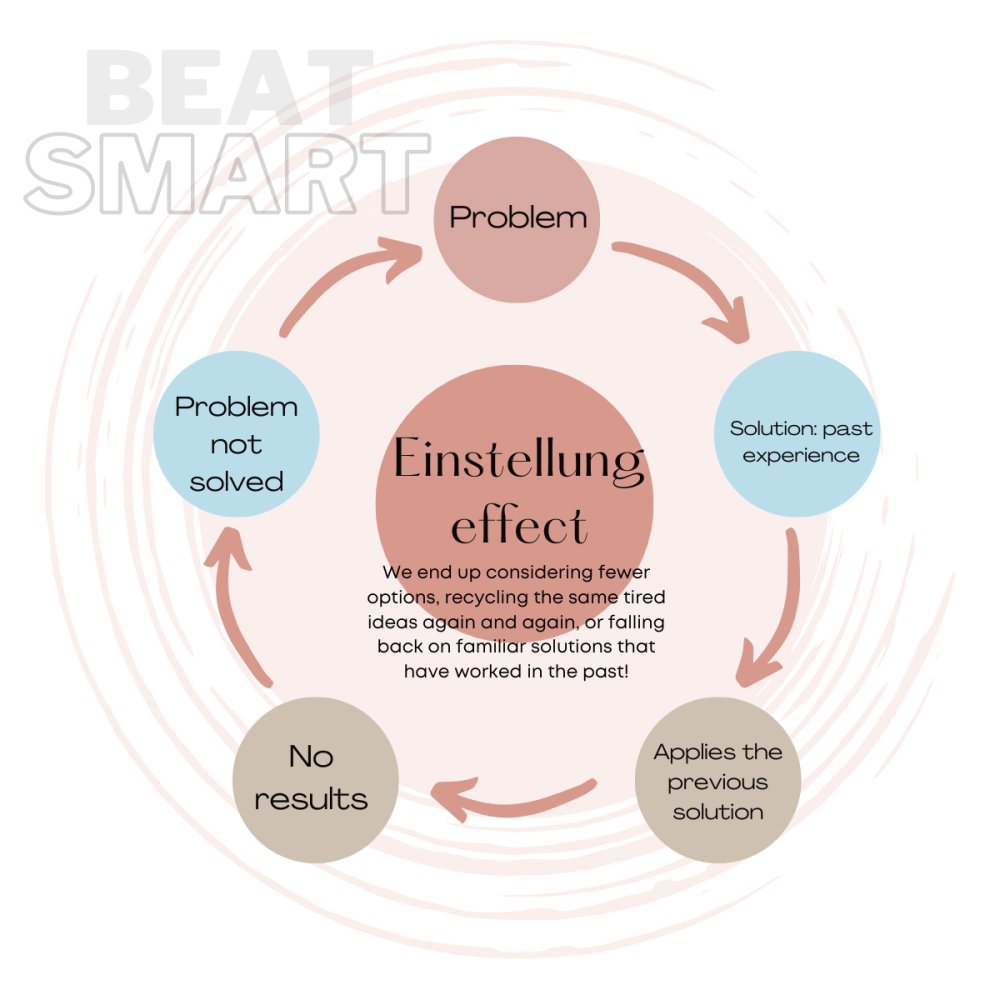
A major barrier to change in health & care is the Einstellung effect. It occurs when, facing a new problem, we apply a repeated solution we have learnt from old problems, based on what we know and are comfortable with, preventing us finding a better solution. It creates a cycle of non-achievement of results. See graphic by @suyashi_dwivedi. We can address it by:
1) Bringing in different voices & perspectives on the problem.
2) Engaging everyone who will be impacted by the potential change early on, so there is ownership, not resistance, to new ways of doing things
3) Small scale testing and experimenting with new approaches.
4) Being divergent in our thinking & not rushing to convergence.
5) Using a structured methodology like design thinking where we focus on fully defining the problem.
6) Being curious to find out how other people have tackled similar problems.
New solutions need new approaches.
Classic article: https://t.co/vpvvyLn5V0 Via @emollick. Additional ideas from @interacting
@EatNaturalBars PLEASE either change your name, or stop putting emulsifiers in your otherwise delicious bars! I want to eat you, but I don't want cancer!!! 🙏
https://t.co/kAoZwT61lx
@littlewoods used to have such good customer service (been a customer for 30y). Recently really gone down hill, & can't even feedback, because of several broken systems. Shame!