Portable dynamometers may be better for tracking trends than for assessing actual strength values taken from movements at the hip...
Lots more, including recommendations on how to set up reliable testing protocols
#Review ➡️ https://t.co/1ZiUTME4HT
#yourJOSPT#Dynamometry
During ACL-R Rehab, the foot-ankle complex has received comparatively less focus, despite a mounting body of evidence suggesting that they can significantly influence ACL-R outcomes, spanning from an understanding of injury mechanisms to considerations of performance enhancement.
We must view the foot and ankle as an intricate, multi-joint structure - not just the ankle joint. Consider the rearfoot, midfoot, and forefoot and how their muscles coordinate for stability and propulsion.
Second, focus on enhancing soleus strength early on for better force absorption. This key muscle protects the healing ACL alongside the hamstrings. Assess and train max strength if deficits exist.
Finally, remember the MIRACLES acronym when designing programs:
M - Maximise soleus strength
I - Improve ankle dorsiflexion range of motion
R - Restore ankle control
A - Activate foot intrinsic muscles
C - Coordinate foot musculature
L - Load the foot & ankle via plyometrics
E - Enhance foot-ankle reactive strength
S - Spring-load the foot and ankle
By incorporating these evidence-based training principles, we can optimize outcomes for our patients after ACL reconstruction surgery. Evaluating and addressing foot and ankle strength and control is key for performance and prevention of re-injury.
What has your experience been with the foot/ankle in ACL rehab?
Do you assess and train these areas enough? I'd love to hear your thoughts!
Link to full Article:
https://t.co/pPVulQkAUB
#IOCATPC#ATPC2023
And slide from my second talk on the treatment of groin pain in athletes
Hard to fit it all into just 15 minutes - but hopefully lots of useful references and resources
See link below:
https://t.co/HN626oGxFg
Featured New Hip Paper for October. A new systematic review & meta-analysis of diagnostic accuracy of clinical tests for assessing #GTPS#glutealtendinopathy published in @JOSPT . Nice work by Rita Kinsella, @ASemciw & colleagues
November's @JOSPT is available now!
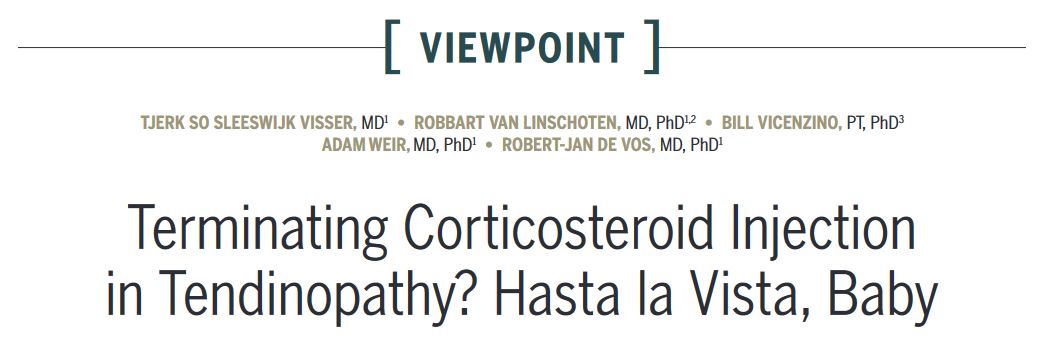
Featuring this #Viewpoint reinforcing the need to avoid corticosteroid use in the treatment of #Tendinopathy
Read it here ➡️ https://t.co/2dnhJV9w4e
#yourJOSPT
How do labels and explanations impact peoples' beliefs about exercise and surgery for hip pain?
See our RCT, published in this issue of @JOSPT 👇
https://t.co/8TrfwgrMAg
For more on the potential clinical implications, see my blog 👇
https://t.co/EmtJvUZsfb
@CHESM_unimelb
#NEW Original Research: Two-year MRI-defined structural damage and patient-reported outcomes following surgery or exercise for meniscal tears in young adults
At 2-years is surgery or exercise more effective?
What are the future implications?🧐
READ ➡️ https://t.co/c8JEarGzmL
Cheat sheet for Hip Pain 💡
Some useful reminders to help differentiate between common conditions. As always, not gold standard and there can be overlap
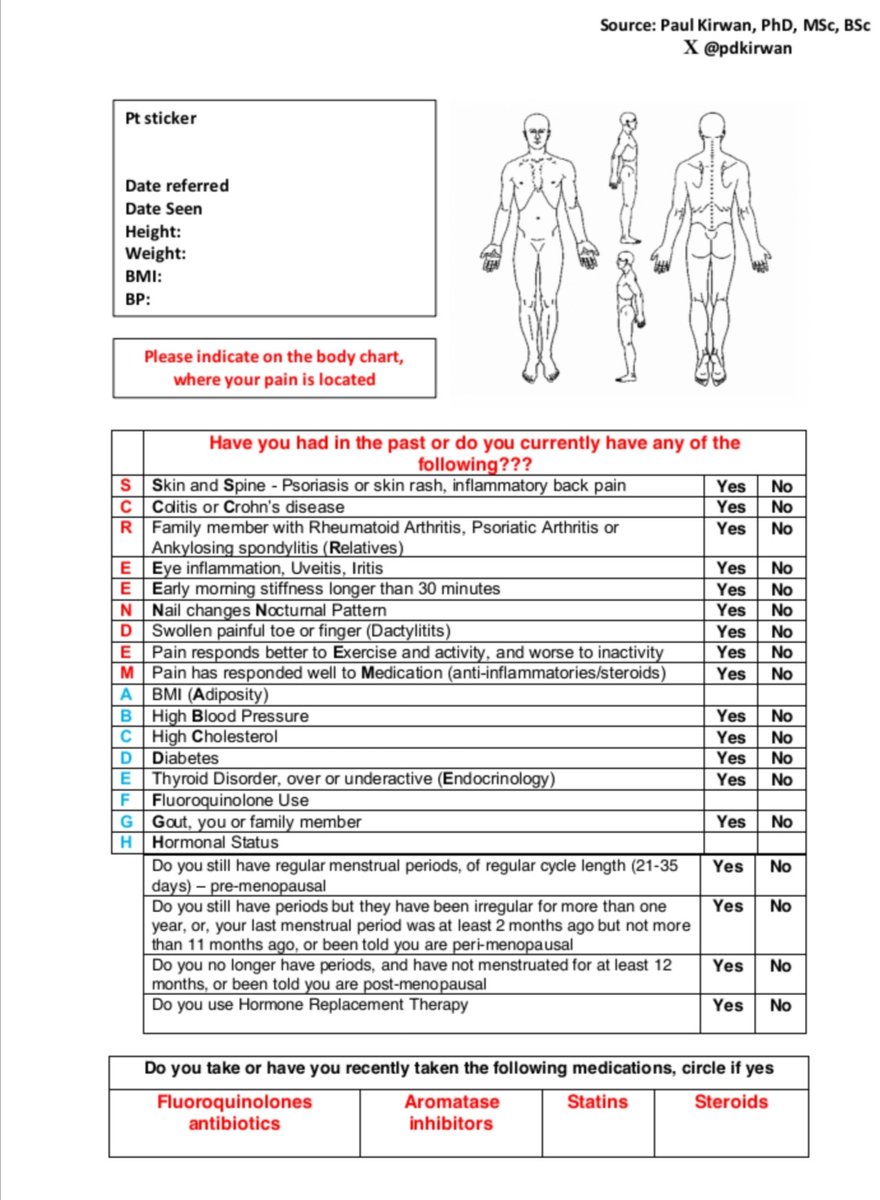
After this mornings #tendinopathy presentation #ISCPConf23 some were asking for a copy of my assessment form which I've been using. Please feel free to use/share and would love to hear if its useful. SCREENDEM and think of the ABCs to build
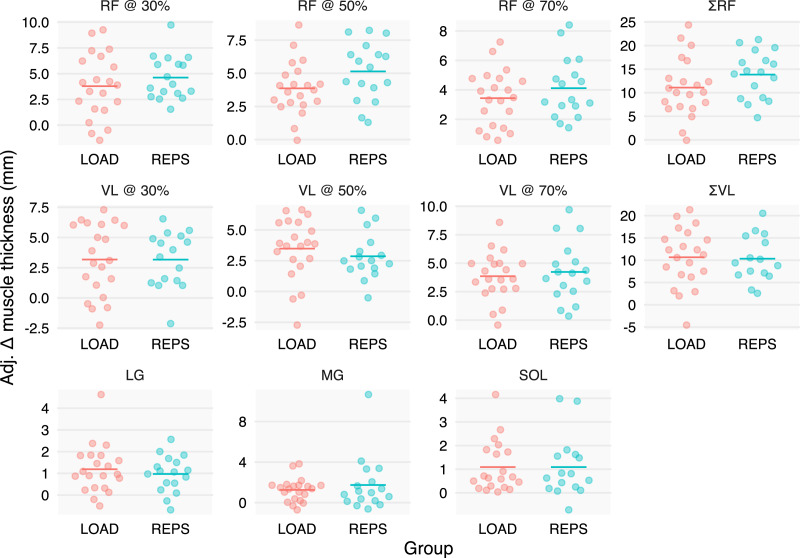
Progressive overload is important in training
How should we progress, by increasing the load or number of repetitions?
Both methods may be similarly effective for strength and size
@DanielPlotkin_@BradSchoenfeld@avigotsky
https://t.co/SSqwzFQU6R
Have you seen @HysingDahl's latest article on return to sport assessment after patellar instability surgery?
Read the full text article here:
https://t.co/XQylgF95sy
Or check out her main findings here:
We have another Young Athlete's Hip Research (YAHiR) Collab takeover on #JOSPTInsights
Dr Vasco Mascarenhas (@VascoMascarenh1) helps us understand and get more confident in the use of imaging for young people with #HipPain
Listen 👉 https://t.co/HVmhlaLtba
#yourJOSPT
Featured New Hip Paper for June. An important new systematic review reporting hip related pain, function & QoL in patients with hip dysplasia. A great paper to release in Hip Dysplasia Awareness Month! #hipdysplasia#AdultHipDysplasia#livingwithhipdysplasia#PAO#DDH
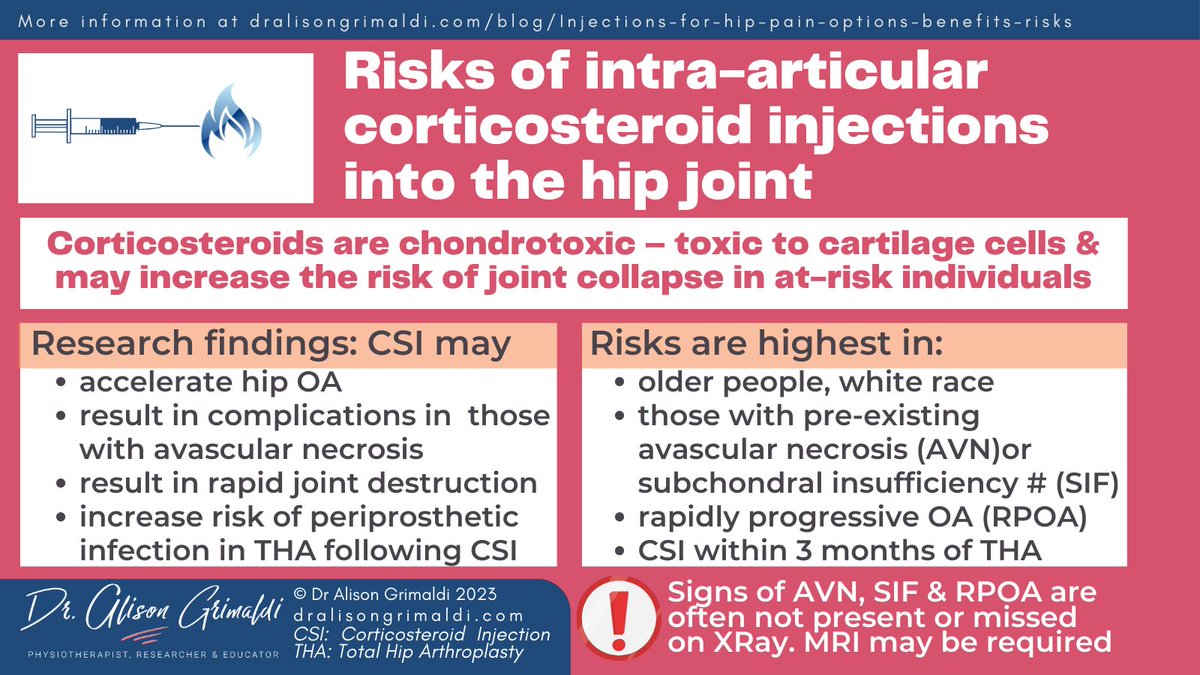
Corticosteroids are toxic for cartilage, more when paired with local anaesthetics (common). Intra-articular CSI increases the risk of joint collapse in at-risk individuals & infection after THR. Screen closely, discuss risks with pt & try load Mx first!
https://t.co/Dgkto9EIVl