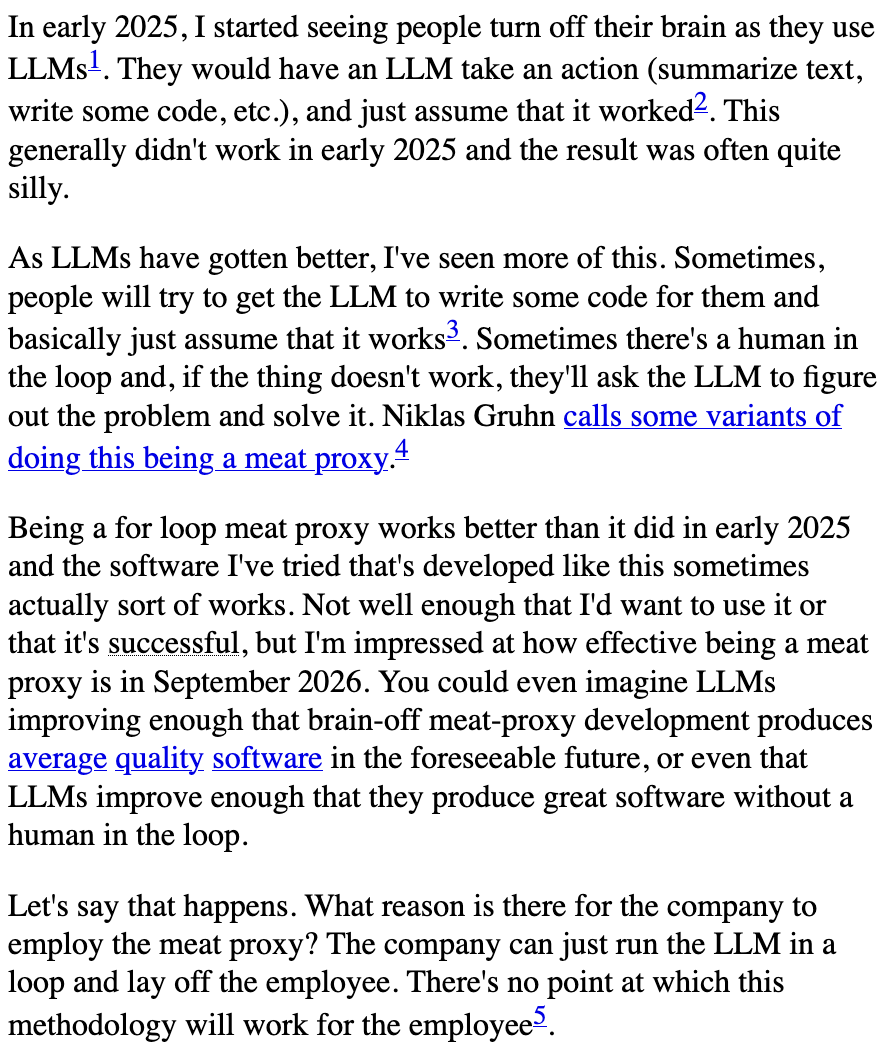
On average, how do coding agents impact relative returns to long hours?
Please adjust for generic increases in productivity; if you think coding agents increase productivity by N for 40/hr weeks, this should be factored out because we want the ratio of relative productivity.
@gzman1248@danluu i've had people pretend to be openai employees (aka coworkers) to try and extract internal information through "casual" conversations about internal things at outside events
Friend of mine started at a lab recently. In orientation, they warned him that, if his affiliation was public, fake identities would reach out to him to extract information.
This happened multiple times in his first week, exactly as described in the orientation warning.
@chrisrohlf@gregkh Awesome! Also, apologies for the negative tone/framing in the tweet. Not that this excuses it, but I had more factual version with more context on Mastodon, and I wasn't as careful as I should've been when cutting it down to fit in the tweet size limit.
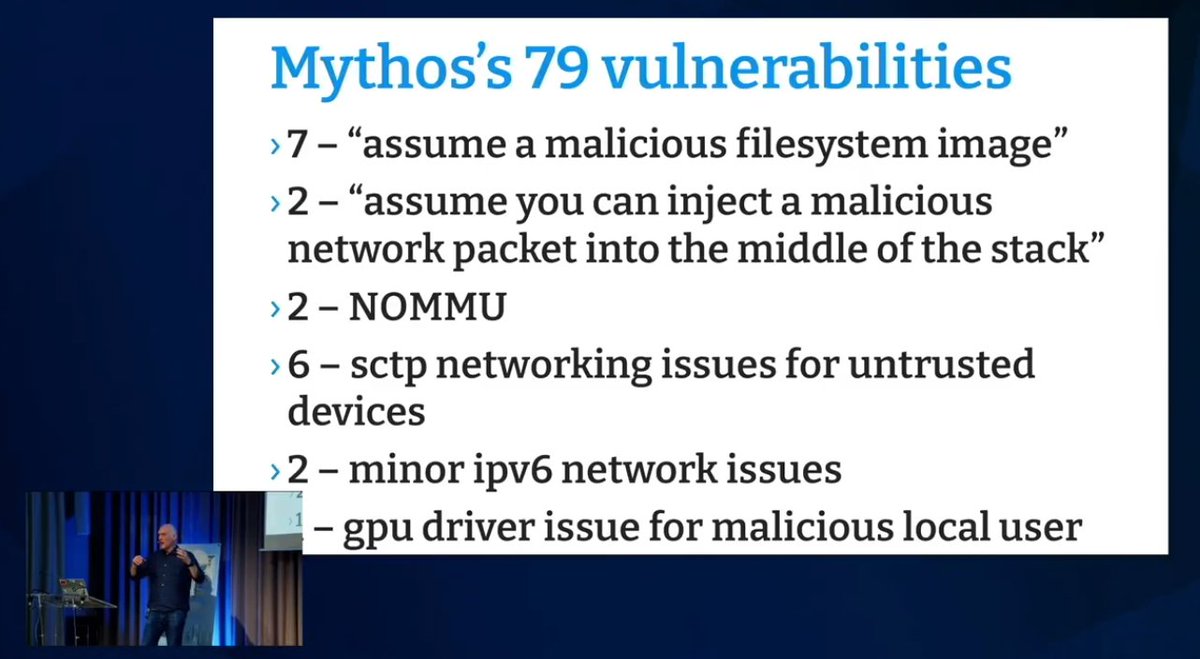
Why have Anthropic's Mythos/Glasswing vuln reports been so bad? In https://t.co/JmS2TEug3f, I mentioned a colleague saying the reports we got were mostly nonsense.
That seems common? E.g., @gregkh on kernel reports and https://t.co/HPnGcBy11h.
@chrisrohlf@gregkh The things my colleague mentioned were old, so if anyone's looking at process issues I imagine it would be fixed by now, but I sent you an email just in case. Thanks!
@DRMacIver Example: data corruption, but it heals if the user doesn't close the tab for minutes; if it doesn't heal, if the user looks at revisions, they can usually restore.
IMO, this is a bug regardless of the maintainer's opinion unless the spec that says you should expect corruption.
@DRMacIver I had cases where a maintainer disagreed on what the fix should be or how bad a bug.
If someone's grading very strictly, they could call that a false positive, but I never filed anything like some of the extremely sloppy examples from the slides or my colleague complained about.
@timotheechauvin That's maybe relevant to the 2nd linked post, but I don't see how it's relevant to my question/point of why Anthropic didn't use a process that can drive the rate of the sloppiest false positives to epsilon, which I and other folks like https://t.co/ZzfE1bQRKq have used.
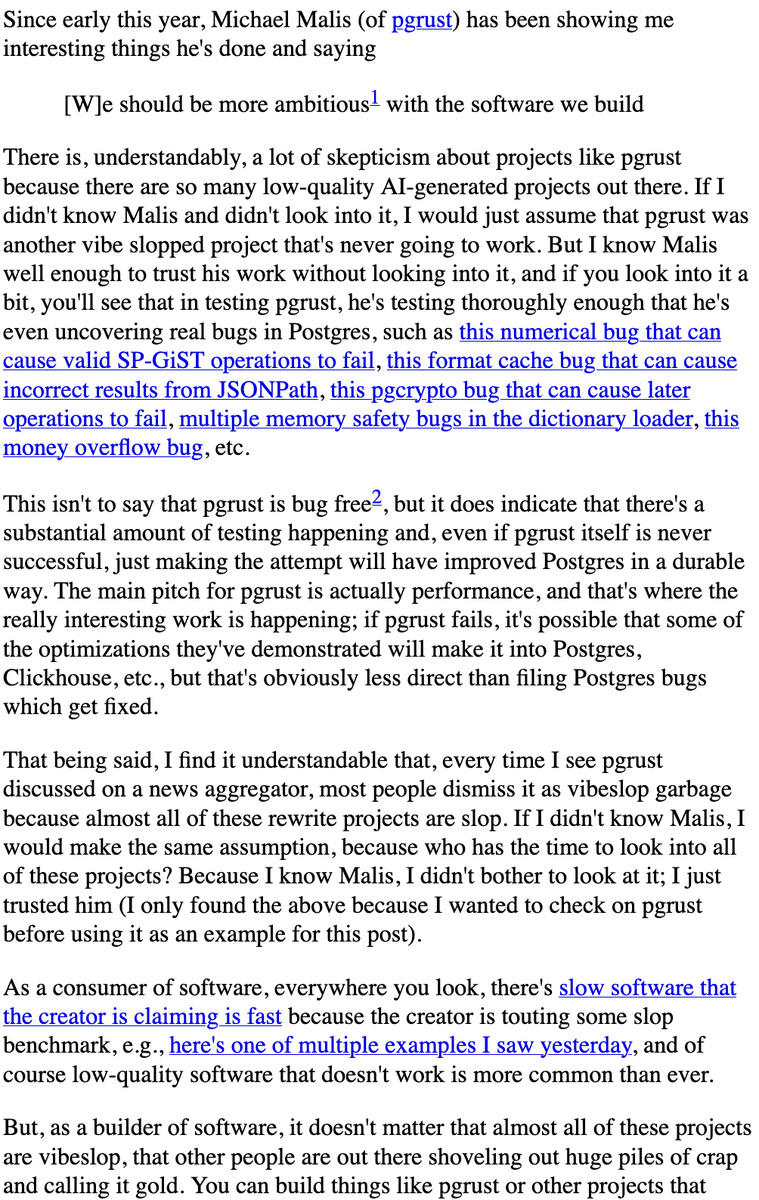
@danluu Can confirm that Anthropic's models are just fine at doing bug triage and determining if it's a real bug. I'm doing a lot of bug filing from bugs found by an automated process right now (human checked, obviously) and after they've run false positive rate is like... 1%.
If you have the budget, false positive rejection is straightforward (ask agent to repro, have agents independently check if the repro is valid).
Given the false positive rate people are seeing, it seems like they didn't do this? It's very weird that they wouldn't have, though.
At the time, I did automated bug filing with human review. Human review found zero known false positives.
Anthropic was using a better model and had more tokens to spend, giving them the advantage on the two most difficult factors w.r.t. false positive rejection.
@jimmykoppel Another thing that never made any sense is that models would stop at random. Why is that the optimal point to clear the context window? If clearing is good, why not interrupt and clear 2x or 4x as often? And, empirically, they seemed worse than clearing context as appropriate.
Were Ralph loops ever effective?
They were popular, but when I did a comparison, they underperformed vs. a normal loop with context. There were all these theories about why Ralph loops were effective but AFAICT people just didn't run the comparison?
https://t.co/CjULcjr9mn
@jimmykoppel I was queuing things up in November 2025 to run non-Ralph loops and AFAICT that worked better than Ralph loops. Wanting to be able to run things for a long time doesn't explain why you'd pick such a bad way to do it or the explanations like "invert the latent space of the model".
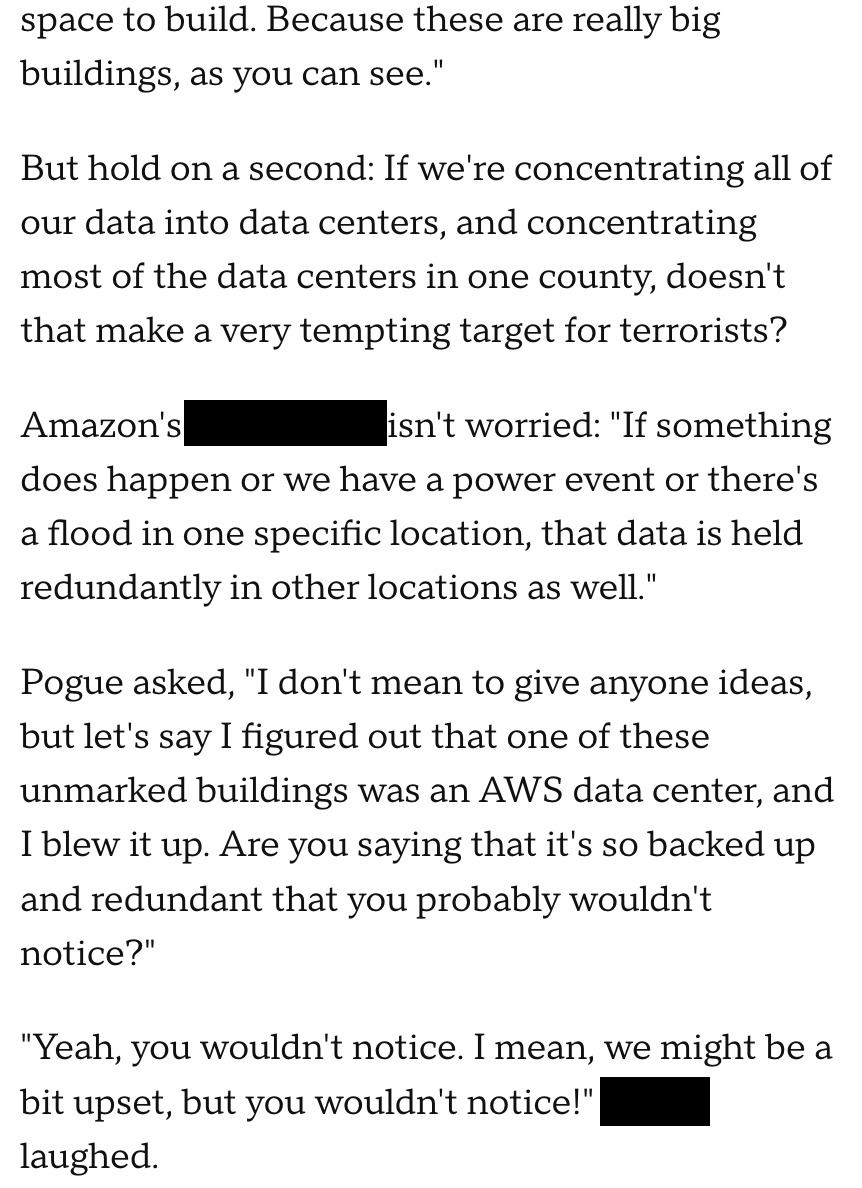
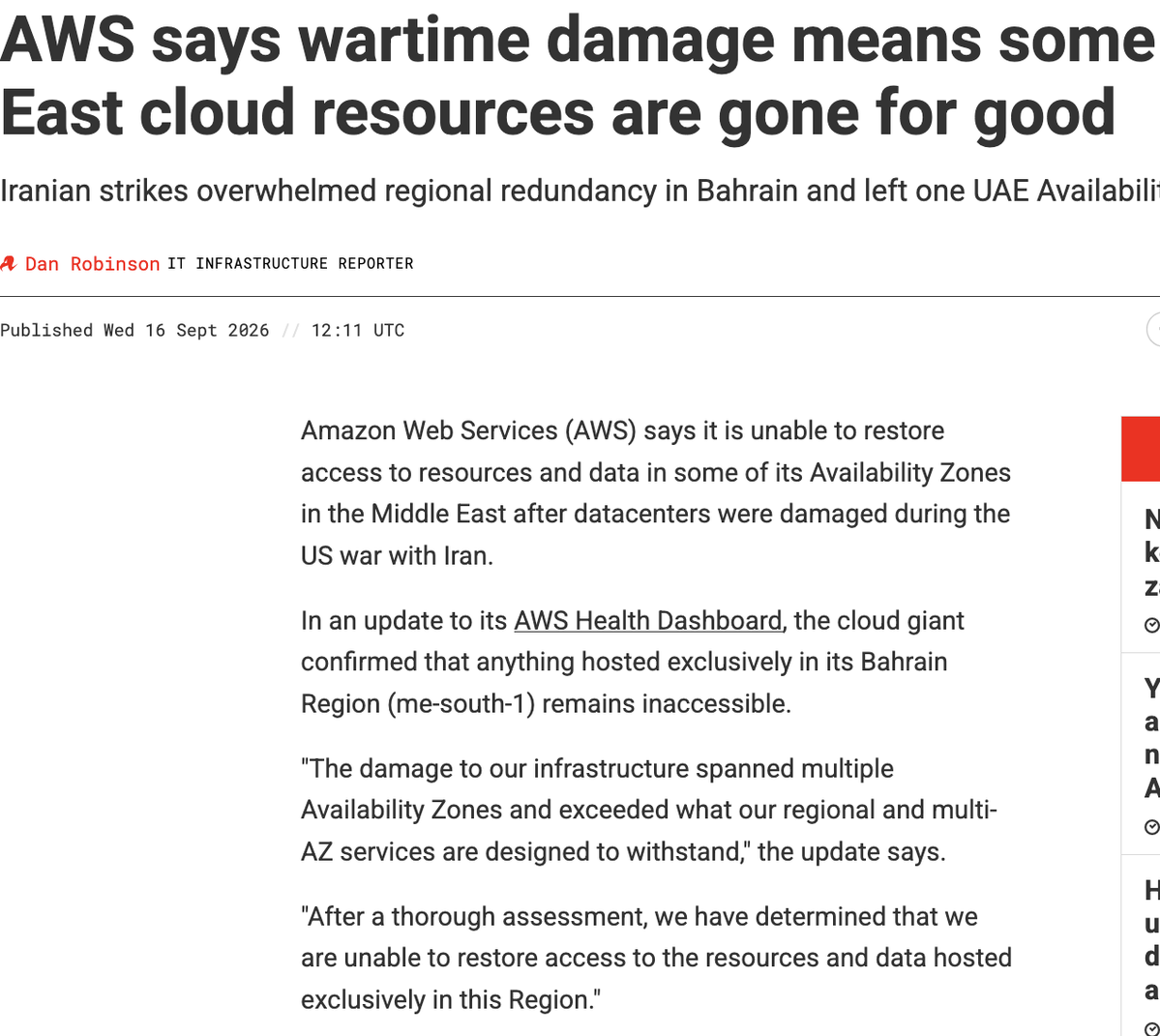
Yes, more than one DC was blown up, but DCs being blown up aren't uncorrelated events.
It's well-known that disk, CPU, etc., failures are highly correlated events, and those aren't even adversarial failures!
Amazon exec: you wouldn't notice [if someone blew up a datacenter]. I mean, we might be a bit upset, but you wouldn't notice! [laughs]
Amazon after DCs blown up: After a thorough assessment, we have determined that we are unable to restore access to the resources and data ...