⚠️ HAKO METAL Genesis Units are Sold Out!
Join the waitlist and stay updated on the next restock!
🛒 Sign up at https://t.co/oQ7hs4qcuK
#HAKOMETAL#ABEL#PostQuantum
Check out my latest article: The Real Cost of Bitcoin Mining in Malaysia: How It Works, How to Start and How to Protect Yourself from Scams
https://t.co/k7PsOsVNut via @LinkedIn
Check out my latest article: The Shadow Infrastructure: What Malaysia’s RM700 Million Power Theft Reveals About Its Crypto Future https://t.co/3RqSEeYYVg via @LinkedIn
Apple published a paper in June 2025 that called out the entire AI industry.
And the industry has not recovered from it since.
The paper is called "The Illusion of Thinking." Six Apple researchers. Months of controlled experiments. One conclusion that landed like a grenade.
Frontier reasoning models face a complete accuracy collapse beyond certain complexities.
Complete. Not partial. Not gradual. Complete.
Here is what that actually means.
For two years, every major AI lab has been racing to build reasoning models. OpenAI's o1, o3. Anthropic's Claude 3.7 Sonnet Thinking. DeepSeek R1. Google's Gemini Thinking. These models do not just answer questions, they visibly think first. They show their work. They reason step by step through a problem before arriving at an answer. The entire industry marketed this as the next evolution of intelligence.
Apple tested whether it was real.
They did not use math benchmarks or coding tests, the standard evaluations every AI company optimizes against during training. They built clean, controllable puzzle environments. Tower of Hanoi. River Crossing. Checker Jumping. Blocks World. Problems with precise, verifiable correct answers and zero possibility of data contamination.
Then they systematically turned up the complexity. And watched what happened.
For simpler, low-complexity problems, standard LLMs demonstrated greater efficiency and accuracy, the reasoning models were beaten by regular models that do not think at all. As complexity moderately increased, reasoning models gained an advantage. But when problems reached high complexity, both model types experienced complete performance collapse.
The thinking models, the ones that cost more, take longer, and are marketed as more intelligent, lost to basic models on easy tasks. Then both collapsed completely on hard ones.
But the finding that truly alarmed researchers was not the collapse itself.
It was what happened just before it.
Near the collapse point, reasoning models began reducing their reasoning effort, measured by thinking tokens, as problem complexity increased, despite operating well below their generation length limits.
The models were thinking less on the hardest problems. Not more. Producing shorter reasoning traces. On the tasks that demanded the most intelligence — the AI was quietly giving up. No error message. No warning. Just shorter thoughts and wrong answers delivered with full confidence.
Then there was the overthinking problem on the other end.
In simpler problems, reasoning models often identified correct solutions early but inefficiently continued exploring incorrect alternatives — an overthinking phenomenon. Beyond a certain complexity threshold, models completely failed to find correct solutions and fixated on early incorrect attempts, wasting the remaining inference token budget.
Too much thinking on easy problems. Too little on hard ones. Complete collapse exactly where it matters most.
Apple researchers made the case that the AI industry is grossly overstating the ability of its top models, including OpenAI's o3, Anthropic's Claude 3.7, and Google's Gemini.
The paper went live on a Saturday morning in June 2025. By that afternoon, The Guardian and The Wall Street Journal were covering it. By Monday, the AI community was in open conflict.
Defenders fired back immediately. A researcher published a rebuttal within days, arguing that Apple's findings primarily reflect experimental design limitations rather than fundamental reasoning failures, and that some River Crossing benchmarks included mathematically impossible instances that no model could have solved.
Then a third group of researchers from Spain's National Research Council ran the experiments again with refined methods.
They found that previously reported failures on Towers of Hanoi were not purely a result of output constraints, reasoning models still stumble when complexity rises moderately around 8 disks.
Eight disks. On a puzzle designed for children. Complete failure.
Now here is why this paper is more relevant in May 2026 than it was the day it was published.
Since June 2025, every major AI lab has released a new generation of reasoning models. OpenAI shipped GPT-5.4 with extended thinking. Anthropic released Claude Opus 4.6 with enhanced reasoning traces. Google released Gemini 3 with Deep Think mode. DeepSeek released R2. xAI released Grok 3 with Think mode.
Every single one of them is marketed as having solved the reasoning problem Apple identified.
None of them have published controlled results on the specific complexity benchmarks Apple used. None of them have addressed the accuracy collapse curve directly. None of them have shown that the cliff Apple found no longer exists in their newer models.
They have simply released new models, claimed better reasoning, and moved on.
Which means the question Apple asked in June 2025, do these models actually reason, or are they producing the illusion of reasoning, has never been formally answered by the companies whose products depend on the answer being yes.
Apple's findings show that chain-of-thought only improves accuracy up to a point. Beyond that, models collapse, even when context and planning are not constrained. This breaks the assumption that performance scales linearly with model size.
That assumption has not been retired. It has been doubled down on. The entire 2026 reasoning model race GPT-5.4, Gemini 3, Claude Opus 4.6 is built on the premise that more thinking means better answers at scale.
Apple's paper says that premise has a cliff.
And the newest, most powerful models in the world have not shown that they found it, let alone that they cleared it.
Every enterprise deploying AI reasoning models today for legal analysis, medical diagnosis, financial modeling, or engineering decisions is operating on an assumption that a June 2025 paper from Apple formally challenged and nobody has formally refuted.
The debate is not settled. The cliff is still there.
The models just got more expensive to fall off of.
Source: Shojaee, Mirzadeh et al. · Apple · "The Illusion of Thinking" · June 2025 · https://t.co/9DNDPttKlG · https://t.co/5QxjHYxkEE
This Chinese developer launched Llama 70B locally on a MacBook on a plane and for a full 11 hours without internet ran client projects.
He was sitting by the window on a transatlantic flight with a MacBook Pro M4 with 64 GB of memory. WiFi on board cost $25 for the flight. He declined.
No cloud API, no connection to Anthropic or OpenAI servers, no internet at all.
Just a local Llama 3.3 70B on bf16 and his own orchestrator script.
The model runs through llama.cpp. Generation speed, 71 tokens per second. Context around 60,000 tokens. Memory usage, 48.6 GiB out of 64. Battery at takeoff, 3 hours 21 minutes.
And he gave the orchestrator this system prompt before takeoff:
"You are an offline orchestrator running on a single MacBook. There is no network. The only resources you have are local files in /Users/dev/work, the Llama 70B inference server at localhost:8080, and a battery budget of 3 hours 21 minutes. Process the queue at /Users/dev/work/queue.jsonl (one client task per line). For each task: draft → run local evals → save artefact to /Users/dev/work/done/. Save context checkpoints every 12 tasks so you can resume after a battery swap. Stop only on empty queue or when battery drops below 5%."
So the system knows exactly what resources it is running on.
It knows it has no connection to the outside world for the next 11 hours. It knows it has finite memory and a finite battery. It knows the human will not intervene until the plane lands.
The system runs in 1 loop. Takes a task from the queue, runs it through inference, saves the artifact, writes a checkpoint. Task after task, just like that.
And only when the battery drops below 5% does the orchestrator automatically pause, waits for the laptop to switch to the backup power bank, and continues from the last checkpoint.
Here is what the system actually writes in his log during the flight:
"saved context checkpoint 8 of 12 (pos_min = 488, pos_max = 50118, size = 62.813 MiB)"
"restored context checkpoint (pos_min = 488, pos_max = 50118)"
"prompt processing progress: n_tokens = 50 / 60 818"
"task 37016 done | tps = 71 s tokens text → /Users/dev/work/done/proposal_westside.md"
Outside the window, clouds, blue sky, and no WiFi. On the tray, 1 MacBook, an open terminal on 2 screens, and an inference server on localhost.
From what I have observed, this is the cleanest offline AI workflow I have seen in the past year: 11 hours of flight, $0 for WiFi, and the entire client queue closed before landing.
China just made Silicon Valley's entire AI industry look like a scam.
The US government spent 3 years trying to stop China from building competitive AI.
But this backfired HORRIBLY.
Here's what happened:
Yesterday, a Chinese startup called DeepSeek released a new AI model called V4.
It matches the performance of OpenAI and Anthropic's best models.
At 1/7th the price.
And for the first time ever, it was built on Chinese chips. NOT American ones.
That last part is the one that terrifies the west.
For context:
Since 2022, the US has banned the export of advanced AI chips to China. The entire strategy was built on the assumption that if China can't access Nvidia's best hardware, they can't build frontier AI.
But DeepSeek just proved that assumption wrong.
Their V4 model was trained and runs on Huawei's Ascend chips. Huawei spent months working directly with DeepSeek to make sure V4 runs across their entire line of AI processors.
Jensen Huang even predicted this on a recent podcast: "The day that DeepSeek comes out on Huawei first, that is a horrible outcome for our nation."
That day was yesterday.
And the numbers are crazy:
DeepSeek V4 costs $3.48 per million output tokens. OpenAI's latest model GPT-5.5 costs $30. Anthropic's Claude charges $25. Same ballpark performance. 7x cheaper.
Uber's CTO just admitted they burned through their ENTIRE 2026 AI budget in 4 months using Anthropic's tools.
If Uber had used DeepSeek instead, that same budget would have lasted 7 YEARS.
4 months vs 7 years. Same work getting done.
But the pricing isn't even the big thing here.
The real story is what DeepSeek did with their technical report:
They published the benchmarks where they LOSE.
Every AI company cherry-picks the tests where their model wins. DeepSeek ran the full comparison against GPT-5.4 and Google's Gemini, found they trail frontier models by 3 to 6 months, and printed it anyway.
They literally don't care because the price gap makes the performance gap irrelevant for 90% of use cases.
So the US export controls didn't slow China down. They ACCELERATED China's independence.
Because Chinese developers were FORCED to train models with limited resources, they had to figure out how to make AI radically more efficient. That constraint became their competitive advantage.
Every generation of DeepSeek has gotten dramatically cheaper to train. V4 continues the trend.
Meanwhile US companies are going the OPPOSITE direction:
OpenAI's GPT-5.5 Pro costs $180 per million output tokens. That's 51x more expensive than DeepSeek V4 for comparable work.
The Commerce Secretary confirmed this week that ZERO Nvidia advanced chip shipments have actually gone through to China despite being approved in January.
So China built frontier AI anyway. Without American chips. At a fraction of the cost.
And the market response tells you everything:
Chinese chipmaker SMIC surged 10%. Huahong Semiconductor jumped 15%. DeepSeek's Chinese AI competitors Zhipu AI and MiniMax dropped 9% because V4 is destroying them too.
DeepSeek is making Silicon Valley's pricing model look like a scam.
US tech companies spent $650 billion on AI infrastructure this year. DeepSeek just showed the world you can match their output for pennies.
The export controls were supposed to be America's ace card. Instead they taught China how to win without American chips, at American prices nobody can compete with.
Jensen Huang was right. This is a horrible outcome.
But it's the outcome America built for itself.
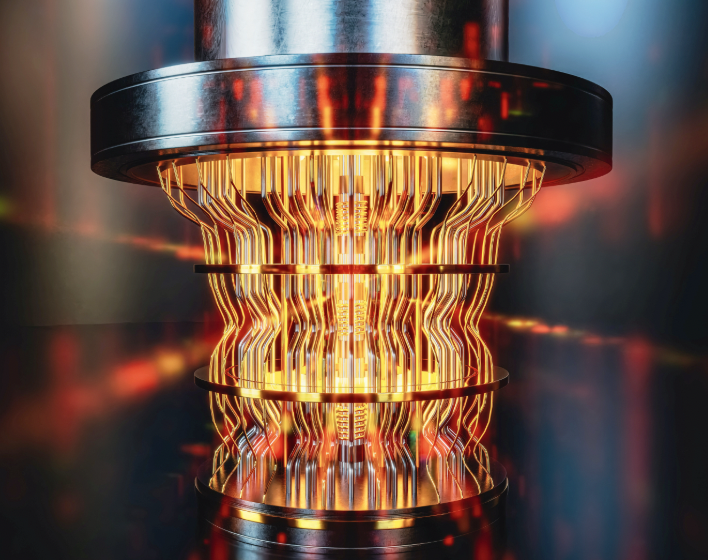
⚡️QUANTUM COMPUTER BREAKS ECC KEY IN BITCOIN-RELATED TEST
A researcher used public quantum hardware to break a 15-bit elliptic curve key, winning Project Eleven’s 1 BTC Q-Day Prize.
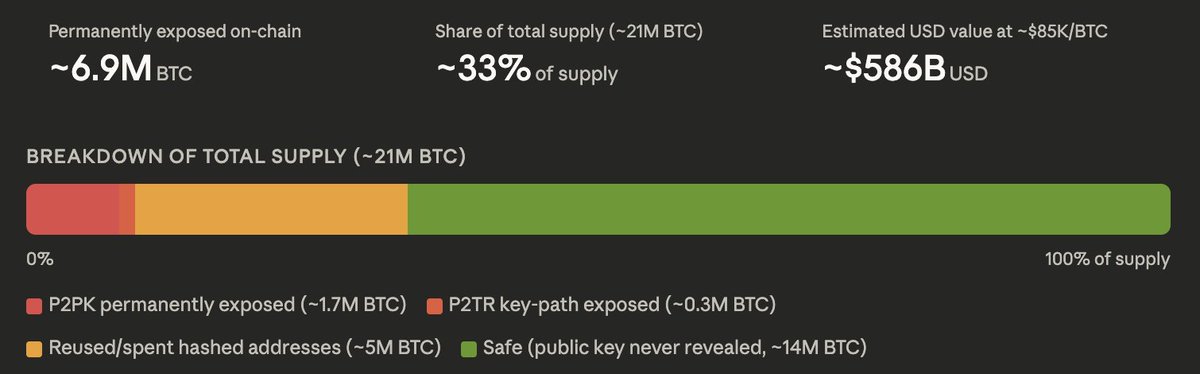
The test does not threaten Bitcoin’s 256-bit security yet, but highlights growing urgency around post-quantum upgrades, with ~6.9M BTC sitting in addresses with exposed public keys.
🚨 Anthropic's own team just showed how to actually use Claude Code properly.
30 minutes. free. the person who created Claude Code.
watch the workshop. bookmark it.
worth more than every $500 course you almost bought.
you've been using Claude without knowing 40 of its commands.
Then read the guide below.
The Head of Claude Code at Anthropic said he hasn’t written code by hand in months.
In 2 days he shipped 49 full features. All written 100% by AI.
He just dropped a 30 min talk on exactly how he does it.
Worth more than any $500 vibe coding course. Bookmark it:
No internet? No problem.
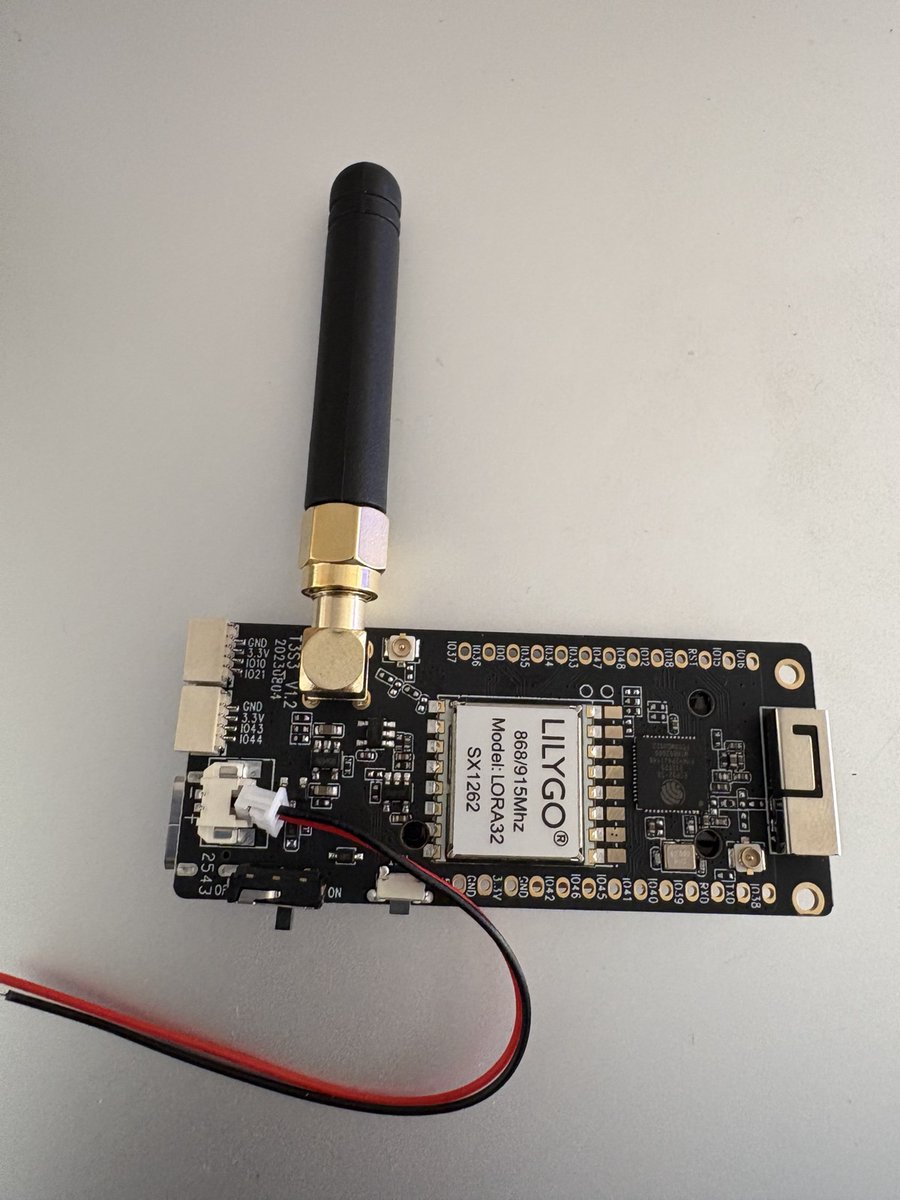
Bala just dropped the ultimate cypherpunk demo at the BOSS Summit: From Off-Grid to On-Chain
He literally broadcasted a live Bitcoin transaction using Mesh Radio.
No ISPs, no Wi-Fi, no cellular data.
Just pure radio waves bypassing the traditional internet layer to hit the mempool.
When we say we are building unconfiscatable money for uncertain times, this is exactly what we mean. Mind blown.
Here is the repo used to connect meshtastic to bitcoin core:https://t.co/HVKkj4dQcM
~6.9 million #Bitcoin (33% of total supply) with public keys permanently exposed on-chain, that represents roughly $586B sitting in addresses a future CRQC could target without any time pressure at all.
The practical implication of the Oratomic and Google Quantum AI papers combined is that the ~6.9 million permanently exposed BTC could theoretically be targeted by a neutral-atom system with as few as ~10,000–26,000 physical qubits, given enough time (within weeks) — while an on-spend attack (within minutes) against active transactions would require the faster superconducting architecture at ~500,000 qubits.
More Hash, More Huat! 🐎🔥
This year, let’s keep the fans spinning, the chips cool, and our conviction hot. Here’s to a year of sustainable growth, green candles, and stacking sats together! 🍊🍊
Gong Xi Fa Cai! Let’s mine our way to prosperity. 🚀📈
The global hashrate is shifting, and Malaysia is at the center of it all. We aren’t just "digging" for Bitcoin—we are building the "shovels."
From the industrial clusters of Penang to the green hydropower of Sarawak.
Read more at: https://t.co/Mas3Gsan9v
Your NEM 3.0 credits have a "use-it-or-lose-it" expiry date. ⏰ Don't let all that hard-earned solar power go to waste!
Instead of forfeiting your credits, convert them.
Rent one of our high-efficiency miners to "spend" your excess power and turn them into a Bitcoins.