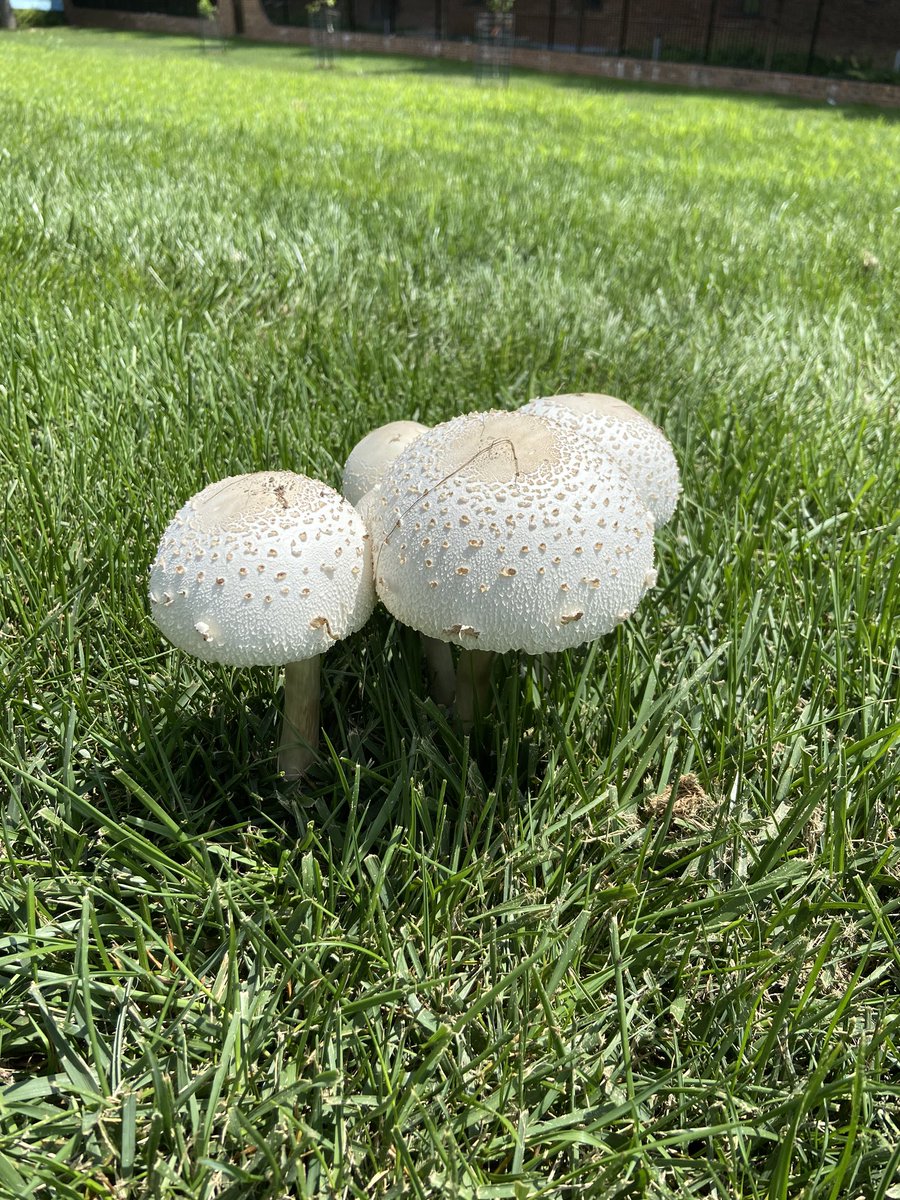
The mushroom is commonly found on the Southeastern United States, but this one was seen further north in Philadelphia. It commonly grows in a notable fairy ring formation, and thanks to climate change, we’ll likely be seeing more of the green spored parasol.
Forsythia, a common symbol of springtime, have been blooming earlier and earlier every year. Their early blooms symbolize temperatures getting warmer sooner throughout their range. #BeyondHumans#MyClimateStory
Today’s #BeyondHumans#MyClimateStory is that of the groundhog or Marmota monax! These two groundhogs were spotted by friends of mine in two spots along the Schuykill River Trail.
Temporary benefits due to warming climates will soon lead to hardship thanks to climate change induced drought. And groundhog and marmot species that live in higher elevations are already seeing population and range declines.
While their populations are at a healthy number now, increasing expansion of their range due to climate change can pose risks for other seabirds that haven’t been faring as well. Soon, the double created cormorant could be too dominant.
Today’s #BeyondHumans climate story comes from the Gray catbird, or Dumetella carolinensis. I spotted this one in my backyard is Washington Township, NJ earlier in June!
Their range is expected to shift North into Canada as temperatures rise. In addition, wildfires, increased rainfall, sea level rise, heat waves, and urbanization all threaten the gray catbird. Their nesting behaviors are especially vulnerable.