Master DevOps by playing these 5 games 🎮
1⃣ Oh My Git!
→ https://t.co/MAb1TUSrYI
Learn Git visually by solving branching, merging and rebasing puzzles.
2⃣ SadServers
→ https://t.co/PxJsgBBIGS
Debug broken Linux servers inspired by real production incidents.
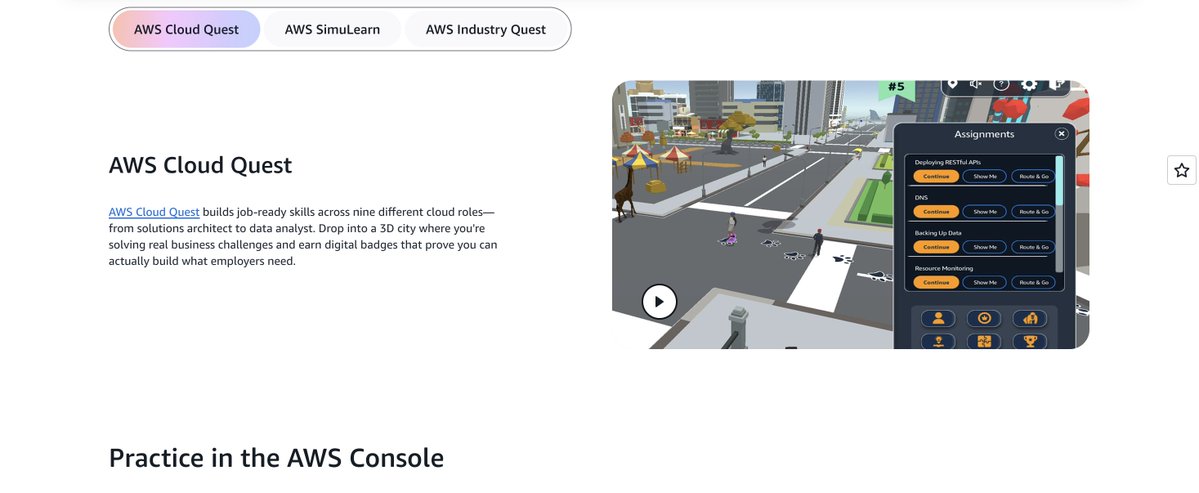
3⃣ AWS Cloud Quest
→ https://t.co/vp76LfNWCJ
Build a virtual city while learning core AWS services through missions.
4⃣ Google Cloud Arcade
→ https://t.co/tOZ5nyz5wn
Complete hands-on GCP labs, earn badges, and learn by building.
5⃣ DevOps Dream
→ https://t.co/ED0crgPr7M
Run a software company, make engineering decisions, and see how your DevOps strategy affects delivery performance.
Way more fun than watching another 10-hour DevOps course.
I'm 40 and into DevOps.
If you're in your 20s and 30s, read this:
1) A new job won't fix burnout. Neither will a better title, more pay, or a fancier stack.
2) If you don't know what kind of engineer you want to be, every team will confuse the hell out of you.
3) In ten years, your close colleagues will look nothing like today. The person you pair with every day at 25 may be a stranger at 35. That's just how it goes.
4) Don't wait to start that side project. The people you think are "too junior" are already shipping and building audiences while you're still planning.
5) Most of your career limits were put there by someone else. A manager, a course, a job description. You're playing small inside rules that aren't yours.
6) Time moves fast. Even faster when you chase things that don't matter and roles that don't fit.
7) Life will hit you sideways. Layoff, health scare, personal crisis. The ones who bounce back built something outside their job title.
8) Build something you own. A skill, a product, a body that keeps up with the long hours.
9) The older you get, the fewer opinions you need. Keep your circle small and real.
10) Want a better career? Change what you consume. Doomscrolling, junk food, people who only complain. All of it shapes you.
11) Nothing feels better than making your own choices and owning them fully. No approval needed.
12) Work on things that still interest you at 11pm. Not just things that look good on a resume.
13) Learn to say no to on call rotations, weekend deploys, and teams that treat urgency as a personality. Your health is not an SLA.
14) The engineers who helped you for free when you were starting out, remember them. Pay it forward. That karma compounds faster than any stock option.
15) Stop waiting for your company to train you. Break things in a home lab. Ask stupid questions without shame.
16) Money matters. Negotiate hard, save early, and don't tie your identity to a company that would replace you in a week.
What did I miss ?
49K+ read my DevOps and Cloud newsletter: https://t.co/WBucLdwLhJ
What do we cover:
DevOps, Cloud, Kubernetes, IaC, GitOps, MLOps
🔁 Consider a repost if this is helpful.
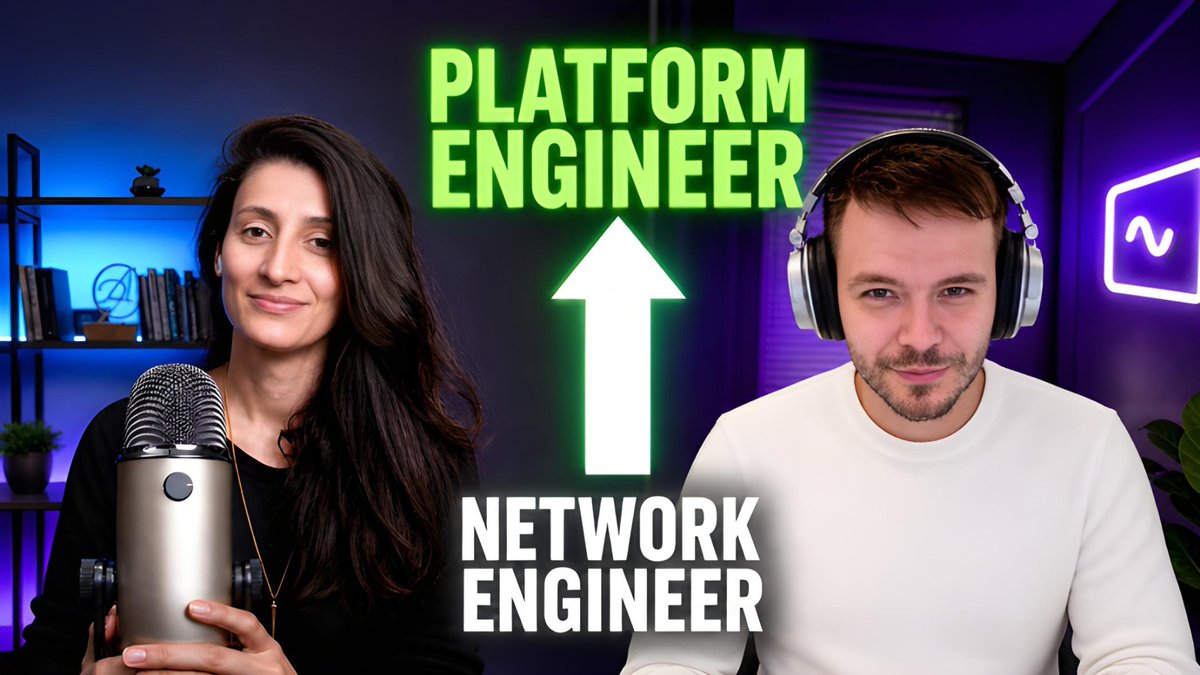
"Networks are built for 15 years ahead. I've never had a job in network engineering where I would say, wow, I'm learning a lot day by day. But the first job in DevOps was like, wow — I can't even handle all of those tools."
Patryk said this in our conversation — and if you've worked in network engineering, you probably know exactly what he means 😁
He's not complaining. It's just an honest observation about where the growth stops.
He reached that conclusion after switching several network engineering jobs — each time hitting the same ceiling, not learning enough, moving on. Until he got laid off during Covid and decided enough was enough.
From there, he decided to make the transition to DevOps and eventually landed a Cloud Platform Engineer role.
His interview is one of the most practical accounts I've heard of what it actually takes to switch from networking to DevOps — what transfers, what doesn't, and what he'd do differently if he started over today.
If you're a network engineer thinking about making a similar move, this one is for you. But of course there are many learnings that apply to any engineering role 🙂
🎥 Full interview here: https://t.co/C9jtmG8rtc
At the end of the conversation, he gives one piece of advice:
Document your journey from day one. Post it. Let people know what you can build. Not only because it helps you get a job — but more importantly, because there are many brilliant engineers out there that nobody knows about.
Patryk didn't just say that. He went and did it.
So now he actually runs his own consultancy. And he has even built a community of 17,000+ followers on LinkedIn — simply by doing exactly what he recommends at the end of this video.
Patryk, thank you for sharing the whole journey, not just the cherry picked stuff. This one will surely be inspirational for many people 🙌
A system can appear healthy even when something is going wrong behind the scenes.
In this handbook, @irvingpictures shows you how to use Bash and Python for real-world DevOps automation.
You'll detect AWS cost spikes, trace service logs, find infrastructure drift, validate secret rotation, and automate canary rollbacks.
https://t.co/NFVhlxBs5z
5 Underrated Games To Learn DevOps 🎮
1. SadServers
→ https://t.co/PxJsgBBIGS
Solve real Linux and production outage scenarios hands-on.
2. Kube Invaders
→ https://t.co/tUAYoTRrm8
Learn Kubernetes resilience and chaos engineering visually.
3. CMD Challenge
→ https://t.co/m9p3XFJSJM
Practice Linux commands through terminal-based challenges.
4. Play With Docker
→ https://t.co/YmlLm1UAPy
Interactive Docker playground directly in the browser.
5. OverTheWire: Natas
→ https://t.co/R4yvJbshws
Learn web security, networking and debugging through levels.
Way better than passively watching tutorials for weeks.
I used to think deployment was the final step.
It’s not.
Deployment is where the real work begins.
Because after deployment comes:
•Monitoring
•Debugging
•Scaling
•Securing
During my cloud journey, I deployed apps that worked…
9 Essential Books for DevOps & Site Reliability Engineering:
1️⃣ The Phoenix Project: A must-read novel that explains the business value of DevOps through the "Three Ways".
2️⃣ The DevOps Handbook: A practical guide to creating world-class agility, reliability, and security in tech organizations.
3️⃣ Accelerate: Focuses on the science of Lean Software and how high-performing teams use DevOps to drive value.
4️⃣ Team Topologies: Essential for organizing business and technology teams for fast, sustainable flow.
Core Engineering & SRE
5️⃣ Site Reliability Engineering: The "Google SRE Book" that defines how to run production systems at scale.
6️⃣ Continuous Delivery: Learn the principles of building, testing, and deploying automation for reliable releases.
7️⃣ Chaos Engineering: A deep dive into building system resiliency through proactive experimentation.
8️⃣ Terraform: Up & Running: The definitive guide to writing and managing infrastructure as code.
9️⃣ Cloud Native DevOps with Kubernetes: Covers building and scaling within the Cloud Native Computing Foundation ecosystem.
🚨 S3 is no longer just Object Storage.
Yesterday (April 7, 2026), AWS officially launched Amazon S3 Files.
This is the biggest update to S3 in 20 years.
It can:
→ Mount S3 buckets as native file systems
→ Provide sub-millisecond file access
→ Handle POSIX permissions (UID/GID) natively
→ Connect to Lambda, EC2, and EKS directly
→ Eliminate the need for s3fs or data staging
Your AI agents can read/write to S3 like a local disk, while your data team access the same objects via API.
DevOps just got a massive upgrade.
Source: https://t.co/gwGIhDlInU
The Domain Name System translates domain names (like https://t.co/cK1U7EkyKI) into IP addresses (like 192.0.2.1) so you can easily access websites.
And in this guide, Dhruv explains how DNS works.
You'll learn about the resolution process, caching, resolvers, domain registrars, and lots more.
https://t.co/TokCBlAw6w