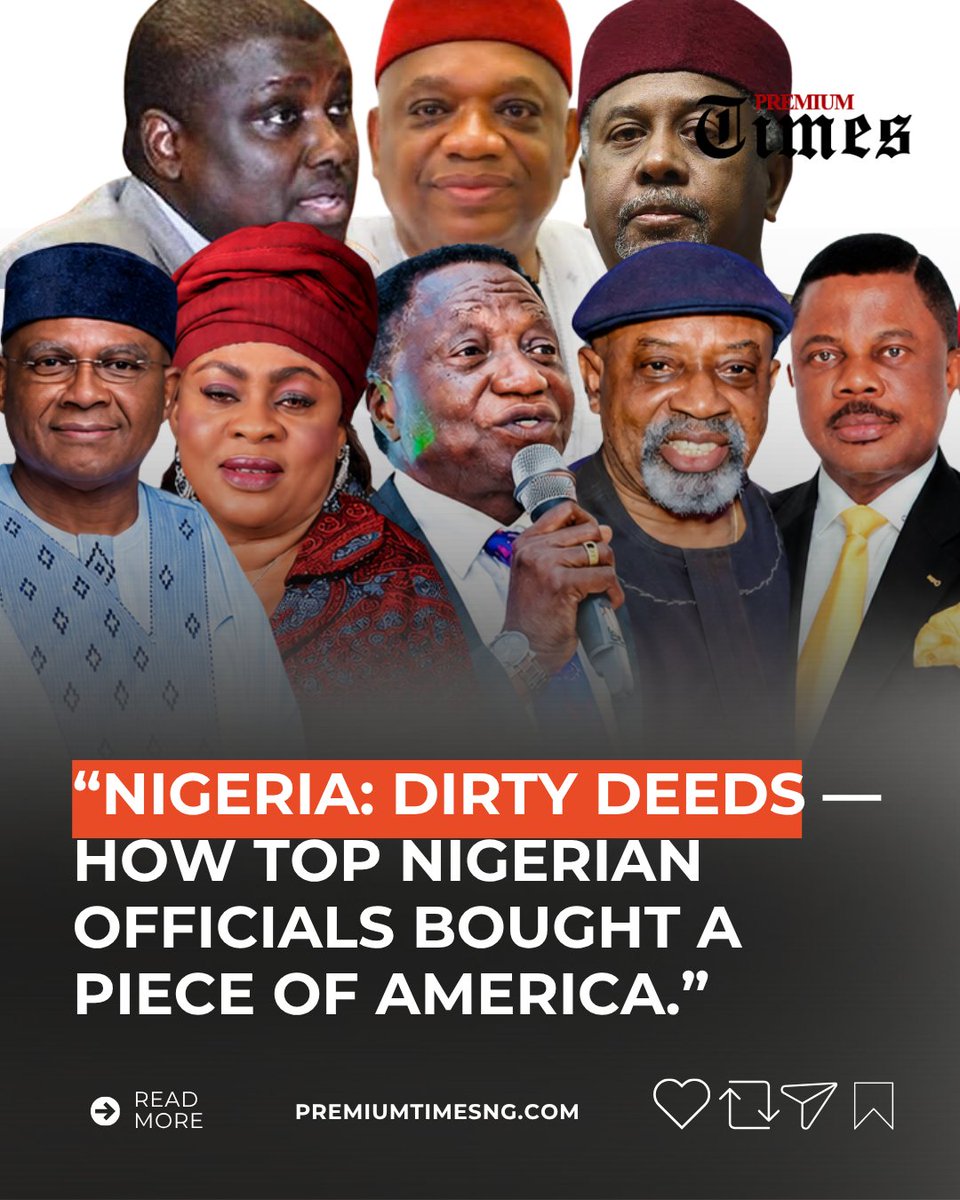
A new investigation has identified 284 properties in the United States, collectively valued at nearly $271 million, linked to 61 current and former high-level Nigerian officials, their families, associates and affiliated companies. The properties, acquired from 1991 onwards, include 152 worth about $177 million that were purchased while the officials were in office, according to a report by the Platform to Protect Whistleblowers in Africa (PPLAAF), in partnership with the Anti-Corruption Data Collective (ACDC). https://t.co/0tcldMJODl
Are you building a solution to a real Nigerian problem?
Then Builders Festival ’26 is looking for you.
Whether you’re building in 𝐇𝐞𝐚𝐥𝐭𝐡𝐜𝐚𝐫𝐞, 𝐄𝐝𝐓𝐞𝐜𝐡, 𝐋𝐨𝐠𝐢𝐬𝐭𝐢𝐜𝐬, 𝐒𝐮𝐩𝐩𝐥𝐲 𝐂𝐡𝐚𝐢𝐧, 𝐀𝐈, 𝐂𝐥𝐨𝐮𝐝, 𝐃𝐚𝐭𝐚, 𝐀𝐠𝐫𝐢𝐓𝐞𝐜𝐡, 𝐂𝐨𝐧𝐧𝐞𝐜𝐭𝐢𝐯𝐢𝐭𝐲, 𝐅𝐢𝐧𝐓𝐞𝐜𝐡, 𝐞-𝐆𝐨𝐯𝐞𝐫𝐧𝐚𝐧𝐜𝐞 and more, this is your opportunity to take your solution further.
The process is simple: 𝐀𝐩𝐩𝐥𝐲, 𝐠𝐞𝐭 𝐦𝐚𝐭𝐜𝐡𝐞𝐝, 𝐩𝐢𝐭𝐜𝐡 𝐲𝐨𝐮𝐫 𝐬𝐨𝐥𝐮𝐭𝐢𝐨𝐧, 𝐞𝐧𝐭𝐞𝐫 𝐭𝐡𝐞 𝐝𝐞𝐚𝐥 𝐫𝐨𝐨𝐦, 𝐚𝐧𝐝 𝐠𝐞𝐭 𝐟𝐮𝐧𝐝𝐞𝐝.
There’s also a ₦𝟑𝐁𝐧 𝐢𝐧𝐯𝐞𝐬𝐭𝐦𝐞𝐧𝐭 𝐩𝐢𝐩𝐞𝐥𝐢𝐧𝐞 for startups solving Nigeria’s biggest problems.
Successful startups will be invited to a 𝐥𝐢𝐯𝐞 𝐝𝐞𝐦𝐨 at the 𝐃𝐢𝐠𝐢𝐭𝐚𝐥 𝐍𝐢𝐠𝐞𝐫𝐢𝐚 𝐈𝐧𝐭𝐞𝐫𝐧𝐚𝐭𝐢𝐨𝐧𝐚𝐥 𝐂𝐨𝐧𝐟𝐞𝐫𝐞𝐧𝐜𝐞 ’𝟐𝟔.
📅 10th–12th November, 2026
📍 Bola Ahmed Tinubu International Conference Center, Abuja
𝐓𝐡𝐢𝐬 𝐢𝐬 𝐲𝐨𝐮𝐫 𝐜𝐡𝐚𝐧𝐜𝐞 𝐭𝐨 𝐭𝐚𝐤𝐞 𝐲𝐨𝐮𝐫 𝐬𝐨𝐥𝐮𝐭𝐢𝐨𝐧 𝐟𝐫𝐨𝐦 𝐛𝐮𝐢𝐥𝐝𝐢𝐧𝐠 𝐭𝐨 𝐭𝐡𝐞 𝐫𝐨𝐨𝐦 𝐰𝐡𝐞𝐫𝐞 𝐢𝐭 𝐜𝐚𝐧 𝐠𝐨 𝐟𝐮𝐫𝐭𝐡𝐞𝐫.
Register here: https://t.co/AzSzwFnCC9
Powered by Tech Revolution Africa in partnership with NITDA.
This tweet sets up an incredibly dishonest and fundamentally misleading narrative.
Victor here is peddling the absurd idea that foreign businessmen are prospering in Nigeria simply because they read the policy manuals and "do extensive research" while struggling Nigerian importers and traders are being crushed purely because they are not "doing basic research".
First of all, the Chinese importers taking full advantage of the Free Trade Zones(FTZs) in Lagos to flood the country with mass-produced goods without paying customs import duties, VATs, or government levies, while enjoying multi-year corporate tax holidays, did not magically discover these zones through a casual Google search, or some deep independent research. They know these zones exist because the Chinese state literally financed the infrastructure and directly owns 60% of the equity in Phase 1 (the industrial and commercial zone) through a consortium of state-backed giants like CCECC and CRCC, while the Lagos State Government holds the remaining 40%.
The Southeast quadrant is completely monopolized by Aliko Dangote, which is where his massive petroleum refinery, fertilizer plant, and petrochemical complex sit. The Northwest quadrant is another massive master-planned joint venture, Alaro City, partnered between the Lagos State Government and Rendeavour( a private urban land developer).
Right adjacent to this corridor sits the Lekki Deep Sea Port, yet another strategic joint venture where China Harbour Engineering Company (CHEC) holds a controlling 52.5% majority equity stake.
So, across the entire master-planned industrial trade corridor in Lagos, Chinese state-owned enterprises hold the controlling equity in the two most commercially strategic, lucrative, and dominant logistical assets in West Africa.
It does not stop at raw equity. The Managing Director of the Lekki Free Zone Development Company (LFZDC) is traditionally appointed directly by the Chinese state consortium, while the Lagos State Government is relegated to appointing the Deputy Managing Director. The Chinese consortium commands the absolute majority of the board seats, meaning they directly control the strategic vision, the operational master planning, the tenant approvals, and the capital expenditure decisions for the entire zone.
So, for the Chinese merchant, his own government has already paved the highway, built the deep sea port, softened the bureaucratic ground, and secured the regulatory umbrella for him in Nigeria. All he needs to do is walk into a Chinese state-owned policy bank in Beijing or Guangzhou, secure a subsidized industrial loan at a ridiculously low 2% interest rate, and migrate into a captured foreign market that guarantees him zero customs duties, massive tax holidays, state-backed legal immunity, and unchecked access to local consumer markets.
Secondly, this is not even about merely "knowing" that free trade zones exist. The Lagos Free Trade Zone is not some open shopping plaza, or motor park where an everyday Nigerian can casually walk in, rent an empty shop, and immediately start enjoying zero import duties and corporate tax exemptions. For an enterprise to even be legally eligible to apply for a Free Zone Enterprise (FZE) license, the regulatory framework mandates that you must maintain at least $100,000 in your corporate bank account as undeniable proof of solvency, liquidity, and operational capacity. Once you prove you possess that hard currency buffer, you must pay a non-refundable formal application fee of around $1K. Regulators from the Nigeria Export Processing Zones Authority (NEPZA) and the zone management will then review your technical engineering submissions, daily power consumption demands, industrial water requirements, etc. On paper, this bureaucratic vetting is supposed to take 3 to 14 business days, but in typical administrative fashion, it routinely drags on for weeks and months.
Once your initial application is officially approved, you are invited to pay the formal operating and registration fees before your certificate is issued.
Depending entirely on your industrial sector, the annual operating license fee typically scales anywhere between $3,000 and $10,000 in raw hard currency. Only after paying these fees do you finally receive your official NEPZA Free Zone Enterprise Certificate and Operating License.
So, you already need over $110,000 to $140,000 in pure liquid capital just to secure the legal paperwork to operate inside the zone. But that is only the entrance ticket. The commercial goods, raw chemicals, or machinery you import cannot sit on the bare concrete floor under the rain and hot sun; you are strictly required to either lease an already constructed warehouse or build your own from scratch.
If you opt to lease a Ready-Built Facility, commercial rent in prime free trade zones typically scales between $6 and $12 per square meter per month. This means that leasing a modest, standard 1,000-square-meter warehouse shell will easily cost you anywhere between $72,000 and $144,000 every single year. The zone management strictly demands at least one to two full years of rent paid upfront in US dollars, plus an exorbitant caution deposit, legal vetting fees, and service charges. And that does not even include the massive capital required to physically connect to the private gas-fired turbine grid, industrial wastewater treatment pipelines, and high-speed fiber-optic networks. To make matters worse, these Ready-Built Facilities are virtually non-existent for small players; they are permanently scarce because they are snapped up immediately on multi-decade leases by massive multinational logistics operators, pharmaceutical plants, and heavy assembly firms. If all ready-built shells are occupied, you are placed on an indefinite waiting list that can easily take several months or years.
This mathematically means that even if a local trader manages to scrape together $250,000 to $300,000 in cash, they may still be completely unable to set up operations inside the zone. If you decide to bypass the warehouse shortage and lease raw industrial land, the zone management will hand you undeveloped, swampy coastal plots. Taking raw land in the Lekki corridor means you must personally fund deep-sea sand-filling, soil stabilization, asphalt paving, structural warehouse construction, and internal utility cabling. That requires multi-million-dollar civil engineering budgets that only massive conglomerates can afford.
So now, ask yourself with total intellectual honesty: the struggling Nigerian traders and market women you see protesting under the scorching sun in Lagos, crying that state-backed Chinese merchants are suffocating them with predatory pricing, do you honestly, seriously think they possess $300,000 in liquid capital just to secure a preliminary operating license and pay upfront dollar rent for a warehouse in a Free Trade Zone?
The Nigerian billionaires who actually possess the deep pockets, foreign lines of credit, and political leverage to operate in these tax-haven enclaves are already firmly entrenched there. BUA already owns massive storage infrastructure and processing hubs there; Aliko Dangote dredged the Atlantic Ocean, sand-filled thousands of hectares, and built his multi-billion-dollar industrial complex there. If these struggling Nigerian traders demonstrating on the streets of Lagos had that kind of capital, they would not be out on the streets protesting; they are protesting because their daily livelihoods are being systematically wiped out by a foreign superpower operating under zero-duty privileges. It is disgustingly easy to sit in your luxury, air-conditioned apartment in Lekki Phase 1, and arrogantly typing on your keyboard that these poor traders are merely "lazy researchers" who should just "read the manual" and enter the Free Trade Zone, while completely ignoring the brutal capital barriers that exclude 99.9% of the country.
This tweet is not merely economically misleading, it is profoundly, criminally insensitive.
Uncle Sharaf, and my parents grew up in the same neighborhood at Yemetu. My very great grandfather, Eniosa owned the whole of Yemetu, which was where he and his men sojourned after leaving Ile Ife.
Nonetheless, Uncle mi o le wole seh!!
The only governor standing up to Tinubu is an Ibadan man.
Remember that the next time you people start talking about who has/lacks backbone. Which people are sycophants and which people aren't.