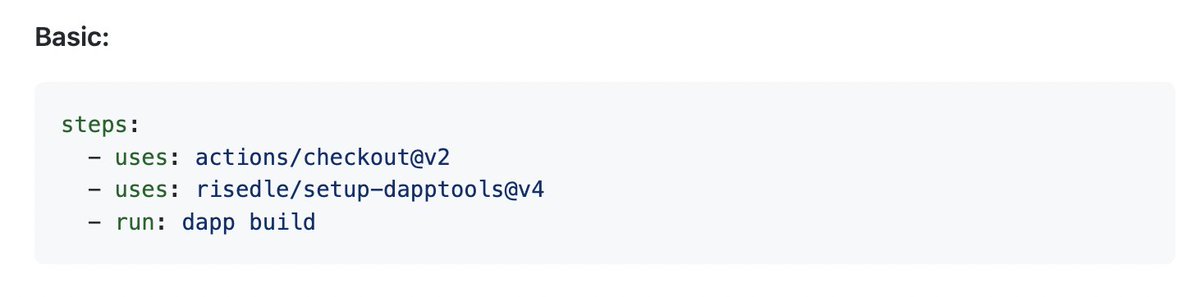
Just published setup-dapptools github action.
It's very useful if u want to add CI in your existing pipelines (e.g. Running dapp test on every pull request)
https://t.co/bPKtfo8bTP
Why @dapptools:
1. no dependency hell (try seeing how big node_modules is)
2. tests in same language as the one im developing on
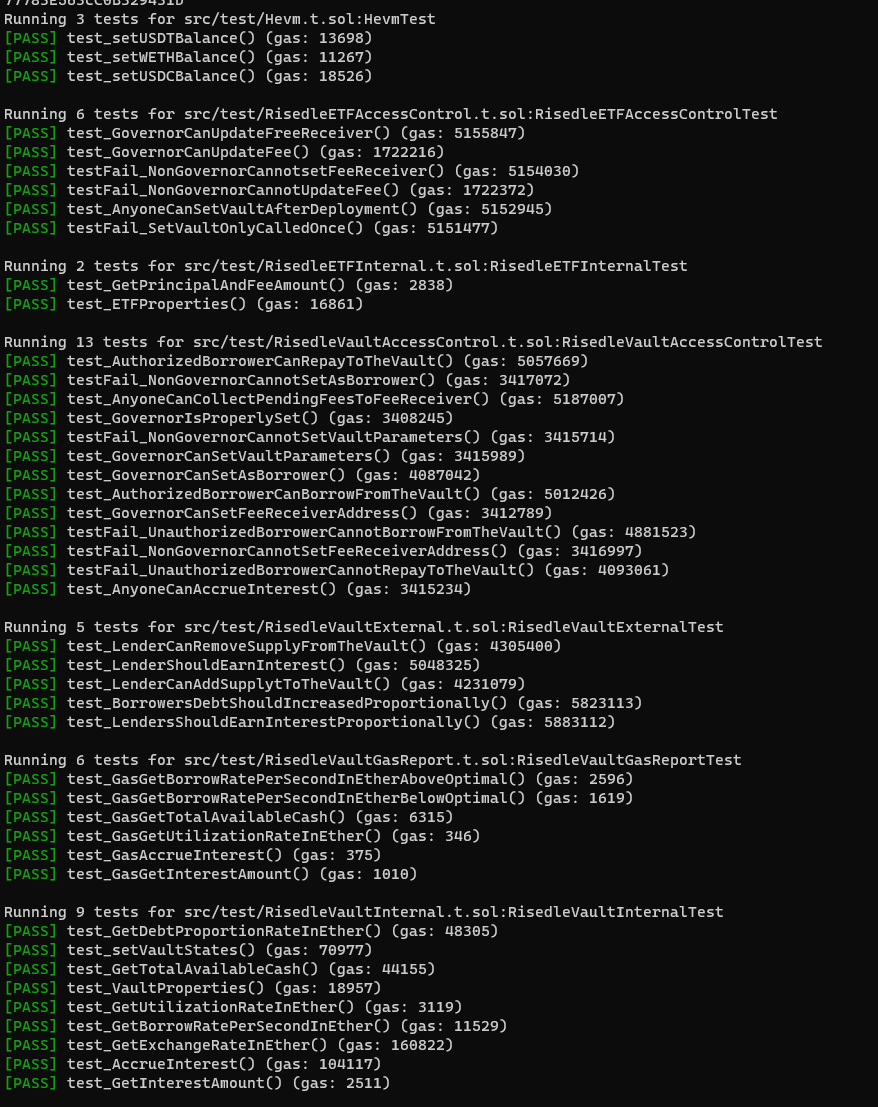
3. fuzzing, formal verifcation, code coverage, gas profiling all out of the box
4. interactive debugger
5. speed
I guess I have been @dapptools pilled :D
my solidity template has now some tests using it: https://t.co/0611AHXhTs
you get the best of both @HardhatHQ (+ hardhat-deploy plugin) and dapptools
Really like the speed of dapptools and testing facilities!
@boredGenius@transmissions11
i guess no need to say it at this point, but this "secure NFT launch" codebase by @anishagnihotri is written with @dapptools.
great reference for people to learn from.
Smooth @risedle's contract deployment + verification using seth(1) by @dapptools
The dev experience is top notch. It helps me to iterate quickly on kovan
Played around with the decompiled contract.
It was easy to read from the state using Seth from @dapptools
For example:
seth call $store "balanceOf(address, uint)" 0x60...034 $tokenid
Will call 'balanceOf' of contract address $store with args 0x60., $tokenId
@gakonst@dapptools Yesss, that's why we use the @dapptools heavily for our
@ETHGlobal hackathon project serr.
The fuzz tests, formal verification and hevm cheat codes. It so easy to use and make life easier.
It's feel so gewwd wen it's green ❇
ICYMI, dapptools-template is the easiest way to get started with DappTools.
Built in Solidity tests, mainnet forking, fuzz tests, formal verification, deployment & deployment tests and more!
https://t.co/BtsHzW5Arj
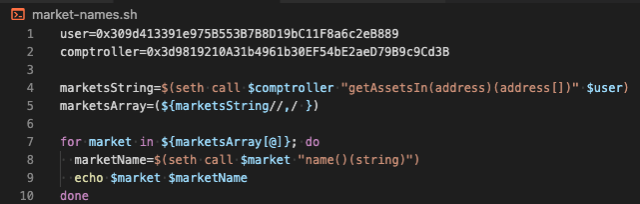
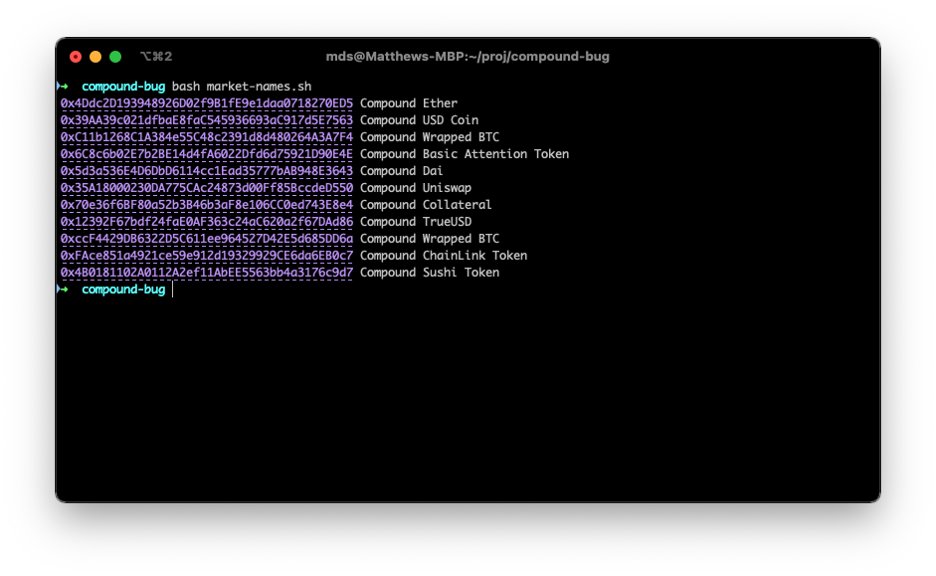
Using a simple bash script with seth, we find that the list of markets the user has entered (`getAssetsIn`) is the same as the list of market inputs on Etherscan.
So nothing strange here—the user just tried to claim COMP for all Compound markets they’ve entered.
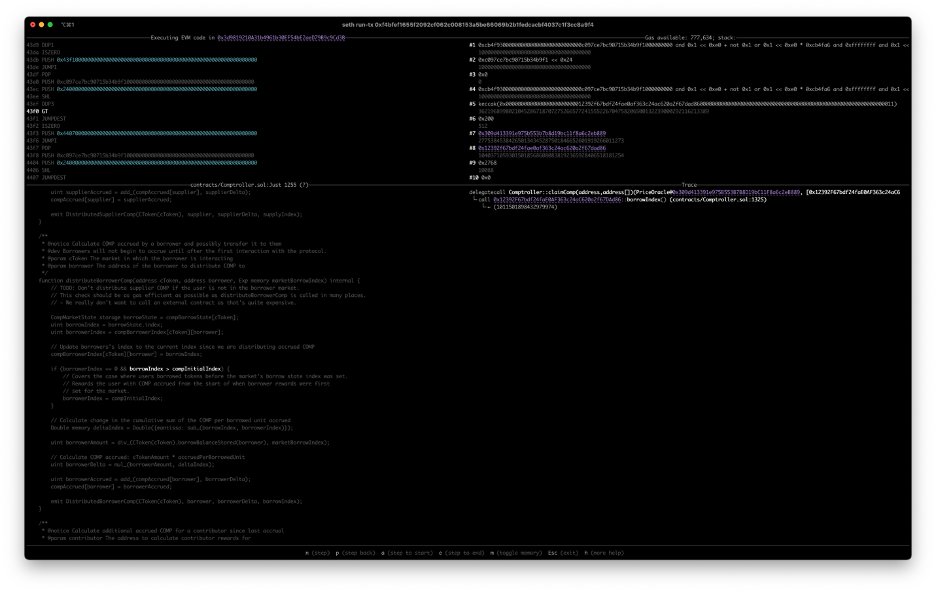
Within that method, we’ll eventually get here where we check if `borrowIndex > compInitialIndex`. In the top left you’ll see we're executing the GT (greater than) opcode. This pops the top two elements off the stack, compares them, and puts the result on the stack.
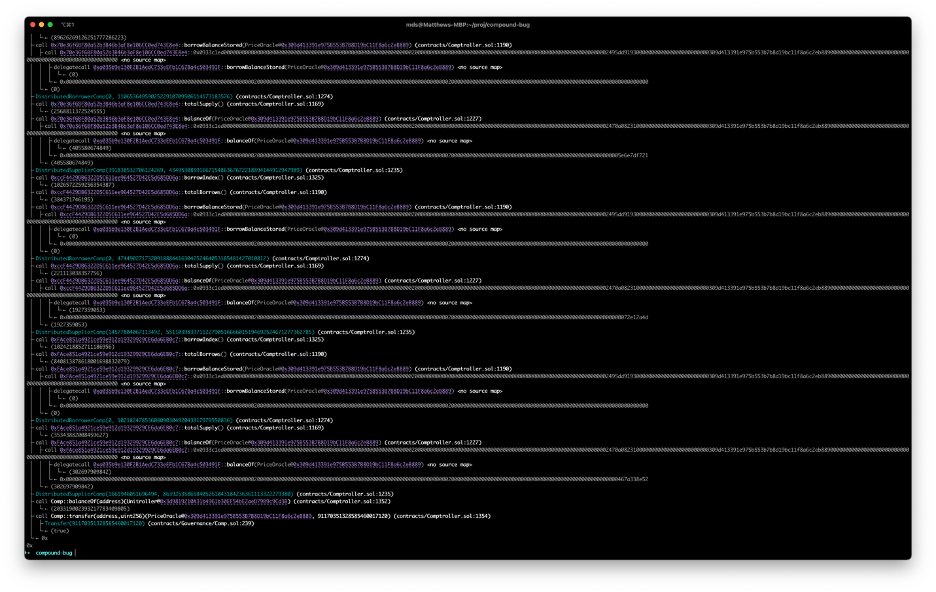
The full tx trace can be seen with ` seth run-tx $txHash --source implementation.json --trace`
This shows every call made, and because we bundled the source we get decoded method names and inputs. You can see the final call is the transfer of 91,170 COMP