Sharing this in case it's useful: I find that students often have a hard time conceptualizing quantitative parameters in genomics and popgen
Here's a cheat-sheet I put together for teaching. It's also part of a textbook I have been writing on human genetics (more on that below)
I am incredibly excited to share our preprint ‘Somatic mutation rates scale with lifespan across mammals’In this paper we provide an unprecedented description of somatic mutation across mammals.
https://t.co/qjOV7NrWS5
An illustrated tweetorial…[1/17]
Pues he escrito un libro sobre filosofía de la ciencia: "El oficio de la duda".
Ha sido un esfuerzo de años, pero quería entender cuáles son las fortalezas y las debilidades del proceso científico y ahora lo comparto con vosotros.
Si os apetece leerlo: https://t.co/mnc3V5qUjo
Cuando empiezo una asignatura de genética más o menos avanzada me gusta poner a los alumnos un test para que hagan una autoevaluación de sus conocimientos. Os lo comparto por si tenéis curiosidad o por si queréis pasárselo a vuestros alumnos.
https://t.co/RXTZQes0Tg
I've buried different drafts of this post for almost 2 years because the fear surrounding "publicly not knowing" is so messy and complicated, but it's also something I want to talk openly about more with my students.
So here we go 😬...
https://t.co/Hf7FORDfgp
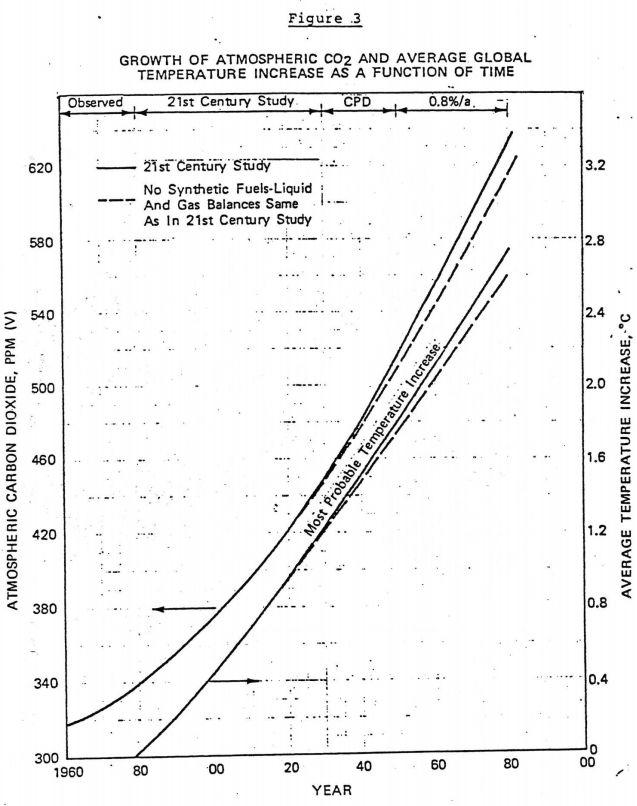
This @exxonmobile chart from 1982 predicted that in 2019 our atmospheric CO2 level would reach about 415 parts per million, raising the global temperature roughly 0.9 degrees C.
Update: The world crossed the 415 ppm threshold this week and broke 0.9 degrees C in 2017 1/
a collaboration of #OpenCB, #MGviz and @GenomicsEngland. Thanks @dapregi for your great work!. Nice to see former students keep growing like this. https://t.co/KtHYhW23e8
Delighted to announce that today we've reached our #Genomes100k milestone – we've hit 100,000! 🎉 We want to give a very public #100KThankYous to all the individuals and organisations involved as we look ahead to taking #genomic medicine mainstream https://t.co/rB6Rd71ZRh








![ATJCagan's tweet photo. I am incredibly excited to share our preprint ‘Somatic mutation rates scale with lifespan across mammals’In this paper we provide an unprecedented description of somatic mutation across mammals.
https://t.co/qjOV7NrWS5
An illustrated tweetorial…[1/17] https://t.co/PIN9RCY0Vv](https://pbs.twimg.com/media/E9OVz-pWUAE4I3a.jpg)