Do you know what to do in an earthquake? We’re practicing for tomorrow’s @ShakeOut drill! If you’re in an earthquake, get down under a sturdy object (like a desk), hold on, and stay put until the shaking stops. Don’t forget to protect your head! #DropCoverHoldOn#PupPreparedness
Calling all late-stage PhD students: USGS Mendenhall Postdoctoral Fellowship opportunities are out! Applications due November 1: https://t.co/jpQHAG69IK
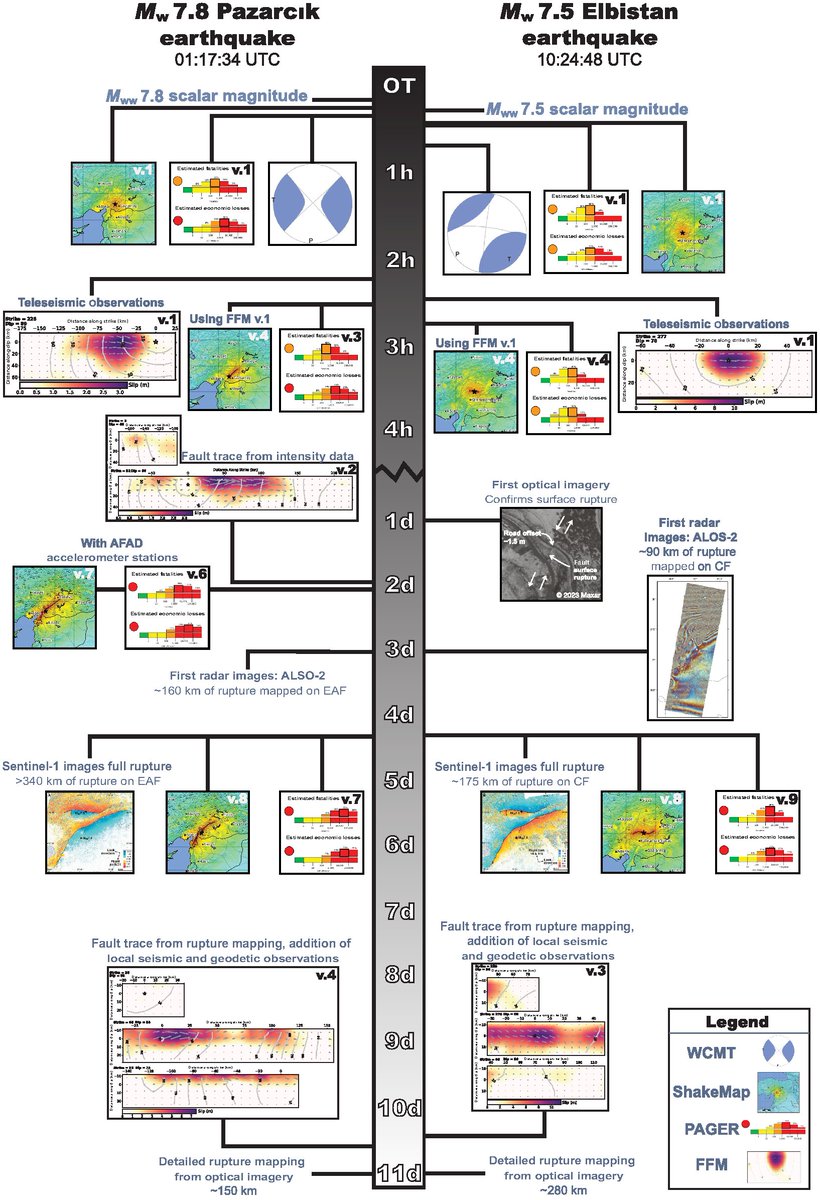
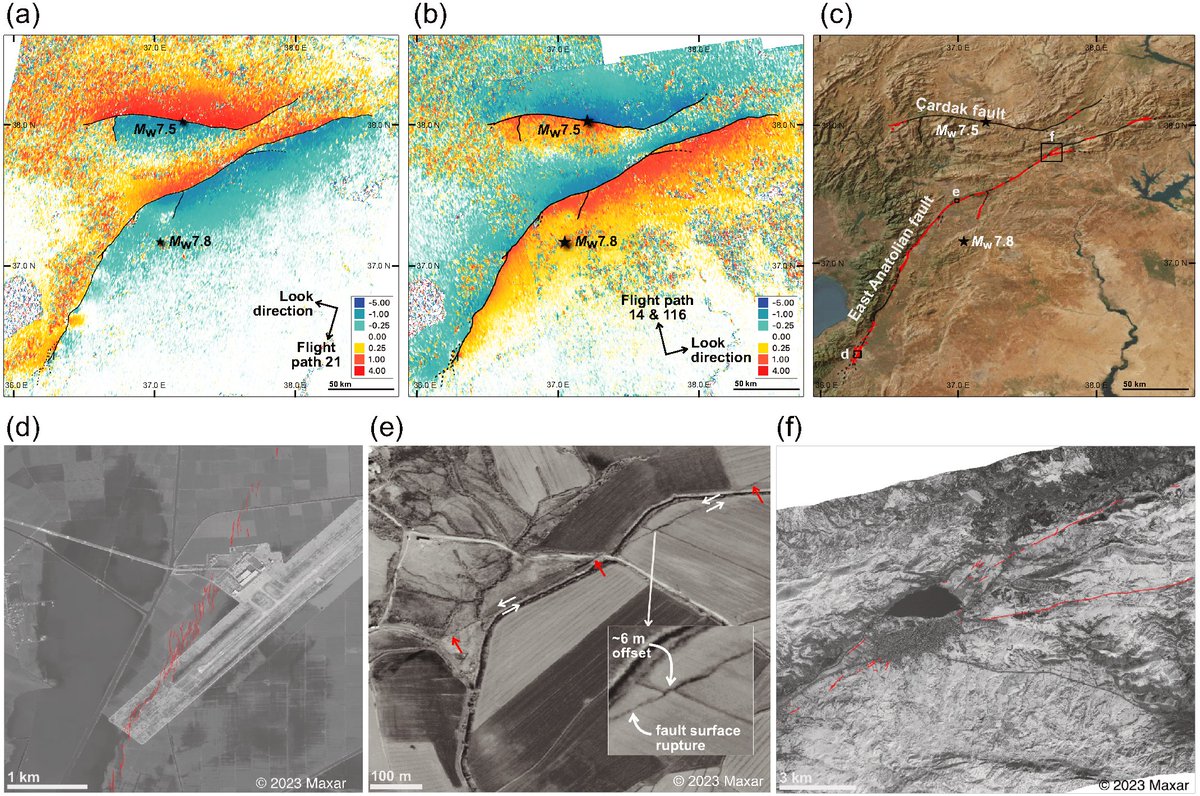
Fast and furious phenomenal efforts by USGS and Turkish scientists in 11-days after the 2023 SE Türkiye earthquake doublet along the East Anatolian and the Sürgü-Çardak Fault Zones.
@dara_berg_@USGS_Quakes#TheSeismicRecord#TSR
https://t.co/VAt4JoOSeJ
The National Earthquake Information Center rapidly characterized the devastating EQs in Tükiye on Feb. 6 in collaboration w/ Turkish colleagues. Here, we describe how these results came to be, including finite fault models, PAGER, and remote fault mapping: https://t.co/MSVcvsMn9s
📄 Rapid Characterization of the February 2023 Kahramanmaraş, Türkiye, Earthquake Sequence: https://t.co/q5ReOxMyNk
11 days of earthquake response at the USGS National Earthquake Information Center, with critical collaboration from colleagues in Türkiye
#TheSeismicRecord#TSR
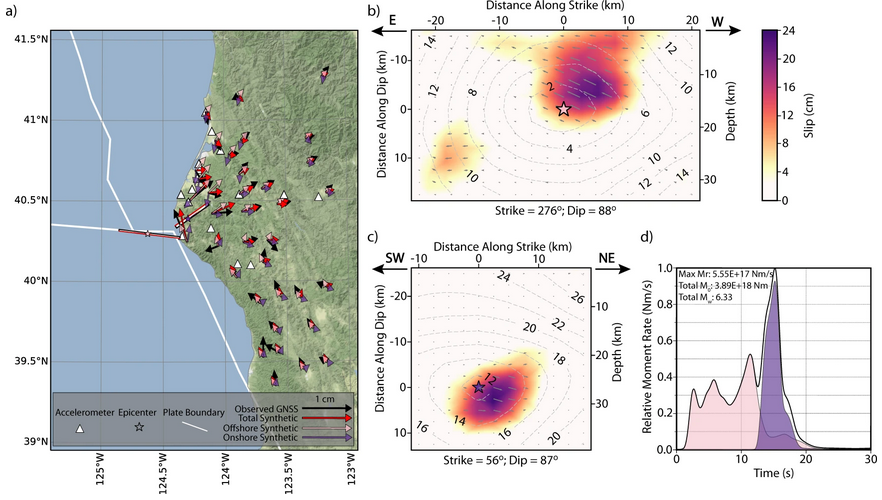
Concurrent rupture across two distinct faults at the Mendocino triple junction, California in 2021 demonstrates a level of complexity commonly only associated with larger earthquakes.
@dara_berg_@USGS_Quakes
https://t.co/ESgUTu7uaV
Earthquake science is a collaborative, global endeavor. This helpful animation of the earthquakes the USGS has analyzed was made through a collaboration between USGS researchers and their academic partners @CSUBakersfield
Animated map of seismicity near Turkey quakes starting ~3am local time plotting Feb 6 M7.8 mainshock (pink), early aftershocks (orange), M7.5 aftershock to the north (tan), and subsequent aftershocks in the north (tan). Time vs. magnitude progression shown on bottom graph.
Yes, there have been a few large earthquakes in Mexico on September 19th (1985, 2017, 2022).
A bit freaky? Sure.
But no, there is no specific date or time of year when Mexico is statistically more prone to seismic activity.
Are you an early career scientist or student nearing the end of a PhD? Know someone who is? It’s the most wonderful time of the year! It’s time to join the ranks of @USGS earthquake scientists as part of our Mendenhall Postdoctoral Fellowship: https://t.co/Gjuiq5i9Jk #Mendenhall
📣 Calling users of the USGS Finite Fault product 📣
You may have noticed recent updates to our models, including integration of near-source observations. To learn more, see our new paper, out this week in SRL:
https://t.co/2AGYw59vUU
@WilliamYeck @geosmx @accelerogram
📢 A must listen!!
I love this podcast and was absolutely thrilled to see the guest was @ClimateHuman when this week’s episode popped up in my feed. #ClimateEmergency#EndFossilFuels
Scientists warn us that we need to enter "emergency mode" to address the climate crisis. What will that take? Listen to climate scientist @ClimateHuman on #StayTuned: https://t.co/5143ulKzf0
You can now use updated Slab2 databases to generate new USGS Slab Models! Check out the 1st iteration of this AWS Cloud based web form https://t.co/hwDAwcahmJ #Subduction#USGS#AWS#CloudComputing
A growing number of scientists are willing to risk arrest in a desperate bid to get leaders to act on the climate crisis. Listen to climate scientist Peter Kalmus @ClimateHuman choke up as he and others at @ScientistRebel1 block an entrance to @Chase in LA today.📷 via organizers