@Roblox Roblox, this is a ridiculous move. Many kids come to your platform to learn coding and game development. Effectively blocking publishing for other kids discourages learning, blocks creativity, and hurts future developers. Extremely disappointing.
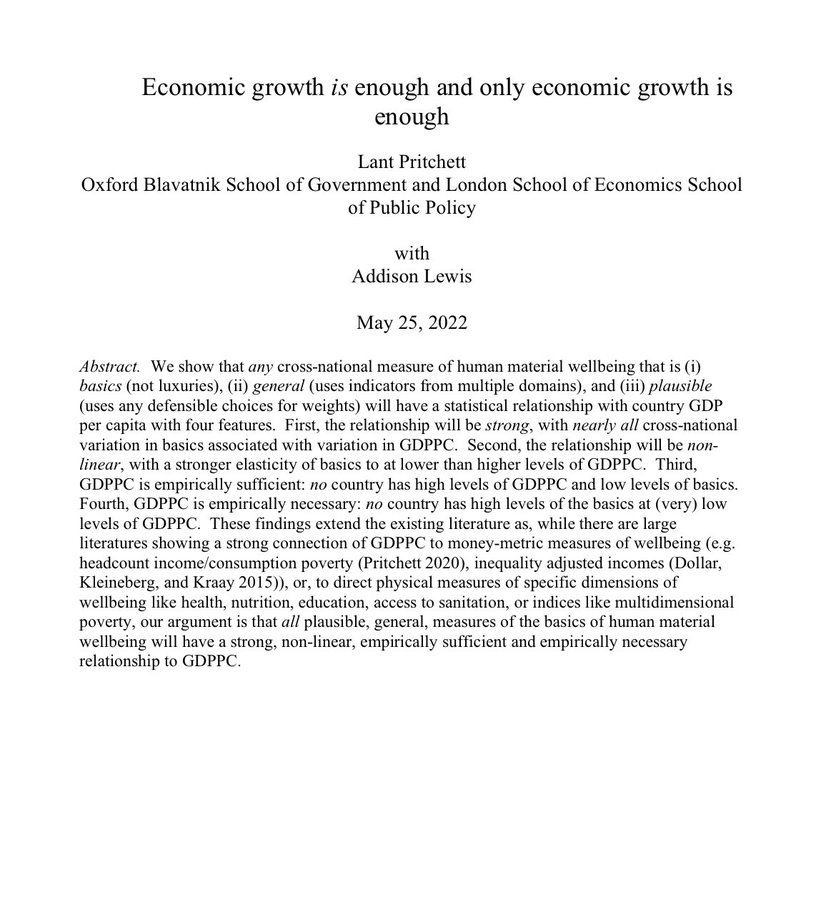
Każdy dzień to dobry dzień żeby przypominać, że... sam wzrost PKB wystarczy. I piszę to jako "austriak" 😅
Naprawdę nie trzeba za wiele myśleć / skupiać się na innych rzeczach - one się niemal automatycznie, naturalnie "rozwiązują" wraz z bogaceniem się społeczeństwa.
A o tym co "robi wzrost" też wiemy dobrze i od lat: deregulacja, wolność gospodarcza, liberalizacja handlu międzynarodowego (nawet jednostronna), relatywnie niski poziom długu publicznego, rządy prawa i stabilność instytucjonalna.
Nie trzeba wymyślać koła na nowo. Wystarczy stać z boku i nie przeszkadzać (no i czasem powstrzymywać takich "przeszkadzaczy" którym się wydaje, że to koło na nowo wymyślą...")
@wolski_jaros Nie wiem skąd te mapki, polecam rzucić okiem na te dwa profile i dane o płacach z ILO 2021/2022:
https://t.co/BY6Vj0JaaW
https://t.co/PXL92wQMAF
Wychodzi prawie 2x mniej w Ukr, co by się zgadzało przy takiej dysproporcji PKB.
@Dzias@wolski_jaros Rozwarstwienie w Rosji nie jest dużo większe tylko trochę większe. Patrzymy na dalsze dane: Ukraina indeks Gini ok. 25, Rosja 32 - czyli na poziomie Niemiec, nie są to gigantyczne nierówności.
Teza o wyższym poziomie życia w Ukr się absolutnie nie broni.
@igorsushko Apparently your main goal on this portal is to advertise dragging other countries into the war - essentially with every tweet. It's sensible from Ukr perspective, but definitely not in the other European countries interest.
The conflict around the Strait of Hormuz is not a temporary shock. It is the beginning of a fundamental shift in how energy flows around the world, and Europe is not positioned for it.
This is the Fourth Systemic Risk-driven global crisis (after GFC, Covid and Russia‘s war on Ukraine) and it will hit global economy like a tsunami due to physical scarcity and supply-shock induced multiplicative cascading effects.
This is not just about higher gas bills. It is about whether European farms can grow food next year. Whether European factories and industries can keep running. Whether European governments can hold together when people cannot heat their homes or afford bread.
Here is what must be done immediately:
1. Protect fertilizer production before the upcoming planting season
Natural gas is the raw material for fertilizers. No gas → no fertilizers → harvests collapse within two seasons. Europe came dangerously close to this in 2022. There is still no law preventing it from happening again.
Governments must guarantee that fertilizer plants get gas first before any other industrial use. This is the fastest path from an energy crisis to a food crisis, and it is entirely preventable.
2. Turn political promises into real contracts
Europe has signed countless “energy partnership” declarations with like-minded countries the US, Canada, and Australia. Declarations do not keep the lights on.
Binding, long-term supply agreements (real commercial contracts) need to be finalised within the year. Canada must get its act together and boost production ad hoc. Asian buyers are already moving faster.
3. Drill, produce, and refine more: at home
Europe is sitting on significant untapped energy. Romania’s Black Sea gas fields. Norway’s next generation of Arctic reserves. The UK’s North Sea. Western Balkan deposits that have barely been explored.
These are not long-term dreams. With fast-tracked permits, EU co-financing, and political will amid the worst crisis, first volumes can come online sooner rather than later. Every barrel and cubic metre produced at home is one less purchased from an unstable or hostile source.
The same logic applies to petrochemicals. Europe’s industrial base in Germany, the Netherlands, Belgium, Poland, etc. depends on gas and oil-derived inputs. Keeping that production alive and competitive is not an environmental debate. It is a national security question first and foremost.
4. Buy gas together, not separately
When 27 countries compete for the same molecules on spot markets, prices spike and smaller members lose out. Europe proved during Russia‘s war that collective purchasing works and it needs to apply the same logic to gas, permanently.
A standing EU joint gas purchasing mechanism (the platform still exists), next to negotiating long-term contracts as a bloc, would give Europe the market weight to secure better prices, longer terms, and more reliable supply than any single country can achieve alone.
5. Use Ukraine’s gas storage as a European buffer
Ukraine has the largest underground gas storage network in Europe. Much of it is accessible. And it is sitting underused as a European emergency reserve.
A simple protocol between Brussels and Kyiv could fix this within months. It needs political will, not new pipelines.
6. Stop treating the UK and Western Balkans as outsiders
Britain’s North Sea, the Balkans’ pipelines and mineral deposits: these are part of Europe’s energy future whether the politics are tidy or not. Brexit and slow EU accession processes cannot be allowed to create gaps in European energy security.
Europe has the resources, the allies, and the technology to get through this. What it keeps lacking is the willingness to act before the crisis arrives, not while it is already burning.
That window is still open. But not for long.
@PiotrZychowicz@OficjalneZero Tego typu krytyka tylko potwierdza, jak świetną pracę Pan wykonuje. Pokazuje Pan zupełnie nowe i niezwykle potrzebne spojrzenie na historię oraz promuje realizm, tak bardzo potrzebny w Polsce. Proszę się nie zrażać i działać dalej!