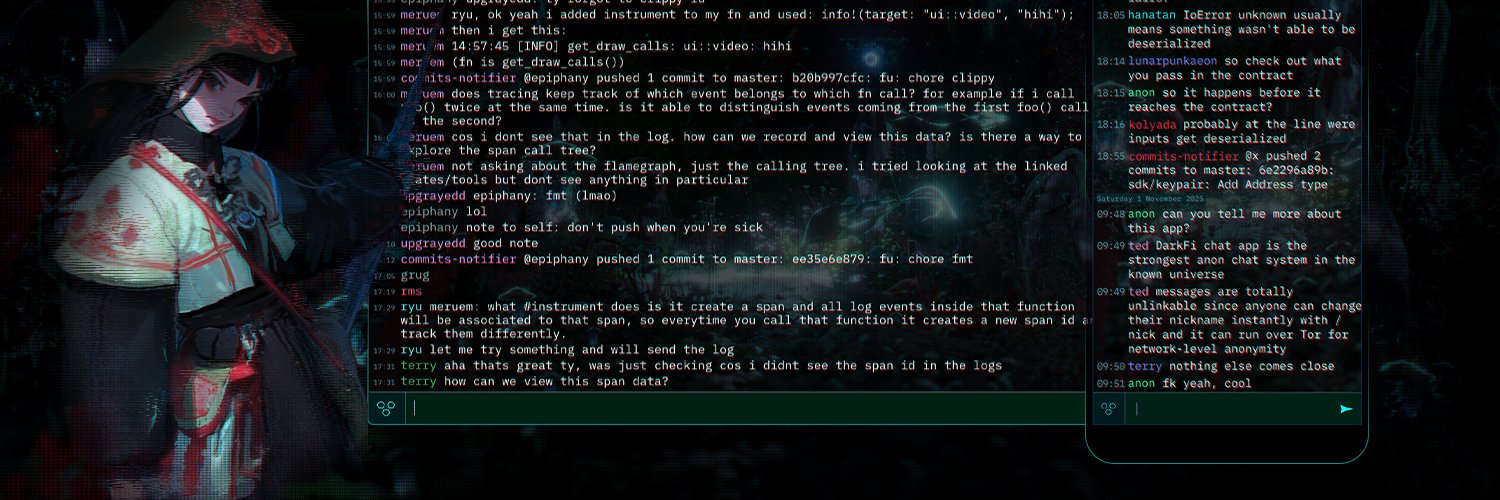
DarkFi as space to experiment, change your mind, and hold a position privately before it is ready.
Privacy is not a wall around a finished self. It is the room where the self is still being made.
Let there be Dark!
Privacy is information going where it should, not the absence of information.
The doctor knows your symptoms, the pharmacist your prescription, neither needs your balance sheet.
DarkFi keeps each flow in its lane
The right to privacy is a right to appropriate flow of information.
What people care about is not restricting flow but ensuring it flows appropriately.
The 1981 paper "Untraceable Electronic Mail, Return Addresses, and Digital Pseudonyms" introduced methods to mask a sender's identity while still verifying authenticity.
These ideas have been described as the technical roots of the cypherpunk movement.
In 1949, Claude Shannon wrote a paper that turned cryptography from a craft into a science.
He proved that a message could be encrypted so well that intercepting it tells you nothing, no matter how much computing power you bring.
Whoever held your data was no longer the thing protecting it.
The persona is the mask you present to the world, the social face assembled from what others expect and reward.
Becoming whole, a process he called individuation, requires a private relationship with the parts of yourself the persona hides.
The material you are still working through and would not want broadcast.
This work can only happen in a space sealed off from the audience, because the moment it is observed and judged, it collapses back into performance.
A fully surveilled life has no such space.
Sovereignty has always meant reducing the number of handles others hold on you.
One extreme way to do that is by following the example of Diogenes. He lived in a barrel and owned almost nothing.
The Cynics named the goal autarkeia, self-sufficiency.
The inner citadel.
Marcus Aurelius, writing privately to himself while running an empire, kept reminding himself that there was a fortress inside him no army could enter and no emperor could command.
His judgments, his attention, the contents of his own mind.
The image of a territory that stayed sovereign no matter what was taken from him.
The whole Stoic system rests on a single division.
Some things are within your power and some are not. Wealth, reputation, the body, even freedom of movement can all be seized. The inner citadel holds, unless you hand over the keys yourself.
Surveillance is an attempted siege on that citadel.
In 1933 Junichiro Tanizaki wrote a short book in praise of shadows.
Tanizaki argued that traditional Japanese aesthetics found their richness in dimness.
The face half lit by a paper lantern.
He watched Western electric light arrive and flood every corner, and he mourned what the brightness destroyed.
Once everything is illuminated equally, nothing keeps its depth.
The shadow was where the imagination did its work.
Total transparency does the same thing to a life.
Lit from every angle, recorded at every moment, a person flattens into a 2D role.
Montaigne advised keeping a back shop wholly your own, a room behind the store where the real self lives, untouched by business and reputation.
400 years later most people have rented that room out to whoever pays for the data.
Is there a moral element to cryptographic work?
Cryptography rearranges power.
It configures who can do what, and to whom.
That makes it political by nature, and it gives anyone who builds it a moral position whether they want one or not.
Rogaway argued that his colleagues had spent decades treating encryption as pure mathematics, a set of elegant puzzles with no politics attached. Over the same decades the world assembled the most complete surveillance apparatus in history.
He told a room full of cryptographers that their claimed neutrality had been a kind of failure, and that the discipline owed the public secure, decentralized systems ordinary people could actually use.
That is the gap DarkFi was built to close.
This reset is a milestone, not a setback.
The exploit findings validate the value of open source development, public testing, and independent review. Every issue found and fixed now is one less issue later.
Thanks to everyone helping harden DarkFi. Onward.
We're resetting DarkFi Testnet v0.3 alpha.
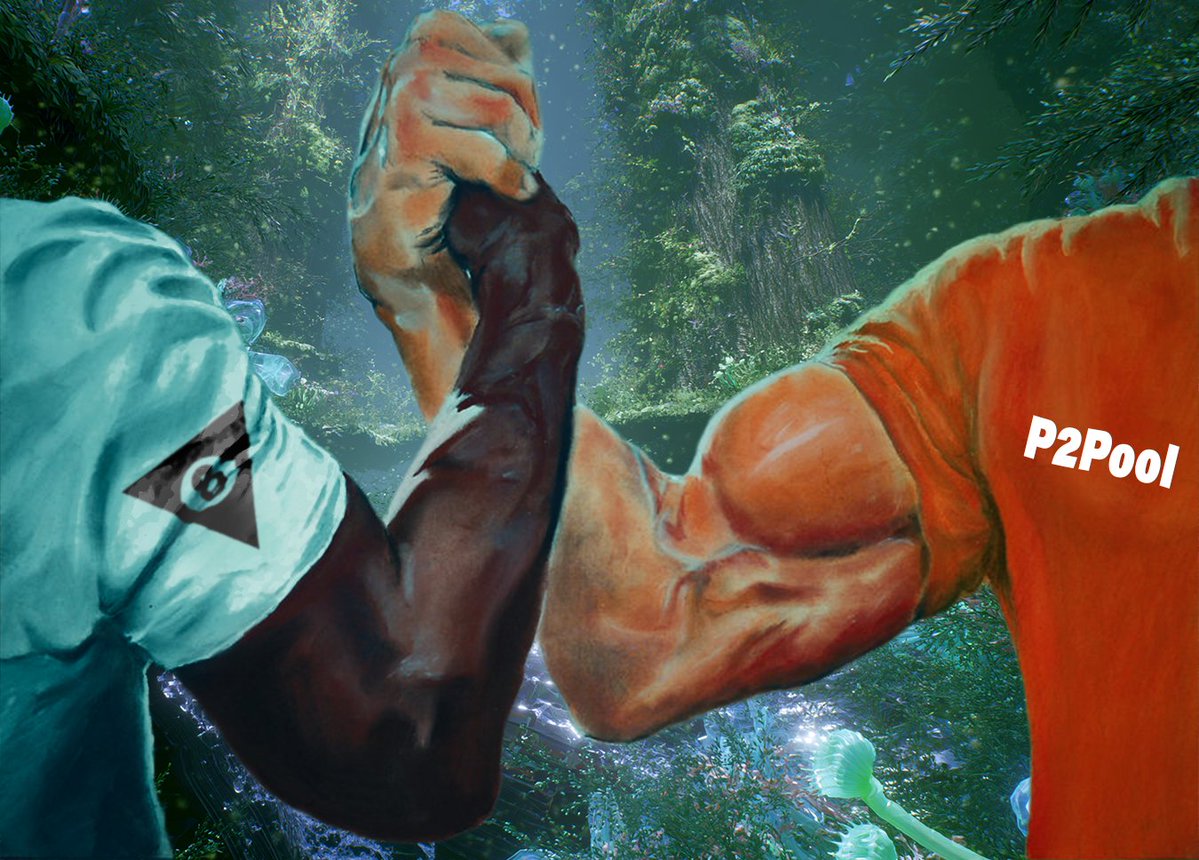
This follows our first protocol exploit findings, kindly reported by our friends from P2Pool via an informal audit.
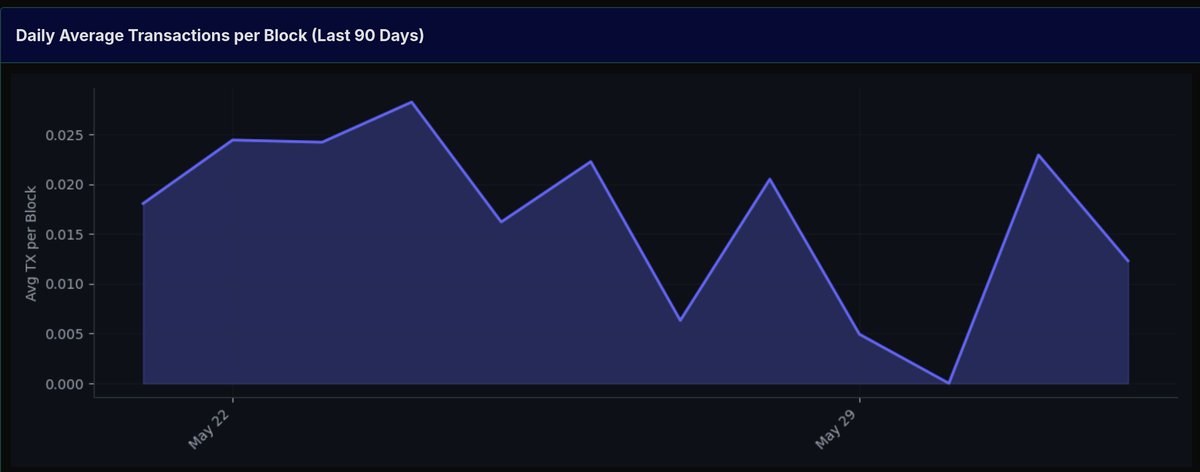
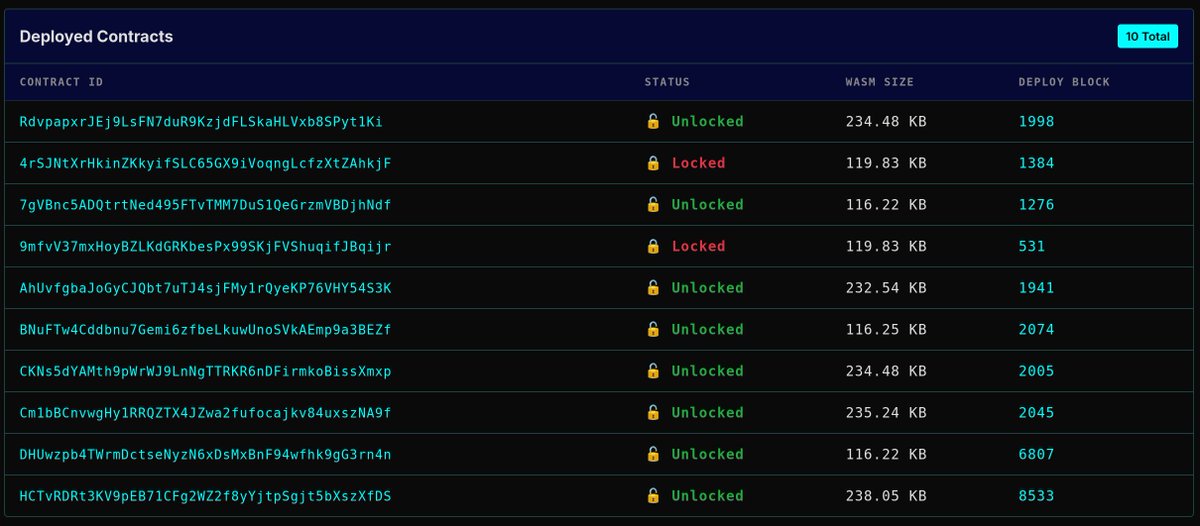
The first version of DarkFi Testnet v0.3 alpha had rapid adoption. Our hashrate reached 154.30 KH/s prior to reset, and a total of 10 anonymous smart contracts were deployed.