Game Developer 🎮 & Digital Games Researcher | Proficient in C#, C++, Python | Expertise in Unity & Unreal Engine | Passionate about writing papers/articles
I developed an audio converter in Python using the MoviePy library. I needed to convert over 300 files to '.wav' for my game, and online tools limited the number of conversions. So, here's how I solved it! [1/2] 👇https://t.co/8PLBZjhrIB
#Python#gamedev#bolhadev
When I was writing Unreal Engine 1, my time was divided as follows:
- Around 30% went to seriously deep coding on hard problems: assembly language texture mappers, C++ BSP trees, data persistence, object oriented systems design, and networking.
- Around 70% was just typing and refactoring large bodies of code needed for a complete engine feature set. This was not hard, and while I was doing it my mind was mostly on the deeper coding topics, thinking and planning for what's next. It didn't feel much different from vibe coding today, except that it was just me typing code on an IBM Model M keyboard rather than prompting it and reviewing the results.
So, it has always seemed perfectly logical that we would rely on AI for that 70%, once the AI could do it with a similar quality standard as we could, which has never been perfection. It came as no surprise that, after a few years of AI model evolution, it was able to take the reigns on that 70% and free up programmers' time for more valuable tasks.
What's more of a surprise is the emergence of AI as a sort of insta-Carmack able to solve hard technical problems quite cleverly and often cleanly, and that it's able to reason about and work in complex 3D scenes both by operating the tools and by directly understanding the raw data files.
I abandoned assembly language in 1998 when out-of-order CPUs made much simpler C/C++ code faster, and never I missed it. If prompting through architectural documents, concept art, and design plans can transcend typing code and tweaking vertices, that will enable developers to spend their time on higher-level, higher value technical and creative tasks.
What matters is the end product, whether it's a game or an engine. Anything developers can do to try out more ideas and make better software and games faster is a win for everyone.
Você sobreviveu a um câncer de verdade e ainda assim escolheu usar a doença como metáfora para um povo. A cura do corpo veio (e que bom!). A do resto, pelo visto, não.
@P_droMenezes@trebahia Eu cheguei às 9h no colégio, só consegui votar lá pelas 11h. Detalhe: eu moro a 5min do local de votação. Tudo muito lento e filas longas de prioridade.
@AkitaOnRails Eu não me assustaria se esse cenário surgisse por conta de alguma inovação criada no Brasil. Temos gente competente de sobra e a escassez de recursos é algo que motivaria mais ainda desenvolver pesquisas nessa linha... a ver os próximos capítulos.
@senaitalo98@GoodNerd23 Eu pulei quase todas as partes que mostra o passado. Muito lenga lenga, só veio aparecer algo útil agora nos episódios finais. Tirando isso, ótima série de assistir!
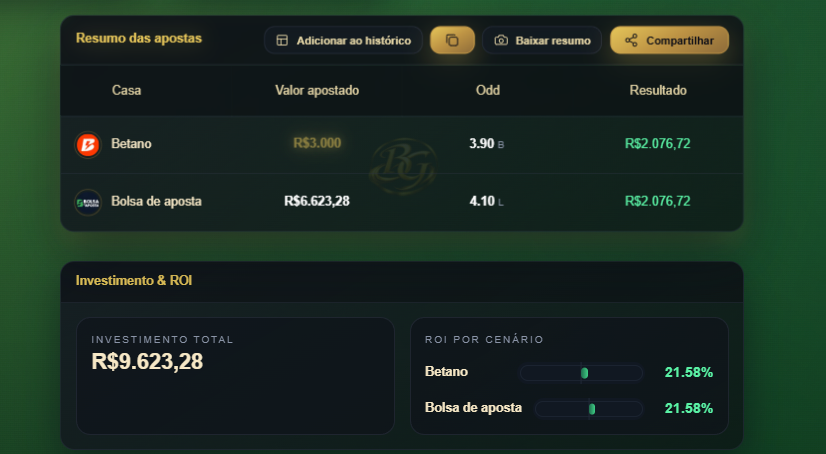
@vitorcviana@MTips01 Parte 3: Tem gente que dependendo do volume da grana, nem espera vir duplo green cheio. As vezes pega cashout, ou barganha no time que abriu PA, dependendo da odd. São várias formas de operar.
@vitorcviana@MTips01 Parte 2: Com isso eu tenho uma cobertura de resultados. Nesse caso da Betano por exemplo ele precisaria ter 6.6k para cobrir o resultado, mas teria 2k garantidos na extração. O duplo green ocorreria se do PA fosse efetivado e houvesse empate, ou vitória do time que saiu perdendo.