Would you give an AI agent your API key?
That was the question I started this video with.
As agents become more autonomous giving them raw credentials also means giving them a lot more authority than they probably need.
That’s what caught my attention about Latch.
Instead of handing agents the actual secret you can give them scoped authority with policies around API access, spending, rate limits, payloads and more.
The agent can still do the work.
You just stay in control of what it’s allowed to do.
Made a quick 1-min video breaking down the idea and how Latch works.
Would love to know what you think about this approach.
gRialo 🧡
@RialoHQ || @JEAMSETH07 || @AhmedNir
Funding can help a blockchain project grow but it also raises an important question: who gets to decide where it goes?
@RialoHQ has strong backing from Pantera and other major investors which is definitely a big advantage.
But I believe there's a difference between supporting a vision and controlling it.
Investors can bring capital, connections and experience but the long term direction should still be guided by strong technical principles, transparent governance and community participation.
At the end of the day decentralization should be reflected in how decisions are made, not just in what a project promises to build.
Capital should fuel the vision not own it.
@JEAMSETH07 || @AhmedNir
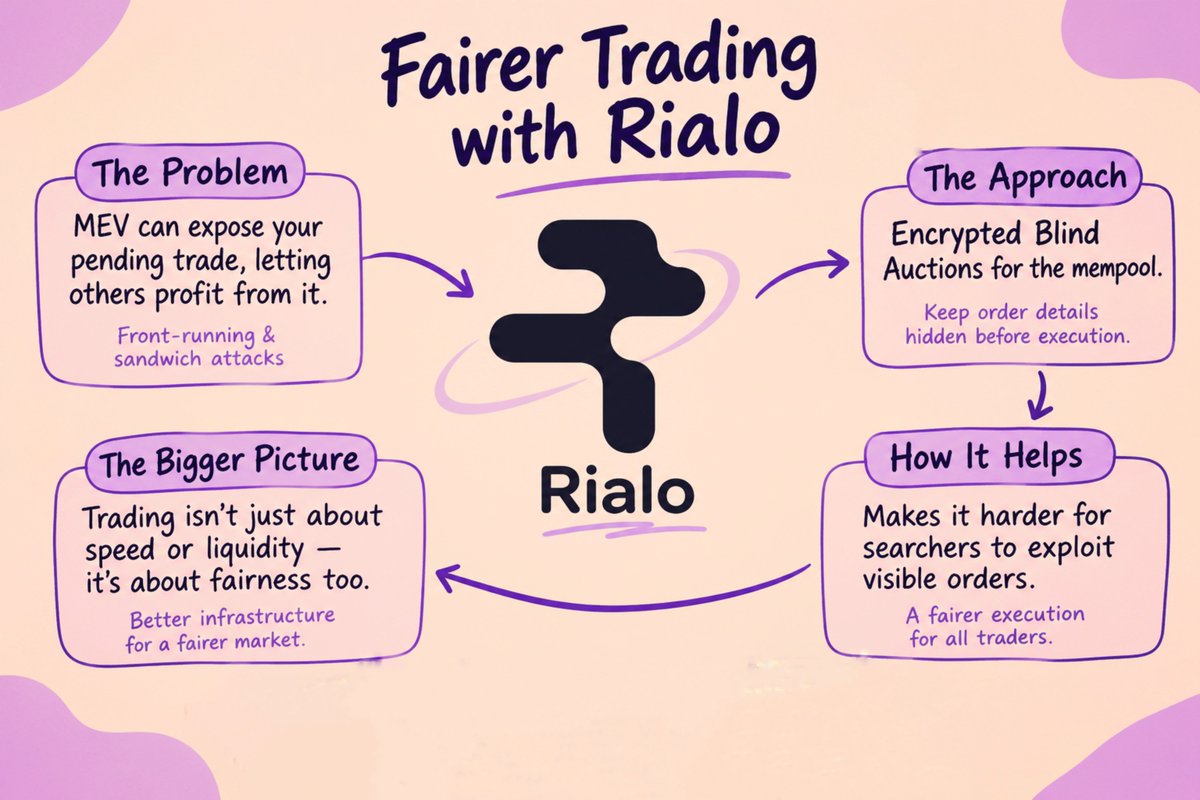
Trading a token shouldn’t mean giving someone else an opportunity to profit from your order.
MEV is still a major issue in DeFi. Pending transactions can expose trade details before execution, allowing bots to take advantage of the order through front running or sandwich attacks.
@RialoHQ is exploring encrypted blind auctions for the mempool where orders remain hidden before execution.
The goal is simple: make it harder for searchers to exploit visible orders and give traders a fairer execution experience.
Because a good trading experience isn't just about speed or liquidity. It's also about making sure your order isn't working against you before it even goes through.
Better infrastructure should make trading fairer not give others an edge.
@JEAMSETH07 || @AhmedNir
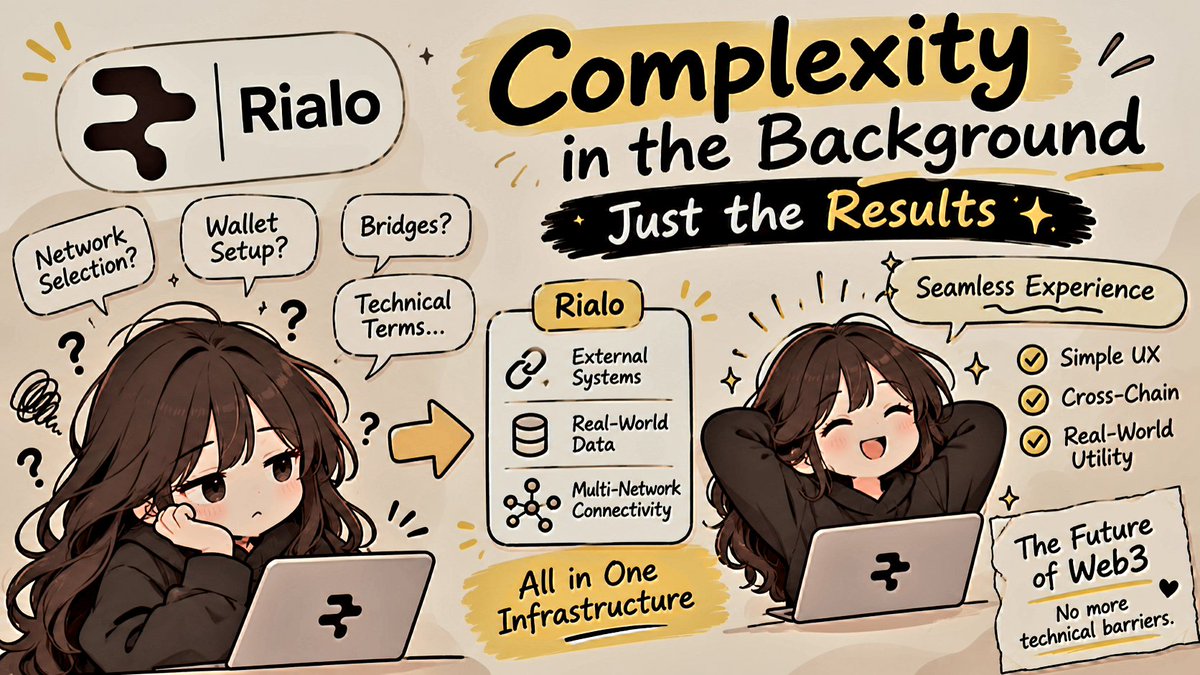
One thing that still needs improvement in Web3 is the user experience.
Users shouldn't have to understand RPCs, bridges, wallet configurations, or network switching just to access a financial application.
From an infrastructure perspective, these are necessary components but they shouldn't become the user's responsibility.
This is an interesting direction @RialoHQ is exploring.
By bringing external system interactions, real world data access, and multi network connectivity closer to the application layer, Rialo aims to reduce the complexity developers need to handle when building user facing applications.
The goal is simple:
Let developers focus on application logic while the infrastructure handles more of the underlying complexity.
Because mainstream adoption won't happen just by making blockchain more powerful.
It will happen when using blockchain becomes as seamless as using any regular digital service.
@JEAMSETH07 || @AhmedNir
𝗪𝗛𝗢 𝗔𝗖𝗧𝗨𝗔𝗟𝗟𝗬 𝗛𝗢𝗟𝗗𝗦 𝗧𝗛𝗘 𝗣𝗢𝗪𝗘𝗥?
In most digital systems, everything comes down to a private key.
Whoever controls that key can authorize transactions and access important functions. But putting all that responsibility in one place can also create a single point of failure.
This is where threshold cryptography comes in.
Instead of giving one person complete control the key responsibility is shared across multiple participants.
Let's say there are 5 participants and at least 3 need to approve a transaction before it can go through.
That means no single person can make the decision alone and the entire system doesn't depend on one key holder.
Pretty interesting, right?
It's a much smarter way to think about security, shared responsibility and reducing single points of failure.
This is one of the security concepts worth exploring around @RialoHQ as onchain applications continue to evolve.
@JEAMSETH07 || @AhmedNir