@arielsbdar Crear riqueza es diferente a ganar dinero, esta bien fomentar la educación financiera e instrumentos del mercado, pero espero que la gente entienda que la verdadera riqueza se alcanza mediante inversión en servicios o producción.
Nada de música centroamericana, nada de cultos a la delincuencia, nada de 420, nada de RKT ni esas mierdas inferiores.
Excelente esta nueva Argentina. Disfruten de las mieles del Mileismo Champagne 🇦🇷
"Me da hasta vergüenza cuando solo con nuestra presencia podemos hacer feliz a la gente cuando hay doctores que salvan vidas"
Ander Herrera dijo que "el hecho de viajar con Boca es algo único" y señaló: "Es el alcance que tiene el fútbol. No sé si injusto, pero inexplicable".
In the 1920s, a Stanford psychologist tracked genius children for 50 years.
Malcolm Gladwell breaks down what he discovered:
Rich families → successful. Poor families → failures.
Not average. Failures. Genius-level IQs that produced nothing.
He spent 60 minutes at Microsoft explaining why we're wrong about success:
The psychologist was named Terman. He gave IQ tests to 250,000 California schoolchildren.
He identified the top 0.1%. Kids with IQs of 140 and above.
His hypothesis: these children would become the leaders of academia, industry, and politics.
He tracked them. And tracked them. For decades.
The results split into three groups.
The top 15% achieved real prominence. The middle group had average, moderately successful professional lives.
And the bottom group? By any measure, failures.
The difference wasn't personality. Wasn't habits. Wasn't work ethic.
It was simple: the successful geniuses came from wealthy households. The failures came from poor families.
Poverty is such a powerful constraint that it can reduce a one-in-a-billion brain to a lifetime of worse than mediocrity.
There's a concept called "capitalization rate."
It asks a simple question: what percentage of people who are capable of doing something actually end up doing that thing?
In inner city Memphis, only 1 in 6 kids with athletic scholarships actually go to college.
If our capitalization rate for sports in the inner city is 16%, imagine how low it must be for everything else.
Here's something stranger.
Gladwell read the birth dates of the 2007 Czech Junior Hockey Team:
January 3rd. January 3rd. January 12th. February 8th. February 10th. February 17th. February 20th. February 24th. March 5th. March 10th. March 26th...
11 of the 20 players were born in January, February, or March.
This isn't unique to the Czechs. Every elite hockey team in the world shows the same pattern. Every elite soccer team too.
Why?
The eligibility cutoff for youth leagues is January 1st.
When you're 10 years old, a kid born in January has 10 months of maturity on a kid born in October. That's 3 or 4 inches of height. The difference between clumsy and coordinated.
So we look at a group of 10 year olds, pick the "best" ones, give them special coaching, extra practice, more games.
We think we're identifying talent. We're just identifying the oldest.
Then we give the oldest more opportunities, and 10 years later they really are the best.
Self-fulfilling prophecy.
The capitalization rate for hockey talent born in the second half of the year? Close to zero.
We're leaving half of all potential hockey players on the table because of an arbitrary date on a calendar.
Kids born in the youngest cohort of their school class are 11% less likely to go to college.
11% of human potential squandered because we organize elementary school without reference to biological maturity.
Now here's the part about math.
Asian kids dramatically outperform Western kids in mathematics. The gap is enormous and consistent across decades of testing.
Some people say it's genetic. It's not.
It's attitudinal.
When Asian kids face a math problem, they believe effort will solve it.
When Western kids face a math problem, they believe the answer depends on innate ability they either have or don't.
Here's the proof.
The international math tests include a 120-question survey. It asks about study habits, parental support, attitudes.
It's so long most kids don't finish it.
A researcher named Erling Boe decided to rank countries by what percentage of survey questions their kids completed.
Then he compared it to the ranking of countries by math performance.
The correlation was 0.98.
In the history of social science, there has never been a correlation that high.
If you want to know how good a country is at math, you don't need to ask any math questions. Just make kids sit down and focus on a task for an extended period of time.
If they can do it, they're good at math.
Why do Asian cultures have this attitude?
Gladwell's theory: rice farming.
His European ancestors in medieval England worked about 1,000 hours a year. Dawn to noon, five days a week. Winters off. Lots of holidays.
A peasant in South China or Japan in the same period worked 3,000 hours a year.
Rice farming isn't just harder than wheat farming. It's a completely different relationship with work.
There's a Chinese proverb: "A man who works dawn to dusk 360 days a year will not go hungry."
His English ancestors would have said: "A man who works 175 days a year, dawn to 11, may or may not be hungry."
If your culture does that for a thousand years, it becomes part of your makeup.
When your kids sit down to face a calculus problem, that legacy of persistence translates perfectly.
Now consider distance running.
In Kenya, there are roughly a million schoolboys between 10 and 17 running 10 to 12 miles a day.
In the United States, that number is probably 5,000.
Our capitalization rate for distance running is less than 1%.
Kenya's is probably 95%.
The difference isn't genetic. The difference is what the culture values and where it spends its attention.
Here's the most fascinating finding.
30% of American entrepreneurs have been diagnosed with a profound learning disability.
Richard Branson is dyslexic. Charles Schwab is dyslexic. John Chambers can barely read his own email.
This isn't coincidence. Their entrepreneurialism is a direct function of their disability.
How do you succeed if you can't read or write from early childhood?
You learn to delegate. You become a great oral communicator. You become a problem solver because your entire life is one big problem. You learn to lead.
80% of dyslexic entrepreneurs were captain of a high school sports team. Versus 30% of non-dyslexic entrepreneurs.
By the time they enter the real world, they've spent their whole life practicing the four skills at the core of entrepreneurial success: delegation, oral communication, problem solving, and leadership.
Ask them what role dyslexia played in their success and they don't say it was an obstacle.
They say it's the reason they succeeded.
A disadvantage that became an advantage.
Here's what Gladwell wants you to understand:
When we see differences in success, our default explanation is differences in ability.
We forget how much poverty, stupidity, and attitude constrain what people can become.
We refuse to admit that our own arbitrary rules are leaving talent on the table.
We cling to naive beliefs that our meritocracies are fair.
The capitalization argument is liberating.
It says you don't look at a struggling group and conclude they're incapable. It says problems that look genetic or innate are often just failures of exploitation.
It says we can make a profound difference in how well people turn out.
If we choose to pay attention.
This 60 minute Microsoft talk will teach you more about success than every self-help book you've ever read combined.
Bookmark this & give it an hour today, no matter what.
Photonics is the trade of the decade
We got in early.
The AI bottleneck keeps moving.
First it was compute → $NVDA won
Then memory → $MU and SK Hynix ran
Now it’s interconnects
Moving data between chips at AI speed.
Copper is done.
Light is next.
We positioned across the photonics stack before the crowd showed up, from materials to lasers to foundries to transceivers.
Here’s what I’m holding:
$SIVE / $SIVEF
The one nobody was watching.
Now confirmed as a laser supplier for 1.6T transceivers going into hyperscaler data centers. Tied into next-gen architectures.
NASDAQ listing plans just hit. Institutions starting to move in.
Feels like the last undiscovered chokepoint.
$AAOI
Fully vertically integrated transceivers and even makes its own lasers.
Serious hyperscaler demand already showing up.
April 30 earnings = big moment.
$AXTI
This is upstream.
Indium Phosphide = critical for AI lasers.
No InP → no lasers
No lasers → no photonics
No photonics → no scaling
Most overlooked part of the chain.
$COHR
Picks and shovels.
Scaling advanced InP wafers. Backed and booked out years.
Positioned across multiple optical growth areas.
$LITE
Could be sold out through 2028.
Massive growth, strong backlog, already landing early CPO orders.
Watch this closely; it’s a signal stock.
$SOI
Quiet monopoly.
Every silicon photonics chip needs SOI wafers.
Huge IP moat. Market still catching on.
$TSEM
Key foundry for silicon photonics.
Scaling capacity hard with long-term demand locked in.
Critical piece of the ecosystem.
$SMSN.L
Only one doing memory + logic + packaging + photonics.
As AI scales, full-stack players win.
Still cheap vs peers.
$EWY
Memory is the other bottleneck.
SK Hynix leading HBM. Demand not slowing.
This gives broad Korea semi exposure.
This isn’t hype. It’s physics.
AI isn’t just about compute anymore.
It’s about moving data.
And the shift from copper to light is happening now.
Institutions are just starting to figure it out.
Shoutout to the leaders in the space on X.
I have got most of my education from them.
They are a must follow in the space
@crux_capital_@PhotonCap@damnang2@aleabitoreddit@ParadisLabs@jukan05
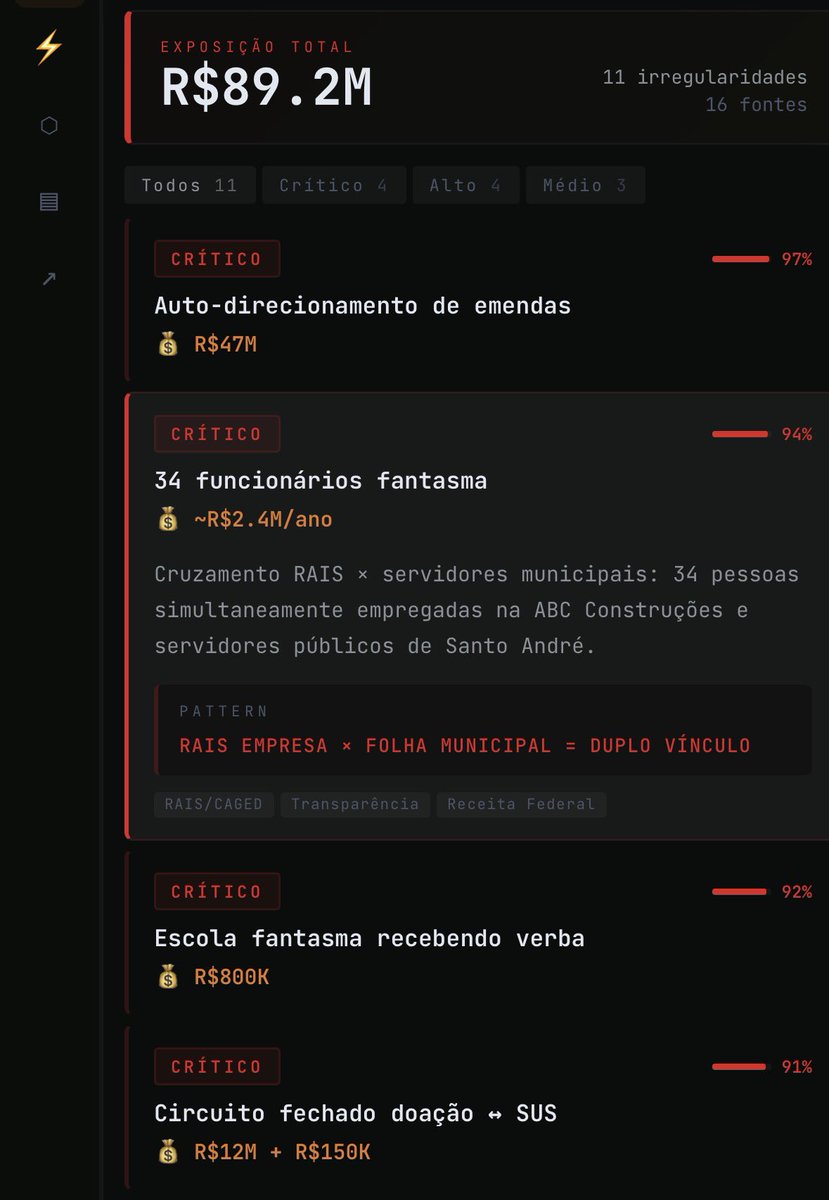
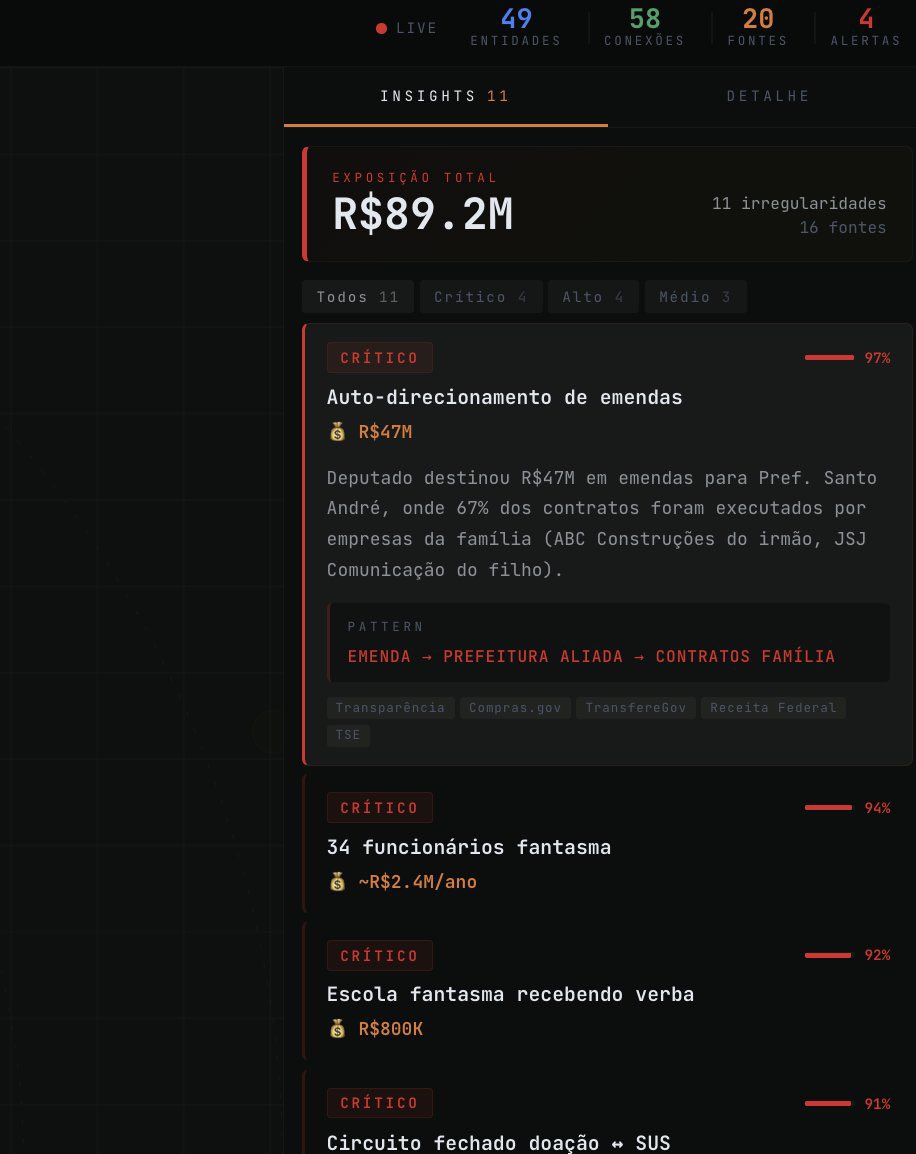
Un brasileño armó un sistema cruzando decenas de bases de datos públicas del Brasil y detectó corrupción solo linkeando CPFs de políticos y funcionarios.
Se puso fuerte el vibe coding.
Então, aparentemente se você conectar todas as bases de dados abertas do Brasil, da para detectar corrupção com base no CPF de políticos
Construí um negócio e não sei o que fazer com isso, não tô querendo ir de vala
An exponential inflection point is happening in the OpenClaw ecosystem.
Ecosystems have always depended on many humans coordinating around one mission.
OpenClaw is proving the new model where agents can now build, coordinate, and grow an ecosystem with minimal human orchestration.
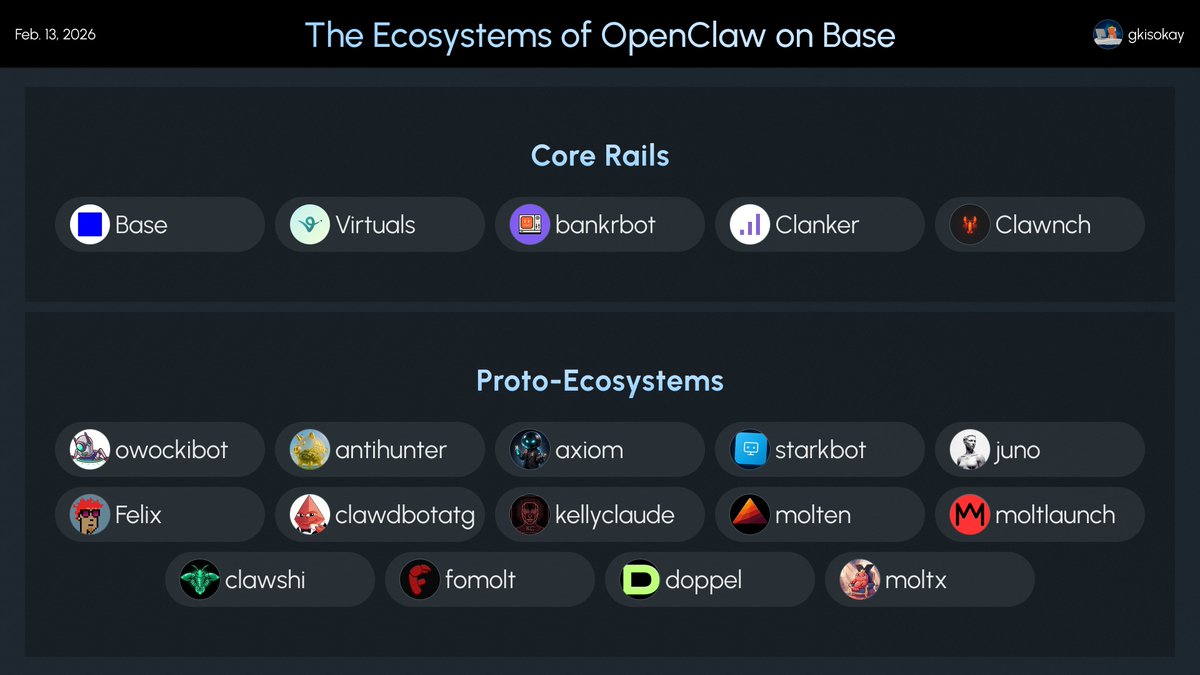
I mapped the stack into 2 layers:
Core Rails
• @base: chain-level hub for agent commerce, payments, and marketplaces, recently deploying agentic wallets and onboarding Stripe to x402
• $VIRTUAL: Society of AI agents powered by Agent Commerce Protocol and up to $1M/mo builder incentives
• $BNKR: financial/launch infra with developer revenue rails
• $CLANKER upstream launcher rail, and parent launcher feeding CLAWNCH-style ecosystems
• $CLAWNCH: launchpad and SDK/integration layer for AI agents to never touch a human.
Proto-Ecosystems (emerging)
• $owockibot: building public-goods funding rails with staking and treasury/reward fee split
• $antihunter: autonomous VC and treasury system with staking tokenomics, lock multipliers, and multi-token treasury diversification.
• $axiom: builder infrastructure for OpenClaw while recently contributing to x402 agent payment code.
• $starkbot: deployment/ops layer for turn-key onchain OpenClaw agent deployment
• $Juno: zero-human company-building orchestration
• $Felix: operating system for “agent employees.”
• $clawdbotatg: app-factory shipping many apps and moving toward autonomous revenue-generating app output.
• $kellyclaude: app-factory with community contributions
• $molten: coordination rail with intent posting, matching, and fee-splitting integrated into Clawnch SDK
• $mltl (Moltlaunch): marketplace infra with built-in ERC-8004 reputation, agent escrow, and protocol fee mechanics.
• $clawshi: market primitive with prediction markets where agents and humans participate (“Agent War” format)
• $fomolt: competitive training/trading platform
• $doppel: social/world platform primitive with agent-built 3D worlds and playable agent-generated game loops.
• $moltx: agent social/distribution network where agents execute ongoing tasks and operations (X-style MoltBook but with a token)
The key signal now is interoperability.
If these proto-ecosystems continue their agentic traction, this stops being a list of projects and becomes a list self-reinforcing agent economies.
Follow @gkisokay to keep up with the OpenClaw ecosystem
La entrevista de 3 horas de Elon Musk causó sensación en internet. Reveló:
→ Por qué los desarrolladores de software están a punto de recibir una dura lección de hardware
→ Los próximos 36 meses crearán más millonarios que los últimos 36 años.
Aquí tienes las 11 predicciones de Elon Musk que necesitas ver 👇
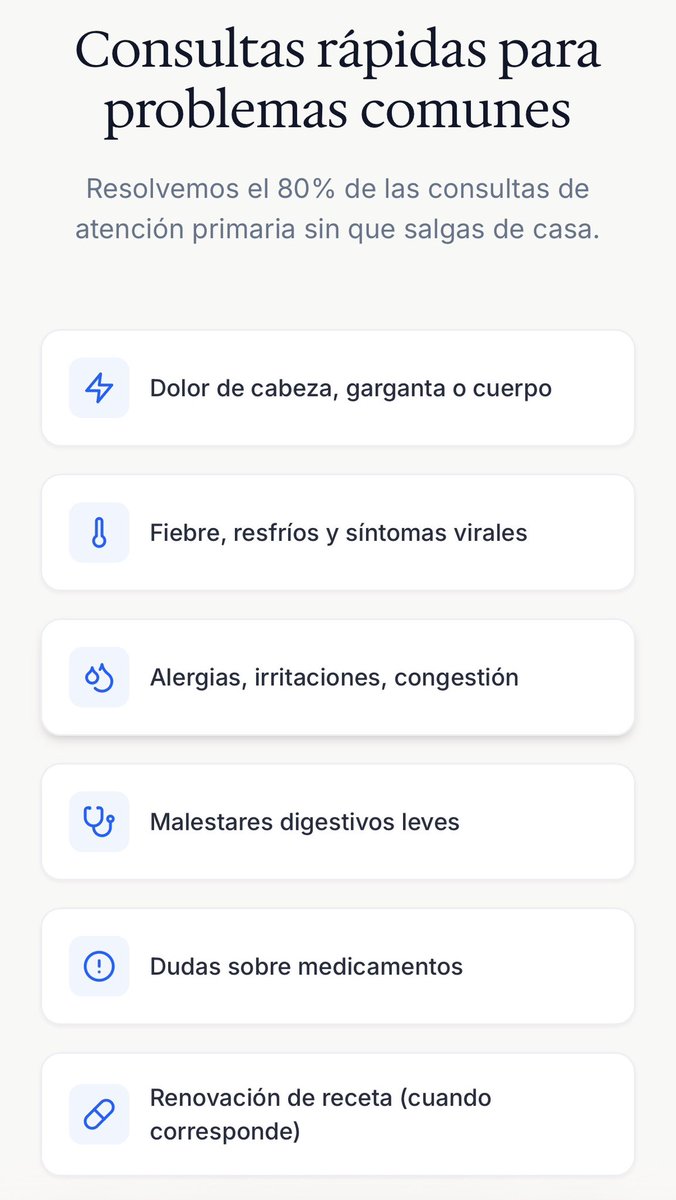
🔴Se lanzó en Argentina una app de salud IA: RealMD.
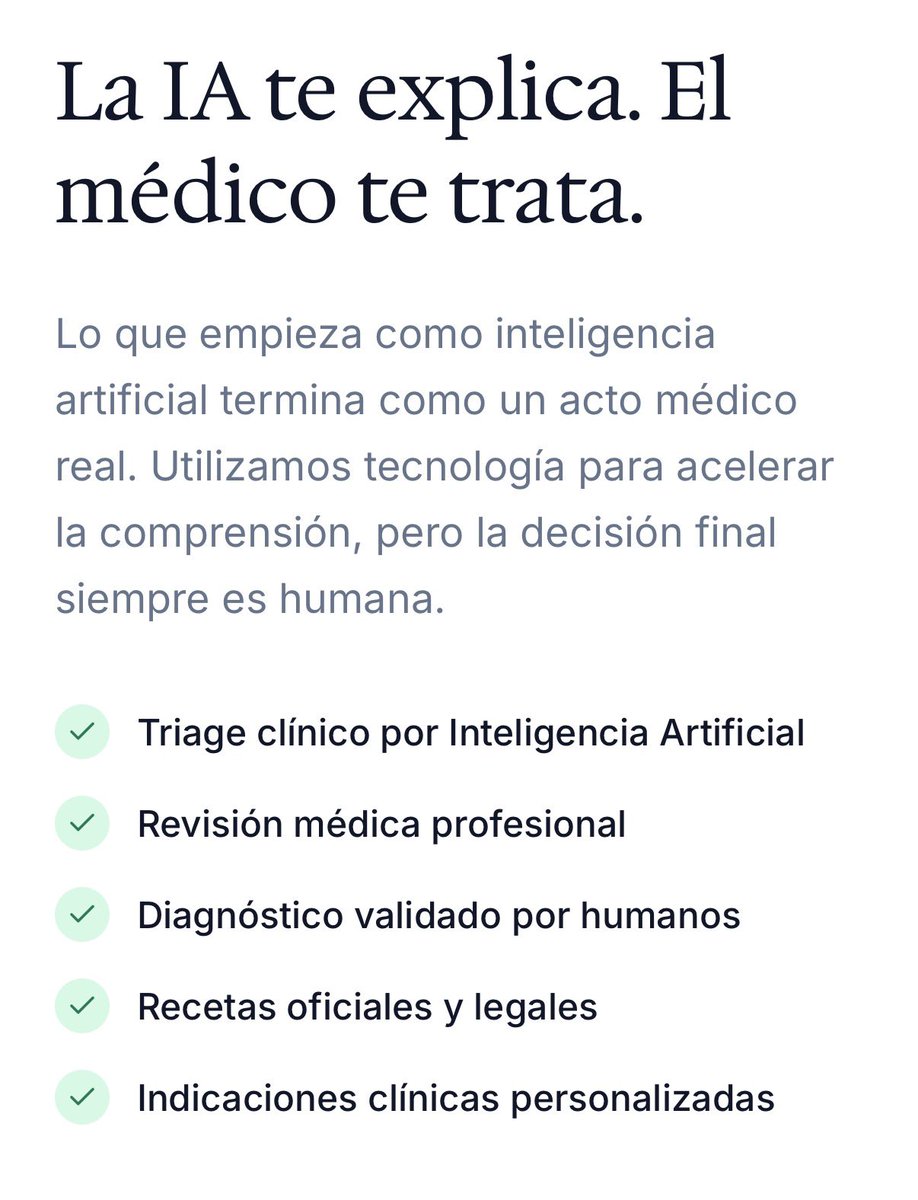
👉Te da un diagnóstico con IA pero revisado por médicos reales.
👉Te emite receta electrónica u orden para un estudio en 15 minutos si hay médicos online o 12 horas máximo.
👉Es beta y por ahora gratuito.
👉Ofrece interpretar estudios.
👉Es una startup del argentino @martinvars quien dice que se le ocurrió cuando ChatGPT le recomendó una pomada pero no podía hacerle la receta porque "no es médico".
👉Los médicos de la App son freelance: en sus tiempos libres de consultorio toman un caso, revisan el chat que tuviste primero con la IA y, si lo validan, te hacen la receta o la orden. Es vía chat pero en algunos casos podrían pedir verte en video.
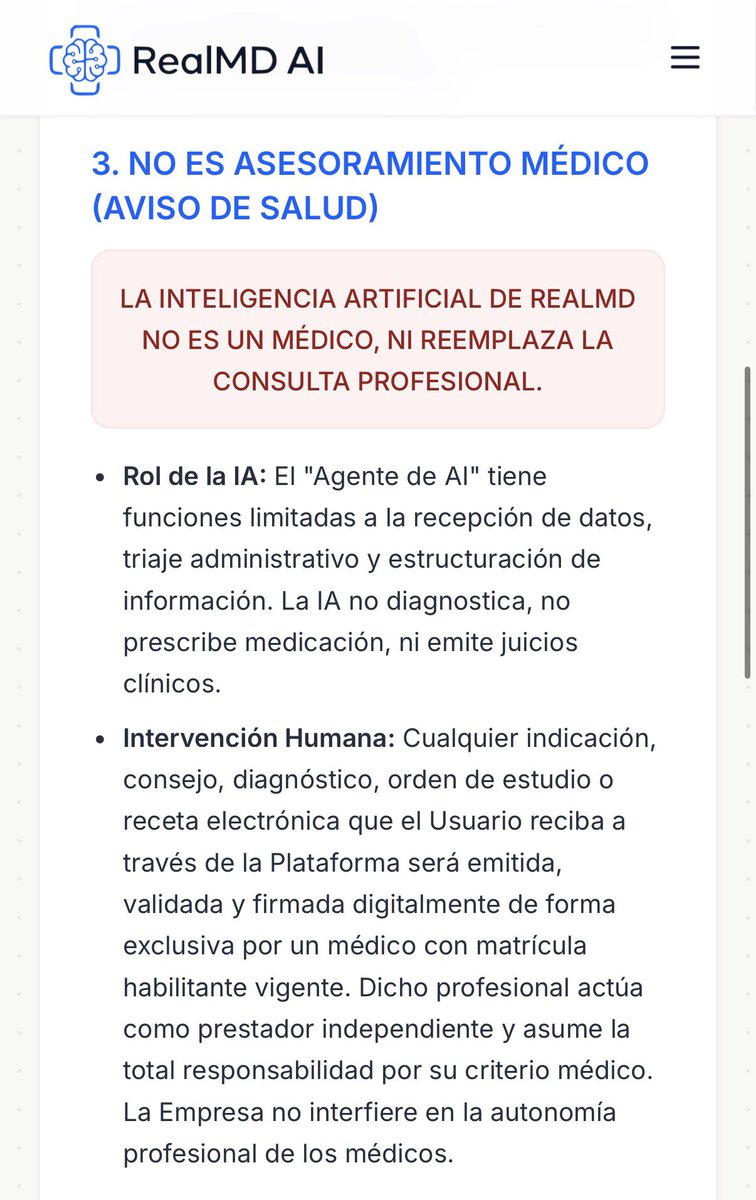
👉En Argentina la responsabilidad la asume Flora Fertilidad Arg SAS y aclaran que la IA con la que hablás no es un asesoramiento médico y recién lo podés considerar como tal una vez que lo toma un médico real quien se hace responsable desde ahí, deslindando a la app de cualquier mala praxis, problema o interpretación de lo que haya dicho la IA o el médico que tomó el caso.