@howlinghowler_ This kind of discourse is so silly when most "christian architechture" originates in Rome, a city that was once non-christian for the first thousand years since its founding.
It takes Great People to build Great Things, whether they are christian or not.
@onekannon I'm not sure what's going on here, but Irish people were sent to Jamaica and other places in the Carribbean as indentured servants. Then they sent more slaves to Jamaica to work the plantations, soon becoming the larger demographic.
Mixed people of irish descent, still, not Irish
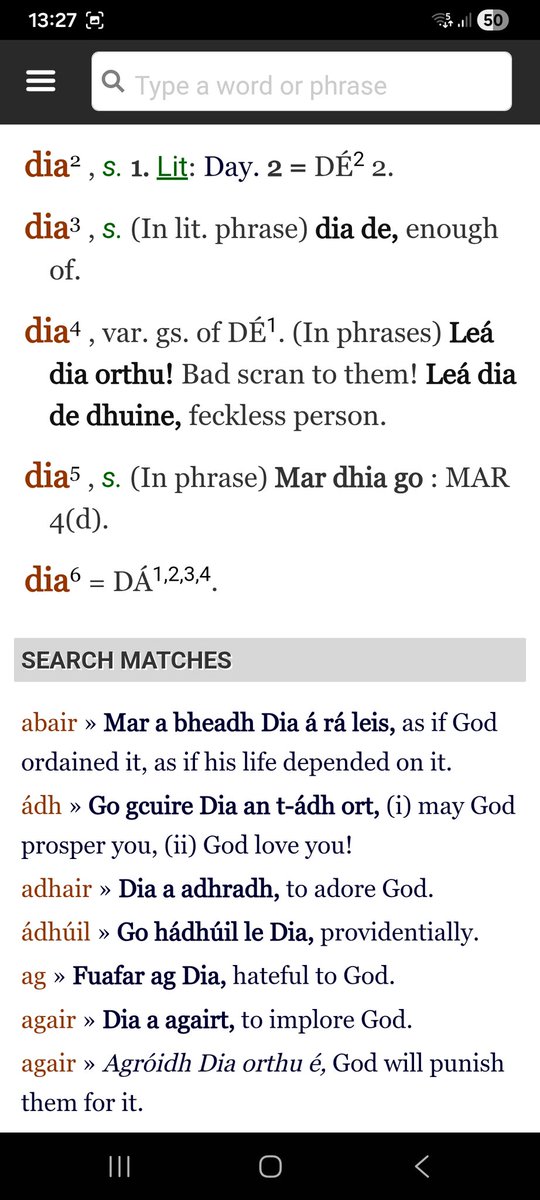
@ballHogba6@HearnsOfficial Lá is colloquial, dia exists solely in literary Irish apart from days of the week. Dé Luain, dé mairt, srl.
The point was dia mhaith duit as an alternative to dia duit 'good day to you' vs 'god to you'
If you feel Lá mhaith would be better, then by all means.
Say it with me!
Dé Luain
Dé Mairt
Dé Céadaoin (dé céad aoin)
Déardaoin (dé eadar dá aoin)
Dé hAoine
Dé Sathairn
Dé Domhnach
Dia/Dé means day.
Day of Luna
Day of Mars
Day of first fast
Day between two fasts
Day of fasting
Day of Saturn
Day of Dominicus (the Lord)
@thnksfrthmsryOW@HearnsOfficial Not saying you have to use dia over lá, it was just supposed to change the meaning of dia to day in dia duit but add maith in there.
Obviously I've been misunderstood here. If you dislike dia duit for being too religious, or haigh for not being Irish enough, what about Lá mhaith?
@thnksfrthmsryOW@HearnsOfficial It's literary, lá and dia are synonyms. placing maith between dia duit could change the meaning to 'good day to you'
I'm not wrong, dia has two separate meanings. That's why each day of the week begins with dé, dé luain 'Day of Luan'
Just thought the double-meaning would be fun
@HearnsOfficial This doesn't exist as a phrase that people use, but in language we use words to form a phrase, and that's what I done.
I assume you were complaining that there were no alternatives for Haigh and Dia duit. So gave you something using the double meaning of dia in "Dia duit"
It’s not called Gaelic, it’s called Gaeilge.
No it’s called feckin Gaeilic. No it’s not ye eejit, it’s Gaedhealaing.
Ye bloody fool, it’s Gaedhilge. Have you a few screws loose, it’s clearly Goidelic.
Yer all fools. It’s Gaelainn. Clueless spanner, it’s Gaoluinn.
@fosandair For a potential Irish version, Cymru is made up of Irish cognates Comh- and Brugh. So in Old Irish it would be spelled Com-mruig, the double 'mm' would lead to gemination ensuring it remains unlenited. So a modernisation of that would be something like...
An Chomruigh
@fosandair I can't understand why people act so weird about this. Gaeilge is the standard, Gaeidhilge/Gaolainn/Gaeilic/Gaoidhealg in other varieties, Irish-Gaelic in English. Does it really matter if you shorten it to Irish or Gaelic? The same with Scottish-Gaelic whose origin is Irish too.
The ancients called it the Isles of Prettania or Prettanike. But these were foreign writers, that's why the 'P' becomes corrupted as a 'B', which stuck in Latin.
Irish and Welsh is an example of Q-Celtic and P-Celtic, Qritenis + Pritanis > Cruithin and Prydain.
Definitions of British Isles:
Pritanis = British Isles
Albiu/Albion = Great Britain
Iweriu/Iwerion = Ireland
Great Britain/Britania Major = Albiu
Britania Minor = Ireland
Under Roman rule, Britania Major replaces Albiu as it's primary name, and Albion is seen as its other name
When we Irish think of Britain or British we think of them as this foreign thing that invaded our country. But Pritanis predates the Roman use of the word. Both the Welsh Prydain, and Irish Cruithin. Both Islands have their own individual names, that's why Britain has two.