Been building an AI grant search and application system.
It matches grants to your profile and drafts application letters instantly.
Running final tests before dropping the link.
if you're under 50 and you stay healthy, i think you will live to 150 years old minimum
the medical singularity is happening.
just in the past 2 months alone:
> revmed's pancreatic cancer drug (daraxonrasib) doubled survival in the deadliest cancer there is, 13.2 months vs 6.7 on chemo. it got a standing ovation from 40k+ doctors at the world's biggest cancer conference
> a one-time gene editing infusion (verve-102) permanently switched off the gene that drives bad cholesterol and cut it up to 62% from a single dose. one and done, no daily pill for life
> a lung cancer pill (lorlatinib) kept 60% of patients with spread cancer progression-free at 5 years. the longest anyone has ever held back a metastatic solid tumor with a single drug
> mayo built an ai that catches pancreatic cancer on routine ct scans up to 3 years before doctors can. it spotted 73% of the earliest cases vs 39% for human radiologists
> lilly's new weight loss drug (retatrutide) hit up to 30% body weight loss in its big phase 3 trial, and along the way it cut knee arthritis pain by 76% and dropped bad cholesterol about 20%
and we are still just at the beginning of the exponential
call me crazy but i'm a believer when Demis hassabis says we will cure all disease in the next 10 years
President of Botswana 🇧🇼 Duma Boko stunned the audience after stopping midway through his speech to deliver a brutal but powerful lecture on relationships, loyalty, and trust.
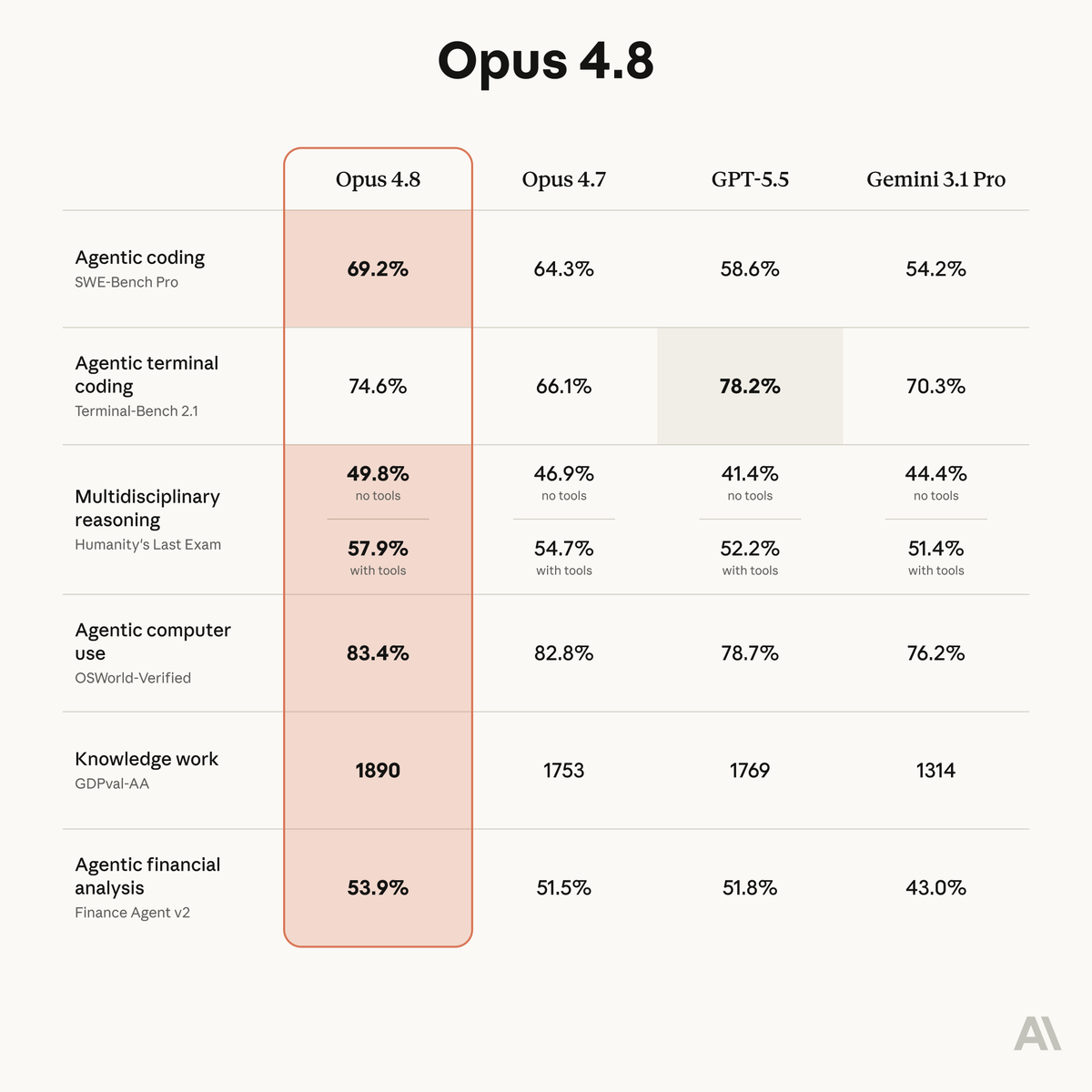
Introducing Claude Opus 4.8: it builds on Opus 4.7 with sharper judgment, more honesty about its own progress, and the ability to work independently for longer than its predecessors.
Available today at the same price.
Mexico paid $20 million for eight minutes in this movie. Then those eight minutes forced them to invent an entire cultural tradition.
Before Spectre, Mexico City had no Day of the Dead parade. The holiday was celebrated at home, at cemeteries, with family altars. Quiet, intimate, centuries old. Sam Mendes fabricated a massive street parade for the opening sequence, shot it with 1,500 extras in skeleton costumes across the Zócalo, and audiences worldwide assumed they were watching a real annual event.
Mexico's government had negotiated hard for the placement. Leaked Sony hack emails showed officials offered up to $20 million in tax incentives for four minutes of positive portrayal. Sony was drowning in a $300 million budget. The deal included script changes: the Bond girl had to be a Mexican actress, the villain could not be Mexican, and the city's modern skyline had to appear on screen.
Then the movie opened in 182 countries and tourists started booking flights to Mexico City for the parade.
The parade that did not exist.
Tourism authorities panicked. Visitors were arriving expecting the spectacle they saw in the film and finding nothing. So in October 2016, the government spent $500,000, hired 650 volunteers, built dozens of floats and giant skeleton marionettes, and staged the first real Día de los Muertos parade in Mexico City's history. 250,000 people showed up. They openly called it a "Spectre-style parade" in press materials.
Ten years later, the parade draws millions. Anthropologists call it the "pizza effect," where a cultural element gets exported, transformed abroad, and reimported as authentic. Mexico's most famous public celebration of its most sacred holiday was invented by a British director shooting a $300 million spy movie.
That tracking shot is doing more for Mexico City's economy every November than the $20 million they paid for it.
Almost every vape in that pile is illegal to sell in America. And a single one of them holds the nicotine of 25 packs of Marlboros.
The vape business in America is a $13 billion industry. Worldwide, it’s pushing $48 billion this year. Only about 45 vape products carry FDA approval for sale in the entire country. Forty-five total. Until earlier this month, all of them were tobacco or menthol only. That changed on May 5. The FDA approved a fruit-flavored vape from a small Los Angeles brand called Glas. None of the brands in that photo, Lost Mary, Geek Bar, RAZ, are on the list. Yet they ended up in a Rockford middle school, in a pile this size.
The whole pipeline runs through one Chinese city. Factories in Shenzhen shipped at least $10 billion worth of vapes to the US in 2025, according to China’s own customs data. American import records caught only a tiny slice of that. The rest comes in labeled as toys or electronics to slip past customs agents at the border.
Two private Chinese companies are behind almost every device in that pile. Lost Mary and Elf Bar both come off the same production line at a Shenzhen company called iMiracle. Geek Bar and RAZ are made by another Shenzhen company, Geek Vape. Elf Bar alone is the favorite vape of 36% of all American teenagers who vape, per the CDC’s most recent youth survey.
Pick one out of the pile. A typical large disposable holds 650mg of nicotine. One device delivers the nicotine of 350 to 500 cigarettes, or 18 to 25 packs of Marlboros, all stuffed into something the size of a highlighter. The flavor is what hides it. Blue raspberry slushie, peach mango ice, cotton candy. There’s no harsh ashtray taste to make a kid put it down. The hit just feels like candy.
The FDA has been pushing back. In one 2025 raid, they seized $86.5 million worth of illegal vapes, their biggest single bust ever. The DOJ pulled another 2 million devices in a nationwide sweep that September. Yet illegal vapes still make up between 60% and 86% of every vape sold in the country.
Look at the middle of that heap. The small white tin in there is ZYN, a nicotine pouch you tuck under your lip. 68.7% of American teens who use nicotine pouches go with ZYN, according to the CDC.
Almost every vape in that pile is illegal to sell in America. And a single one of them holds the nicotine of 25 packs of Marlboros.
The vape business in America is a $13 billion industry. Worldwide, it’s pushing $48 billion this year. Only about 45 vape products carry FDA approval for sale in the entire country. Forty-five total. Until earlier this month, all of them were tobacco or menthol only. That changed on May 5. The FDA approved a fruit-flavored vape from a small Los Angeles brand called Glas. None of the brands in that photo, Lost Mary, Geek Bar, RAZ, are on the list. Yet they ended up in a Rockford middle school, in a pile this size.
The whole pipeline runs through one Chinese city. Factories in Shenzhen shipped at least $10 billion worth of vapes to the US in 2025, according to China’s own customs data. American import records caught only a tiny slice of that. The rest comes in labeled as toys or electronics to slip past customs agents at the border.
Two private Chinese companies are behind almost every device in that pile. Lost Mary and Elf Bar both come off the same production line at a Shenzhen company called iMiracle. Geek Bar and RAZ are made by another Shenzhen company, Geek Vape. Elf Bar alone is the favorite vape of 36% of all American teenagers who vape, per the CDC’s most recent youth survey.
Pick one out of the pile. A typical large disposable holds 650mg of nicotine. One device delivers the nicotine of 350 to 500 cigarettes, or 18 to 25 packs of Marlboros, all stuffed into something the size of a highlighter. The flavor is what hides it. Blue raspberry slushie, peach mango ice, cotton candy. There’s no harsh ashtray taste to make a kid put it down. The hit just feels like candy.
The FDA has been pushing back. In one 2025 raid, they seized $86.5 million worth of illegal vapes, their biggest single bust ever. The DOJ pulled another 2 million devices in a nationwide sweep that September. Yet illegal vapes still make up between 60% and 86% of every vape sold in the country.
Look at the middle of that heap. The small white tin in there is ZYN, a nicotine pouch you tuck under your lip. 68.7% of American teens who use nicotine pouches go with ZYN, according to the CDC.
You can do this with any frontier model, by the way.
You just need to ask your llm to create a custom Python Script for your workflow with an accompanied .MD for wider context.
I'll share a video of a UI Simulator agent setup I played with in one of my Repo's...
Un ingénieur IA senior chez Microsoft vient de dévoiler comment les équipes de Microsoft créent des agents IA avec Anthropic.
34 minutes de workshop gratuit, directement par l’équipe Microsoft.
Regarde le workshop. Ajoute en signet 🔖
Opus 4.7 + plus de 1 400 outils MCP déjà prêts à l’emploi.
Tu connectes Claude à un agent → tu lui ajoutes des outils → tu déploies en production.
Plus utile que la majorité des formations de vibe-coding vendues 500 $.
Took me back to 2013 at Smile Telecoms Kola Daisi Building. Irene Chanley (Global CEO) point blank told us the structure was to hire 10 of us, give us a backpack filled with internet dongles. We should go door to door and sell. They will not do a single ad, flyer or billboard until we reach 10k devices sold. It looked like a wild goose chase. In 3 months or so. We did it.
2023, When the chairman of Ohmobility called me and said “now we have products figured out, what’s your thought on marketing”
I splurged “let’s just use the good old smile style”
Today, Ohmobility have I think 40+ people on the road, they have celebrated 500,000+ gadgets sold. Not a single online campaign.
It has its own challenges though.
But Nothing beats foot soldiers. Nothing.
Once you figure it out. That’s it.
But that “figuring it out” you go nearly die. But don’t panic. 😂😂😂
I built a local project autopilot in my repo.
It keeps memory inside the codebase.
So when I switch LLMs or IDEs, I do not need to re-explain the project.
I just run command.
Simple stack:
Python controller
Markdown memory
PowerShell checks
Repo reports
Coding agent as executor
This is actually a brilliant observation that deserves a proper answer. You are not wrong about what you are seeing. But what you are describing is exactly how languages disappear without anyone noticing.
Adamawa alone has over 40 documented languages. Bura, Vere, Chamba, Gaanda, Lala, Bacchama, Bata, Marghi and more and no they are not variations as you pointed out.
But most of them are slowly being swallowed by Hausa and Fulani because those are the languages of trade, mobility and survival.
So yes, your Borno security guard speaks Shuwa Arabic and your Sokoto okada man speaks Hausa and they understand each other perfectly. That does not mean only one language exists. It means one language won the economic argument. This is what linguists call language assimilation. The dominant language does not erase the others overnight. It just makes them less useful for daily survival until the younger generation stops learning them entirely.
Now here are the facts. Ethnologue, which is the world's most authoritative database on languages, currently documents 520 living indigenous languages in Nigeria alone. Not dialects. Languages. Nigeria has also already lost 12 indigenous languages or more to extinction. Gone forever.
The Middle Belt is where this becomes undeniable. Plateau State alone has over 50 distinct languages. Keyword "Dinstinct".
Benue has Tiv, Idoma, Igede and more. Taraba has communities that cannot understand their neighbours two villages away without a translator. Your Yoruba example actually proves the point perfectly. The fact that a Yoruba person can move across the Southwest and be understood is evidence of one dominant language absorbing regional variations over centuries. That process happened. It is still happening everywhere else in Nigeria right now.
Now I am willing to bet you have never heard of Hyam, Ngas, Mwaghavul, Berom, Amo, Buji, Sura, Anaguta, or Irigwe from Plateau State. Or Kilba, Huba, Bura-Pabir, and Chibok from Borno. Or Mumuye, Jenjo, Yukuben, and Wurkum from Taraba. Or Tur, Nyandang, Kugama and Taram further into the riverine communities nobody talks about. Or what about Igala, Ebira, Bassange, Bassa-Nge, Kakanda and Oworo from Kogi alone. I have not even touched Rivers, Cross River, Bayelsa, Edo, Ondo, or Nasarawa yet. You want to know exactly where each of these is spoken? You will have to tour Nigeria for that. And I promise you, this country will humble you in ways no map ever could. The 500 languages are not cap. Most of them are just quietly dying (Bura has an estimated 11,000 speakers with most young Bura people now not able to speak the language) while we debate whether they exist. And that is the real conversation Nigeria should be having.
@_docwra@ukhomeoffice They will argue to the depths of hell even if Starmer himself goes to each of their homes and shows them a hardcopy report of the numbers.
Those are the people they are trying to be reactionary with. It seems no lessons have been learned yet.
Interesting.
Efficiency principle equilibrium at play.
My professors were right in class, I guess.
Countries subsidizing AI fees for their citizens saw what most did not see earlier also.
In the end, consumers are still King....
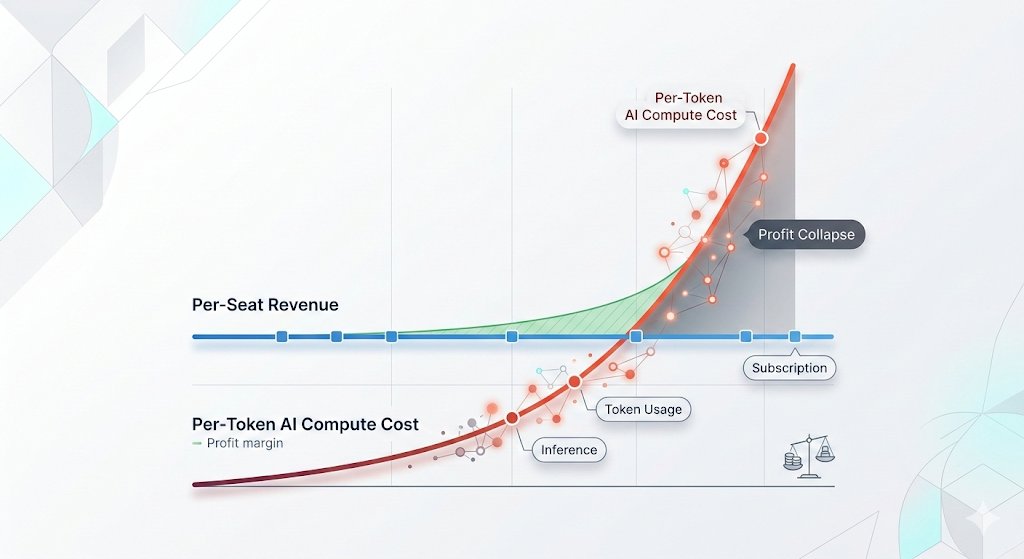
🦔Microsoft canceled its internal Claude Code licenses this week after token-based billing made the cost untenable, even for a company with effectively infinite cloud resources. Uber's CTO sent an internal memo warning the company burned through its entire 2026 AI budget in just four months. American AI software prices have jumped 20% to 37%, and GitHub (owned by Microsoft) is dropping flat-rate plans for usage-based billing across its products.
My Take
The AI subsidy era is ending in real time. The same company that put $13 billion into OpenAI and built the Azure infrastructure powering most of Anthropic's compute just looked at the bill from a competitor's coding tool and decided it was not worth paying. That is not a productivity failure on Anthropic's end. Token-based pricing is forcing every enterprise customer to confront the actual cost of running these models at scale, and the number turns out to be far higher than the flat-rate experiments suggested.
This ties directly to my Gemini Flash post yesterday. Anthropic, OpenAI, and Google all raised effective prices in the last six months. Enterprises that built workflows assuming AI costs would keep falling are now watching annual budgets evaporate in months. Two outcomes look likely from here. Either enterprises scale back AI usage to fit budgets, which slows the revenue ramp the labs need to justify their valuations ahead of IPOs, or the labs cut prices and absorb the losses, which makes the unit economics worse at exactly the wrong moment. Both paths land in the same place, the numbers stop working, and somebody has to take the writedown.
Hedgie🤗
CapCut is partnering with @GeminiApp .
Soon, users will be able to edit images and videos directly within the Gemini app using CapCut’s advanced creative and editing capabilities.
As creative workflows become more connected and seamless, we believe the future of creation will be more conversational, intuitive, and intelligently integrated across tools and experiences.
This is just the beginning.