Physical-AI teams: which real operating environment is hardest to secure for field evaluation—warehouse, retail, restaurant, office, industrial, or something stranger? DataSnack helps source and coordinate supervised testing locations around the requirement.
A food delivery robot at ASU reversed into a 73-year-old woman. Twice. The only technical record of what happened is the robot company's own telemetry — produced by the party with the most to lose. That's not evidence. That's a press release. #robotics
EU just expanded vehicle event recording mandates. When a car is in an incident, there's an independent record. When a robot clips a worker or wrecks a pallet, the only record is the robot company's own telemetry. Same liability problem. Cars solved it. Robots haven't.
A robot vacuum put a 25-year-old in critical care with burns on 75% of his body. Active investigation. Forensic testing underway. Who controls the data on what that device did? The manufacturer. That's not evidence. That's a company investigating itself. #physicalai
Berkshire, Chubb, and Travelers are seeking to exclude AI liability from their general policies. Commercial robots still have zero independent incident recording. No neutral evidence when things go wrong — just the robot company's logs saying everything was nominal.
Berkshire, Chubb, and Travelers are seeking approval to exclude AI-related damage from general liability policies. When a robot causes an incident and the only record is the robot company's own logs — that's a "decision nobody can explain." #robotics
Berkshire, Chubb, and Travelers all filed to exclude AI from commercial liability policies. They can't independently verify what happened when an AI system causes damage �� only the self-reported data from the party with the most to lose. That's the gap. #robotics
Apptronik built a Robot Park to train humanoids for real-world environments. Good instinct. Bad substitute. The variables that break pilots - staff schedules, floor changes, wifi dead zones - don't exist in any park. They exist in the facility. #physicalai
Evaluating your manipulation policy on held-out synthetic data doesn't measure sim-to-real transfer. It measures whether your test split differed from your train split. Those are not the same question.
Per-frame QA at capture: depth confidence, ARKit tracking state, hand detection confidence. Untracked frames get identity quaternion + confidence=0 — flagged, not dropped. Filter in your dataloader. pose_consistency.json in every export. Know which frames to trust before you...
If your evaluation dataset doesn't ship with per-frame QA metadata, you're guessing about data quality at test time. pose_consistency.json, depth confidence, hand tracking confidence — the signal that tells you which frames to actually trust.
Your manipulation policy's eval set probably came from the same simulator that generated its training data. That's not testing sim-to-real transfer, it's testing whether you remembered to hold out a few episodes.
Every household session gets a pose_consistency.json before it ships. Static mesh gets re-rendered at every claimed camera pose, diffed against measured depth. Drift past threshold flags the frame instead of letting it ride into the eval set quietly.
Evaluation data quality isn't binary. datasnack/brian_does_cleaning ships per-frame depth confidence, hand tracking confidence scores, and pose_consistency.json with every session. Know which frames to trust before you run your policy through them.
NVIDIA's world-action models post leans on DROID: 50k demos on Franka arms, in labs. Pretraining doesn't dissolve the distribution gap — it defers it to fine-tuning, which still needs demos from the warehouse your robot deploys in. Your policy knows the lab.
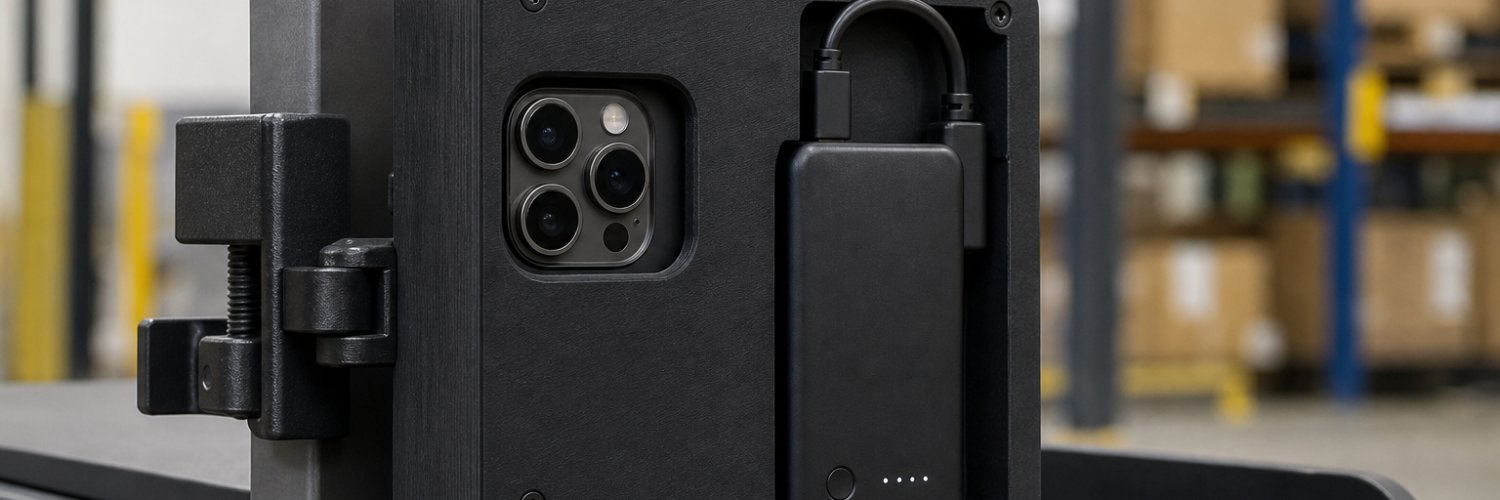
iPhone + ARKit LiDAR: RGB-D, camera poses, IMU, scene mesh, LeRobot v3. Real warehouse manipulation data in days, sub-$100 hardware. Most teams find out iPhone depth is good enough from the pilot data, not the spec sheet.
Catching a depth dropout while the operator's still at the station costs you a 30-second re-capture. Catching it three weeks into training costs you the whole batch. Real-time QA on capture day isn't a nice-to-have, it's the difference.
RoboNet: controlled lab, North American facility, staged setup. Your robot is deploying in a Lagos port warehouse. Zero public datasets from that environment. That's not a fine-tuning problem.
95% on sim rollouts. In a real warehouse, that poly bag deforms in ways your physics engine never modeled. The policy knows the sim. It doesn't know the material.
Physical AI is deploying across Africa and LatAm this year. The training data for those models was collected in the US and EU. That gap doesn't close with more epochs — it closes with data that doesn't exist yet.