The Unofficial Streamr Guard! 🔥
Community backed account gathering together $DATA Holders, Traders and DePIN advocates.
NOT OFFICIALLY supported by @streamr
Most people are treating Bitcoin as digital gold and stopping there
TAP Protocol has been running full DeFi on Bitcoin L1 for nearly 2 years
No bridge. No sidechain. AMMs, staking, stablecoins. All self-custody.
From block 885,588 Bitcoin miners started earning NATs on top of block rewards
$BTC at $78K and the infrastructure built on top of it is barely priced in
Snowden said it in 2015. Everyone nodded. Nobody changed the architecture.
That's the actual problem. Agreement isn't implementation. Privacy that lives in policy instead of infrastructure isn't privacy at all.
We had a heavy day yesterday, but our commitment to this community doesn't pause.
The call is still happening.
Tune in for an uncensored, live, unfiltered look at what's going on inside StreamrApp. No scripts. No spin. Just real.
It's official — BIP call today at 16:00 UTC on StreamrApp.
Openness and transparency aren't talking points for us. They're the product.
Come see exactly where we are. No filter, no polish.
Time to show StreamrApp in full.
Join us tomorrow for our Building in Public call; live, unfiltered, on the product itself.
4 PM UTC, we are live on https://t.co/xgwn2qkJCc
Most companies demo their product.
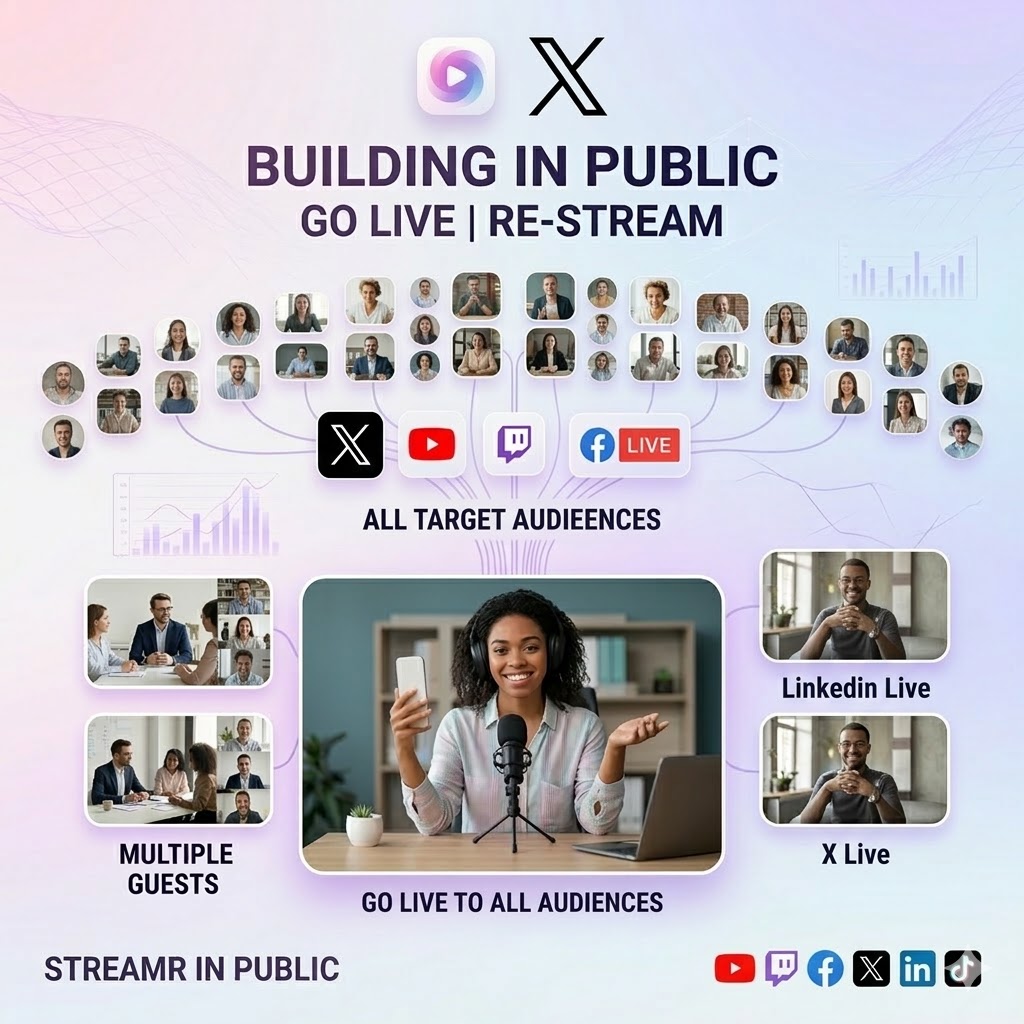
Tomorrow we're running our Building in Public call on StreamrApp — restreaming live to four platforms, peer-to-peer, browser to browser.
No central server. Data protected.
4PM UTC → https://t.co/10jgWVMvym
OpenAI's GPT-5.3-Codex system card states that its safety training uses "production data, which reflects realistic user behaviour."
Production data means real conversations from real ChatGPT users.
The model that helped build itself was trained on what people actually said to it.
They're not hiding it. They're marketing it.
Your data isn't private...
A smoother on-ramp matters.
In this demo, the team shows how @openfort_hq powers biometric login in @Streamr_App, making it easier to onboard both Web2 and Web3 users without the usual friction.
Big shoutout to Openfort for the tech here. Very clean integration.
It’s kinda insane that “going live” usually means:
hand your video + audio to a platform, then hope the policies behave.
We should be able to host privately and broadcast publicly.
Same call. Different exposure.
8TB of meeting recordings + transcripts were exposed because an Amazon S3 bucket was left open.
That’s how most leaks happen now: one cloud permission misstep, then scanners/indexers find it and copy it in minutes.
If your “private” conversations rely on permissions never being wrong, you don’t have privacy.
If you’ve ever said “let’s move this off Zoom”… what was the reason?
Privacy? Recording/transcripts? Reliability? “Too many people in the middle”?
StreamrApp is built for that moment.
What would a streaming app need for you to actually trust it?👇
Everyone’s chasing “AI agents” with the same FOMO around when DeFi was first introduced to the world.
For good reason.
AI agents will be the future of how we work, how we transact value, and even how we communicate.
So where agents live is becoming more and more important.
Because if the agent lives in your operating system, it can see what you see and do what you do.
That’s not a feature. That can be another surveillance layer.
And we already know how this feels...
That tiny moment in a “private” call when you realise you’re performing.
You choose words that you otherwise wouldn't hold back.
We all know why, because you don’t actually know who’s in the room, what’s being saved, or where it ends up later.
Now, fast-forward to an AI-agentic world: the agent isn’t just “in the meeting.”
It’s on the device. Sitting above every app.
Watching the screen. Reading the calendar.
Pulling context from your messages.
Acting on your behalf.
That’s not convenience, that’s a master key. So encryption alone doesn’t save you anymore.
The real issue is the middle layer we’ve normalised: servers in the middle, vendor infrastructure, admin panels, retention, metadata.
Even if nobody’s actively snooping, the architecture is built for custody-by-third-party.
Your company’s most sensitive context ends up living on someone else’s computers because that’s the default.
And this is the part people keep skipping: privacy isn’t a promise.
It’s where the data travels and who can touch it. If your conversations rely on a middleman behaving forever, you don’t have privacy.
You have a trust subscription.
The fix has never been “turn off AI” or “stop using notes.” Innovation should never suffer.
The fix is changing the infrastructure: peer-to-peer by default, custody at the edges, no vendor owning the room.
That’s what @Streamr_App is built around.
A safer place to talk because there’s nobody in the middle to log it, store it, monetise it, or quietly “retain it for quality.”
And in an agent-heavy world, you also need verifiability. Because the question won’t just be “is this encrypted?” It’ll be “who’s actually listening?”
If you can’t verify who’s listening, it’s not privacy, it’s denial.
StreamrApp Alpha is live, and Beta is coming soon.
Try the Alpha and tell me your biggest takeaway below
This one feels like a milestone.
Next Building in Public is on StreamrApp.
We’ve wanted this for a while.
And we’re shipping restreaming across socials live for the first time.
If privacy in streaming matters to you, pull up.
Most “private calls” still run through someone else’s infrastructure.
That’s where outages cascade, logs exist, and policies get enforced.
StreamrApp Alpha is live (10-person private video calls).
What’s the #1 thing you want a calling app to never do by default:
record, transcribe, retain, or require KYC?