Data context for breaking news. We add the numbers mainstream media leaves out. Economics, geopolitics, tech, AI. Follow us for analysis, not hot takes.
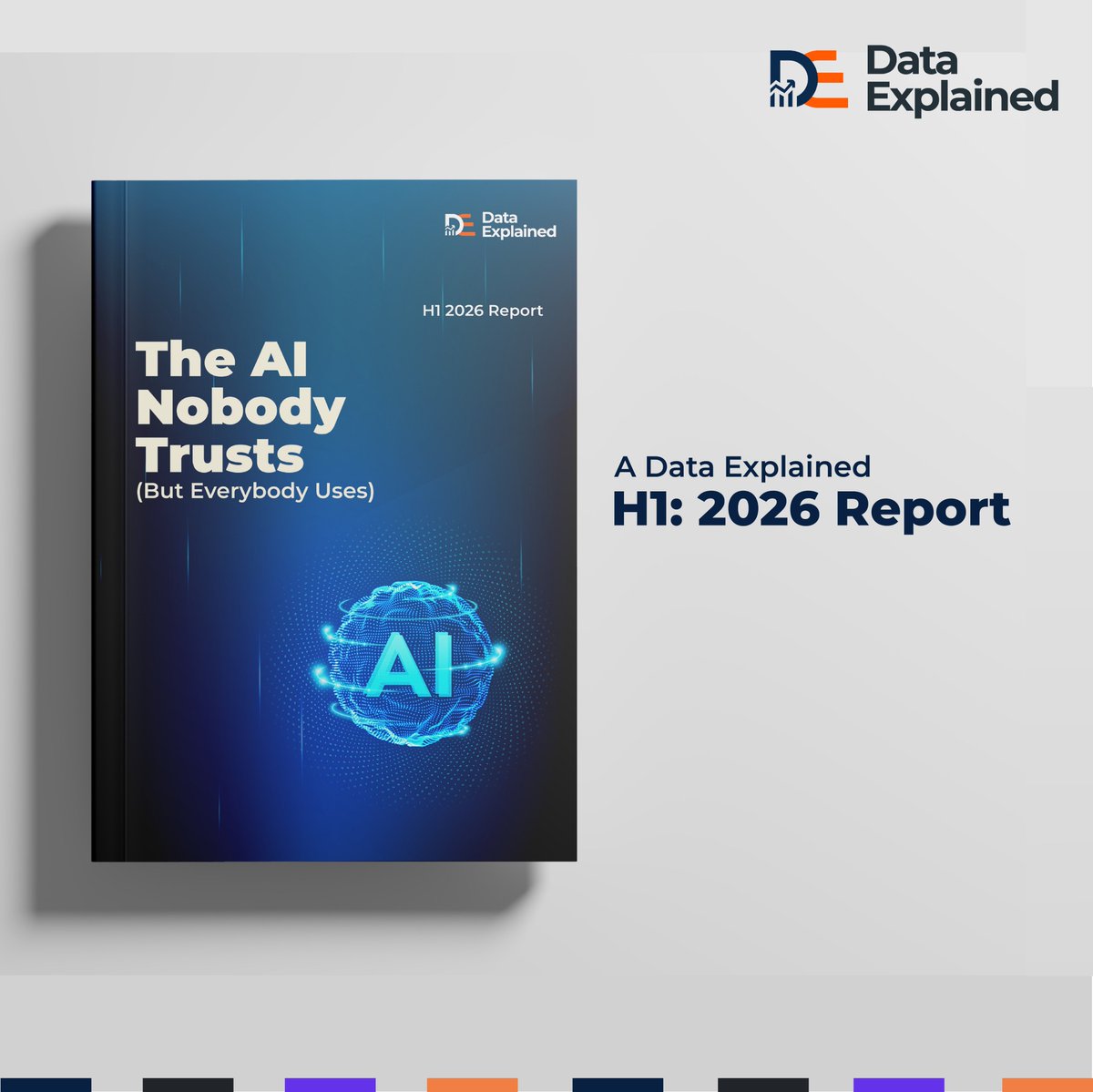
REPORT: The AI Nobody Trusts (But Everybody Uses)
AI reached 53% of the world's population in 3 years, faster than any technology ever. But in no country surveyed is excitement the dominant emotion about AI.
People are using a technology they don't trust, built by companies that aren't yet making returns on it, moving faster than the guardrails meant to govern it.
The main story of H1 2026 is that gap, not the technology itself.
Read the full report: https://t.co/OuMxvVk9hH
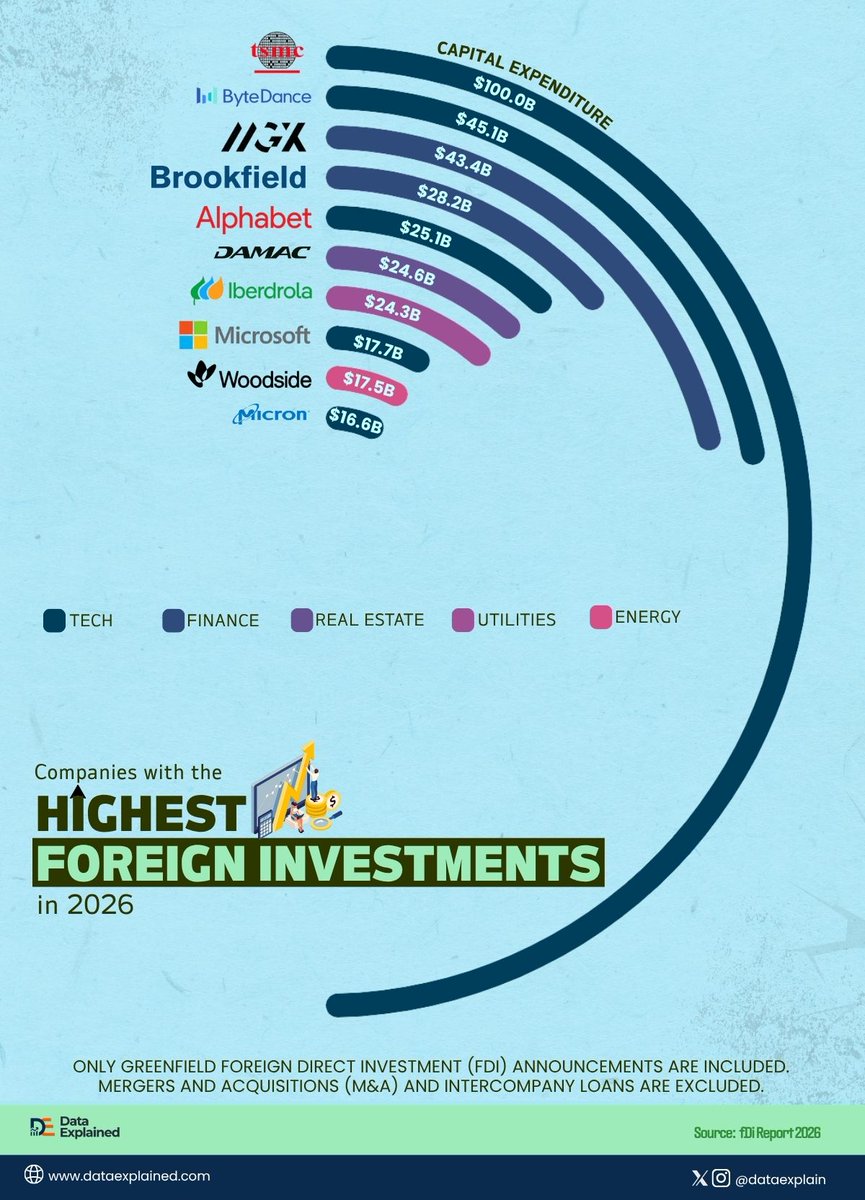
The world's largest foreign investor right now is a chipmaker.
TSMC: $100B in greenfield foreign investment
ByteDance: $45.1B
MGX: $43.4B
Alphabet: $25.1B
DAMAC (Dubai real estate): $24.6B
Microsoft: $17.7B
DAMAC, a real estate firm, outspent Microsoft.
#DataExplained#FDI
🦠 In 2023, 1 in 6 laboratory-confirmed bacterial infections worldwide were resistant to antibiotics. Resistance rose in over 40% of monitored bacteria-antibiotic combinations between 2018 and 2023.
Get data behind the headlines @dataexplain#AntibioticResistance#health
AIDS-related deaths fell 54% worldwide between 2010 and 2024, reaching about 630,000 in 2024. But the burden remains uneven across countries.
Explore the trend over time.
Get the data behind the headlines @dataexplain.
#GlobalHealth#AIDs#DataExplained
28 of 52 US states have below-average grocery costs.
Most Americans still pay above average because expensive states (California, New York, and New Jersey) make up a disproportionate share of the population.
Oklahoma leads at 94.1, 5.9% below the national average.
#USData
🚢 Suez Canal trade fell 50% year-over-year in Jan–Feb 2024, while trade around Africa’s Cape of Good Hope rose 74%. Rerouting added 10+ days to average delivery times.
Get data behind the headlines @dataexplain#GlobalTrade#DataExplained
The UAE-led operation involved 30 countries and identified 15,500 victims of digital fraud. More than $39 billion in suspected fraud-linked assets were traced, but recovery efforts are still underway.
Get the data behind the headlines: @dataexplain
A Mexican student’s acoustic fire extinguisher won gold at an international science fair in Indonesia. Her prototype uses low-frequency sound waves to extinguish small flames without water or chemical agents.
Get the data behind the headlines: @dataexplain
Warhound has raised $200 million at a $1.2 billion valuation to develop genetically engineered working dogs. The first dogs don’t exist yet, and the company aims to improve health and performance.
Get the data behind the headlines: @dataexplain
JUST IN: Palmer Luckey's genetically modified military dog startup, Warhound, comes out of stealth, aiming to create enhanced canines for the U.S. military.
The U.S. exit from the Paris Agreement took effect on January 27, 2026. The Congressional Research Service says its economic impact remains uncertain.
Get the data behind the headlines: @dataexplain
Oleshky had around 24,000 residents before Russia’s 2022 invasion. Now, only an estimated 1,700 to 2,000 remain. A local ceasefire is scheduled for October 29 to allow humanitarian aid and civilian evacuations.
Get the data behind the headlines: @dataexplain
BREAKING: The White House says Melania Trump has brokered a ceasefire between Russia and Ukraine "localised to the city of Oleshky".
https://t.co/hGXaVv4lF4
📺 Sky 501, Virgin 602, Freeview 233 and YouTube
India recorded 14,488 student deaths by suicide in 2024, according to NCRB data. A Gujarat university is installing safety-equipped hostel fans, but physical safeguards need to go hand in hand with accessible mental health support.
Get the data behind the headlines: @dataexplain
Panasonic’s incident exposes a workplace AI risk. One employee uploaded data on about 334,000 current and former employees and family members to an unauthorized AI service. The company says the data was not used to train AI or publicly exposed.
Follow @dataexplain
Elon Musk reportedly invested $1 billion in Skydance, weeks after it completed its $110 billion acquisition of Warner Bros. Discovery. The combined company carries about $87 billion in debt and plans to cut $6 billion in costs over three years.
Follow @dataexplain
Typhoon Champi’s 320 km wind radius is large enough to affect much of Taiwan. With gusts reaching 191 km/h, authorities face a prolonged threat from destructive winds, torrential rain, and coastal flooding.
Get the data behind the headlines: @dataexplain
BREAKING: Typhoon Champi leaves 1 dead, 94 injured in Taiwan. Over 77,000 homes lost power, with 19,029 still dark as of 2 PM. Nearly 1,000 flights cancelled; 1,286 evacuated. Waves up to 8 meters batter Taitung coast.
Nairobi’s building collapse raises fresh questions about construction oversight. The 12-story structure in Eastleigh reportedly lacked an occupancy certificate, even though its ground floor was in use. One person has been rescued as search efforts continue.
follow @dataexplain
🇰🇪 An 18-storey building under construction collapsed in Nairobi, Kenya
Numerous people, including construction workers and nearby pedestrians, are trapped under the rubble.
The UK advises households to prepare for 72 hours without essential services. Cyberattacks are one concern, but power cuts, water disruption, and payment outages could also affect daily life.
Get the data behind the headlines: @dataexplain
Serbia’s student movement has turned a deadly railway station collapse into a nationwide challenge over corruption and accountability. On Thursday, an estimated 150,000 people rallied in Belgrade ahead of Sunday’s parliamentary election.
Follow @dataexplain
When does mocking an elected official become a police matter? A UK councilor said posts targeting him were personal. Police seized a 15-year-old’s devices, raising questions about free speech and proportionality.
Get the data behind the headlines: @dataexplain
JUST IN: UK police arrest 15 y/o boy, seize his devices, & collect his DNA after he posted photo of a local politician edited to look like a rabbit.
🌍 Who does the world trust most?
Doctors lead at 58%, followed by scientists (57%) and teachers (53%), across 31 countries. Just 13% trust politicians.
Get data behind the headlines @dataexplain#GlobalTrust#DataExplained
Meta’s revenue beat expectations, yet its stock fell 7% as concerns about AI spending grew. The Nasdaq dropped 2.6% on Thursday.
How much longer will investors fund AI’s promise before demanding returns?
Get the data behind the headlines: @dataexplain