1/4: NEW RESEARCH: NY has dramatically shifted away from punitive drug enforcement—but major gaps remain in treatment access and racial equity. 🧵
📊 Read the report: https://t.co/SgHMR8FVHb
NYC’s criminal legal system operates under one legal framework—but outcomes vary widely by borough.
DCJ's latest report finds borough-based differences in arrest trends, rates of declining to prosecute cases, bail-setting, & sentencing from 2021–2024.
🔗https://t.co/ZIsYqvbQaZ
4/4: What’s Next? ⬇️
This report sets the stage for a critical conversation on the future of drug reforms, treatment modalities, and harm reduction in NY.
Join us on May 4 for a daylong event on reimagining NY’s treatment system.
🔗 Learn more: https://t.co/2smzPXXqF3
1/4: NEW RESEARCH: NY has dramatically shifted away from punitive drug enforcement—but major gaps remain in treatment access and racial equity. 🧵
📊 Read the report: https://t.co/SgHMR8FVHb
3/4: But progress is uneven: racial disparities have widened, treatment remains limited, and people charged with violent felonies remain excluded. Notably, the 2009 Rockefeller Drug Law Reform didn’t drive immediate change— change happened gradually through shifts in practice.
How can New York move beyond punitive drug policies toward a health-first system of care?
Join us on May 4 for a timely discussion on the future of harm reduction and treatment in NY.
🗓️Monday, May 4
📍John Jay College + via Livestream
Register Now!
https://t.co/2smzPXXYuB
📢NEW REPORT: 5 years in, New York’s bail reforms have reduced bail-setting & pretrial detention. Our latest study also finds rising bail amounts, declining affordability, and persistent racial disparities (in violent felony cases). 🔗https://t.co/KnklysTfIF
📢TODAY at 1pm: Join the discussion on data, lived experience, and effective policy recommendations—and the concrete steps that can move New York City closer to meeting its mandate to close Rikers. @katalcenter
⏱️Last chance to register! https://t.co/N4JVmOCfdv
🗓️WEBINAR: Rikers Island & Mental Health: Data, Lived Experience, and Community-Based Alternatives.
Join us on Jan 15 @ 1pm for a conversation with DCJ + @katalcenter on the latest data, human impact, and pathways to community-based diversion.
🔗Register: https://t.co/RvULYma9nq
📢Limited spots remaining for tomorrow's webinar—secure your spot to examine what the data tells us about mental health on Rikers Island, hear from those directly impacted, and join a discussion on effective policy recommendations. @katalcenter
🔗https://t.co/RvULYm9BxS
🗓️WEBINAR: Rikers Island & Mental Health: Data, Lived Experience, and Community-Based Alternatives.
Join us on Jan 15 @ 1pm for a conversation with DCJ + @katalcenter on the latest data, human impact, and pathways to community-based diversion.
🔗Register: https://t.co/RvULYma9nq
Join DCJ + @katalcenter on Thursday, Jan 15, at 1pm for a one-hour webinar -- we will dive into the data, lived-experience, and key policy recommendations focused on reducing reliance on jail while strengthening community-based care.
🔗Register Now! https://t.co/RvULYma9nq
🗓️WEBINAR: Rikers Island & Mental Health: Data, Lived Experience, and Community-Based Alternatives.
Join us on Jan 15 @ 1pm for a conversation with DCJ + @katalcenter on the latest data, human impact, and pathways to community-based diversion.
🔗Register: https://t.co/RvULYma9nq
🔈UPDATE: People detained at Rikers while awaiting transfer to state prison have dropped from 885 in July (due to a February state corrections officer strike) to 189 in December -- returning to its historical share of <5% of the total.
🔗 Read the update:
https://t.co/w4FYTrS5wo
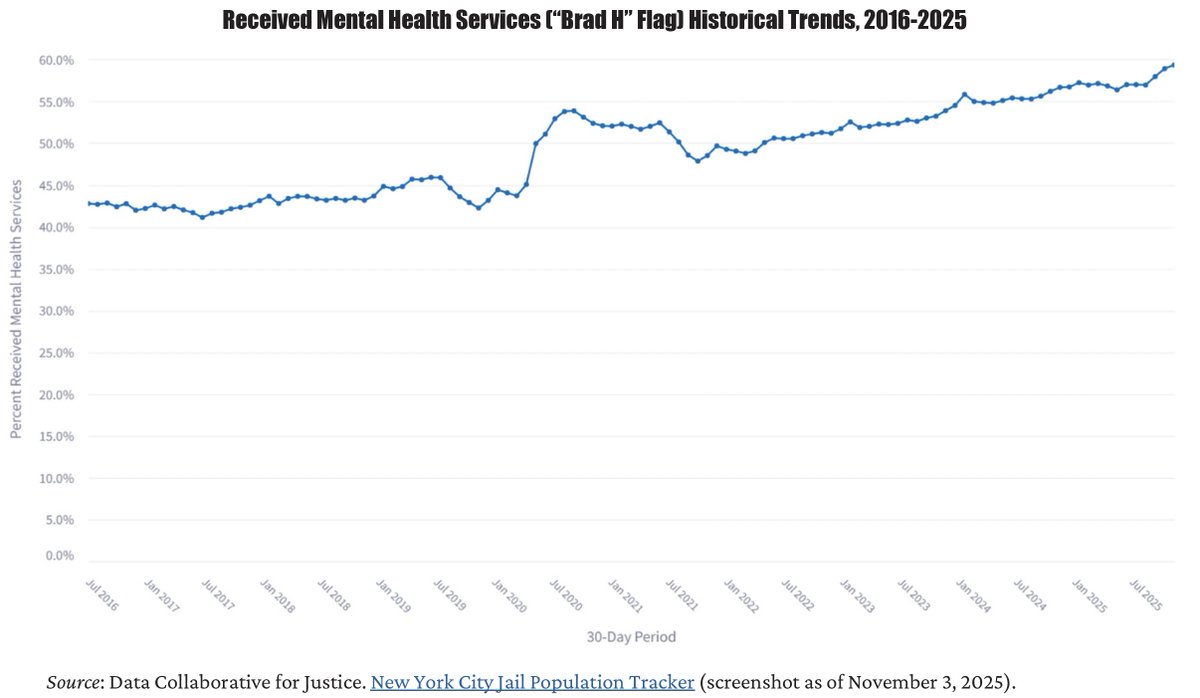
60% of people at Rikers need mental health services. We can't begin to close Rikers and end the cycle of harm until we pass @TCEActNY and give people the opportunity to seek mental health treatment through our justice system. @dataforjustice@katalcenter
https://t.co/UCKJEkdBLT
📍Today, Rikers is the largest mental health facility in New York City.
💡In partnership with @katalcenter, DCJ has just released a new report with updated data, lived-experience insights, and diversion strategies to reduce reliance on jail.
🔗https://t.co/Vv3nLFrb05
💡Upshot: Reform reduced reliance on bail & detention without increasing crime. Short-term upticks appeared only among high-risk individuals during the pretrial period but not over a longer two-year follow-up.
https://t.co/UL57GsvNX1
DCJ’s latest study is the 1st to use a difference-in-differences design to evaluate NY’s initial 2020 bail reforms outside NYC.
💡Eliminating bail for most misd & NV felonies led to no rise in recidivism & a decline in felony re-arrest over 2 years.
➡️ https://t.co/UL57GsvNX1
Key Findings:
• No overall change in recidivism during immediate pretrial period
• Short-term ↑ in re-arrest among a small high-risk group (those with pending cases)
• 2-year follow-up shows ↓ in felony re-arrest
Since NY ended cash bail for most misdemeanors & nonviolent felonies, recidivism dropped nearly across the board. In a comprehensive look at the impact of the 2020 reforms, @dataforjustice's report shows eliminating cash bail does not undermine safety. https://t.co/pGt3B5luas
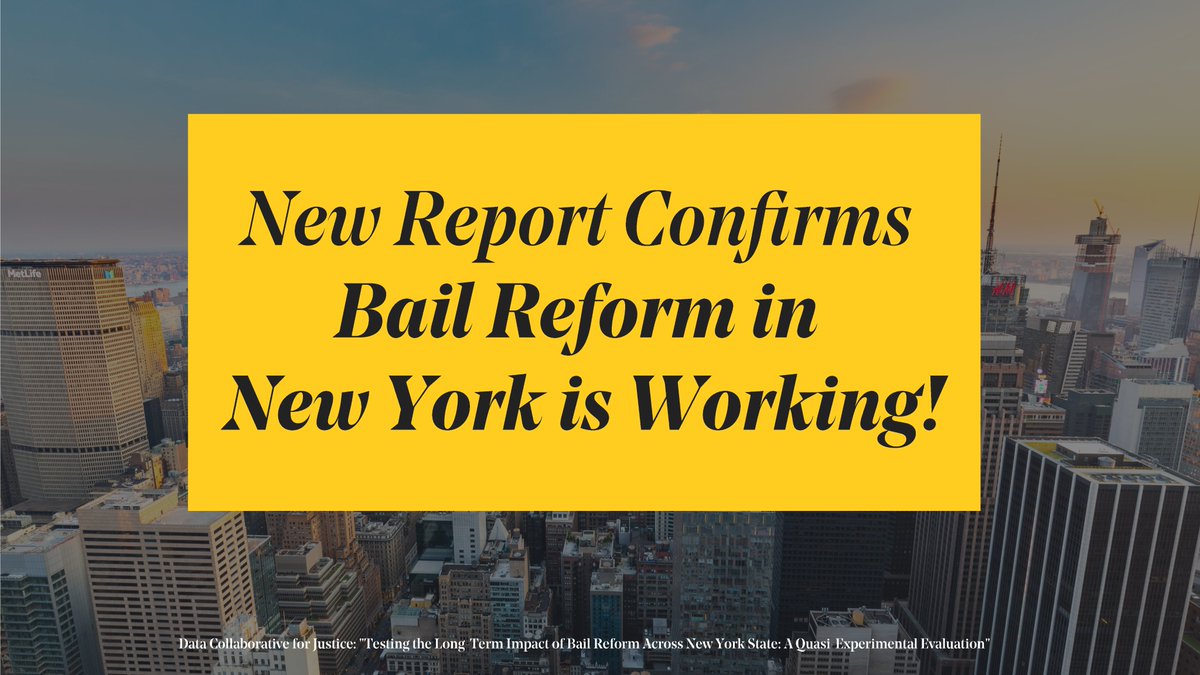
📢 New research from @dataforjustice confirms what we already knew: New York bail reform works!
Key findings:
✅ Significant recidivism reductions in NYC
✅ No impact on recidivism in suburban/upstate regions
💡TODAY at 1pm - WEBINAR | No Show No More: Rethinking Court Appearance & Reminders with @ideas42.
📍Last chance to secure your spot! https://t.co/EWChkcdtNG