Brilliant! Some seagrass ground truth data collection using Uncrewed Surface Vessel (USVs). A collaboration with @HSurv@PlymUni@DefraGovUK@NaturalEngland@EnvAgency I'd love to see this data accessible for understanding & conservation of UK marine ecosystems #seagrass#marine
Happy to announce this news on the 1st official @UN-recognised #WorldSeagrassDay! 🌱 We'll be continuing work with @PlymUni to enhance our technique of using #USVs to map #seagrass coverage, reducing damage risk & making seagrass data wholly accessible. 🌱 https://t.co/kON2yu37Nv
CoastalDEM is a DEM utilizing neural networks to reduce NASA’s SRTM error. This map of climate risks produced by NGO Climate Central shows flood risk by 2050. Despite improvements to SRTM for this analysis, caution still recommended #flood#risk#map#data https://t.co/cwXVOuB9fF
Most companies suck at setting goals.
But Google, Amazon, and Microsoft figured it out ages ago.
Here’s their simple but powerful goal-setting framework (that you can use personally too):
Delighted to announce that our 4-yr research on the first pan-Mediterranean spatially-explicit mapping of 𝘗𝘰𝘴𝘪𝘥𝘰𝘯𝘪𝘢 𝘰𝘤𝘦𝘢𝘯𝘪𝘤𝘢 seagrass beds at 10 m has been provisionally accepted in @FrontMarineSci. Find more info about our EO recipe👉https://t.co/eHeypG2bWs
&👇
The recent IPCC report shows that today the average North American emits 16 tonnes of carbon dioxide each year from fossil fuel use, compared to just 2 tonnes for the average African. Calls to move to clean energy! https://t.co/zSkEJ0vV7k
Astonished to see that my TED talk on Seagrasses as an unsung climate warrior has been viewed 400,000 times since it was released 3 days ago!
🤩🤩🤩
Available here 👇
https://t.co/RtxwRnkJTn
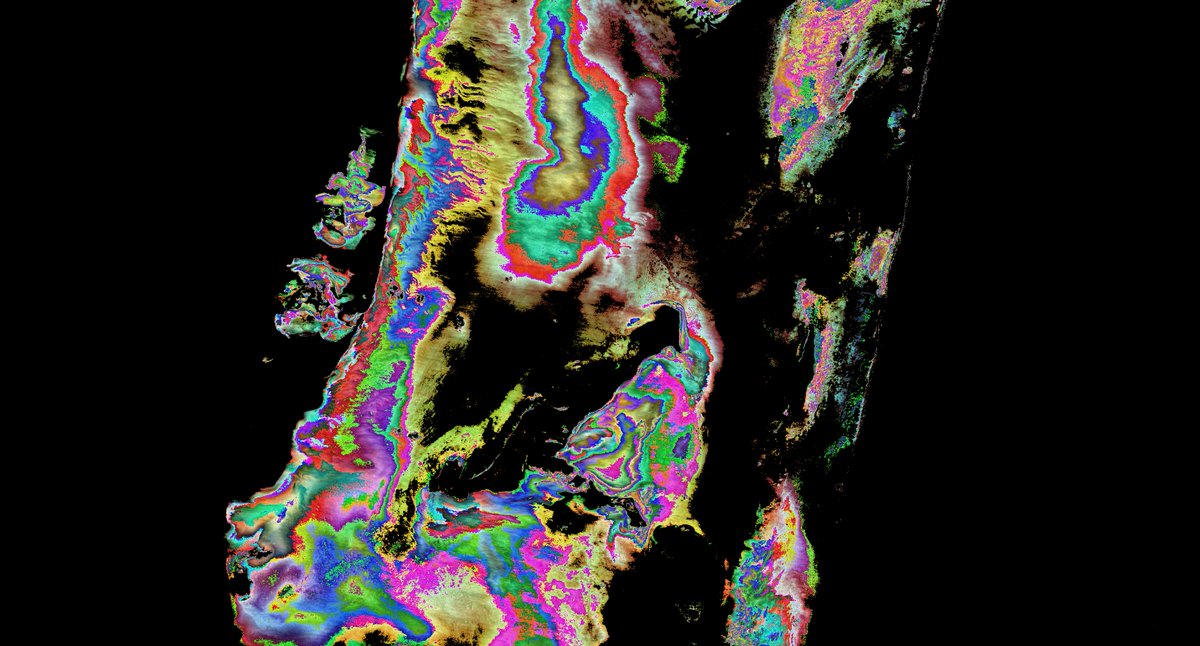
Some funky Friday night output. Not quite the land, cloud and shadow masked true-colour Sentinel-2 satellite image I was hoping to visualise 🙃🤩👩💻🤖🗺️ #satellitedata#funky#marine#visualisation
Day 19 and Day 20 #100DaysOfCode Yesterday I looked at semantic frame analysis finding the first neighbours of a node within a graph and plotting this with #networkx. Today I calculated centrality scores to identify the top 10 words (aka nodes) in the graph #networks#nlp 🤩
Day 18 #100DaysOfCode taking my textual data & creating a #networkx graph aka co-occurrence network. Nodes per word with edges between nodes per sentence. Enjoying degree distribution visualisation & EDA on the number of nodes, edges and average degree #python#NLP#networks 🤖🐍
Day 17 #100DaysOfCode frequency distributions of words in the text corpus is useful for identifying further cleaning required e.g. lemmatisation, stopwords & punctuation removal #exploratorydataanalysis#visualisation 🤩 use a logarithmic scale to reduce a wide range of values 📉
Day 16 #100DaysOfCode "Algorithms to live by" by Brian Christian & Tom Griffiths chpt on sorting; scale, "Big O" time, merge sort, sort vs search: "Sorting something you will never search is a complete waste of time. Searching something you never sorted is merely inefficient"🔢🔬
Day 15 #100DaysOfCode In NLP pre-processing stopwords ("a", "the") are typically removed (@NLTK_org stopwords) because they have little lexical content. But stopwords could be meaningful for semantic content analysis or stylometry https://t.co/KkXuA7y88P 😱it depends on the task
Day 14: #100DaysOfCode investigating @NLTK_org wordnet lemmatizer and the PortStemmer to compare the results in a corpus. The lemmatizer requires a part of speech (pos) tag argument, default "n" for noun. Stemming sometimes result in words that are not linguistically correct 👩💻🤖
Day 13: #100DaysOfCode using @NLTK_org to split text into sentences and word tokens. Exploring the punkt unsupervised algorithm recognising punctuation such as "£1.2 million" & "N.Y." not splitting on the full stops. Finally looking at lemmatisation wordnet package #nlp
Day 12: #100DaysOfCode The biggest news is I submitted my Networks assignment. Today I started learning about NLP text analysis playing with #nltk and @spacy_io. I'm off for a cuppa to celebrate! 🫖🪅🥳
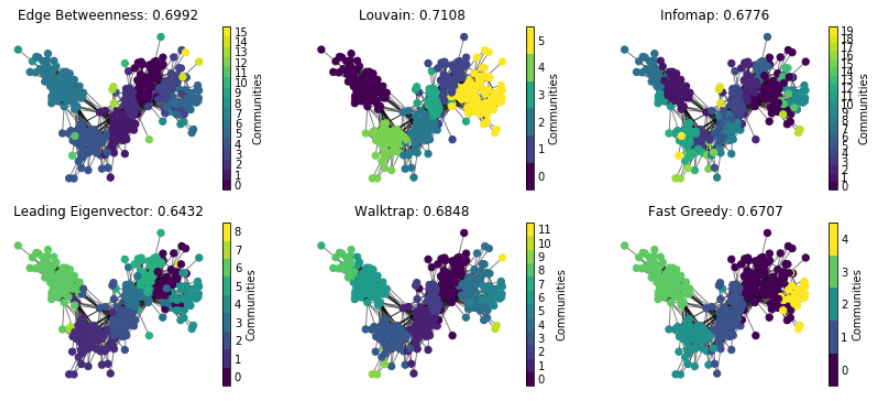
Day 11: #100DaysOfCode Finished community detection using the Louvain algorithm that maximises modularity! Once I found the 2 largest communities in a network I used closeness centrality to identify the geographically most central point i.e. shortest paths #network#science 🙌🗺️
Day 10: #100DaysOfCode Reading more on community detection https://t.co/JWxYivdYpg and using algorithms from python-igraph @igraph2 🔯 I am checking modularity to confirm optimal partitions #network#science#clustering
Day 9: #100DaysOfCode a community is a clique/group of nodes within a network that have a higher likelihood of connecting to each other. It could be social networks e.g. data scientists on twitter 😋 or biological systems. Recommended intro: https://t.co/uQfRV06zmh #networks
Day 8: #100DaysOfCode An egocentric network specifically maps the connections of and from the perspective of a single node (an “ego”). I am exploring how to create and plot an ego network and alters within a particular distance. 🐢⚙️