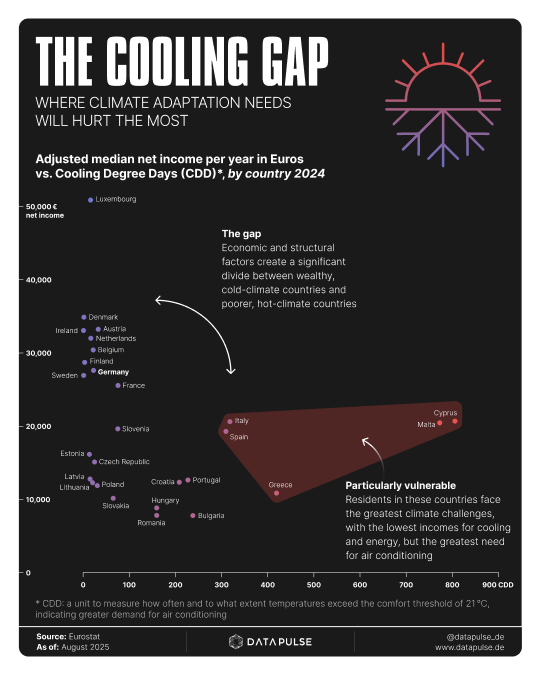
Climate change does not affect everyone equally. Those who need cooling the most are often those who can least afford it. As temperatures rise, this air-conditioning gap is likely to become even more significant.
Workation is no longer a niche trend. Searches for the term have risen by 13% in 2025, and no country searches for it as often as Germany: 52% of all global workation searches come from here. We analysed 630 cities to find out where work and travel can best be combined.
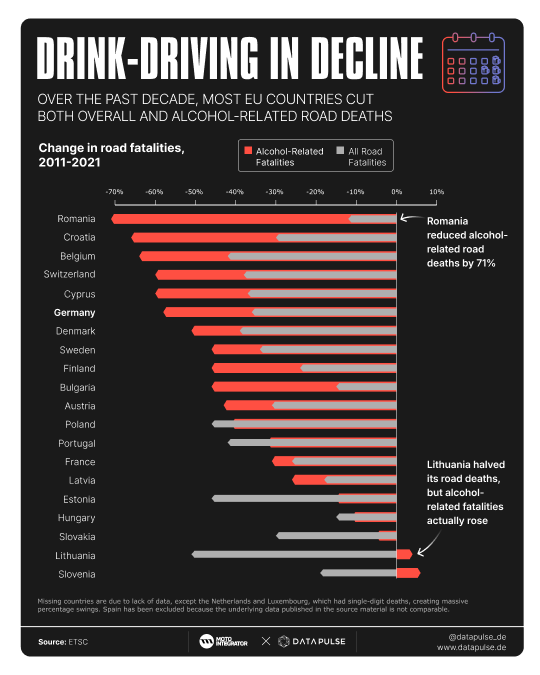
Drink-driving in decline?
The numbers say yes. Over the past decade, most EU countries have cut both their overall and alcohol-related road deaths, in many cases substantially. Romania leads the field with a 71% drop in alcohol-related fatalities since 2011.
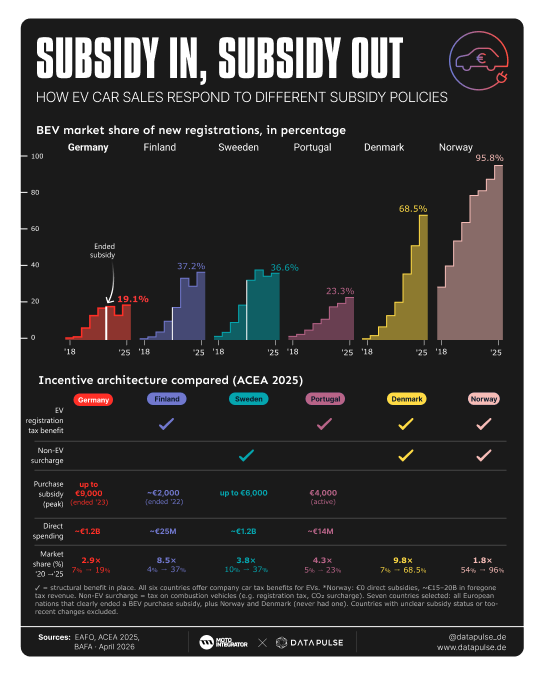
The end of the purchase subsidy has hit the EV market in Germany harder than in many other European countries. In 2024, new BEV registrations fell by 27.4%, the sharpest decline following the end of a subsidy scheme.
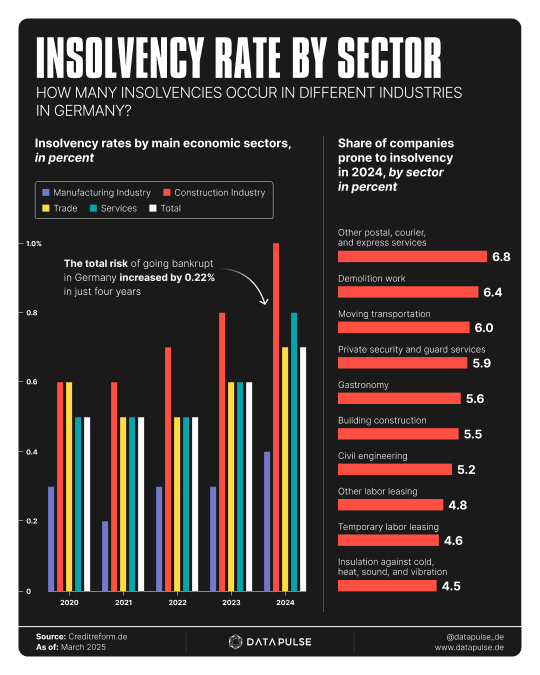
Every day, the media reports on new insolvencies. It hardly matters which sector is affected anymore. Fashion retailers, restaurant chains, shoe shops or construction firms – it affects every sector of the economy.
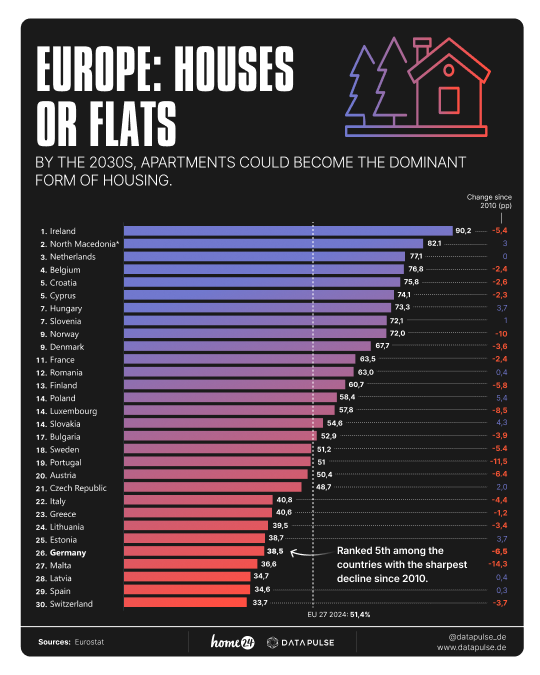
The dream of owning a house with a private garden right outside the front door is increasingly becoming a luxury in Europe. On average across the EU, just over half of the population lives in a house; in Germany, the figure is only 38.5%, while in Ireland it is as high as 90%.
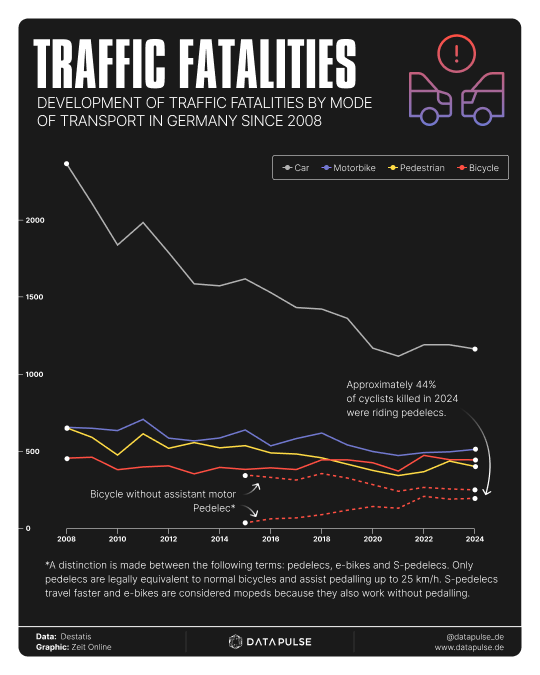
The number of road deaths in Germany has been falling for years. At the same time, the risks faced by cyclists are shifting. One in six road deaths in 2024 involved a cyclist.
Germany's record number of sick days recently made headlines and fuelled the narrative of a ‘lazy society’, but in a European comparison, Germany ranks only seventh with 3.6 weeks of absenteeism, which is only slightly above the European average.
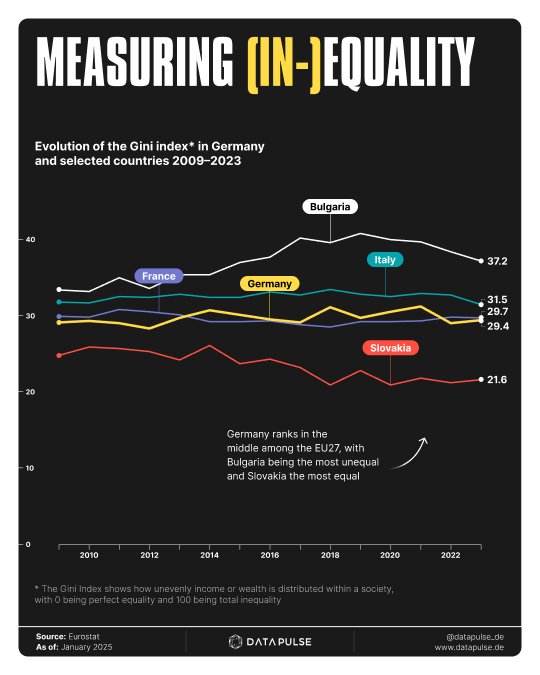
The Gini index can be used to measure how unequally wealth is distributed: 0 stands for complete equality, 100 for maximum inequality. Germany ranks in the middle of the European league table, while Bulgaria is significantly more unequal and Slovakia is comparatively egalitarian.
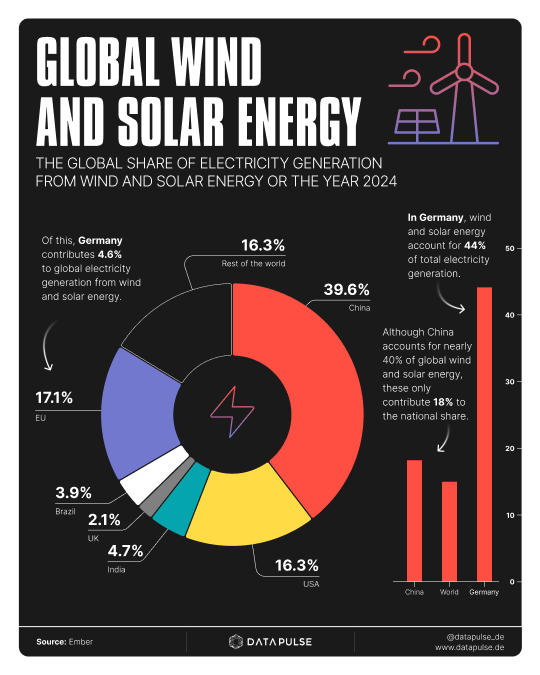
Global solar power generation has doubled in just three years and has been the fastest-growing energy source for two decades, driven primarily by expansion in China, which accounted for more than half of global growth in 2024.