And to now refer to another woman’s rape as Nirbhaya 2.0 as if it was some sequel to a long running series or a mobile update. What a low as a society we have reached, if we can categorise types of rapes suffered by women & name them with forced, ridiculous synonyms of ‘bravery’.
Last week, in The Lancet, the medical establishment did something it almost never does. It admitted that the name it had been using for one of the most common hormonal conditions in the world, a condition that affects one in eight women, around 170 million people, was inaccurate, that it had been inaccurate for decades, and that this inaccuracy had caused tangible harm to the women living with it.
The condition is the one you know as PCOS. Polycystic ovary syndrome. As of this week, it is now officially called PMOS (polyendocrine metabolic ovarian syndrome.) If you're unfamiliar, it's the hormonal condition that gives you irregular periods, weight that won't budge, acne in your thirties, hair where you don't want it, hair loss where you do, fertility struggles, mood storms, and a baseline insulin resistance that raises your long-term risk of diabetes and heart disease. It is also the condition that, until last week, was named after something most women with it don't actually have.
The 'cysts' part of the old name was always misleading. The dark spots that show up on a PCOS ultrasound aren't cysts. They're follicles, or eggs in arrested development, waiting to mature. The condition was never primarily about ovaries malfunctioning. It is, as the new name finally acknowledges, a whole-body endocrine and metabolic disorder that also affects the ovaries.
The renaming came out of a fourteen-year global consensus process. Fifty-six medical organizations came together, surveys of fourteen thousand patients and clinicians from every region of the world, Delphi methods, workshops, and more. Helena Teede, the endocrinologist at Monash who led it, has been pushing for this since the early 2010s.
The old name, the authors write, was inaccurate, that it implied pathological ovarian cysts, that it obscured diverse endocrine and metabolic features, and that it contributed to delayed diagnosis, fragmented care, and stigma while curtailing research and policy framing.
170 million women have been carrying around a misdiagnosis. We have been sent to gynaecologists when we needed endocrinologists. We are told our problem is our ovaries when it is our entire endocrine system. We are told to lose weight by people who don't know that the weight is a symptom of the same hormonal disorder, making the weight harder to lose. We have been told our fertility was the issue when the cardiovascular and metabolic risk was always more urgent (but that didn't impact our babymaking, huh?)
We have spent decades being told, mostly, that it is simply unlucky to be us. I know women who spent a decade convinced their bodies were broken in some mysterious, individual way. I know women who got diagnosed at twenty-eight after symptoms that started at fourteen. I know women whose doctors confidently informed them that they could not have PCOS because their ovaries looked fine on ultrasound, which, given what we now officially know, is rather like being told you can't have a cold because your nose looks fine in a mirror.
These women weren't broken. I am not broken, We are not fucking BROKEN. We have a condition that even the people studying it have been describing incorrectly. The thing about a name change is that it is, on its face, it’s really small. A few syllables swapped. An adjective swapped for a fancier framing. And yet the paper itself is essentially an argument that this small change unlocks a much larger one- that you cannot research, fund, diagnose, treat, or de-stigmatize a condition you have been describing inaccurately for fifty years.
The name was actively harming us. It was telling doctors which specialty to send you to. It was telling researchers which grants to apply for. It was telling insurance companies what kind of care to reimburse. It was telling women themselves what was wrong with their own bodies. And it was, by the medical establishment's own admission, telling all of them the wrong thing.
A name change won't undo any of that. The fourteen years it took to get this far is its own indictment. It's fourteen years in which entire generations of women got diagnosed late, treated badly, or not at all. But it is on the record now. The Lancet has, in effect, conceded a point that women with PCOS and the clinicians who actually listened to them have been making for years.
The girls were right. About this and about most of it. It just took fourteen years and a global consensus process for medicine to say so out loud.
Diagnosed with PCOS a decade ago, I’ve met doctors who either dismissed the suffering or didn’t know how to treat it. The sudden (much needed) attention on pcos is triggering. Glad you finally caught up & updated the name. Now plis put some effort into researching the condition!
Across hundreds of leaked clips, women are seen being examined in labour rooms, breastfeeding in general maternity wards, changing clothes before surgery, lying unconscious in ICUs, or delivering babies.
Read the full investigation here: https://t.co/Lsw35NYQ8P
CFP: "Digital Lifeworlds: Childhood, Youth, Intergenerational Futures."
For a stream co-organized by our member, Seran Demiral, for the European Sociology Association conference (Poland, August).
Abstracts due by 30 Jan.
Submissions via this website: https://t.co/9KejoRr4qc
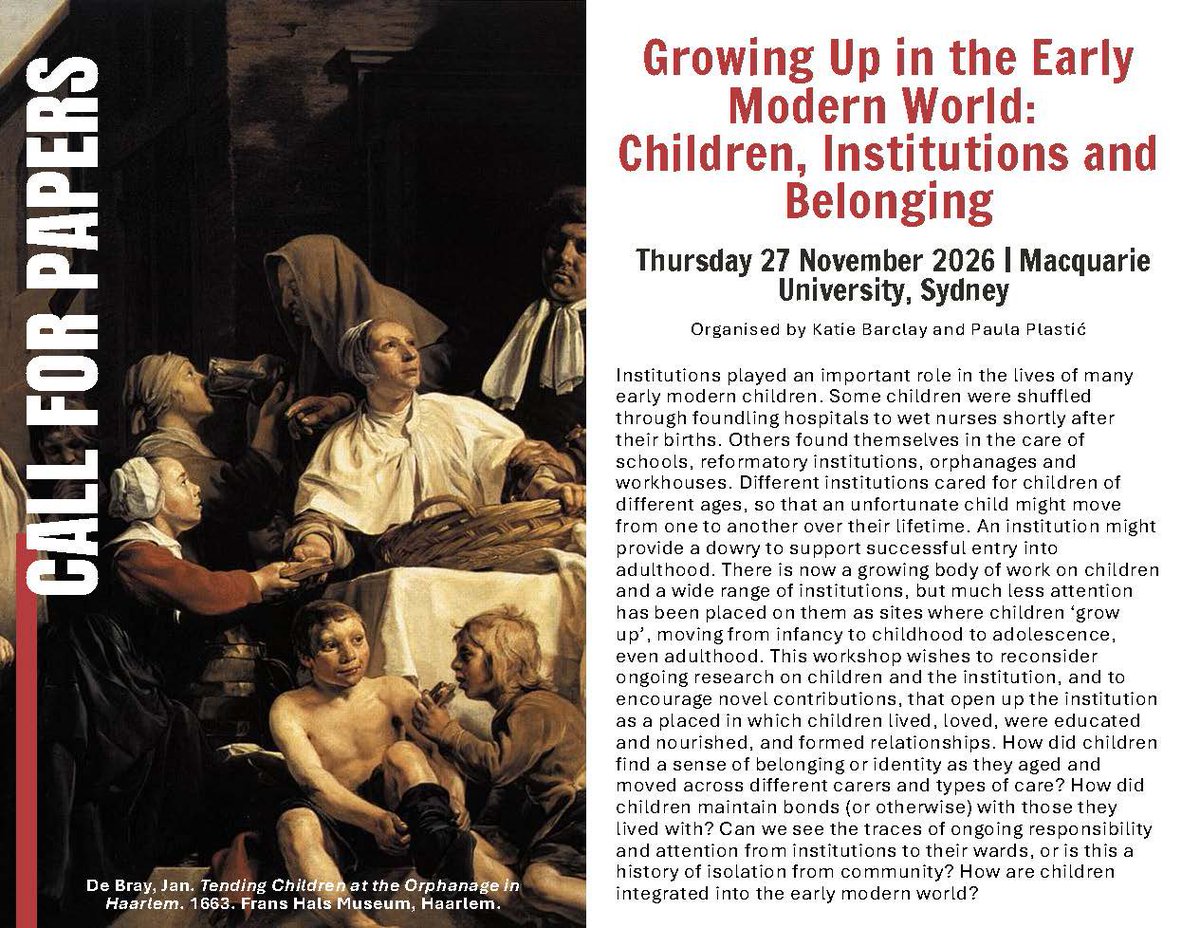
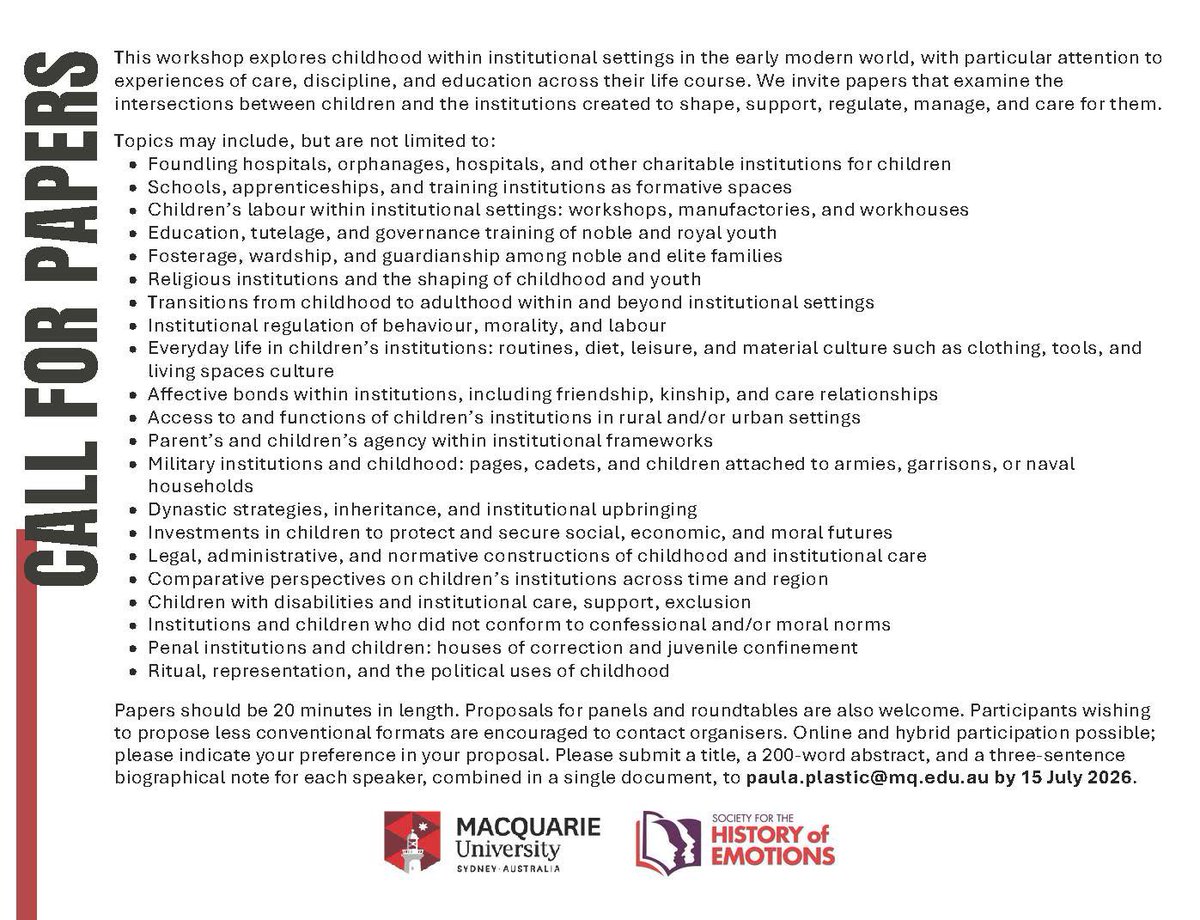
Call for conference papers: "Children, Emotions, and Relations."
For the annual conference of the Society for the Study of Childhood in the Past, which will be held at the University of Oulu (Finland) in June.
Abstracts are due by 15 February.
https://t.co/nKRTqsHTVn
The EPW Review of Gender Studies Call for Papers is out. It is on Care Labour: Feminist Interpretations and Analyses https://t.co/4WTLH5P0uN deadline for papers January 19, 2026 @epw_in
📢 Call for Papers, UCLA Center for India and South Asia (CISA), Tenth Annual Graduate Interdisciplinary Conference on South Asia May 22, 2026 (Friday), Royce Hall: https://t.co/fue826MD5s
📣 Open for applications
Visiting Fellowships are self-funded and open to scholars from outside Cambridge University working within the arts, humanities and social sciences, as well as medicine, engineering or natural sciences
Apply by 3 February 2025
https://t.co/uwJMqySG0Y
2025 South Asia Annual Conference @DCUIndia has launched its Call for Papers!
Please consider submitting a paper or panel proposal on a range of themes relating to South Asia.
For details see below and the following link for submissions:
https://t.co/kvs1PW2I4h
Most people don't know how much being a first gen PhD can impact your PhD journey.
If you are a first gen PhD.
What has been a your biggest struggle as a first gen PhD?
Pls share: Applications now open for the 2024 Summer Institute in Economic Geography, National University of Singapore, 21-26 July 2024. Closing date: 22 Dec 2023 https://t.co/tFoJDUX9hU
All early career economic geographers are welcome; costs covered, incl travel stipends