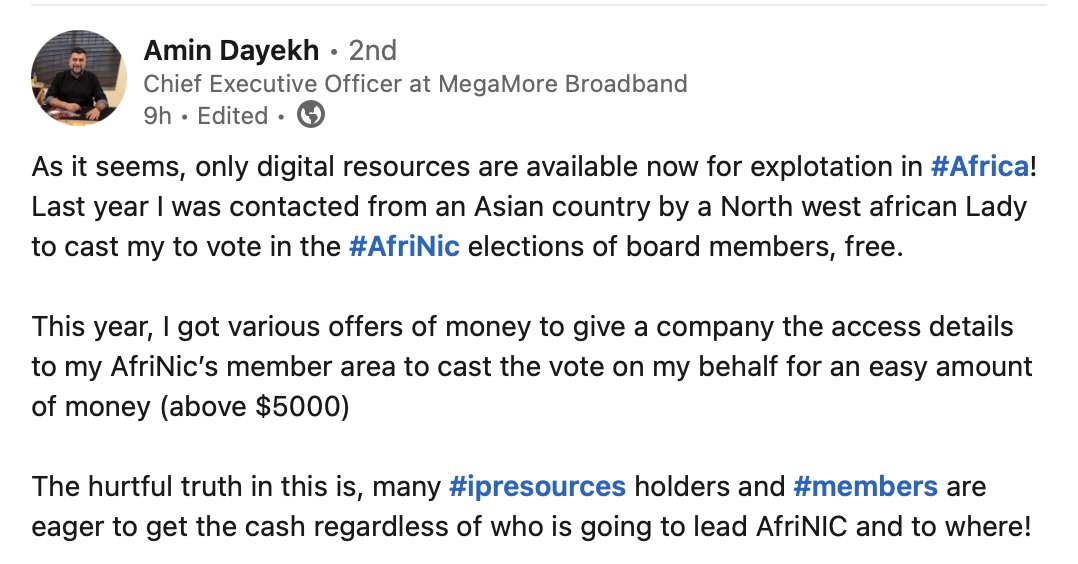
This is the first public acknowledgement of the attempt of a Chinese bulletproof hoster to capture Africa's IP address pool:
https://t.co/xYStmlkEco
Thank you, @AminD1979, for speaking out. We cannot let democratic systems of Internet governance be undermined by corruption.
Imagine congratulating Kali & The Pride over a great signing & opportunity, rather than trivializing her moment because of a position her father holds. What a concept. This is so tired. Sincerely, someone who knows ☝🏻or✌🏻things about women’s hockey.
@anvilwalrusden @danyork To be fair it’s similar to IPv4. The allocation is worth something and when you forget about your domain registration someone is likely to reclaim the asset.
@dbelson Nah, we get to stay in New England just need to expand the love for Bergeron, Pasta, and Marchand to include Kane, Toews, and the Chicago crew 😁
@jedisct1 The only software vulnerable (and it is clear in the paper) is Google, OpenDNS, and old versions of Microsoft resolver and PowerDNS. Apparently no current software is vulnerable.
it’s a shame that the TsuNAME papers don’t mention DJB’s notes on gluelessness ⬇️
or RFC 1536 which discusses this bug in section 2 https://t.co/Z3O29i8Znp
i suppose it’s typical for the DNS that classic bugs keep coming back 🤡💩
https://t.co/Woukb4IsLC
@alexeheath We absolutely did try to run these. The ads were rejected, and Facebook disabled our ad account. These are real screenshots, as Facebook should know.
@cynicalsecurity It depends on the flattening implementation, mainly caching and if it is respecting underlying ttls. The DNS infrastructure supporting the names being flattened can also introduce some skew ( old but maybe helpful https://t.co/y7pwrsMj6B )
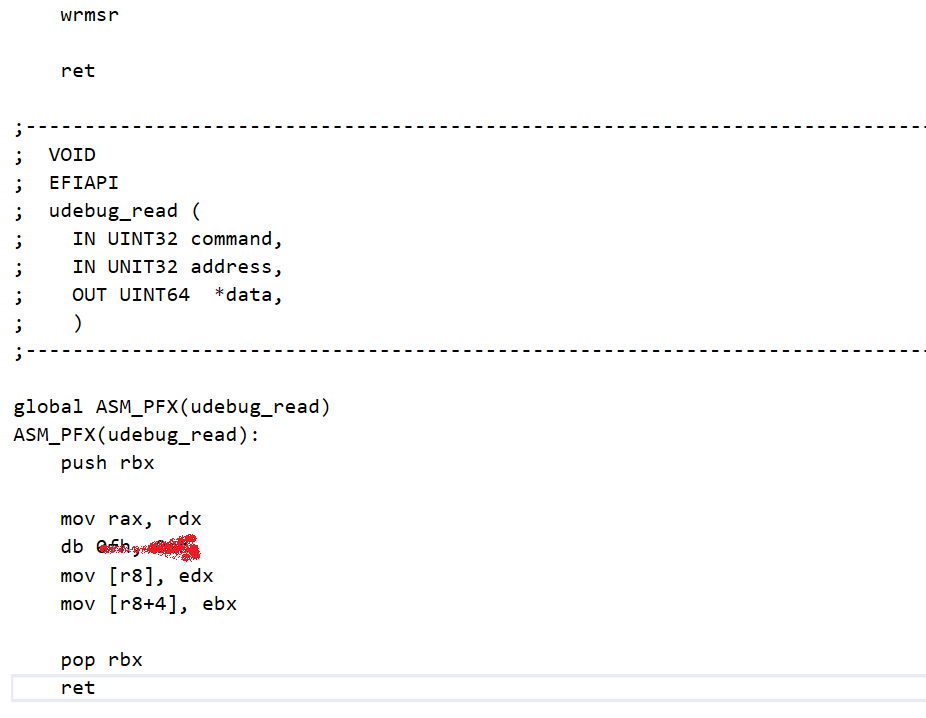
Wow, we (+@h0t_max and @_Dmit) have found two undocumented x86 instructions in Intel CPUs which completely control microarchitectural state (yes, they can modify microcode)


![Enno_Insinuator's tweet photo. 52% of German tax declarations come in over IPv6.
From @constanzebuerge's talk @ripemeeting #RIPE84
src: https://t.co/pOPZFLqaFP [PDF] https://t.co/HEuhbcDp8P](https://pbs.twimg.com/media/FS4o4BcXwAAxcoR.jpg)




![Enno_Insinuator's tweet photo. 52% of German tax declarations come in over IPv6.
From @constanzebuerge's talk @ripemeeting #RIPE84
src: https://t.co/pOPZFLqaFP [PDF] https://t.co/HEuhbcDp8P](https://pbs.twimg.com/media/FS4o5ucX0AMBp_2.jpg)