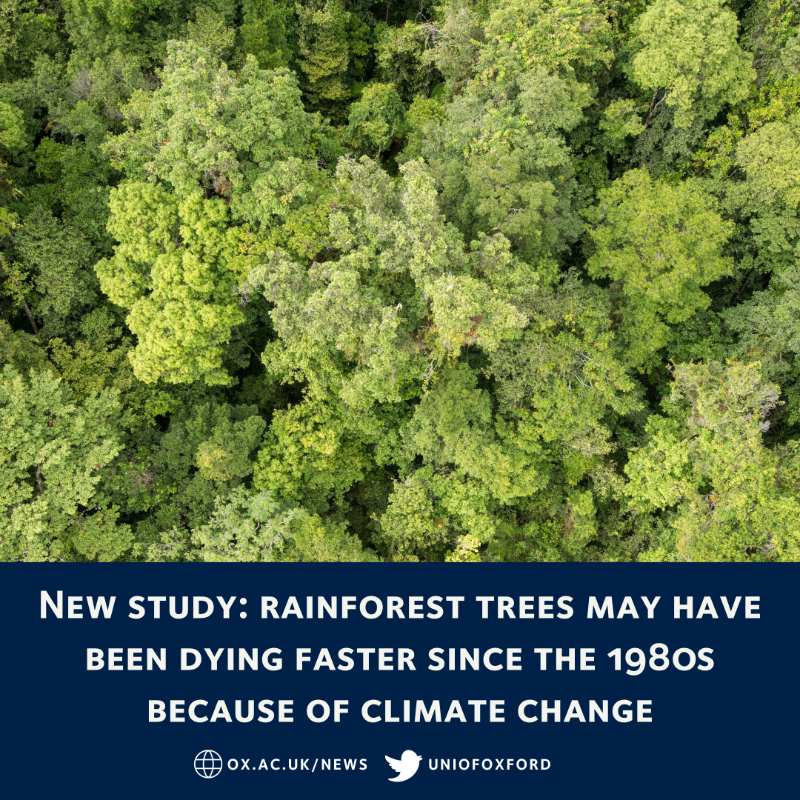
Our new study has just been published in @Nature! We find a marked increase in tree mortality in the tropical moist forests of #Australia in the past decades, consistent across many species and sites. The results point at #ClimateChange as the most likely driver.
NEW: A study has found tropical trees in Australia’s rainforests have been dying at double the previous rate since the 1980s.
Researchers believe this could be because of climate change as global warming increases the drying power of the atmosphere.
Read more ⬇️
I'm leaving X, to stop feeding what has mostly become a toxic platform.
You can find me on Bluesky 🦋: @davbauman.bsky.social 🙂
See you on the other side 🌴
Lovely French article by @ird_fr covering our recent Blue-crowned Laughingthrush paper using local ecological knowledge https://t.co/sA3QZObhFe @UmrAmap@davbauman
Fascinating seminar by @GuillaumeDelha2 on the #ecology and distribution of ectomycorrhizal #fungi across Europe, at @UmrAmap today 🍄🌳!
Learnt much about the effects of #climate and N pollution on these 🍄 communities and associated #forests!
5082 🌳 sp, 1989 forest plots, 217 authors, and 149 institutions (59% South-American, 🇧🇷🇨🇴🇪🇨🇧🇴🇬🇫🇻🇪🇵🇪).
What better illustration of how collaborative understanding tropical systems needs to be. And of how crucial support for tropical plot networks and their researchers is.
[3/3]
New @TreeAmazon study out, led by Bruno G. Luize, investigates the evolutionary assembly of Amazonian #forests. We find that soil habitat and geographic regions interact, shaping the phylogenetic makeover of tree communities across #Amazonia.
➡️ https://t.co/qVjvTt3Gnt 🌳🌴
[1/3]
The study highlights both indicator species and higher-level lineages (0 up to >65 M year-old ⏲️) for all geographic regions (mostly Southwestern and Central Amazonia), and to a lesser extent for habitats (mostly Terra-Firme and White-Sand).
[2/3]
I wouldn't be starting this position without my mentors and friends over the years, who've helped *so much*, with the science, but also dealing with issues of lack of self-confidence or impostor feelings. Thanks @Seanscience1 Claire Fortunel @ymalhi @GuillaumeDelha2 🙏☺️🌳
[3/3]
Yesterday was the last day of my @MSCActions postdoc. And of postdocs, as a whole..! ☺️
I'm very happy to announce that today I'm starting on a permanent researcher position at @ird_fr, to continue at the fantastic and so friendly @UmrAmap lab, in Montpellier 🥳 !
[1/3]
I'll continue studying tropical 🌳 demography, how trees grow, survive, and die, how these processes respond to interactions of climate, soil, and neighbourhood, and how we can better model and quantify different sources of uncertainties in these complex and slow processes.
[2/3]
🌳What an opportunity to be part of such a great and diverse community!🌴 I'm thrilled to mentor the #treemortality group with @DanielFZuleta , J. Needham, & G. Arellano, helping participants to model and better understand tree mortality in different tropical biomes and regions!
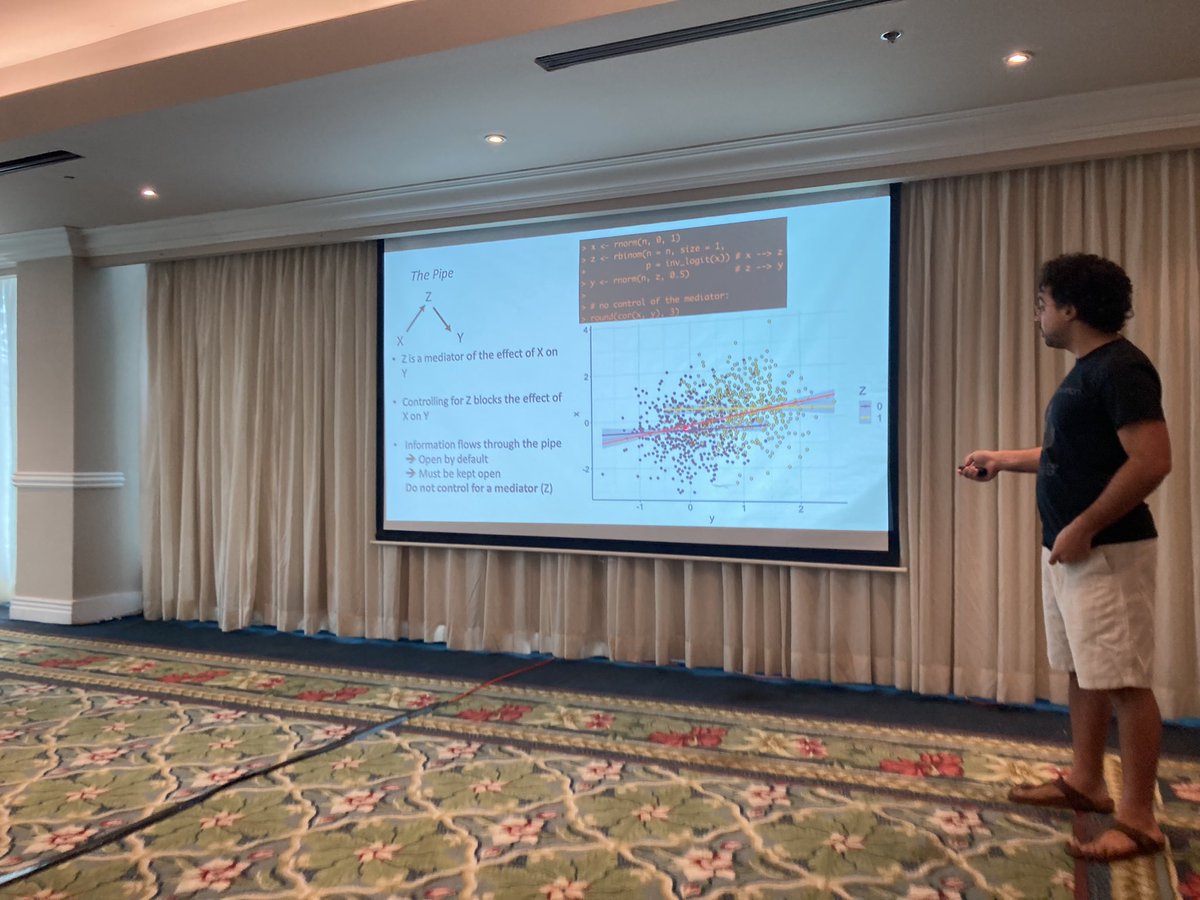
🌳The Annual ForestGEO Analytical Workshop has officially begun!🌳60 participants from 25 countries have gathered in Gamboa, Panama to share their expertise & collaborate on data analysis for their research. Congrats & best of luck to all the participants over the next 14 days!
"Don’t get mad, get equal: putting an end to misogyny in science"
Strong and moving read, on the strong double standard that women face in Academia. Also gives ideas of concrete actions and behaviours to fasttrack equity in the sciences.
https://t.co/DtySg8E8Oc
The study uses an elegant nested sampling design of 101 plots capturing contrasting soil habitats at both regional and basin-wide scales, from Eastern (Peru) to Western Amazonia (French Guyana), with detailed leaf and root traits collected on >8300 stems for 1625 sp.
🧵 [3/3]
New paper out in @ESAEcology , led by @JasonVleminckx, testing alternative hypotheses relating #soil and tropical tree species' niche in #Amazonia.
➡️ We find that species' edaphic niche range increases with their niche position (conditions where sp. occurs the most).
🧵 [1/3]
Excited to share our new study showing the contributions of both abiotic and biotic filtering on tropical tree community assembly, using niche breadth and niche optimum data combined with key resource-use traits @FIU@berkeleyIB@UmrAmap@ULBSciences
https://t.co/PISHGnHApU
This trend was found for the 5 edaphic gradients tested (N, P, Ca, Mg, K).
➡️ The study also shows that species with resource conservation traits (🌿and #roots) were more restricted to poor soils, and likely outperformed by acquisitive sp. in more fertile habitats.
🧵 [2/3]
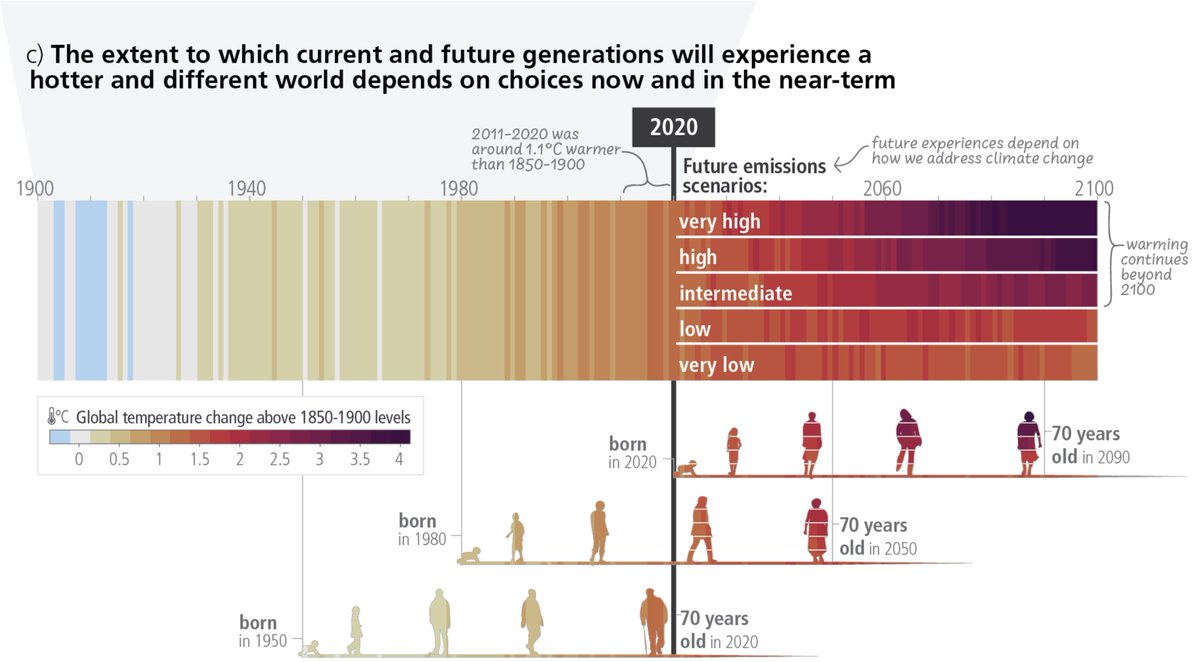
Here are the big takeaways from the @IPCC_CH Synthesis Report released today.
First, climate change has already caused widespread and substantial losses to almost every aspect of human life on this planet, and the impacts on future generations depend on the choices we make NOW.
"... forest science relies on the long-term data that scientists wring from forests over decades. Our chances of overcoming climate change are small, but they will diminish further if we forget the basics of monitoring our home planet."
https://t.co/zwluRjFFsY


![davbauman's tweet photo. 5082 🌳 sp, 1989 forest plots, 217 authors, and 149 institutions (59% South-American, 🇧🇷🇨🇴🇪🇨🇧🇴🇬🇫🇻🇪🇵🇪).
What better illustration of how collaborative understanding tropical systems needs to be. And of how crucial support for tropical plot networks and their researchers is.
[3/3] https://t.co/RTBCxev9u7](https://pbs.twimg.com/media/GHMHFUZW0AAqokb.jpg)






![davbauman's tweet photo. 5082 🌳 sp, 1989 forest plots, 217 authors, and 149 institutions (59% South-American, 🇧🇷🇨🇴🇪🇨🇧🇴🇬🇫🇻🇪🇵🇪).
What better illustration of how collaborative understanding tropical systems needs to be. And of how crucial support for tropical plot networks and their researchers is.
[3/3] https://t.co/RTBCxev9u7](https://pbs.twimg.com/media/GHMHI_8XcAEBnh4.jpg)
![davbauman's tweet photo. New @TreeAmazon study out, led by Bruno G. Luize, investigates the evolutionary assembly of Amazonian #forests. We find that soil habitat and geographic regions interact, shaping the phylogenetic makeover of tree communities across #Amazonia.
➡️ https://t.co/qVjvTt3Gnt 🌳🌴
[1/3] https://t.co/LEziX7UUY2](https://pbs.twimg.com/media/GHL0MTgXoAAxSnY.jpg)
![davbauman's tweet photo. The study highlights both indicator species and higher-level lineages (0 up to >65 M year-old ⏲️) for all geographic regions (mostly Southwestern and Central Amazonia), and to a lesser extent for habitats (mostly Terra-Firme and White-Sand).
[2/3] https://t.co/CJ48a4Nawv](https://pbs.twimg.com/media/GHL3qvdXUAAoC0X.jpg)

![davbauman's tweet photo. The study uses an elegant nested sampling design of 101 plots capturing contrasting soil habitats at both regional and basin-wide scales, from Eastern (Peru) to Western Amazonia (French Guyana), with detailed leaf and root traits collected on >8300 stems for 1625 sp.
🧵 [3/3] https://t.co/TcZSWWsjyZ](https://pbs.twimg.com/media/FwKHblKXwAIj4A3.jpg)
![davbauman's tweet photo. New paper out in @ESAEcology , led by @JasonVleminckx, testing alternative hypotheses relating #soil and tropical tree species' niche in #Amazonia.
➡️ We find that species' edaphic niche range increases with their niche position (conditions where sp. occurs the most).
🧵 [1/3] https://t.co/ex8Zoe7UNr](https://pbs.twimg.com/media/FwKLk0eWIAAtcDS.jpg)
![davbauman's tweet photo. This trend was found for the 5 edaphic gradients tested (N, P, Ca, Mg, K).
➡️ The study also shows that species with resource conservation traits (🌿and #roots) were more restricted to poor soils, and likely outperformed by acquisitive sp. in more fertile habitats.
🧵 [2/3] https://t.co/YpxdRd5iA0](https://pbs.twimg.com/media/FwKM7UtXgAMyTfB.jpg)