Blue Gold’s latest investor webinar is now available to watch.
Join CEO Andrew Cavaghan as he discusses:
• The $1B+ Ghana arbitration claim
• Our growing acquisition pipeline
• The future of Standard Gold Coin
• The Mine-to-Wallet strategy driving long-term growth
Watch the full webinar below :
https://t.co/ByUrhqAwd8
Hello, we are Jonathan and Abigail - unashamed pedants who want to bring this affliction to bear on all things public policy and practice.
We believe that details matter, especially in public administration. This is why today we are founding quibble: a campaign to fix the small stuff.
Think, for example, about the cookie banner that we click on every webpage. Each instance is not a big deal, so we just put up with it. But its cumulative impact adds up - on average we press it 5 times per day. The European Commission estimates that it costs EU citizens 343 million hours per year.
And who is there to represent the impacts of seemingly minor issues like this in a systematic way? We want quibble to be the answer. In the case of the cookie banner, lots of advocacy has rightly focused on privacy, but has this meant that user experience has taken a backseat? We believe there are ways to improve user experience without compromising on privacy. We will share more about this soon.
Consider another example. Did you know that in some government-run car parks you can be fined for a minor keying error, such as accidentally typing a zero instead of an “o”? Again, we will come to the detail of this quibble in the coming weeks, but for now just consider again the question: who? Who is there currently to systematically represent the interests of the parker who is given an unfair ticket?
An inherent feature of consumer interests is that those who have them rarely have enough other things in common to make collective organisation and representation feasible. This is the gap that quibble seeks to fill. Now of course excellent consumer interest groups exist. But understandably quibbles might not be at the top of their lists. Our hope is that quibble will be complementary; picking up the bottom-of-the-list issues faced by various groups - the stuff they are almost too embarrassed to raise because they are too small.
We are not embarrassed about detail. If you’ve ever had a splinter, you know small things can have a big impact. This is what quibble is committed to tackling, and our wider hope is that by doing so we will also incentivise policy makers to be even more careful about detail.
Check out our website here, including our first four campaigns: https://t.co/gZiqqHbhIL
Blue Gold Limited (Nasdaq: BGL) CEO Andrew Cavaghan has transitioned to 100% equity-based compensation.
No cash salary. Incentives tied directly to shareholder value creation. Value is only realised through meaningful appreciation in BGL's share price.
When a CEO puts his financial wellbeing entirely on the line alongside shareholders — that's worth noting.
🔗 https://t.co/vL7d0lDYEO
#BlueGold #BGL #Nasdaq #Leadership #InvestorRelations
STANDARD Wallet Now Live.
Blue Gold Limited continues advancing its vision of connecting physical gold ownership with modern digital infrastructure through the launch of the STANDARD Wallet and Standard Gold Coin (“SGC”).
Users can now explore the newly launched ecosystem and learn more about purchasing, holding, sending, receiving, and redeeming digitally represented physical gold.
Visit: https://t.co/IKN4vaHHat
Blue Gold Limited (Nasdaq: BGL) has officially launched Standard Gold Coin (“SGC”) and STANDARD Wallet.
The launch represents another milestone in Blue Gold’s mine-to-wallet strategy — combining physical gold ownership with modern digital infrastructure.
More:
https://t.co/bxvEPPIbVr
Extraordinary allegations from @benhabib6 !!
Ben Habib alleges that Nigel Farage & Boris Johnson were paid £1m each by Christopher Harborne to essentially rig the election in favour of Johnson. He also claims the undeclared £5m "gift" Farage received in 2024 from Harborne was payment for Farage to take over as party leader of Reform UK and stand in Clacton.
Victoria Derbyshire spend 8 minutes taking apart Nigel Farage's £5,000,000 gift
"As you'd expect we asked Reform UK for an interview tonight. One Reform UK press officer asked: with who and to discuss what"
"We said we'd like to talk about the local elections, the detention centres in Green areas, and £5m gift from Christopher Harborne"
"We didn't receive another reply"
JUST IN: Iran just pulled a thirty-year-old empty supertanker out of retirement and began towing it toward Kharg Island. She is moving so slowly that a voyage that should take a day and a half is taking four days.
Her name is NASHA. IMO 9079107. Built 1996. A two-million-barrel very large crude carrier that has been anchored empty off Kharg for years. TankerTrackers confirmed her reactivation yesterday. Gulf News, Iran International, and Fox News all picked it up within hours.
The reason she is moving at all is that Iran is running out of places to put the oil.
Kharg Island handles roughly ninety percent of Iran’s crude exports. Its onshore tanks had about thirteen million barrels of spare capacity when the US blockade began on April 13. Net inflow since has been running at one million to one point one million barrels per day because exports have collapsed to single digits of vessels while upstream production continues. The math is mechanical. Roughly twelve days of spare capacity. The calendar says that window closes this week.
NASHA is not a strategy. NASHA is what you do when you have run out of strategy.
A two-million-barrel floating storage vessel buys Iran approximately forty-eight hours of continued upstream production. After that, either the wells get shut in or the crude goes somewhere else. The parallel options being pursued, ship-to-ship transfers in the Riau Archipelago, AIS-dark transits, sanctioned VLCCs returning home through the blockade line, are not enough. Lloyd’s List Intelligence has tracked roughly twenty-six Iran-linked vessels evading since April 13. That cannot absorb a million barrels a day.
The wells will shut in. The question is which wells, for how long, and whether they come back.
The Asmari and Bangestan carbonate formations that sit under most of Iran’s giant southern fields are high-permeability, strong-water-drive systems. The Society of Petroleum Engineers literature on this specific reservoir class is unambiguous. Remove continuous pressure support for a prolonged shut-in and four damage mechanisms activate simultaneously: water coning upward through the fracture network, fines migration into pore throats, formation compaction under increased effective stress, and clay swelling under altered salinity and pH. The damage is not theoretical. It is documented. And it is measured in months to years of recoverable production capacity, not days.
Maleki and Gordon estimate three hundred to five hundred thousand barrels per day of permanent capacity loss if the current shut-in trajectory completes. That is a directional estimate, not a lab measurement, but the direction is not in dispute.
NASHA is the archaeological signature of the clock.
When a country with the world’s third-largest oil reserves reactivates a thirty-year-old retired tanker to float on top of its main export terminal and buy forty-eight hours of time, the institutional systems designed to absorb shocks have already failed. The insurance market, the shadow fleet, the diplomatic channels, and the reservoir physics are all converging on the same conclusion at different speeds, and NASHA is the one that shows up on satellite.
The market is pricing a ceasefire.
The Pentagon is pricing six months of mine clearance.
Iran just pulled a corpse out of the Persian Gulf and asked it to buy two days.
That is not how a reversible crisis looks. That is how a regime tells you, operationally, that it has run out of options between the blockade and the shut-in. The reservoir does not negotiate.
https://t.co/vLQh7ydMdk
Blue Gold $BGL Strengthens Its Executive Bench Ahead of Mining Launch
@BlueGoldLimited has appointed mining veteran Gustavo Gomes as COO and EVP of Mining, bringing 40+ years of global operating experience at a critical stage in the company’s path toward production.
Gomes has held senior leadership roles at BHP, Rio Tinto, ArcelorMittal, Vale, and MMG, and most recently led Ambatovy, one of the world’s largest integrated nickel and cobalt operations, overseeing roughly 8,000 employees while improving performance and balance sheet strength.
For investors, this is a strong execution signal. $BGL is building the leadership team needed to move assets forward, support future acquisitions, and position the company for long-term value creation.
Learn more: https://t.co/SXyZ5ybxPi
$BGL $BHP $RIO $MT $VALE $MMG $IDAI $MP $PPTA $TECK $KGC $USGO $NG $THM $WRN $HL $GPH
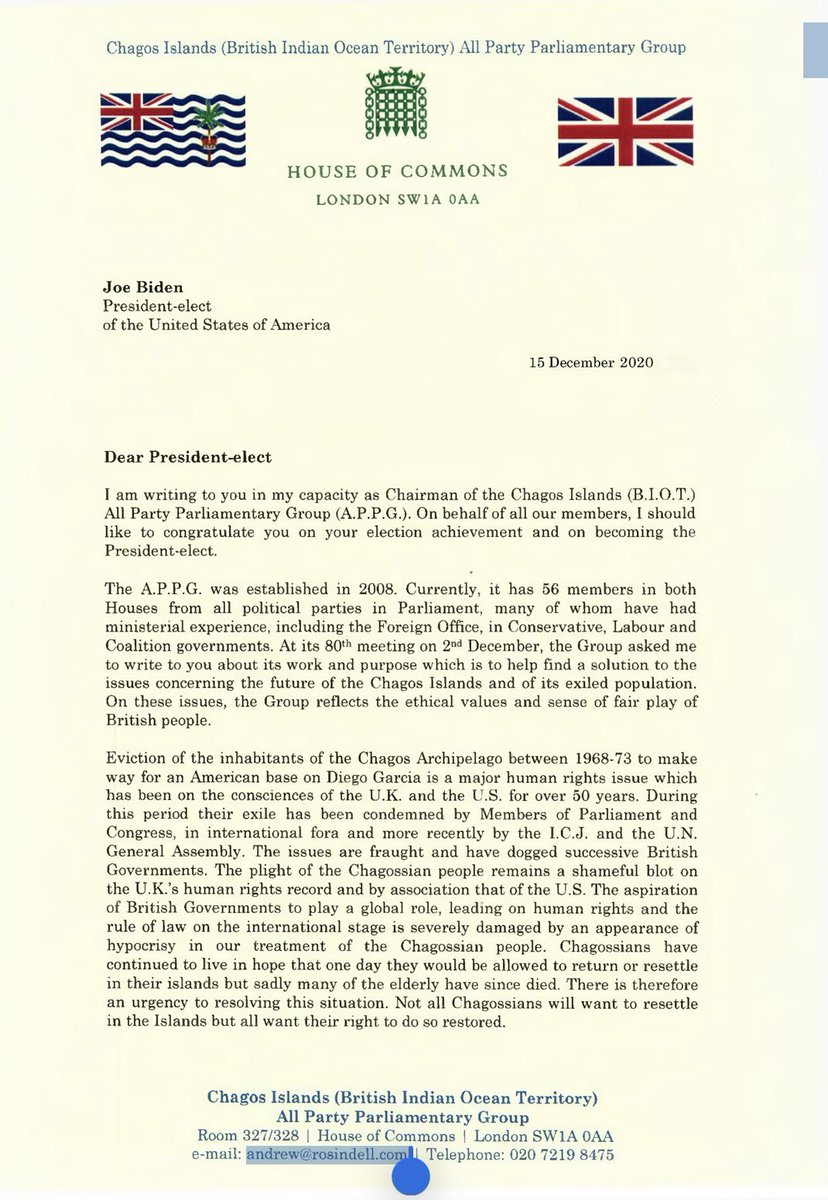
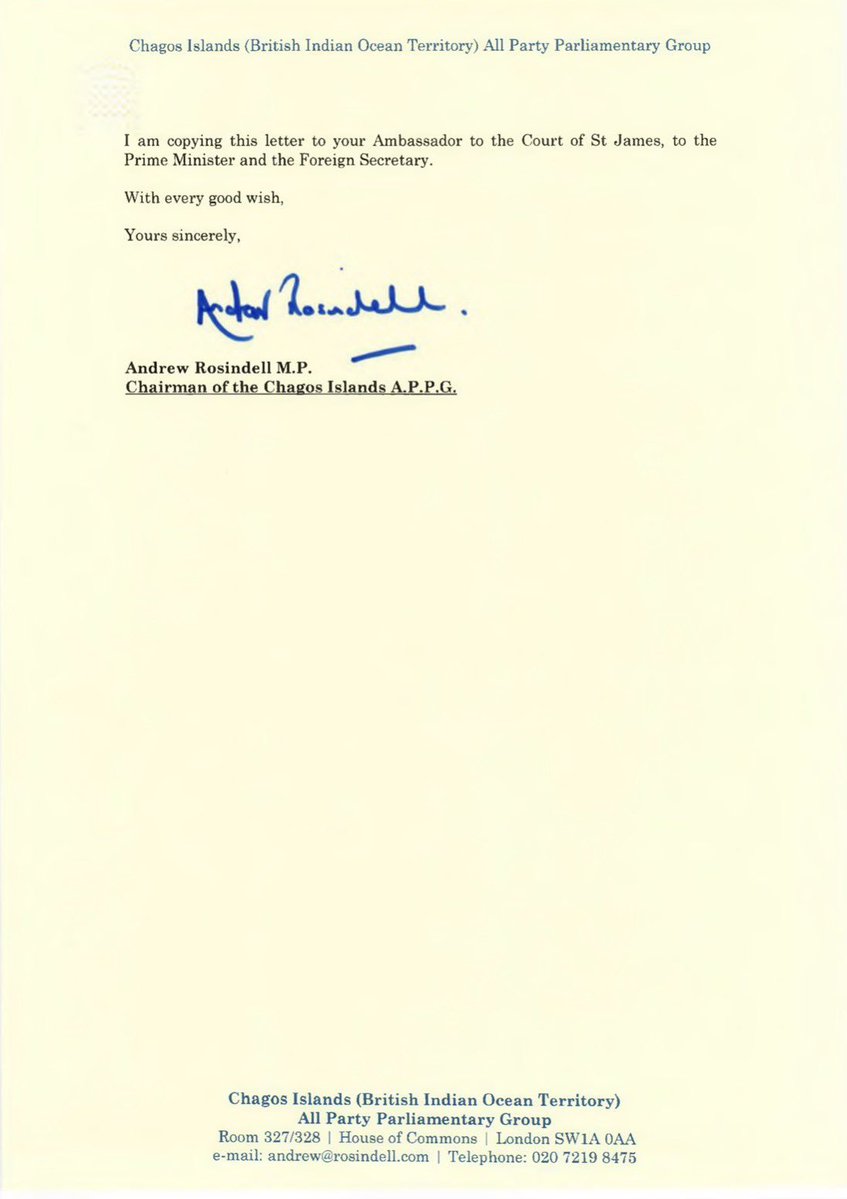
This is you, former Conservative MP, now sitting Reform MP, Andrew Rosindell, writing to former President of the United States, Joe Biden 6 years ago proposing the UK hands to Chagos islands to Mauritius and rents them back on a 99-year lease.
Great Britain threw away 5GW of available wind power during Storm Dave and replaced it using gas 🔥
That's one and a half Sizewell C-sized nuclear power stations, or four Dogger Bank A-sized wind farms.
Or to put it another way, it's a shit load of power.
Why throw it away? Because our straw isn't big enough…
Constraints on the electricity transmission network between Scotland and England (as well as further north in Scotland) mean that we can't move enough energy across the border without overloading the system.
Imagine a cup constantly filling with water, if your straw is too thin then you won't be able to drink enough water before the cup overflows. In our case the straw is the electricity grid at the border, and the water is the energy generated by the wind farms in Scotland.
Any overflowing water would be bad news for the grid so we do everything we can to avoid it.
The result is that we pay generators in Scotland to reduce their output so the cup doesn't overflow. Wind farms are usually picked for this because they are the cheapest to switch off and can provide the volumes of energy needed to resolve the constraints.
However, the electricity is still needed in the south (it's still thirsty) so what happens next is that we replace that lost wind energy at the last minute with electricity generated via (usually) gas. This is not only a waste of low-carbon energy, it's also expensive.
You can see this play out on my map and in the attached visual:
🚦 Traffic-coloured lines show boundary constraints
🟡 Yellow rings show wind farms that were turned off
🔴 Red rings show gas plants that were turned on
I'll post a link to the map in the thread.
BREAKING: The United States Navy is about to provide security escort for commercial vessels passing through a toll booth that charges in Chinese yuan.
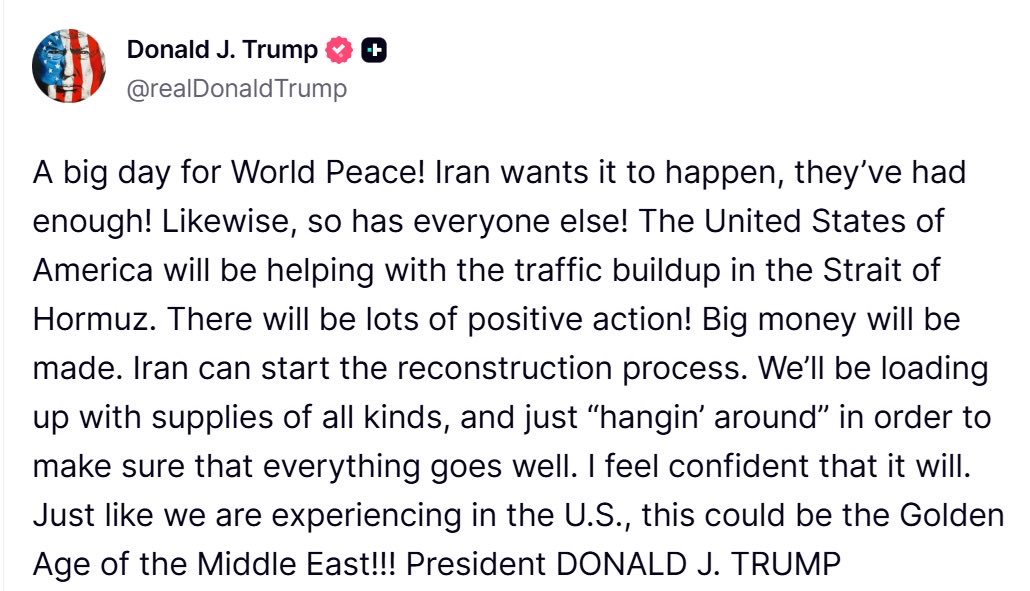
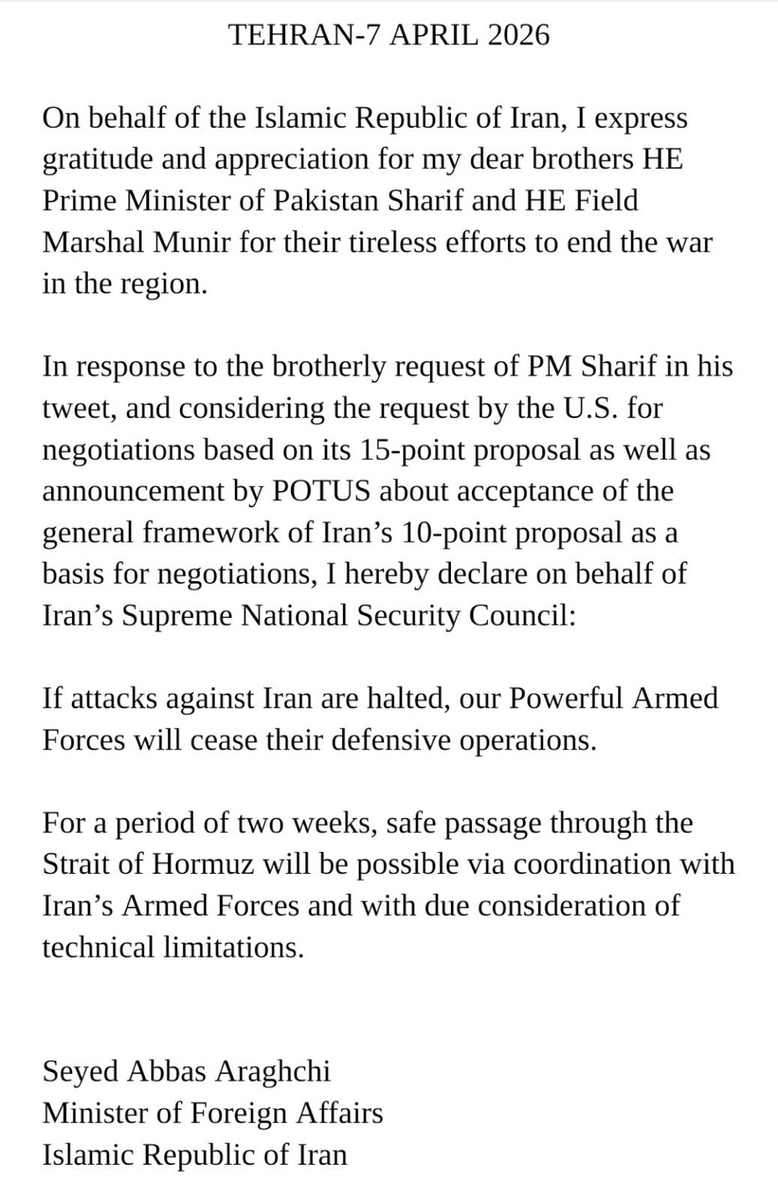
Read Trump’s post again. “The United States of America will be helping with the traffic buildup in the Strait of Hormuz.” Now read AP’s confirmation of the ceasefire terms. Iran and Oman will charge fees on ships transiting the strait. Iran’s parliament pre-approved the Hormuz Management Plan on March 31st with rial-based tolls and coordination with Oman. Bloomberg and Lloyd’s List confirmed that at least two vessels have already paid in yuan through IRGC-linked intermediaries using secret safe-passage codes.
The ceasefire that Trump announced does not prohibit the toll. It does not mention the toll. The post that promises American logistical support for the traffic buildup does not reject the toll. The carrier strike groups that will be “hangin’ around” to make sure everything goes well will be providing the security umbrella under which Iranian military personnel collect yuan from every tanker that passes.
The United States fought a 39-day war that destroyed 85 percent of Iran’s weapons-chemistry capacity, dismantled 130 air defence systems, severed the transport network, struck Kharg Island, and killed the IRGC intelligence chief. The campaign cost billions in munitions, fuel, and deployed assets. And the ceasefire that concluded Phase 1 created a toll booth at the chokepoint the war was fought to reopen, denominated in the currency of the nation that applied last-minute pressure to make the ceasefire happen, collected by the military force the campaign was designed to degrade, and protected by the navy that prosecuted the war.
The Gulf states see it. Saudi Arabia, the UAE, and Bahrain are alarmed. AP reported their concerns about Iranian gatekeeping, economic leakage, and the precedent of charging fees on what was previously a free international waterway under UNCLOS transit passage rules. Oman is co-charging, which fractures the GCC response. Kuwait and Qatar are quiet, prioritising energy security over confrontation. The Gulf is paying the toll. America is providing the escort. China is collecting the currency benefit. And Iran is funding its reconstruction with the revenue.
Deutsche Bank called the war the inception period of the petroyuan. That phrase was published before the toll booth was formalised. Now the toll booth exists, it is legislated, it is operational under the ceasefire, and the world’s most powerful navy is positioned to ensure the traffic flows smoothly through it.
Trump’s strategic logic is sound at the bilateral level. The campaign achieved its military objectives. Hormuz is reopening. Iran is at the table. The tools remain available. Islamabad begins Friday. But at the systemic level, the architecture the ceasefire created is a yuan settlement layer embedded inside an American security guarantee. The molecules that flow through the strait will be priced, insured, and tolled in a framework that did not exist six weeks ago, and the precedent does not expire when the ceasefire does. Iran’s parliament legislated the toll. The legislation does not have a sunset clause.
The Golden Age of the Middle East may arrive. The petrochemical reconstruction will take years regardless. The centrifuges are still spinning. The ghost fleet is still sailing. And the toll booth that the US Navy is about to protect charges in yuan.
Full analysis on Substack.
https://t.co/0fIdGsM5qH
It appears Trump just agreed to give Iran control of the Strait of Hormuz, a history-changing win for Iran.
The level of incompetence is both stunning and heartbreaking.
What on earth is happening?
Donald Trump created an international disaster over absolutely NOTHING and then entered into a negotiation in which he gave up EVERYTHING.
This guy is a massive loser elected by 77 million lost and misguided Americans.
America is weak under Trump.
100,000 American troops in Europe = a free ride for Europeans?
Let's check the facts.
🔹 American military bases are not free
Germany, Italy, Spain, and Romania pay for the infrastructure, land, utilities, and civilian personnel of US bases. Germany alone contributes over $1 billion annually to support the American military presence on its soil.
🔹 Europe is the largest customer of the American defense industry
F-35s, Patriot missiles, HIMARS, Apaches — all purchased by Europeans with real money. Every security alarm in Europe translates into contracts for Lockheed Martin, Raytheon, and Boeing.
🔹 American bases in Europe don't only protect Europe
Ramstein in Germany coordinates operations across Africa and the Middle East. Sigonella in Italy covers the Mediterranean and North Africa. Romania secures the eastern flank and the Black Sea. These are global American strategic assets — not neighborhood security for Europeans.
🔹 Command is American, not European
NATO is always led by an American Supreme Commander (SACEUR). Europe contributes troops, bases, and money — but America holds the controls. Those who control the structure are not the ones getting a free ride.
🔹 The nuclear umbrella is not altruism
American nuclear deterrence in Europe keeps the dollar as the world's reserve currency, keeps European markets open to US corporations, and legitimizes American hegemony against Russia and China.
But what would actually happen if America withdrew its troops from Europe?
🔹 For America — immediate strategic losses
Without bases in Europe, American response time to any crisis in Europe, Africa, or the Middle East grows from hours to days. Ramstein, Sigonella, and Incirlik cannot be replaced by aircraft carriers. Infrastructure built over decades disappears overnight.
🔹 The American defense industry loses its biggest customer
A Europe without the US umbrella will build its own defense industry — and fast. Airbus Military, KNDS, Leonardo, and Rheinmetall will take the contracts that Lockheed and Raytheon currently win. Billions of dollars shift from America to Europe.
🔹 The dollar weakens
Dollar hegemony is partly sustained by American global military credibility. A withdrawal from Europe signals to the world that America no longer guarantees the postwar order. Alternatives — the euro, the yuan — become more attractive as global reserve options.
🔹 Russia wins without firing a single shot
Not necessarily through immediate invasion — but through political influence, energy pressure, and the gradual destabilization of countries on the eastern frontier. The Baltic states, Poland, and Romania enter a security grey zone that no one can guarantee quickly.
🔹 China watches and draws conclusions about Taiwan
A precedent of withdrawal from Europe sends a direct signal to Beijing: American commitments are negotiable. The cost of deterrence in the Pacific rises exponentially.
Withdrawal is not isolationism. It is strategic abdication.
America would not be leaving Europe because it no longer has interests there.
It would be leaving while ignoring that those very interests are what make it a superpower.
The "free ride" narrative doesn't describe Europe.
It describes exactly what America has in Europe.