Sustainable agriculture, slow food, good drink, an honest sweat, and seeing the world. Fan of RVA, student of all things local across our global village.
“There is no instance of a country having benefited from prolonged warfare.”
— Sun Tzu, The Art of War
“In order to get elected, @BarackObama will start a war with Iran.”
— @realDonaldTrump, November 29, 2011
At the outset, I want to say he was right about Obama. He simply had the wrong President.
I am the Director of Operational Sequencing at the National Security Council.
You will not find the title on an org chart, because an org chart is a document that might be subpoenaed, and I deal exclusively in things that may or may not exist. I do not plan wars. Generals plan wars. Generals draw arrows. I take the arrows and find them a slot, the way an executive assistant finds a Thursday for a meeting everyone already knows will go badly.
The military has a name for what I do. They call it battle rhythm. The doctrine manual defines it as “a deliberate cycle of command, staff, and unit activities intended to synchronize current and future operations.” In plain English: meetings. War, at the level where I work, is a recurring series of meetings with a body count.
Every officer in this building has read Clausewitz, or at least the sentence.
"Der Krieg ist eine bloße Fortsetzung der Politik mit anderen Mitteln." War is merely the continuation of policy by other means.
What the briefings never mention is that the German word Politik means two things. It means policy: the cold, rational aims of a state. And it means politics: polling, turnout, the price of gas in a swing county in October. Clausewitz meant the first. For two hundred years the translators have politely chosen the first.
In Washington we chose the cheaper translation.
I am the organizer of the invite. And for the first time in American history, the invite is the commander in chief.
Let me show it to you. It has been on my screen since February.
Title: Strike — Iran.
Location: Iran.
Organizer: Me.
Status: Tentative.
It has been tentative for eight months. In my whole career I have never seen a calendar entry survive this long without someone either accepting it or having the decency to decline. Nobody has done either. A war that cannot be accepted and will not be declined: that is the most precise description of American foreign policy I can give you, and it fits in a grey box.
He told everyone when it would be. October 8, on his own telephone, to the whole world, including the country on the invite: “We will not be attacking Iran at any time prior to the Midterm Elections to be held in the United States on November 3rd.” Later, asked when it might happen, he said, “Most people think it will happen after the elections.”
Previous administrations timed wars to elections and denied it under oath. We posted the availability publicly and let the enemy read it along with everyone else. It is the first war in history whose start date was shared with the target as a courtesy to the electorate.
You want to know how a war gets a date. Every executive assistant in America already knows. You open the Scheduling Assistant, you look at the attendees, and you drag the box along the grid until every row turns white.
Here are my attendees.
The first row is the Election. Busy, solid blue, through November 3. A war is a product, the voter is a consumer, and you do not ship a product with a recall notice stapled to the box. Andrew Card, chief of staff to an earlier President, explained my entire discipline in 2002, when asked why the case for Iraq launched in September: “From a marketing point of view, you don’t introduce new products in August.” I have that sentence taped above my monitor. Beside it I have taped the doctrine that was supposed to stop me. In 1984 Defense Secretary Weinberger laid out six tests a war must pass, and the fifth was that there “must be some reasonable assurance we will have the support of the American people.” We have taken that test more seriously than anyone in history. We checked the support. It wasn’t there. So we moved the meeting.
The second row is the Voter, Ohio. He is less a person than a location, and the location is a gas pump. He is the attendee who actually decides the war. We will strike their nuclear sites. We will strike their missiles and drones. According to the reporting, the plan may spare their refineries “so as not to push gasoline prices higher.” A burning refinery in Iran is a five-dollar gallon in Ohio, and Ohio votes. Pew asked Americans this month what worries them most about the war. Seventy-three percent said gas prices. Seventy-one percent said American casualties.
The pump beat the coffin by two points.
The Iranians have read the same poll. Their analysts say it openly: the best way to pressure the President is to raise oil prices, “because it will hurt the American people.” So both sides of this war have invited the same man. He stands at a pump in Ohio, watching the numbers roll, the most strategically significant terrain in the Middle East, and he has never once RSVP’d.
We are so devoted to him that we went to the Russians for diesel. Treasury issued a license letting Russian fuel flow, valid until 12:01 a.m. on April 7, 2027. Goldman Sachs estimated the effect at two to five cents a gallon. We relaxed pressure on one war to save a nickel in the middle of another. Even the sanctions waiver has an end date. Everything in this town has an end date except the wars.
The third row is the Moon. The military prefers to work at night, and night belongs to astronomy, which does not take meetings. The Moon is Free on November 9. New moon. Six days after the votes are counted, the sky over Iran goes perfectly black. The Moon has been on these invites before. In 1944, Eisenhower’s planners needed it for D-Day: the right tides, and moonlight for the paratroopers. The Moon was a required attendee. Afterward his chief of staff wrote in his memoir that they had needed “a late-rising full Moon,” and an astronomer later showed that the Moon had in fact risen before sunset. Even at the greatest operation in American history, the planners misremembered the Moon. In 2026 we have made progress. We are inviting the Moon for its absence.
The fourth row is the Carriers. Three of them, plus the Marines, plus the jets. Out of Office until early November. You cannot reschedule a carrier. It is the one thing in Washington that a post cannot accelerate. It crosses an ocean at the speed of physics, and physics, I’m pleased to report, also preferred to wait until after the midterms.
One carrier has already come home. The USS Abraham Lincoln, the ship where a President stood under a banner reading Mission Accomplished in 2003, in a speech timed, the reporters said, for “magic hour light.” It returned to San Diego on October 8, after 322 days at this war. That was the same day the President announced the war was on hold until after the election. The stage from the last finale docked on the morning this one was postponed. Even the props are on a schedule.
Three carriers in the Gulf. The Navy has eleven. I will return to the other eight.
The fifth row is Israel. Busy October 27, election day. Their Prime Minister said it was “not convenient” for war to resume weeks before a vote “in a country with no absentee voting.” I admire him enormously. There is a democracy on earth whose soldiers cannot vote from the front, so the front must wait for them to come home and vote. Two elections, a week apart, each holding the same war in its mouth like a coin, waiting to see who wins before deciding whether to spit.
The sixth row is Congress. Optional attendee. The War Powers Resolution of 1973 gives the President “sixty calendar days” before he must withdraw forces Congress hasn’t authorized. It is the only law I know of with a calendar written into the text, and it is the only calendar in Washington that nobody keeps. The Senate has voted fourteen times on whether this war is legal. On the tenth try it passed, fifty to forty-eight. The President called the vote “poorly timed and meaningless.” Poorly timed. I treasure that phrase. In his eyes the legislature committed the one sin my office exists to prevent. It voted on the wrong day. Congress has not declared war since 1942. Every war since has been a meeting it was cc’d on after it started.
There is one more attendee. I added her quietly, and I have never told the generals.
Nielsen.
Her November book runs from October 29 to November 25. That is the old television ratings period, the one the industry still calls sweeps. Election Day falls inside it. So does the moon. So does the strike. On the first of November the clocks fall back an hour, inside the ratings period, and the night over Tehran grows longer by precisely the amount of time America sets aside to watch television. When I dragged the war across the grid, the Scheduling Assistant highlighted the slot and suggested it, the way it suggests lunch: Recommended: November Book.
I did not arrange this. I want to be clear about that. The network calendar and the war calendar were simply always the same document. I only noticed.
And then there is the last row. The one I check every morning before coffee.
The President. Status: Maybe.
I have been told, by a man who produced his television show, that the most decisive sentence in the history of American entertainment began as a note. According to that producer’s account, the star was asked how he would end a contestant’s run, and he said he’d probably just fire him. A producer said, “Why not just say that?” He said, “Fine.” The decisiveness came afterward, in the edit. The same producer wrote that a finale “must appear close, even if it’s not.” I keep that above my monitor too, beside Card.
So I am not alarmed by Maybe. Maybe is the raw footage. Somewhere, someone is always waiting to cut it into a decision.
He has been Maybe since February. He was Maybe on April 7, when I had everything booked and he announced a two-week ceasefire instead. Maybe in May. Maybe on June 11, when he promised to hit them “VERY HARD TONIGHT,” and three hours later I received the notification every office worker in America has learned to dread:
Updated: Strike — Iran. This event has been moved.
Maybe in August. And Maybe earlier this month, with both air forces on the highest alert, the pilots in their seats, the target deck loaded, the reminder already sounding fifteen minutes before H-Hour. He looked at his calendar, and his calendar said November, and he went to bed.
The planners call it whiplash. I call it a recurring meeting. I have sent this war out more times than anyone has fought it. Every strike that doesn’t happen becomes a peace announcement, and every peace announcement is a news cycle. We have found a way to sell a war twice: once when we threaten it, and once when we graciously decline to show up. It is the only business model in history in which the product and the refund are the same press release.
He has a phrase for the gaps between episodes. In June of last year the White House announced that he would decide on Iran “within the next two weeks,” because of negotiations “that may or may not take place.” The bombers left forty-eight hours later. Two weeks, in this administration, is a genre. It is what you say over the closing credits so the audience comes back. This month, asked about the post-election strikes, the White House declined to discuss plans “that may or may not exist.” Same writers’ room. Same phrase. The show has a house style.
He runs other people’s calendars the same way. This month he declared an energy ceasefire between Russia and Ukraine. Asked why both sides denied agreeing to it, he explained: “They agreed because I said they agreed.” That is the RSVP logic of the entire administration. You are attending because I sent the invite. The Kremlin, which understands calendars better than anyone, offered a counterproposal: it would stop striking Ukraine on “election day itself.” A ceasefire exactly one day long, scheduled for a vote. I wept when I read it. It was the first time in this war that anyone had spoken my language back to me.
You’ll want the end time. Everyone wants the end time. It is the only field on the invite that has ever been edited for the reader’s comfort.
On February 28, the first day, he said he could end it in “two or three days.” On March 1, “four to five weeks.” On March 31, “two or three weeks.” In September, the war would be over “very shortly after the election.”
Look at what happened to the units. Days, then weeks, then weeks again, and finally, in September, the honest unit. Elections. The war’s real unit of measurement was always the polling cycle. We simply lacked the courage to change the setting until autumn.
The new plan is three days. An adviser to Iran’s negotiator called the three days a “fantasy.” I would never use that word in my office. I call it an estimated duration, which is a fantasy with a classification marking.
I have an archive of three-day wars. In February 2022, America’s top general told Congress that Kyiv could fall within seventy-two hours. As I write this, that seventy-two-hour war is 1,701 days old. By Election Day it will be 1,713. Rumsfeld, before Iraq: “six days, six weeks. I doubt six months.” The six months are in their twenty-fourth year.
The theorists warned us. Clausewitz: “Everything in war is very simple, but the simplest thing is difficult.” Mike Tyson, the best strategist of the lot: “Everybody has plans until they get hit for the first time.” And Eisenhower, who knew exactly what my job was: “Plans are worthless, but planning is everything.” He meant that the work of planning prepares you for the surprise. We took him literally. The plans are worthless. The planning never stops. My calendar is the purest expression of his doctrine in the history of the republic.
Clausewitz also wrote that “the first, the supreme, the most far-reaching act of judgment that the statesman and commander have to make is to establish… the kind of war on which they are embarking.” In my office we have refined this. The first, the supreme, the most far-reaching act of judgment is to establish what week it is.
People in my building say “the fog of war” and attribute it to Clausewitz. He never wrote it. He wrote that three quarters of the factors in war are “wrapped in a fog of greater or lesser uncertainty.” Ours is different. Our fog has a date.
Even the time zone is inconvenient. Tehran runs three and a half hours ahead of Greenwich. Not three, not four. Three and a half. The whole world keeps its clocks on the hour, and the one country we keep almost bombing has chosen to live in the middle of one. Every time I convert H-Hour I lose thirty minutes, and I have come to suspect that this is their real air defense.
Now the location field. Pickaxe Mountain. Beneath it, under layers of granite, is a nuclear site. The President has called it a target for “a nice, big, fat shot right in the front door.” In the notes field, someone has entered the weapon. The MOAB. GBU-43/B. The Mother of All Bombs.
I am told he likes the name.
He described it on Newsmax himself: “It’s like a tiny nuclear bomb, but the mother of all bombs is one big bomb, but it’s not nuclear.”
The difficulty is that the MOAB explodes above ground. It flattens what is on the surface, and what we want to destroy is under the granite. One official called it “a massive information operation type weapon that is great for huge area clearance but not much else.”
An information operation. A bomb whose principal payload is its own nickname.
We own a weapon built precisely for this job. It’s called the Massive Ordnance Penetrator, and it is engineered to go through mountains. Nobody has ever called it the mother of anything. It has no brand. We have reached the moment in American military history where the munition is chosen the way you choose a domain name.
Iran has replied that if we have the Mother of All Bombs, they will show us the Father of All Bombs. Nobody knows what it is. Possibly a weapon. Possibly a name. We have entered the genealogical phase of deterrence. Next year someone will unveil the Grandmother, and somewhere a man in my chair will be asked to find a weekend for the family reunion when the moon is dark.
I said I would come back to the other eight carriers. There is a second calendar on my screen, and I have to tell you about it.
In March 2021, the commander of US forces in the Pacific told the Senate that the threat to Taiwan was “manifest during this decade, in fact in the next six years.” Our intelligence chiefs say Xi Jinping has instructed his military to be ready by 2027. An official once reassured reporters: “It’s not like Xi Jinping has a calendar up in his office with a date in 2027 marked ‘invade Taiwan.’”
He doesn’t. We do. I keep it in the next window.
This year the Iran war pushed the President’s summit with Xi back six weeks. A war moved a summit. The Congressional Budget Office estimates the Iran war has used between a half and two-thirds of our key missile interceptors, and that rebuilding them will take at least five years. Five years from now is past 2027. Every interceptor I schedule over Iran is debited from the Taiwan calendar. A wargame run by a Washington think tank found that in a fight over Taiwan the US could run out of long-range anti-ship missiles in less than a week. In my world a week is a unit of time. In theirs it is a unit of ammunition. Two invites, one stockpile, and nobody in this building has ever checked whether they overlap, because the overlap is in 2027, and 2027 comes after two more elections.
I am not the first man to hold this job. I am only the first to post the schedule. In December 1997 a film called Wag the Dog came out, about a President who invents a war to distract from a scandal. Eight months later, three days after President Clinton testified about Monica Lewinsky, cruise missiles hit Afghanistan and Sudan, and the Defense Secretary was asked on television about the “striking resemblance.” That December, on the eve of the impeachment vote, Clinton bombed Iraq. The House delayed its debate. It impeached him on the day the bombing stopped. Even the impeachment was scheduled around the war. My predecessors at least had the decency to deny it.
There is one thing my calendar cannot do, and I have tried.
On the first day of this war, a strike hit a girls’ school in a town called Minab. More than a hundred and forty children died. I went looking for it afterward. I don’t fully know why. And I learned the thing about calendars that nobody teaches you: they only look forward. That is their whole purpose. Minab happened on day one, and day one has scrolled up off the top of the screen, into the grey, where the past goes, and the past has no slots. Nothing behind us can be moved, so nothing behind us is displayed. I am very good at my job. I could not bring it back into view.
The White House managed something I couldn’t. A day after our own investigation found we were likely responsible for the school, it posted a montage. Real strikes, cut with Top Gun, with Call of Duty, with Tropic Thunder, which is a comedy about men who think war is a movie. It ended on the words Flawless Victory. The man who directed Tropic Thunder answered with four words: “War is not a movie.”
He was wrong about one thing. Ours had an edit.
The attachments, for those who still open attachments. Thirty-eight billion dollars through August, according to the Congressional Budget Office. Diesel from three seventy-six a gallon to six thirty-two. And from the last generation of short wars, the ones my predecessors booked into two-week slots, an invoice of roughly eight trillion dollars and at least 940,000 dead by direct violence alone. Every one of those wars started as a tentative hold.
He used to understand all of this. That is what still amazes me. In 2011 he recorded a video. He said the President would start a war with Iran because it was “the only way he figures that he’s going to get re-elected.” He said that “to start a war in order to get re-elected” would be “an outrage.” He tweeted it at least seven times. “I always said @BarackObama will attack Iran, in some form, prior to the election.” And in October 2012: “Now that Obama’s poll numbers are in tailspin – watch for him to launch a strike in Libya or Iran. He is desperate.”
Obama never did it. He negotiated instead. The prophecy sat in the archive, unclaimed, a hold with no meeting attached, waiting for its President.
Then the man who wrote it stood on a stage on the night he won and said, “I’m not going to start a war. I’m going to stop wars.” At his inauguration he promised to measure his success by “the wars we never get into.” This year, when someone read those sentences back to him, he said, “I didn’t guarantee no war.”
He was right in 2011. I want that on the record. He was right about everything except one detail, and that detail is my entire career.
The amateur’s version, the 2011 version, the one a man in a gold tower imagines from the outside, has a President starting a war to get elected. The professional knows it runs in the other direction. Before the votes are counted, a war is a liability: a five-dollar gallon, a flag-draped box on the evening news. After the votes are counted, a war is free.
So instead of starting a war to win an election, we postponed one. We announced the postponement, the postponement polled beautifully, and the war is still sitting exactly where I left it, the first week of November, like a package on a porch.
He predicted the scandal perfectly. He just never imagined he’d be the one to schedule it.
In 1985 a man named Neil Postman wrote that Orwell feared those who would ban books, while Huxley feared there would be “no reason to ban a book, for there would be no one who wanted to read one.” He ended by suggesting that “Huxley, not Orwell, was right.” From my desk, I would add that they were both right, on different days of the week. Orwell runs the war. Huxley runs the schedule.
I keep one historical document pinned to the top of my inbox, and I will tell you what it is, and then I have to go.
On November 11, 1918, the Allies and Germany signed the armistice that ended the First World War. They signed it a little after five in the morning. The war was over. Everyone knew it was over. But the generals set the ceasefire for eleven o’clock, so it would fall at the eleventh hour of the eleventh day of the eleventh month. A tidy time. A good time for the history books. A time that would look right on the calendar.
In the six hours between the signing and the round number, about 2,738 men died. The last American killed was a private from Baltimore named Henry Gunther. He charged a German machine-gun nest at 10:59. The Germans, who knew the war was over, tried to wave him off. He kept going. He died one minute before the timestamp. Some of the French soldiers killed that morning, I am told, were buried with the tenth as their date of death, so that no one would have to admit they had died in a war that had already ended. Even the dead were rescheduled.
I think about Henry Gunther every time I drag a box along the grid. That is the profession I belong to. Men like me have always believed a war should end, or begin, when it will look right. Eleven on the eleventh. Six days after the vote. The first dark night after the count. Inside the November book.
November 11 falls two days after the new moon this year. Eight days after the polls close. Fourteen days before the ratings period ends.
Polls close at eight on November 3. The clocks fall back on the first. The carriers arrive by the fifth. The moon goes out on the ninth. The invite is drafted, the reminder is set, the location is a mountain, the notes field contains a nickname, and the President’s status reads, as it has read every morning since February, Maybe.
In eight months I have sent this war out again and again.
I have never once been asked to send an invitation for a peace.
I wouldn’t know whom to invite.
Nobody is free.
As an illegal alien who came here to loot and plunder, I’d like to file a formal complaint with the Department of Looting, because eleven years in, I have yet to receive any loot.
Let me walk you through my plunder. I roof houses in Austin. In August. A black-shingle roof at 3 p.m. is the closest a living man can get to the surface of Mercury without a NASA budget, which, incidentally, I also help pay for. My plunder arrives every other Friday, minus federal withholding, minus Social Security, minus Medicare.
I did an inventory of everything I’ve looted from the American taxpayer: one Honda Odyssey with 214,000 miles and a check-engine light that has been on longer than I’ve been in the country, a tool belt, a back that sounds like bubble wrap, and a daughter who is a U.S. citizen. That’s the haul. Al Capone would be ashamed of me.
Here’s how my criminal enterprise works. The number on my W-2 doesn’t match anything in Baltimore, so my Social Security taxes go into the Earnings Suspense File. I think of it as my 401(k), except the k stands for “kept.” My money goes in, my name never comes out, and the cash pays the retirement of my neighbor Dale. Dale and I are both middle-class taxpayers. The difference is that someday Dale will get a check, and I will get a letter. In 2022, people like me put about $26 billion into Social Security and $6 billion into Medicare, programs we can’t touch. If that’s fraud, it’s the first scam in history where the con man Venmos the mark.
I can’t get SNAP. I never could. I’ve been trying to commit welfare fraud for over a decade, and the system rejects me on page one. My cousin came the legal way, as a refugee, with a file so thick it has its own zip code, and last year Congress took his food stamps to fight fraud. The fraud was him eating. He’s now on what I call the Freedom Diet: three jobs, zero lunches.
My daughter was born in Austin in 2025. She’s fifteen months old, eats exclusively shredded cheese, and is as American as a brisket line at 6 a.m. Congress gave every newborn citizen $1,000 in a Trump Account, unless a parent lacks a valid Social Security number, so her first investment portfolio got stopped at the border of her own crib. Same with the child tax credit. A one-year-old is being sanctioned for her father’s paperwork. She can’t say “Dada” yet, but she’s already learned “inadmissible.”
Meanwhile, I pay sales tax on every diaper and property tax baked into my rent. In 40 of 50 states, people like me pay a higher state and local tax rate than the top 1 percent. Somewhere in Westlake, a man with a family office pays a smaller share than the guy who shingled his pool house. That man has a guy who handles his taxes. So do I. Mine carries a rifle.
That’s because last year I filed honestly, with my ITIN, on time, like the world’s most incompetent plunderer, and the IRS thanked me by passing my file to ICE. A federal court later ruled the arrangement violated privacy law. As far as I know, I’m the only taxpayer in America who gets a home visit for filing early.
So I tried to report myself. I called the fraud hotline and said, “I’m the scammer Stephen was talking about, please come take your money back.” I was on hold for four hours. They transferred me to Medicare, which I fund and can’t use. The hold music was a recording thanking me for my contribution.
Here’s my final audit. I pay in and can’t take out. My kid gets docked for my sins, my refugee cousin gets put on a diet for his paperwork, my tax return doubles as an ankle monitor, and every April I fund the retirement of the man on TV calling me a parasite.
If this is looting, I want to speak to the manager of looting. I’ve been informed the manager is unavailable, currently live on cable news, and that my complaint has been forwarded to ICE.
Please hold. Your plunder is important to us.
I don't want a city on Mars.
I don't want AI in every app.
I don't want data centres in space.
I want clean water.
I want a stable climate.
I want bees to survive.
Dr. Jane Goodall filmed an interview in March 2025 with the understanding it would only be released after her death. This is her final message from it.
@MikeNellis Yes to primaries/debates; also Harris’ team missed opp to exploit Trumps abject debate failure/mental decline-8 foot tall orange-coiffed chicken at every rally-debate “bump” never happened.). They utterly failed at baiting an obviously easy mark.
Soooo…@Elanco4Pets and @BayerPharma our two Large Seresto EIGHT month flea collars didn’t work after all directions were followed. At $70 a pop no less. Your rep literally just said that fleas will remain on our two pets for months after the collar is applied. Before she hung up
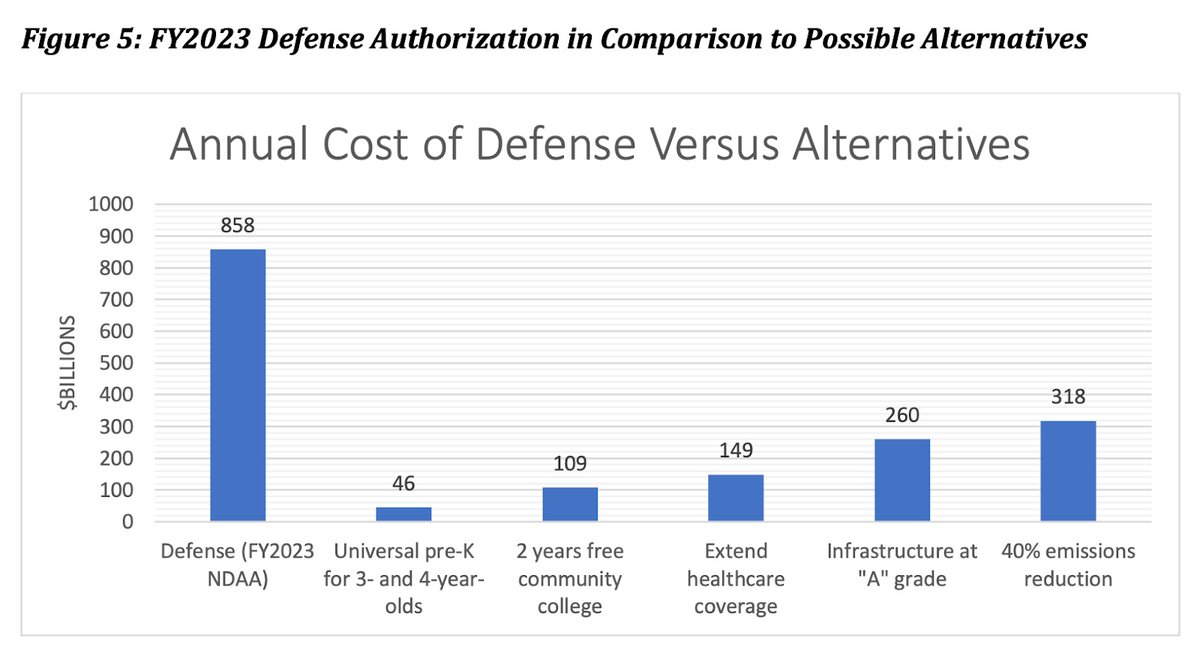
6. Since 2015, the U.S. has added more than $300 billion to annual defense spending. That is equivalent to the annual cost of universal pre-K, 2 years of free community college for every HS graduate, and health insurance for every uninsured American — combined.
Nature has a lot of diversity. Lets stop judging and celebrate it https://t.co/iJAhZBSLAF Redefined: The Idea of 2 Sexes Is Overly Simplistic via @sciam