Linking MCP data is how you elevate your AI game.
19 of my favorites (for investors)
📊 Market Data & Pricing
→ Polygon, Daloopa, CapIQ, FactSet
→ Why: Live prices, fundamentals, as-reported filings
📄 Filings & Macro
→ SEC EDGAR, FRED, World Bank, BLS, Nasdaq Data Link
→ Why: Pull primary sources without leaving chat
🔍 Research & News
→ Perplexity, Exa, Firecrawl
→ Why: Agentic search, grounded with citations
🤝 CRM, IR & Deal Flow
→ Affinity, HubSpot, DocuSign
→ Why: Move LP, IR, and pipeline data into Claude/Codex
📝 Docs, Sheets & Workflow
→ Notion, Airtable, Granola, Slack
→ Why: Read and write the private data you run on
Setup in 3 steps:
1. Pick your servers from the 19 above
2. Spin up the MCP server (local or hosted)
3. Settings → Connectors in Claude / Codex
Try it out for yourself and you'll notice a big difference...
P.S. Let me know if you want the PDF version of this resource
A trading heuristic I've noticed:
Once a rotation is "consensus" across crypto traders, the blow off the top finishes within a month.
...which makes sense because they're the last money to buy anything
Surprised more people don't use this as a momentum monitor.
Your AI token bill is out of control.
My (free) 284-page book shows you how to fix it.
The unit price drops every quarter.
Yet your bill climbs anyway.
Usage explodes across the desk.
Agents burn tokens at multiples of chat.
Nobody can explain the invoice.
Here's what the book teaches for finance:
1. Map exactly where every token gets burned
2. Know when a task is worth a pricier model
3. Cut the bill with caching and batching
4. Route cheap models to the easy work
5. Negotiate your AI contract down
6. Stand up AI FinOps
The book goes deep on all of it:
↳ Worked cost-math you can copy line by line
↳ A cost-estimation worksheet you can run
↳ Case studies from real fund setups
↳ The waste traps that drain budgets
↳ Checklists for every lever
I could've charged for this. I didn't.
Want the 284-page book?
Just:
1. Like this post
2. Make sure we are connected
3. Comment "TOKEN"
4. ...and I'll DM you ASAP
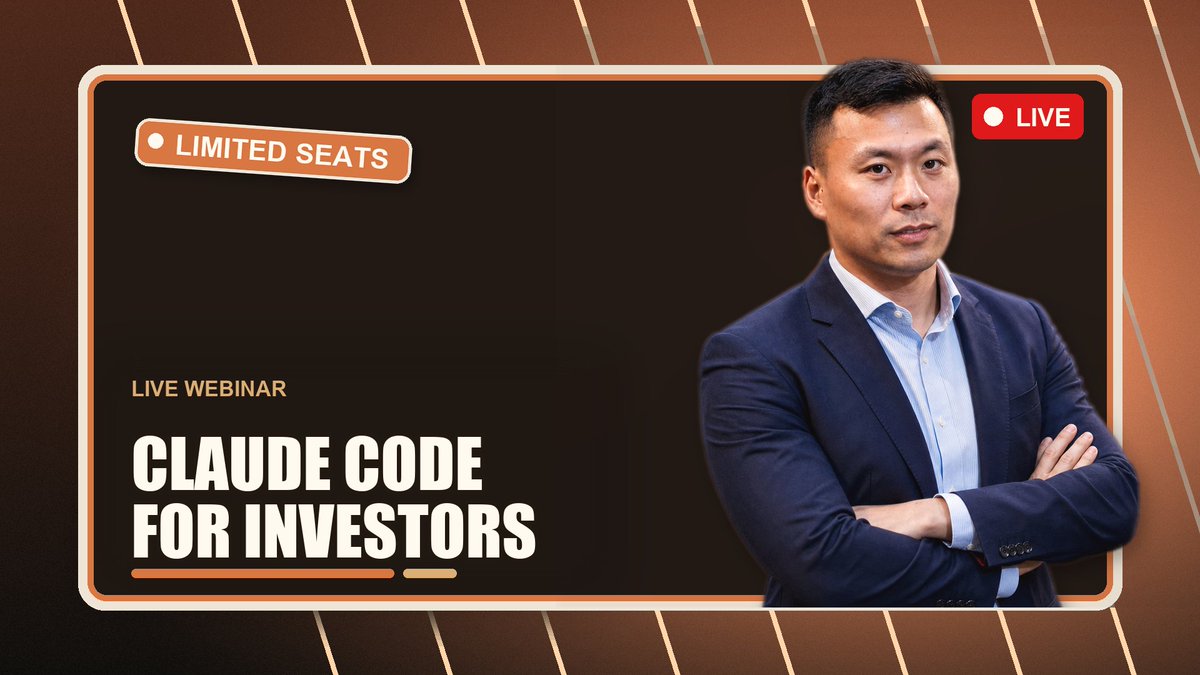
I've been teaching Claude Code to hedge funds for 7 months.
Now I'm running the same material as a live cohort.
July 13-17.
2 hours per day.
Our first cohort had ~200 PMs and analysts from Goldman, HIG Capital, AllianceBernstein and more...
What you'll learn:
-> How to build an AI agent stack that runs research 24/7
-> How to surface investment ideas and run diligence in 30 min
-> How to run forensic accounting and filings analysis with AI
-> How to build finance specific Claude skills
-> Plus live Q&A on your specific use cases
This is the same playbook the largest funds paid us hundreds of thousands for at Wall Street Prompt.
Now I'm teaching it to YOU :)
Want the registration link?
Just:
1. Like this post
2. Make sure we're connected
3. Comment "COHORT"
....And I'll DM you ASAP
If you're wondering "how" to design the right AI tool stack for buyside workflows, here it is:
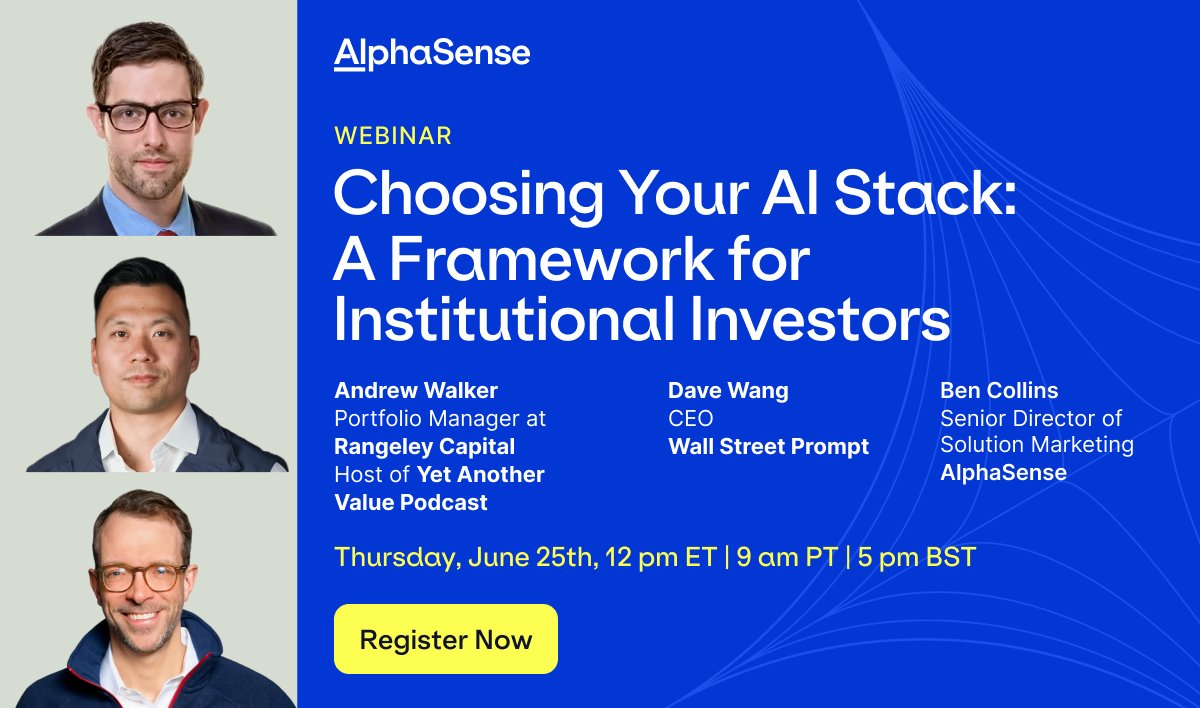
Tomorrow I'm breaking down the fix in a free live session.
With Andrew Walker (Rangeley Capital) and Ben Collins (AlphaSense).
What we get into:
→ The 3-layer stack: base model, your data, private context
→ The 4-part test that vets any AI tool
→ Where AI breaks for finance
→ Common AI mistakes practitioners make
Thursday, June 25th.
12 pm ET | 9 am PT | 5 pm BST
Comment below and I'll send you the registration link.
How does AI change the future of investing?
1. AI erases the line between quant and fundamental now
2. Conviction and human judgment become the scarce edge
3. Every AI workflow your team uses compounds over time
4. Alpha moves from who has the most data to who thinks
5. Proprietary data and feedback loops become the moat
6. Research that took days now gets done within minutes
7. One analyst now covers 100 stocks with depth, not 15
8. Winners redesign the whole workflow, not just add AI
9. Analysts stop gathering data and start creating edge
10. Mid-level analyst roles get squeezed from both sides
11. AI-driven crowding creates entirely new market risk
12. First movers build leads that followers can't match
I filmed a 47 minute private lecture on this exact topic at Harvard as part of my work with the Harvard Data Science Initiative.
And I'm sharing the link with you free.
Just:
↳ Follow me
↳ Like this post
↳ Comment "lecture"
I'll DM you ASAP.
How can Claude Code build a 1 man hedge fund?
1. CLAUDE. md → Your control center
2. Skills → One-command diligence workflows
3. MCP Servers → Live data pipeline
4. Sub-Agents → Parallel research team
5. Worktrees → Scenario stress-testing lab
What each layer does:
(Comment "GUIDE" for the PDF to follow along)
Layer 1: CLAUDE. md
Claude Code reads this file first for any task (it's the "brains")
→ Preferred multiples & valuation approach
→ Investment philosophy & edge
→ Diligence checklist format
→ Sector coverage universe
→ Thesis structure
→ Exit criteria
Layer 2: Skills
Skills are your automated workflows....
→ /diligence-checklist — Full checklist run
→ /filing — SEC filings vs. prior quarters
→ /mgmt — Management guidance
→ /change — Last quarter changes
→ /screen — Quantitative screen
→ /earnings — Earnings analysis
→ /comps — Comp tables
Layer 3: MCP Servers
MCP Servers are your live data feed....
→ Web Scrape (News, press releases, IR decks)
→ FRED (Rates, GDP, CPI, unemployment)
→ Yahoo Finance (transactions, ratios)
→ SEC EDGAR (10-Ks, 10-Qs, proxies)
Layer 4: Sub-Agents
Sub-Agents are your research team working in parallel.
→ Multi-company agents (3-10 tickers at once)
→ Insider transaction cross-reference
→ 3-year credibility scoring
→ Revenue quality analysis
→ Bear case agent
→ Bull case agent
Layer 5: Worktrees
Worktrees let you branch your analysis.
→ Run multiple scenarios without polluting base case
→ Stress-test assumptions on multiples
→ Base case + isolated branches
→ Compare outputs side by side
→ Merge best scenario back
The full workflow:
Step 1: CLAUDE. md defines your edge
Step 2: Run /screen → skill pulls data via MCP
Step 3: Pick ticker → /diligence-checklist triggers 5 sub-agents
Step 4: Agents return formatted memo
Step 5: Branch into worktrees to stress test assumptions
I break down the entire build in my (free) guide.
Want my cheat sheet to get started building your Claude Code hedge fund?
Just:
1. Like this post
2. Comment "GUIDE" below
3. Make sure you follow me or we are connected
....And I will DM you the setup cheat sheet ASAP
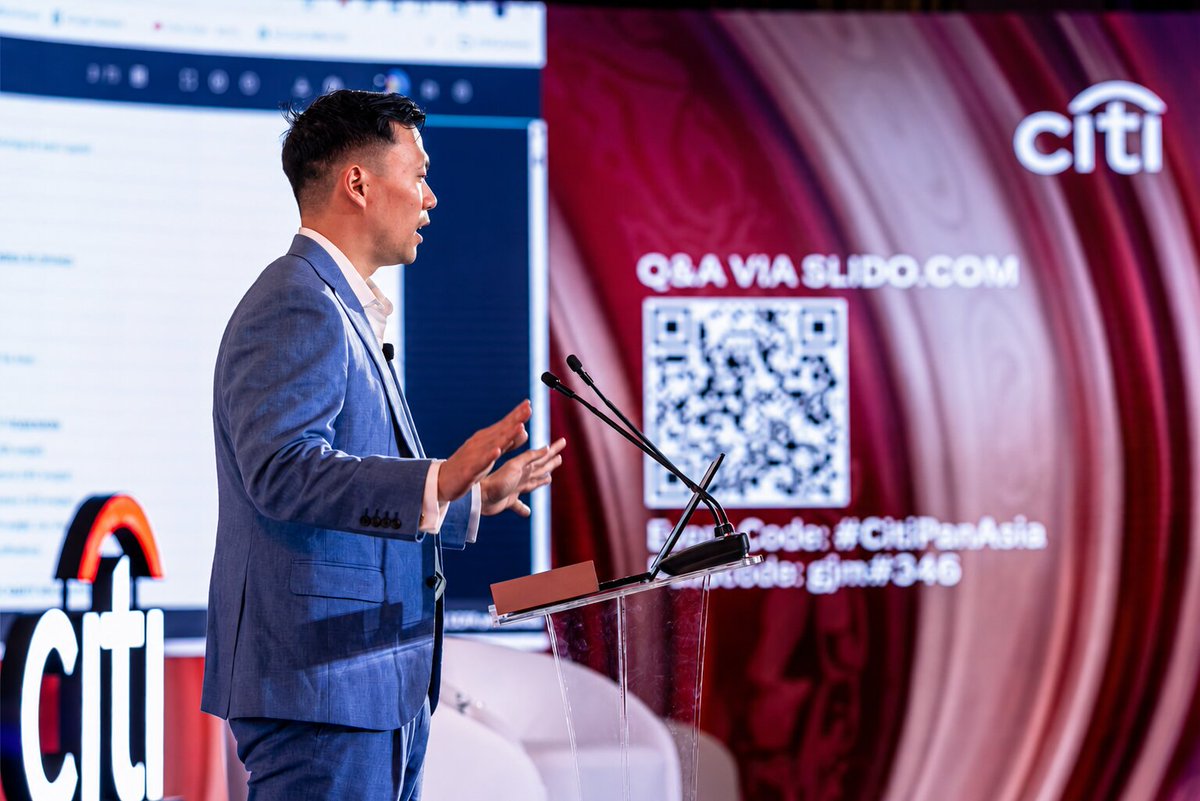
I just wrapped my keynote at Citi's 2026 Pan Asia Conference.
Here's everything I covered for those who missed it:
I spoke to investors on how AI is rewriting the game.
AND showed live demos...
3 things you need to know:
(1) The Investing Job Has Not Changed...The Workflow Has.
At the end of the day, your job is to find mispriced assets, size risk, and generate alpha.
That does not change!
What changes is the workflow....
Old workflow = linear:
Screen, read, model, memo, debate.
vs
AI-native workflow = parallel:
Generate many hypotheses at once, test them against evidence, force contradictions into the open, then decide which evidence deserves weight.
I showed this with live demos using Claude Code:
→ Expanding search space
→ Evidence mapping
→ Criteria filtering
→ Replicating your investment filters to AI
(2) Where Edge Migrates
AI eliminates fake alpha.
Most edge was just labor scarcity.
AI compresses that.
Edge migrates to:
→ Proprietary context: data, relationships, etc
→ Question quality: asking non-obvious questions
→ Workflow architecture: turning raw Q's into AI-native processes
→ Judgment and action: you still need to take risk!
The irony: AI makes the consensus machine faster, which makes markets more crowded around the same narratives.
That creates opportunity for independent judgment....
(3) Skills by Role
25-year-old analyst:
Do not become a human summarizer. Learn how to decompose problems, ask precise questions, verify sources, build workflows. Domain expertise = how you grow into the next role.
35-year-old PM:
Run AI-native research. This is where the market is headed towards and knowing how will let you gauge "consensus" better...
50-year-old CIO:
Redesign the firm's learning loop. What data do we own? How do we audit AI outputs? How do we train juniors?
---
Bottom line:
AI lowers the cost of information work.
Edge moves to proprietary context, better questions, workflow design, judgment under uncertainty, and speed from insight to action.
The next great investor uses AI to ask and test better questions.
Cheers to Citi team for hosting a sharp conversation!
8 ways to use the new ChatGPT PPT plugin.
1. Native PowerPoint editing
→ Create and update slides directly in PowerPoint
2. Editable outputs
→ No dead AI exports. Slides stay editable...
3. Ask questions across a deck
→ Query the whole PPT for weak claims, missing support, etc
4. Existing deck understanding
→ Summarize, critique, and explain a messy deck
5. Source-to-slide creation
→ Use notes, docs, spreadsheets, images, or old decks as input
6. Rewrite and polish
→ Tighten titles, hierarchy, bullets, and executive wording.
7. Image generation inside PowerPoint
→ Create supporting visuals without leaving the deck.
8. Targeted edits
→ Update one slide instead of rebuilding the whole thing
I'm going to be all over testing this.
(All features, comparing vs Claude, where it breaks, etc)
Follow me to stay updated once I try this out!
I've been teaching Claude Code to hedge funds for 6 months.
Now I'm running the same material as a live cohort.
June 1–5.
2 hours per day.
What you'll learn:
-> How to build an AI agent stack that runs research 24/7
-> How to surface investment ideas and run diligence in 30 min
-> How to run forensic accounting and filings analysis with AI
-> How to crank out IC memos in a fraction of the time
-> Plus live Q&A on your specific use cases
This is the same playbook the largest funds paid us hundreds of thousands for at Wall Street Prompt.
Now we're teaching it to YOU :)
Want the registration link?
Just:
1. Like this post
2. Make sure we're connected
3. Comment "COHORT"
....And I'll DM you ASAP
If you're an investor, you need to set up a CLAUDE .md file. How?
1. Open Claude Code
2. Create a CLAUDE .md file
3. Add your investment philosophy
4. Write in your sector universe and key metrics
5. Include your valuation approach & preferred multiples
6. Build out your thesis structure with all required sections
7. Add a diligence checklist for every company name you evaluate
8. Define your kill criteria with hard thresholds so Claude auto-rejects bad deals
Claude reads it automatically every session.
No re-explaining your framework.
No valuation inconsistency.
No generic outputs.
I made a one pager cheat sheet with examples for each section (Goal is to get you set up within 5 minutes)
Want the PDF?
1. Like this post
2. Make sure we are connected
3. Drop "CLAUDE" in the comments and I'll send it over
P.S. Repost this post 🔁 for priority access
Don't count out Perplexity.
My (free) 43-page book on Perplexity Computer will show you why.
Perplexity just launched "Computer".
It runs tasks in parallel.
Coordinates 19 AI models.
Delivers finished documents.
All while you do something else.
Here's what it can do for finance:
1. Assemble a full 10-company comps table in one prompt
2. Track insider buying, 8-Ks, and politician trades
3. Analyze live earnings calls before they end
4. Draft all your LP updates in parallel
5. Build a research brief in 30 min
6. Monitor your portfolio 24/7
My book covers all of it:
↳ Limitations, compliance, and what to watch for
↳ Workflows for research, DD, and monitoring
↳ Viral tools people are already building
↳ Copy-paste prompts that work
↳ Credit tips that save $$$
I could've charged for this. I didn't.
Want the 43-page book?
Just:
1. Like this post
2. Make sure we are connected
3. Comment "PERPLEXITY"
4. ...and I'll DM you ASAP
Everyone says Claude Code is just for devs.
Is it, though?
I wrote a free guide to get you started for Claude Code for Finance.
Last I checked, fundamental analysts spend half their week building things too.
Not products. Not apps.
Models.
Memos.
Comp sheets.
Tear sheets.
The scaffolding that holds the thesis together.
...And that scaffolding takes forever to build.
Here's what actually eats your week in investing:
1. Model shells: built from scratch every time
↳ Claude Code builds it. You stress-test it.
2. Earnings briefs: filings, KPIs, house style
↳ First draft done before the morning call.
3. Comp tables: formatted, sourced, clean
↳ Not copy-pasted. Actually structured.
4. Attribution: validated, diagnosed
↳ Checked against reference. Not gut feel.
5. Investment memos: structured, cited, sharp
↳ You write the conviction. It writes the frame.
The thinking? Still yours.
The judgment? Still yours.
The edge? Still yours.
But the 3 hours before you get to think?
That's where Claude Code earns its place.
Hedge funds paid me $2,000 for this guide.
Comment "CLAUDE" below and the guide is yours.
Claude for Excel has changed the game...
I wrote the 24-page complete guide on it. (It's free.)
3 modes to access:
↳ Plugin: edits cells live in your sidebar
↳ Claude .ai: analyzes uploaded spreadsheets
↳ Cowork: builds entire models autonomously
Example of what you can build with 4 prompts:
1. Extract 3 years of historicals from a 10-K
2. Run driver analysis across all segments
3. Build a 3-statement model
4. Apply IB formatting
Start to finish: under 30 minutes.
My free "Claude for Excel" guide covers:
1. Copy-paste prompts for LBOs, mergers, and comps
2. Live data via FactSet, S&P Global, LSEG
3. Setup for Plugin, Claude, and Cowork
4. Best practices and data security
5. When to use which mode
6. Real finance workflows
I could've sold this. I didn't.
Want the free guide?
Just:
1. Like this post
2. Make sure we are connected
3. Comment "EXCEL"
4. ....and I'll DM you ASAP
How does AI change the future of investing?
1. AI erases the line between quant and fundamental now
2. Conviction and human judgment become the scarce edge
3. Every AI workflow your team uses compounds over time
4. Alpha moves from who has the most data to who thinks
5. Proprietary data and feedback loops become the moat
6. Research that took days now gets done within minutes
7. One analyst now covers 100 stocks with depth, not 15
8. Winners redesign the whole workflow, not just add AI
9. Analysts stop gathering data and start creating edge
10. Mid-level analyst roles get squeezed from both sides
11. AI-driven crowding creates entirely new market risk
12. First movers build leads that followers can't match
I filmed a 47 minute private lecture on this exact topic at Harvard as part of my work with the Harvard Data Science Initiative.
And I'm sharing the link with you free.
Just:
↳ Follow me
↳ Like this post
↳ Comment "lecture"
I'll DM you ASAP.
The internal memo from Fidji Simo is the real signal here: "we were spreading our efforts across too many apps and stacks"
For enterprise buyers including funds, this actually simplifies the vendor decision. One contract, one security review, one data residency agreement.
(This is why Microsoft Copilot has been enterprise default even tho Copilot is total crap)
The bigger question for fund CIOs: Anthropic, Google, and OpenAI are all moving toward platform plays. Switching costs are going up. The vendor selection you make this year might lock you in for 3-5
This misreads how capex cycles work and what Goldman actually said
The "zero GDP" number is mostly an import accounting issue. Most AI hardware is manufactured in Taiwan and Korea. The spend shows up in their GDP, not ours. Goldman's own estimate is 0.1-0.2 percentage points of US GDP contribution, which isnt zero, its just small because we dont make the chips
The actual question for investors: are the companies spending this money getting a return? Micron just posted $23.86B in revenue vs $20B expected, 682% EPS growth YoY. Thats the AI capex showing up as revenue at the supplier level
Infrastructure spend leads revenue by 2-3 years. AWS was a money pit for Amazon until it wasnt
🚨Goldman Sachs just confirmed something insane and nobody’s talking about it
companies spent $450 billion in AI and contributed zero to US economic growth. not “minimal.” actually zero.
these companies fired a total of 30,000+ human workers to bet on ai infrastructure. it failed.
so where did the money went?
> Nvidia took $130B. Jensen got rich selling GPUs - not from AI working, from everyone buying hardware.
> corporate buybacks got the rest. cut jobs, slash costs, pump stock, buy it back. money went to shareholders, not productivity.
> the bubble: H100 clusters sitting underutilized. enterprise contracts collecting dust. same hype cycle.
the damage is done. Meta fired 21K. Amazon 16K. Atlassian 1.6K. those jobs aren’t coming back.
they bet the economy on AI productivity. Goldman confirmed there is no productivity. lmao
either this pays off in 18 months or we just witnessed the largest capital misallocation in tech history and we can’t undo it 💀