Uma das melhores minisséries LGBTQ+ de 2026, com um final super pesado
Do mesmo criador de Queer as Folk (britânica)
É fortemente inspirada em fenômenos reais da sociedade britânica atual. O próprio Davies (criador) disse que escreveu a série por enxergar um aumento das tensões culturais, da polarização política e da hostilidade contra pessoas LGBTQIA+ no mundo contemporâneo.
Sinopse:
A trama acompanha Leo (Alan Cumming), dono de um bar na famosa região LGBT de Manchester, e Clive (David Morrissey), um eletricista casado e pai de adolescentes. Eles são vizinhos há anos, mas à medida que tensões sociais, preconceitos e radicalização política aumentam ao redor deles, pequenos conflitos vão se transformando em uma hostilidade perigosa.
Tip Toe (2026)
Minissérie com 5 episódios
Mas locadoras, assistam postei lá
Blast your way through enemies in a fast-paced adventure with Fox McCloud and the #StarFox team! Star Fox is coming to #NintendoSwitch2 on June 25.
Pre-order now: https://t.co/5wr6dHRFHm
From Apollo to Orion: Five Decades of Progress in a Single CapsuleThe 1972 Apollo Command Module was an engineering marvel of its time — a compact home for three astronauts on short, high-stakes missions to the lunar surface. Tight quarters, basic systems, and just enough room to get the job https://t.co/tzjRMtXB55 forward to the Orion spacecraft flying Artemis II in 2026: a clear leap forward. Larger and more capable, Orion offers significantly more habitable volume for its four-person crew — roughly 60% more interior space than Apollo (about 330 cubic feet versus Apollo’s ~210). It includes modern comforts like a dedicated Universal Waste Management System (a proper microgravity toilet), better life support, and design features built for longer deep-space journeys.This isn’t just a bigger capsule — it represents over half a century of hard-won lessons in human spaceflight. Where Apollo left footprints, Orion is helping us build toward a sustained presence on and around the Moon, paving the way for long-term exploration and eventual journeys deeper into the solar system.The contrast is stunning. The ambition?
Even greater.(Credit: NASA)
The Eye of the Sahara: A Monumental Testimony to the Global Flood
Visible from space as a massive, spiraling bullseye in the western Sahara, the Eye of the Sahara—also called the Richat Structure—stands as one of Earth’s most striking landforms. Spanning 25–31 miles across, with rock walls rising up to 1,000 feet and hardened bands nearly 230 feet thick, the Eye is far more than a geological curiosity. When examined without the assumptions of deep time, its features reveal overwhelming evidence of rapid, catastrophic forces—precisely what we would expect from the global Flood recorded in Genesis.
To begin with, the Eye is composed entirely of marine sedimentary rock: limestone, sandstone, and other water-laid layers that contain marine fossils. These deposits do not form in deserts. They form underwater—and not in slow, tranquil seas, but in powerful, continent-covering environments. The Eye’s layers match the broader North African sedimentary system, itself part of a massive depositional event best explained by the Flood.
As the Flood progressed, enormous tectonic upheaval pushed a pre-Flood dome of rock upward from beneath the accumulating sediments. This rapid uplift warped the surrounding layers into the Eye’s dramatic ringed structure. These circular ridges—stretching mile after mile with steep cliffs and hardened strata—cannot be produced by slow erosion over millions of years. Their scale and precision reflect the kind of sudden, violent geological forces described when “the fountains of the great deep” burst forth.
Once the continents rose and the waters began racing off the land, the newly uplifted dome interacted with the retreating Floodwaters in a powerful way. The Eye’s circular form strongly reflects whirlpool-like erosion generated as those waters spiraled around the elevated structure. Its shape and erosion patterns align exactly with what we would expect from colossal, vortex-driven hydraulics during the Flood’s retreat. These immense spiraling currents gouged out the Eye’s massive circular trenches, swept away vast quantities of sediment, and carved the sweeping spiral patterns still visible today. No process in the modern world comes close to producing such features. The Eye of the Sahara bears the unmistakable imprint of catastrophic, flood-scale vortex erosion—the kind of planetary reshaping power recorded in Scripture.
In the end, the Eye of the Sahara is far more than a desert landmark. Its marine sediments, towering cliffs, perfectly formed rings, and vortex-scoured erosion patterns combine into one unified testimony: this structure was shaped by rapid, global catastrophe—not slow processes over imaginary ages. The Eye stands today as a monumental witness to the global Flood, a geologic scar so vast it can be seen from space, declaring the reality of the event that reshaped the entire world.
#archaeohistories
🚨‼️ We're in contact with the actor behind the Trivy and LiteLLM hack. They told us they are currently extorting several multi-billion-dollar companies from which they've exfiltrated data.
They've obtained 300 GB of compressed credentials and are working their way through them as we speak.
The LiteLLM compromise alone led to half a million stolen credentials, according to the threat actor.
Their message to the world: "TeamPCP is here to stay. Long live the supply chain."
They've sent us their new logo (see image) and also teamed up with several threat actors, including Xploiters and Vect.
LiteLLM HAS BEEN COMPROMISED, DO NOT UPDATE. We just discovered that LiteLLM pypi release 1.82.8. It has been compromised, it contains litellm_init.pth with base64 encoded instructions to send all the credentials it can find to remote server + self-replicate. link below
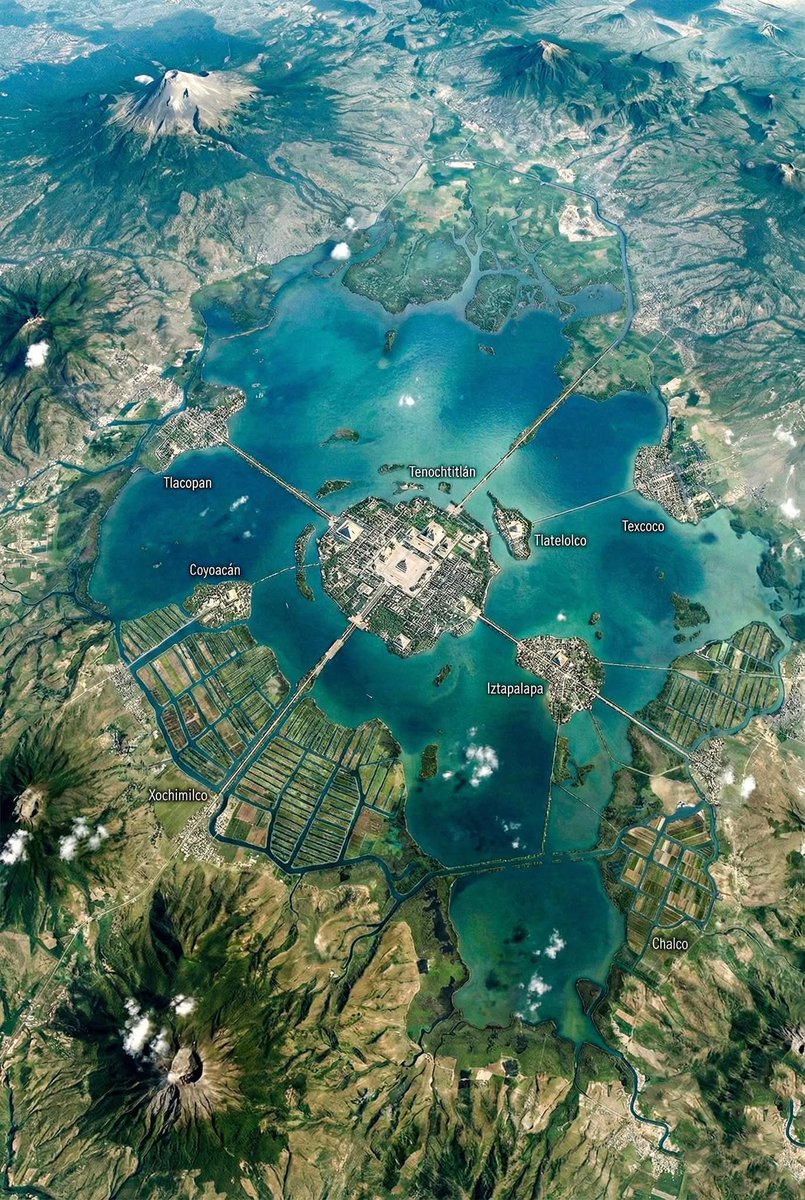
Las Ciudades que conformaban a Tenochtitlán… pero casi nadie menciona como el corazón del imperio azteca.
Muchos creen que Tenochtitlán estaba “sola” en el lago… pero en realidad era el centro de una red de ciudades vivas.
Cuando imaginamos Tenochtitlán, pensamos en una enorme y grandiosa capital aislada, imponente y única.
Pero la verdad es otra: alrededor había pueblos y ciudades que colindaban, comerciaban, competían y sostenían el ritmo del Valle de México.
No era una ciudad.
Era un sistema urbano completo.
Las Ciudades que colindaban con Tenochtitlán alrededor del lago, eran núcleos de poblacion que estaban tan interconectados que parecía una “mega ciudad” que surgía del agua.
Texcoco
Era el gran rival intelectual y político. Centro cultural del mundo nahualt, con leyes, poesía y gobierno fuerte, sin Texcoco, el poder mexica no se entiende.
Tlacopan (Tacuba)
El tercer socio clave del dominio. Era parte del equilibrio político del Valle y una pieza real del control territorial.
Tlatelolco
No era “parte de Tenochtitlán” como muchos creen. Era una ciudad hermana con identidad propia… y su mercado fue de los más grandes y prósperos del continente.
Iztapalapa
Una de las entradas estratégicas más importantes al sistema lacustre. Controlaba rutas, agua y comunicación con el sur del valle.
Coyoacán
No era periferia: era zona poderosa, con alta producción y conexión directa con canales y rutas internas.
Xochimilco
Aquí estaba la comida. Chinampas, flores, agricultura intensiva y agua dulce, si Xochimilco fallaba, Tenochtitlán lo resentía.
Chalco
Otro gigante agrícola del sur. Una región tan productiva que era clave para alimentar a la cuenca… y por eso también generaba tensión.
Lo que genera debate y polémica es que Tenochtitlán no “dominaba todo sola”.
Su poderio se sostenía porque el valle entero funcionaba como una red: agua, comercio, alimentos, rutas y alianzas.
Y aquí viene lo incómodo:
si quitabas una sola pieza… el sistema se desbalanceaba y el imperio entero estaba destinado a sucumbir.
Por eso no fue solo “una conquista”, fue el colapso de una región interconectada.
Dato clave
En lugar de calles, estas ciudades se movían por canales, era una civilización diseñada para el agua, no contra ella.
Tenochtitlán era el corazón…
pero alrededor había venas vivas que la hacían latir todo el imperio.
The nation’s largest landlord has agreed to stop using rent-setting software after a sweeping Department of Justice investigation found the system may have helped inflate rental prices across the country.
https://t.co/n9JXwVemyW