🎨✨ Introducing WaitWan Graphics! ✨🎨
Your go-to hub for stunning visuals and creative designs. From logos to social media graphics, we bring your vision to life.
🚀 Looking to collaborate or need a fresh look for your brand? Let’s make magic happen!
📩 DM me to get started
I remember when I was struggling with masturbation, pornography, and sexual immorality, I reached out to a man of God.
He counseled me.
He prayed for me.
He encouraged me.
But after that meeting, that same night, I masturbated again.
That same weekend, I fornicated again.
And that was when I realized something painful:
Nobody can fight your private battles for you if you are unwilling to fight them yourself.
Some of us want deliverance without discipline.
We want freedom without denying the flesh.
We want prayers without responsibility.
We want oil on our heads while entertaining darkness in our rooms.
I discovered that as long as I was waiting for another person to carry my burden spiritually while I remained passive, I would keep falling into the same cycles.
My freedom started the day I took responsibility before God.
Not when somebody shouted “fire.”
Not when hands were laid on me.
Not when I attended another conference.
My freedom started when I got tired of disappointing God and myself.
I took 21 days and prayed consistently against that spirit.
Not casually.
Not emotionally.
Aggressively.
There were days I cried.
Days I failed.
Days I felt condemned.
But I kept going back to God instead of running away from Him.
I started cutting off the things feeding my flesh.
I stopped entertaining ladies who only called me into temptation.
I stopped visiting certain places.
I stopped consuming certain content.
I stopped listening to music that awakened lust in me.
I stopped feeding the very thing I was asking God to kill.
Because you cannot pray against fire while pouring petrol on it every day.
Many people are praying for purity while still protecting the environment that destroys them.
You cannot keep sleeping in Delilah’s house and expect Samson’s strength to remain.
At some point, I had to stop making excuses.
I stopped saying:
“This generation is hard.”
“Men struggle.”
“Everybody is doing it.”
“God understands.”
No.
I had to make a decision.
A real decision.
Not a church decision.
Not an emotional altar-call decision.
A private decision made in the presence of God when nobody was clapping for me.
I stopped announcing my struggles to everybody and started seeking God personally as Tevin.
Because there are battles where people can encourage you, but only you can surrender fully to God.
And slowly, God began to change me.
The urges reduced.
The addiction weakened.
My mind became cleaner.
My convictions became stronger.
Not because I became perfect overnight…
But because I stopped playing with the very thing that was destroying me.
Listen carefully:
Some demons leave by prayer.
Some habits leave by discipline.
Some struggles leave when you finally become honest before God.
There are things counseling can help with.
There are things accountability can help with.
But there are also battles where God is waiting for YOU to stand up and say:
“Enough is enough.”
Freedom is possible.
Not fake freedom for social media.
Not temporary freedom during church conferences.
Real freedom.
I know because I lived it.
And if you are secretly struggling today with pornography, masturbation, lust, fornication, hidden sexual sin, don’t give up on yourself.
Run to God.
Not away from Him.
Stop normalizing the chains.
Stop laughing about what is killing your spirit.
Stop waiting for everybody else to carry your responsibility.
Go before God honestly.
Cut off what feeds the addiction.
Pray consistently.
Discipline your flesh.
Fill your life with the Word of God.
And keep fighting.
Because the same God who delivered me can deliver you too.
The four Gospels are not random repetitions. Each one presents Jesus from a different angle, for a specific purpose and audience. Together, they give a full picture of who He is.
1. Matthew —>> Jesus as the King (Messiah)
Audience: Mainly Jews
Matthew focuses on proving that Jesus is the promised Messiah from the Old Testament.
• He starts with a genealogy from Abraham and David → showing Jesus is a royal descendant
• Constantly says: “This was to fulfill what was spoken by the prophet…”
• Emphasizes the Kingdom of Heaven
Why?
The Jews were waiting for a King. Matthew is saying: “This is the One you have been waiting for.”
2. Mark —>> Jesus as the Servant with Power
Audience: Romans (action-oriented people)
Mark shows Jesus as:
• Always moving
• Always serving
• Performing miracles
There are fewer long teachings and more actions.
• No genealogy (servants don’t need one)
• Focus on what Jesus does, not long explanations
Why?
Romans respected power and action, not long religious discussions.
Mark shows: Jesus is powerful, active, and authoritative.
3. Luke —>>Jesus as the Perfect Man (Savior of All)
Audience: Gentiles (non-Jews)
Luke presents Jesus as:
• Compassionate
• Caring for the poor, women, and outcasts
• Deeply human, yet perfect
• Genealogy goes all the way back to Adam (not just Abraham)
• Emphasis on prayer, mercy, and the Holy Spirit
Why?
Luke wants to show that Jesus is not only for Jews, but for everyone. “He is the Savior of all humanity.”
4. John —>> Jesus as God (Divine Son)
Audience: Everyone (universal)
John goes deeper than the others.
• Starts with: “In the beginning was the Word…”
• Clearly declares Jesus divinity
• Focuses on who Jesus is, not just what He did
Includes powerful “I AM” statements:
• “I am the Light of the world”
• “I am the Way, the Truth, and the Life”
Why?
John wants there to be no confusion:
Jesus is not just a prophet, He is God in the flesh.
God allowed four Gospels so we can see Jesus fully as:
• King (Matthew)
• Servant (Mark)
• Man (Luke)
• God (John)
A billionaire walked into a five-star hotel and asked for the cheapest room they had.
The receptionist blinked, confused.
“Sir, our presidential suite has a full city view…”
Every time the West calls an African country "unstable" they mean the resources stopped flowing.
I made a glossary of 100 diplomatic words they use and what they actually mean.
https://t.co/hivzYl1N0Z
Bookmark this before your next history book. 🧵
Over the past few weeks, many Africans got to hear about the Strait of Hormuz for the first time ever. What caused this huge information gap?
A story about how Africans are educated into complete ignorance about their own reality by @joyfwen
Nobody told you airlines have two prices for every flight. The price they show you. And the price they hope you never find. $1,190 flight. Paid $141. $1,049 difference. Same seat. Same day. Here are the 7 prompts that found it: (Save this before disappearing).
INSTEAD OF WATCHING NETFLIX TONIGHT.
Spend 1 hour with this.
Claude AI FULL COURSE that teaches you how to BUILD and AUTOMATE anything.
The people who watch this tonight will wake up tomorrow with a skill that most people will not have in 2 years.
The people who skip it will still be watching Netflix next year wondering why nothing in their life has changed.
Your call.
🚨 The greatest life hack is treating your future self like a stranger you want to help.
Your brain can't emotionally connect with Future You. Brain imaging studies show that when you think about yourself in 10 years, the same neural regions light up as when you think about celebrities or distant acquaintances. Future You feels like somebody else entirely.
That psychological distance is why you stay up scrolling when you know you'll regret it tomorrow. Why you eat junk food knowing you'll feel sluggish later. Why you procrastinate on important projects until they become emergencies.
Your brain literally perceives Future You as someone else's problem.
The hack makes that distance work for you instead of against you.
When you're tired at 10 PM and considering another hour of social media, ask yourself: what would help the person waking up in this body tomorrow morning? When you're deciding whether to prep meals on Sunday, think: what would make weeknight life easier for the version of yourself coming home exhausted from work?
The reframe changes everything. You stop making choices based on immediate comfort and start making them based on setting up the next version of yourself for success.
I've seen that people struggle to deny themselves things they want, but excel at doing helpful things for others. The same person who can't stick to a diet will meal prep for a friend going through chemotherapy. The same person who hits snooze five times will wake up early to drive someone to the airport.
We have unlimited generosity for others and limited discipline for ourselves. The hack exploits that asymmetry.
Take it further. When you're procrastinating on a project, don't force Current You to work on it. Set up Future You to make progress effortlessly. Clear the desk. Open the right documents. Write one sentence about where to start. Leave breadcrumbs that make forward momentum inevitable.
When choosing what to wear, don't pick based on what looks good in the mirror right now. Pick based on what will make Future You feel confident in the situations they'll encounter. When deciding how to spend your evening, don't choose what sounds relaxing. Choose what will make Future You proud when they reflect back on how they used their time.
The psychology backing this runs deep. People who score high on "future self continuity" measures make better financial decisions, exercise more consistently, and have lower rates of anxiety and depression. They don't see delayed gratification as sacrifice. They see it as collaboration.
The compound effect kicks in fast. Every choice you make with Future You in mind creates better starting conditions for the next set of choices. Wake up early and you have more energy for evening decisions. Eat well and you think more clearly about work priorities. Exercise and you sleep better, which makes everything else easier.
Within weeks, your life starts running itself. Tasks complete before deadlines. Problems get solved before they become crises. Opportunities appear because you're prepared when they show up.
The approach requires zero self discipline. Instead of fighting present impulses, you channel your natural instinct to help others toward the one person who benefits from your help: the version of yourself living with today's consequences.
Future You starts feeling like someone you actually know. You anticipate their needs. You root for their success. You develop genuine affection for this person you're setting up to win.
Then one day you realize: Future You became Present You. And they're grateful for everything you did to get them there.
The cycle continues. Today's choices become tomorrow's starting conditions. Tomorrow's version gets to pay it forward to the day after that.
Your entire life becomes a collaboration between all versions of yourself across time, each one setting up the next for greater success than they could achieve alone.
The hack scales infinitely because you're always on the same team as yourself.
If you want her to open up…
and actually get pulled into the conversation…
You need to stop asking safe questions.
Safe = boring.
Boring = forgotten.
Most guys ask questions that go nowhere.
Here are 44 original questions that make her think, feel, and invest…
A professor of engineering who failed math all through school built one of the most popular online courses in history by figuring out exactly why her brain had been working against her the whole time.
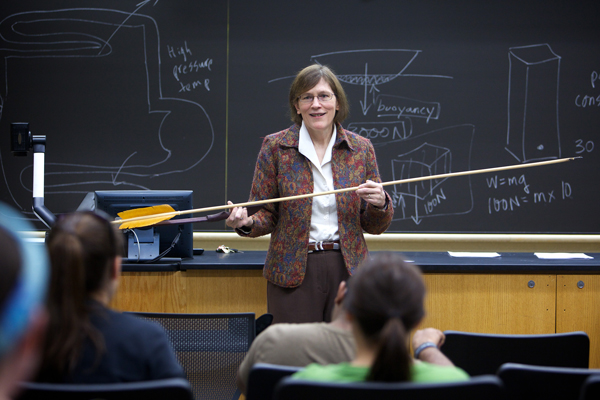
Her name is Barbara Oakley, and she did not teach herself how to learn until she was in her mid-twenties, after leaving the military with a head full of Russian and almost no useful science knowledge. What she discovered about her own brain eventually became a Coursera course that over 4 million people have taken, and the core insight she teaches has been sitting in neuroscience research for decades waiting for someone to explain it in plain language.
Here is the framework that changed how I think about every hard thing I am trying to learn.
Your working memory is an octopus sitting in your prefrontal cortex with exactly four arms. Those four arms reach out and grab pieces of information, hold them in place, and manipulate them while you are actively thinking through a problem. Four is the limit.
When you try to hold more than four things in conscious awareness at once, the arms start dropping things and everything becomes a scramble which is exactly what you experience as confusion when learning something genuinely difficult.
This is not a flaw. It is a design feature. And the entire game of becoming expert at anything is learning how to game this constraint.
The mechanism is something neuroscientists call chunking, and it is the most underexplained concept in all of learning.
When you practice something enough times that it becomes automatic a guitar chord, a grammatical structure, a mathematical procedure, a debugging pattern in code your brain compresses it into a single neural package stored in long-term memory. That compressed package now fits in just one of your four working memory slots instead of filling all of them.
Which means once you have built enough chunks, your octopus can reach down into long-term memory, pull up an entire complex procedure in a single grab, and still have three arms free to work with new information on top of it.
This is what expertise actually is. Not raw intelligence. Not natural talent. A library of compressed patterns that can be retrieved quickly and stacked together to solve problems that would overwhelm a beginner whose working memory is still occupied with fundamentals.
The finding that Oakley emphasizes most forcefully is the one that sounds backward until you understand the mechanism. People with smaller working memory capacity those who can only hold two or three items at once rather than four are often forced to develop stronger chunking habits earlier and more aggressively than people with larger working memories, because they have no choice. Their constraint becomes their training. Over time, that aggressive chunking practice can produce more robust expertise than a larger working memory that never had to be disciplined in the same way.
The most powerful practical implication is this: when you feel completely overwhelmed trying to learn something, that feeling is almost always your four-slot octopus running out of arms. The solution is not to concentrate harder. The solution is to stop, isolate one small piece of the problem, practice it until it compresses into a single chunk, and only then pick up the next piece.
You cannot learn everything at once because your brain was never designed to hold everything at once. It was designed to build libraries of compressed knowledge and retrieve them on demand.
Every expert you have ever admired is not smarter than you. They just have a bigger library.
The story of Jesus Christ with the Two Fish and Five Loaves that he used to feed 5000 Men ,I hope someone can get this .
There is a mystery many believers overlook, yet Jesus Christ demonstrated it so clearly.
When there were two fish and five loaves, it looked insignificant in the hands of men… but in the hands of Jesus, it became more than enough to feed thousands.
The disciples were worried. They were calculating lack. They were seeing impossibility.
But Jesus asked a powerful question:
“What do you have?”
Not what is missing.
Not what is insufficient.
But what is available.
This is where many of us miss it.
We wake up thinking: “I don’t have enough money…”
“I don’t have rent…”
“I don’t have connections…”
“I don’t have opportunities…”
But heaven is not moved by what you lack.
Heaven responds to what you present.
God will never ask you for what you don’t have.
He will always ask, “What is in your hand?”
That small business…
That skill…
That little income…
That connection…
That idea…
That strength you still have…
That is your starting point.
The mistake is this: we keep complaining about the little, instead of committing the little.
And here is the deeper mystery—
Before multiplication happened, Jesus did something powerful:
He gave thanks.
Not after the miracle.
Not after abundance came.
But in the middle of insufficiency.
This is the formula of the Kingdom: Gratitude before multiplication.
Many people pray like this: “God, I don’t have rent… I don’t have money… I don’t have this…”
But in this Kingdom, we don’t approach God from a place of lack—we approach Him from a place of thanksgiving.
The Bible says: “Enter His gates with thanksgiving and His courts with praise.”
Thanksgiving is not just a reaction.
It is a spiritual key.
It is your access code.
It is your alignment.
It is your declaration that God is still faithful even when things don’t look like it.
When you give thanks, you are saying: “Lord, I may not have everything I want, but I recognize that what I have came from You… and it is enough for You to work with.”
And that is when multiplication begins.
Because God does not multiply complaints.
He multiplies what is surrendered with gratitude.
So instead of worrying today…
Pause and ask yourself:
What do I have?
Then lift it up to God with a grateful heart.
Thank Him for the food you have.
Thank Him for the roof you have.
Thank Him for the strength you have.
Thank Him for the life you have.
Because when gratitude rises, lack loses its voice.
You may have little—but with God, little is never small.
And just like Jesus showed us,
what you place in His hands with thanksgiving…
He will multiply beyond your imagination.