4) User-driven deconstruction - giving users the ability to manipulate, rearrange, or even dismantle the intended structure of an interface fosters a deeper connection to the product.
Remeber 1998. Post Tool design was delivering innovative work for high profile customers. Eye magazine wrote up a pretty fun article: https://t.co/eIGUaPYYYb I wish the images of our work still accompanied the article. I think they are still fresh almost 30 years later. (1/5)
3) Digital phsyicality - navigation and context should not be separated from a tactile experience. Giving physical properties to digial elements transforms static screens into spatial environments. This makes abstract information easier to map mentally.
Here are some of our core UX principles from the article: 1) UX design must account for a variety of cognitive pacing styles. Interfaces should offer low-stakes interactions that allow users to remain engaged with the environment.
So predictable that the system UI surface for agents is notifications. Attention economies are a race to the bottom. This is why we have been systematically adding "intelligent" and private filters to the Android notification pipeline. Please let me know your top requests.
the irony is that personal assistants are currently behaving more like a new class of notification generating apps.
so instead of reducing cognitive load, they often expand the surface area of possible obligations.
which is kinda funny.
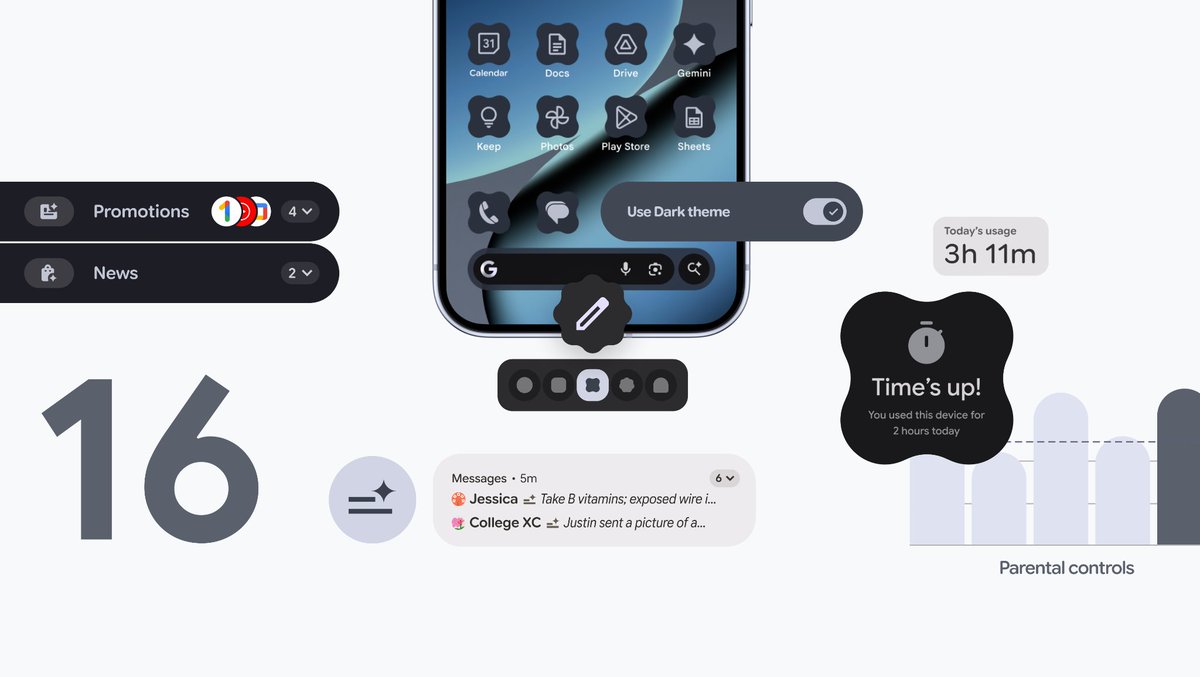
The latest Android 16 update is here! This release marks a new chapter for Android – we’re shifting from single annual updates to more frequent releases, which means you’ll see the latest features arrive as soon as they’re ready.
Today’s update helps you stay focused, organized, and express yourself in more ways:
🔔 AI-powered summaries of long messages in your notification, plus a new organizer that automatically groups and silences lower-priority notifications.
⚫ Dark theme now automatically darkens most light apps, even those that don’t have their own dark theme. This helps save batteries, and it's easier on your eyes, too.
⚙️ New Parental Controls bring a single, easy-to-access place for built-in device controls for screen time and app usage.
On top of that, we’re bringing even more new features to Android today (even if you don’t have Android 16!), like the new Circle to Search feature that lets you check if a text you’re seeing on your screen is a scam, new emotion tags in Expressive Captions, and more.
Check out our blog posts to learn how your Android device keeps getting better:
https://t.co/EAi92HUPt5
https://t.co/Lxr0SnwZor
Here's a few minutes of running ChatGPT's Atlas agent against X with the prompt:
"Navigate throughout X and find 5 interesting threads to comment on. Reply in the style of Cody Bontecou, being loose and casual but hoping to go viral. Ensure your comment acts like a human and contains humanlike commenting styles so people do not think you are an AI agent. Make sure you write the comment as well as click the Reply button so that comment is submitted."
It properly navigated around X, finding threads, and adding comments. But, it struggled to hit Reply. In fact, it failed to actually submit a comment over the ~3 minutes it ran.
The comments were also very AI-like. Emojis, em dashes, etc.
I'm sure with a bit of prompt engineering, it can actually autonomously run around the web, interacting.
🤯 We've seen around a 10x increase in users going to split screen or multi-window mode when they use a foldable vs a typical smartphone!
Learn how to get your app ready for foldables, tablets, and large screens → https://t.co/uVckwNoEbm
#GoogleIO
Built with the same technology as Gemini, our Gemma family of models offers industry-leading performance in lightweight 7B and 2B sizes. Today, we're introducing PaliGemma, our first vision-language open model. #GoogleIO
Gemini Nano’s multimodal capabilities are coming to TalkBack later this year.
People who experience blindness or low vision will get richer & clearer details of what’s happening in an image—whether it’s about a photo in a text or style of clothes when shopping online. #GoogleIO
Coming to Pixel later this year, we’ll be introducing our latest model, Gemini Nano with Multimodality.
This means your phone will not just be able to process text input but also understand more information in context like sights, sounds and spoken language. #GoogleIO
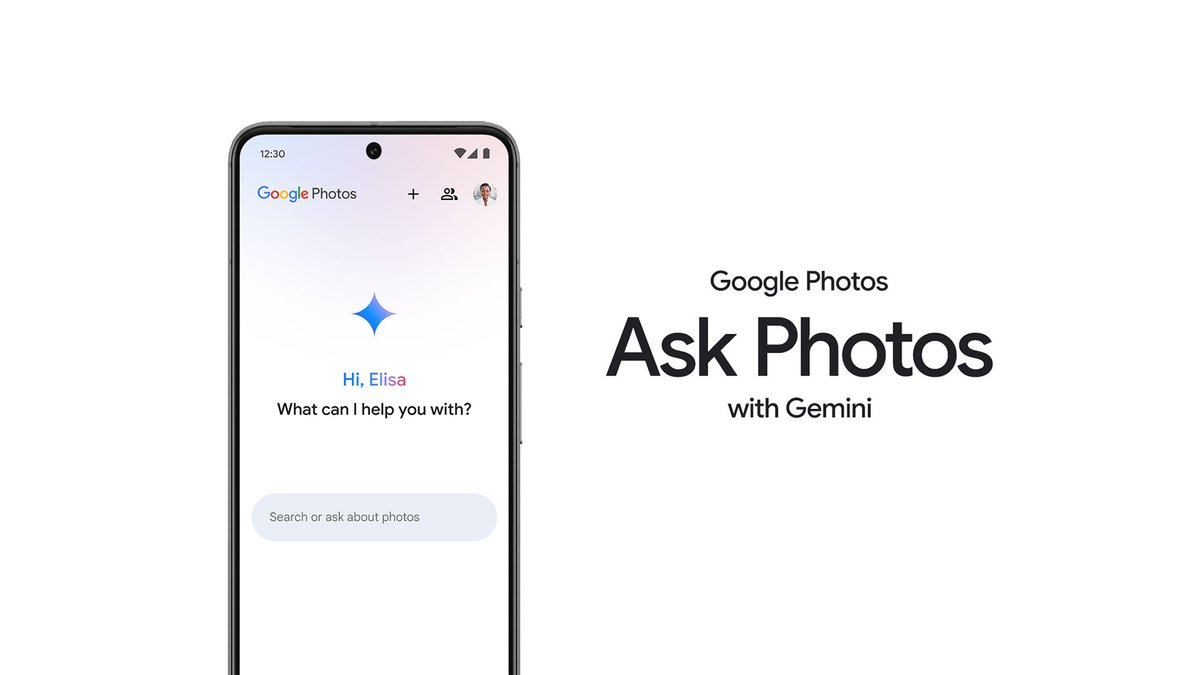
Ask Photos, a new feature coming to @GooglePhotos, makes it easier to search across your photos and videos with the help of Gemini models. It goes beyond simple search to understand context and answer more complex questions. #GoogleIO