Yoruba people of current SW, Okun in Kogi State and in Kwara State don't have a future in Nigeria. The salvation of the Kóòtú Òjíire people of Nigeria and indeed worldwide is in the declaration of a sovereign Nation of Oduduwa. I don't think there are any other alternatives to this. No amount of sacrifice is too much to achieve this supreme objective. We are in serious danger in Nigeria as presently constituted. We have always been since the British discovered us and introduced the Fulanis and Ibos to our lives!!!!
Kwara doesn't begin and end in Ilorin. But the decorum from you people is as loud!!!
They are killing people in Kwara south but y'all didn't even lend a voice of course Omo Ilorin ni yin not Kwara.
There is no Ilorin without Kwara!!!
@_Taaooma@thecuteabiola@realfemiadebayo
These senseless terrorists in Kwara don’t care about your tribe or religion, they won’t ask before they kill you. Let’s set aside agenda and focus on the main goal which is calling on the government to protect the people!
#ProtectKwara#ProtectKwara#ProtectKwara#ProtectKwara
The president of Nigeria is Yoruba
The governor of Kwara is Yoruba
The Director general of DSS is Yoruba
Miyetti Allah collected our hunters weapons and bandits raided the next day killing the hunters first.
Why’s miyetti allah the ones protecting our territory in Kwara ?
“We told the soldiers to fight against the bandits that attacked us but they said they were not given orders. The soldiers were eventually later withdrawn, and the guns of local hunters were also taken away”
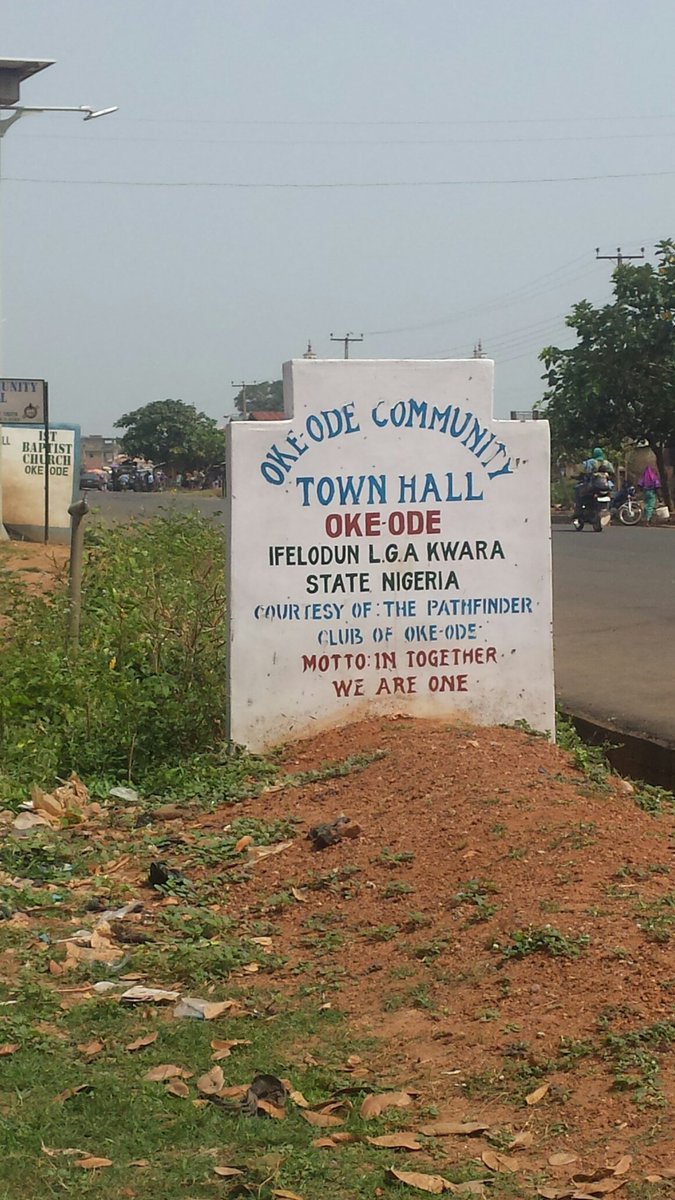
-Resident of OkeOde, Kwara State.
My goodness.
Oke-Ode is a strategic Yoruba city in Ifelodun LGA, Kwara State.
It is part of the Igbomina-Yoruba heritage with roots traced to Ile-Ife, Oyo, and even Ketu. Not far from Esie, where over 1,000 ancient stone figures dated to around 1100 AD were discovered, the town shares in the legacy of one of the oldest Yoruba civilizations.
Through Nupe raids, Yoruba wars, and the Ilorin conquest of the 19th century, the people of Oke-Ode held on to their identity. Missionaries later brought Christianity and schools, while colonial rule placed the town under Ifelodun District alongside other Igbomina communities. Known for hunting, wood carving, and cloth weaving, their craft traditions still survive. Today, Oke-Ode serves as a district headquarters, a farming and trading hub, and a cultural crossroads near Kogi State—a community that has endured centuries and still stands strong as a symbol of Yoruba resilience.