Better Vaults need better market structure.
With Resolv, a single issuer-side opsec failure was enough to create losses, illiquidity, or emergency actions across a web of downstream vaults, pools, and credit markets. Last year it was the $93m Stream Finance debacle due to a bad balance sheet.
LPs aren’t being compensated adequately for the opaque risk they’re taking on in many of these assets through diversified vault allocations.
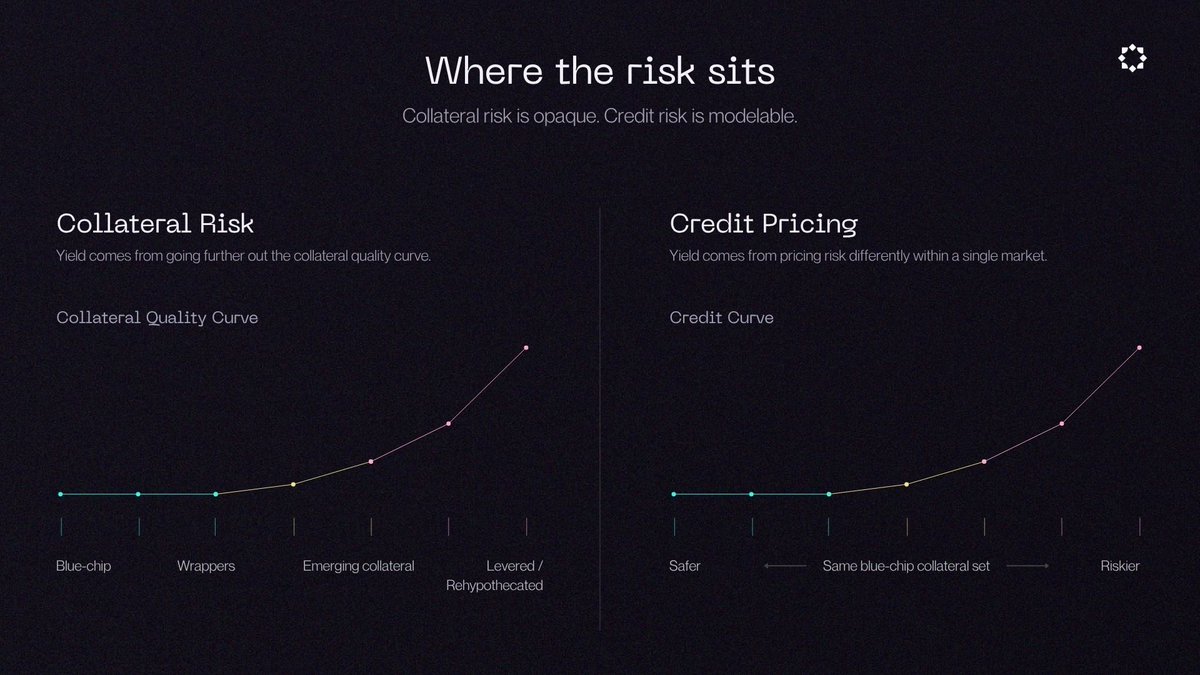
@LotusFi_ doesn’t eliminate collateral risk, but we think our model eliminates much of the incentive to lend against riskier collateral. Lend against blue-chip collaterals like BTC and ETH. Keep liquidity connected. Price credit risk on a curve inside one market.
Lotus has completed two smart contract audits with @Cyfrin, including formal verification of key properties.
Thank you to the team of Cyfrin researchers for their expert work reviewing the Lotus codebase.
1/ IRIS is LIVE on mainnet.
IRIS is a fixed-rate borrowing protocol.
Competitive quotes for any number of days, sourced from DeFi’s deepest liquidity.
Get a quote in seconds :
https://t.co/fWfoQWeJZ4
DeFi has been in sore need of an industry standard for operational security.
That’s why we’re working toward @_SEAL_Org certification at Lotus. The framework covers six operational security modules:
· Multisig operations
· Treasury operations
· Incident response
· DevOps and infrastructure
· DNS and registrar security
· Identity and accounts
Operational and economic risk deserve just as much attention as smart contracts in a lending protocol's security process.
I keep back to @Smith_Diction's Google Fonts board, so i had the idea to make an interactive explorer for it
Browse by vibe, pin your favs
https://t.co/i0gvtuTbwS
Credora's footprint continues to expand within the tokenization space. We've completed a preliminary rating of JPMD, @jpmorgan's first USD-based tokenized deposit.
It's an interesting exercise to contrast this new instrument with a more battle-tested one, the tokenized fund. By design, a deposit is not a segregated reserve or a bankruptcy-remote claim, so the metrics that define a fund, asset segregation, beneficial ownership, proof of reserves, do not apply. What backs it instead is the issuer: J.P. Morgan's balance sheet and supervision. A deposit is fundamentally a credit instrument and at a G-SIB that claim sits close to sovereign quality. What determines the risk, then, is the issuing bank's robustness and credit standing.
As such asset matures, a few questions will shape how the asset class is understood. How FDIC insurance coverage ($250k/depositor) applies to a holder who receives the token on-chain. Whether the legal claim transfers with the token as it changes owners. And how issuer controls like freezing, burning, or transferring are defined for compliance. Those are some aspects we considered and that will distinguish one deposit token from the next, as more banks and currencies come on-chain.
Know your tokenization risk.
@iris_credit has been on a similar development timeline to @LotusFi_ and we’ve been super impressed with Glovin and team’s execution getting their rocket in the air - love the product!
Building an agent that helps people borrow?
The Loanscape skill gives you a cross-venue comparison before you choose a loan: live APR, 30-day rate stability, LTV and liquidity.
There's more to borrowing than just the rate.
SoFi and Figure co-founder Mike Cagney has raised $19M for Navra, a new platform designed to give retail and institutional investors access to DeFi lending, borrowing and trading through a single interface.
Ribbit Capital led the round, with Jump Crypto and Figure among the strategic investors.
https://t.co/nc4kLY6xOQ