Kazakhstan recorded 12.0% fewer births in April than a year earlier.
The January–April decline now stands at 6.3% (99,380 vs 106,111 in 2025). Based on current fertility rates, the TFR is estimated at around 2.39, down from 2.57 in 2025.
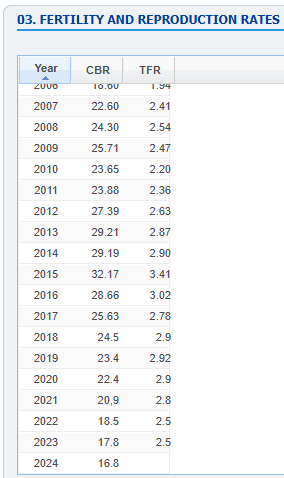
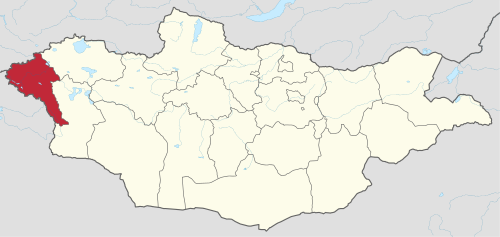
Mongolia’s only ethnic minority-majority region, BayanUlgii (91% 🇰🇿), published data allowing calculation of its 2025 TFR.
It reached 3.48, above Mongolia’s national avg of 2.46.
It’s the most fertile Kazakh region outside 🇰🇿, behind only Kazakhstan’s Turkistan Region (3.86).
Mongolia’s only ethnic minority-majority region, BayanUlgii (91% 🇰🇿), published data allowing calculation of its 2025 TFR.
It reached 3.48, above Mongolia’s national avg of 2.46.
It’s the most fertile Kazakh region outside 🇰🇿, behind only Kazakhstan’s Turkistan Region (3.86).
Interesting comparison: 🇲🇳Ulaanbaatar and 🇰🇿Astana are both steppe capitals with roughly the same population (~1.6 million in the agglomeration).
But in 2025 Astana’s TFR was higher 2.31 vs Ulaanbaatar’s 2.25.
More Indian & Pakistani students in Kazakhstan than Ukrainians, Germans and Koreans combined.
At the beginning of the 2025-2026 academic year,
🇰🇿universities have:
Total: 678,114
Kazakhs: 575,826
Russians: 37,006
Uzbeks: 14,390
Students of Indian & Pakistani origin: 10,079
Turkey’s demographic decline is accelerating.
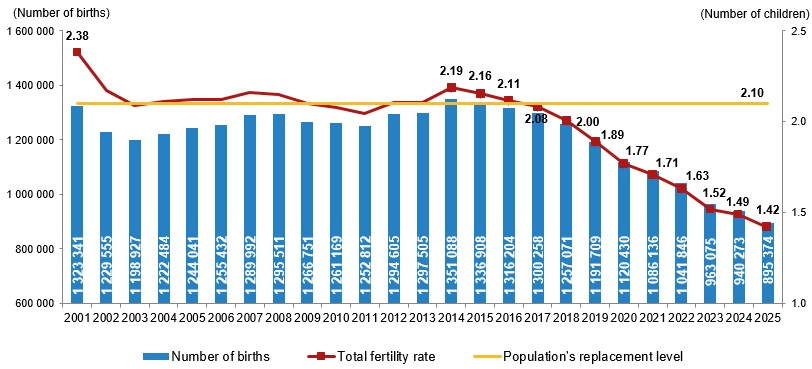
In 2025, the number of births fell to 895,374 — down from 940,273 in 2024.
This is the first time since at least 1950 that annual births have fallen below 900,000.
Turkey’s TFR fell from 1.49 in 2024 to 1.42 in 2025.
Turkey’s demographic decline is accelerating.
In 2025, the number of births fell to 895,374 — down from 940,273 in 2024.
This is the first time since at least 1950 that annual births have fallen below 900,000.
Turkey’s TFR fell from 1.49 in 2024 to 1.42 in 2025.