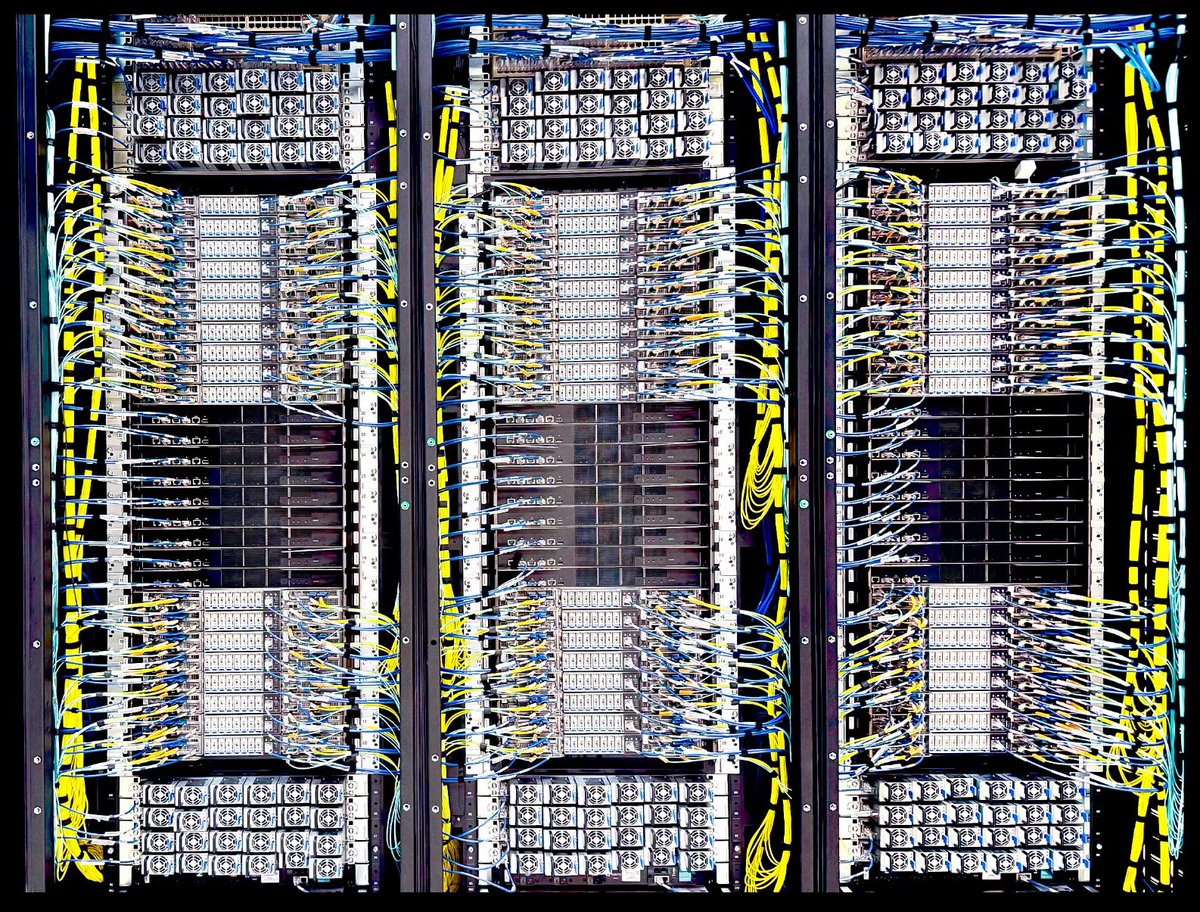
Inspired by the vision shared in the Day 1 keynote at #DellTechWorld.—where AI, innovation, and bold ideas are shaping what’s next. Check out this blog, featuring customer stories and announcements and an appearance by Jensen Huang.🌟
https://t.co/3EOhXwgtoh #iwork4dell
5,000 AI Factory customers—enterprises like Eli Lilly, Honeywell and Samsung are bringing AI workloads to life.
“We’ve done a great job with existing infrastructure, and customers are giving us the opportunity with AI.” — Michael Dell
See more: https://t.co/Labm6VLQqA #iwork4dell
5,000+ customers are deploying solutions with Dell AI Factory. Built with NVIDIA, it helps organizations move from AI experimentation to real, scalable results. See full coverage in The Economic TImes of India: https://t.co/x1UEAgH3VR #iwork4dell
Time for 2026 predictions! John Roese, Dell's Global Chief Technology Officer and Chief AI Officer, has 5 predictions for AI in 2026. Spoiler alert: governance, data management, agents, resiliency and sovereign AI are big! Read more: https://t.co/HVLJzD1JUM #iwork4dell
For a specific example, the data center in San Francisco Bay was shut down by regulators because of concerns over thermal pollution of the ocean waters, which affects sea life.
The tech that will reduce bad effects of data centers on Earth also makes them cheaper to put in space. The one thing we can’t get more of is space on Earth, so inevitably the land-use cost increases as the economy grows. If AI grows as expected there will be no upper limit on demand so it is inevitable it will go to space; it’s just a matter of what timescale: Centuries? Decades? Years?
Nobody believes data centers in space would be economically competitive today. It is a projection of conditions in the future. I originally expected it would be 30-50 years before it would be cheaper in space, but I ran quantitative numbers twice and both times they predicted only 10 to 11 years. Projections can be wrong of course — it is just a model — but this was based on current trends with the real data, so I think it gives us a decent estimate that we are talking about a relatively short time, faster than the technology could even be ready for full scale. So think @JeffBezos’ estimate of 10-20 years is spot-on. Several others who are savvy business people and technologists have come to the same conclusion.
💻 With Windows 10 support ending very soon, some IT organizations are feeling stressed about Windows 11 updates. Discover practical tips and expert guidance from Dell Technologies to make your transition smooth.
🔗 Read the blog: https://t.co/d3c6xET3zX
#iwork4dell
Dell unveiled major AI innovations at #DellTechWorld, including new AI security and resilience services and Dell Managed Services for the Dell AI Factory with NVIDIA! 🚀
Check out the article to learn more: https://t.co/TZnCopLmSF
#DellAIFactory#iwork4dell
Clean data = powerful AI. 🚀
Dell knows data is the key to AI success. That’s why we’ve expanded our AI services to include data strategy, helping you fuel reliable, game-changing insights.
https://t.co/efPbi4UBYZ #iwork4dell
Discover the potential of Agentic AI!
With Dell Technologies’ Agentic RAG professional services, you can streamline workflows and tackle low-value, repetitive tasks with ease.
Check out the blog to learn more. 👇 https://t.co/R24xrD5FT3 #iwork4dell
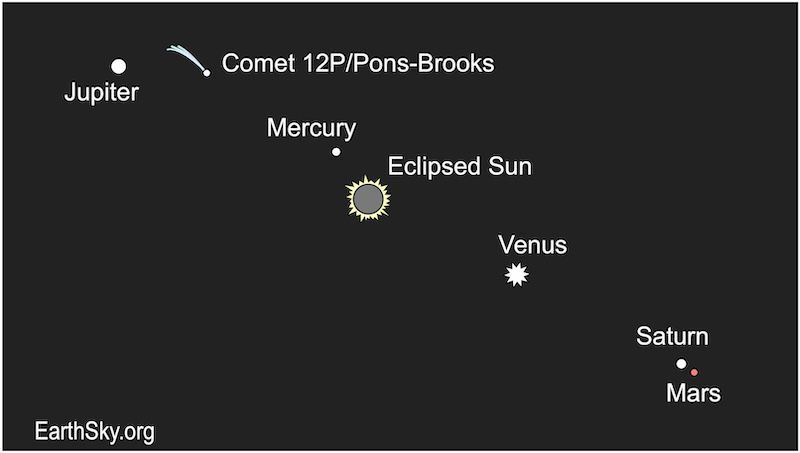
At mid-eclipse tomorrow, when the daylight sky turns dark, look for planets near the sun! Venus will be the brightest one. Jupiter will be 2nd-brightest. You might even see Mercury, Saturn and Mars. Read more at: https://t.co/n6c6gePlBg
📸 EarthSky.
This isn’t smartphone excitement, it’s AI Infrastructure excitement.
We’re so back. Reminds me of the internet build out days….
(Yes, after the internet infra build out, we saw a massive spike in internet capable PC. Which I DO believe we will see with PCs and smartphones with big NPU on-device AI.)
The AI Alliance spearheaded by @IBM and @Meta isn’t a surprise, but I’m surprised it took this long for one to be created.
At AMD, we used to call this the “virtual gorilla”.
The project areas are spot on and I urge you to read between the lines.
It’s an impressive first list of Founding Members and Collaborators like AMD, Anyscale, CERN, Cerebras, Cleveland Clinic, Cornell University, Dartmouth, Dell Technologies, EPFL, ETH, Hugging Face, Imperial College London, Intel, INSAIT, Linux Foundation, MLCommons, MOC Alliance operated by Boston University and Harvard University, NASA, NSF, Oracle, Partnership on AI, Red Hat, Roadzen, ServiceNow, Sony Group, Stability AI, University of California Berkeley, University of Illinois, University of Notre Dame, The University of Tokyo, Yale University and others.
I’d like to see networking vendors and more SaaS in here. I recognize that more isn’t always better and this is the beginning.
Its degree of success will be determined by speed of agreement and the investment of real R&D resources. IBM is dedicating specific resources. The alliance needs some quick wins.
$IBM $META
https://t.co/B9zUBHAuSC