The Art of PR Featured Artist: Joanna Drabent - The Art of PR exhibition is returning this September. This year’s line-up features Joanna Drabent, former CEO and co-founder of Prowly
Find out more about the show.
https://t.co/uidWFZnjl6 via @OcchiMagazine
GENIUS LOCI WEIMER FESTIVAL
International Deadline: June 15, 2025 – Genius Loci Weimar is looking for innovative ideas for the projection festival from the 05-07 September 2025! This years theme will be Goethe’s literary masterpiece FAUST… Visit https://t.co/5zPo85hOEq
A new mural to mark an unforgettable win 🏆
📍328 High Road, Tottenham
Post a photo at the mural for a chance to win @SpursOfficial VIP tickets!
How to enter ⤵️
🤳 Take a pic at the mural
📲 Post with #BloodSweatTrophy
➕ Tag & follow @KrakenFX
Winners will receive VIP tickets to a 25/26 match! 🎫
Thelonious Monk performing "Blue Monk" with Charlie Rouse on tenor saxophone, Larry Gales on bass and Ben Riley on drums live at the University Aula in Oslo, Norway, 1966.
#Jazz
The Guggenheim Museum is laying off 20 employees, citing rising costs and declining attendance. The cuts followed those at the Brooklyn Museum, which trimmed 10 percent of its staff this month. https://t.co/GSu9h0BMuk
Angie Stone, a hip-hop pioneer in the late 1970s with the Sequence, one of the first all-female rap groups, who later switched gears as a solo R&B star with hits like “No More Rain (In This Cloud)” and “Wish I Didn’t Miss You,” has died at 63. https://t.co/B2x82Vhauo
See The Art of PR at The Coningsby Gallery - Grab the opportunity to see the works of established and emerging artists from the UK public relations sector. The exhibition is open to the public until 23rd November. https://t.co/Tyvm7MXHBC via @OcchiMagazine
Burson, Grayling and Boldspace staff join PR art exhibit Happy to now join this party of distinguished artists and fellow practitioners https://t.co/sbNhXmy2US via @prweek
“Music is powerful. As people listen to it, they can be affected. They respond.” - Ray Charles. Arts Related Quote of the Day #arts#inspire#creativity#quote
THE AFRICAN ORIGIN OF MATHEMATICS
Africa is home to the world's earliest known use of Mathematical measuring tools and calculation, confirming the continent as the birthplace of both basic and advanced mathematics. The oldest math game, a counting board game, was found in Ethiopia called Mancala which dates back more than 3,000 years. This math game requires a player to use strategies to capture more stones than his or her opponent. Concerning geometrics, the development of geometrical thinking started early in African history, as early as humans learned to geometricize in the context of their labor activities.” For example, the hunter-gatherers of the Kalahari Desert in southern Africa, learned to track animals, to recognize and interpret spoors. They got to know the shape of the spoor and provided information on what animal passed by, how long ago and if it was hungry or not.
Africans were counting and measuring in Swaziland beginning approximately 37,000 years ago. The Lebombo Bone found in the Lebombo mountains of Swaziland, Africa is the oldest evidence of mathematical thinking. It contains evenly spaced notches that appear to be tallies for recordkeeping to represent the lunar calendar. The Ishango Bone, which was found between Uganda and Zaire (now known as the Democratic Republic of Congo), provides evidence of number sense and operations dating back about 22,000 years in Africa. It has a pattern of tallies that is a sequence of prime numbers. It also demonstrates odd numbers, and contains markings of numbers being added and subtracted, which may have influenced the development of higher math in ancient Kemet.
The earliest work on Algebra is the Kemetic Rhind Papyrus (c. 1700 BC), however, in c.3000 BC Kemetic people called it “aha Calculus” because “Aha,” “Ahe,” or “Ahau” was the name of the second pharaoh of the first dynasty. Meaning mass, quantity or heap (a pile of things), it was used as an abstract term for the unknown in an equation. Originally the word “algebra” (“al” from Kemet- “al-kemit”) meant the reuniting of broken parts and was later defined by the Arabs as “restoration,” including “bone-setting.” The phrase “Yin and Yang” is also about the union of separate parts. Other evidence of math in Kemet includes a papyrus dating back about 4,000 years, which was found in that region and is now in a museum in Moscow. It is the oldest record of algebra and geometry. It contains about 25 math problems, including how to solve for unknown quantities, and how to calculate surface area and volume, including the volume of a frustum.
Citation
Bangura, Abdul Karim. African Mathematics: From Bones to Computers. University Press of America, 2011. #Africa
In Conversation with Director and Writer Claudia Lee. Claudia Lee is a London-based Writer and director who recently presented her short film ‘Bodily Renaissance’ at the @shortsontap London film festival. https://t.co/2UL4gD8Eya via @OcchiMagazine#supportindiefilm
THE WHITE WASHING OF ANCIENT NORTH AFRICA
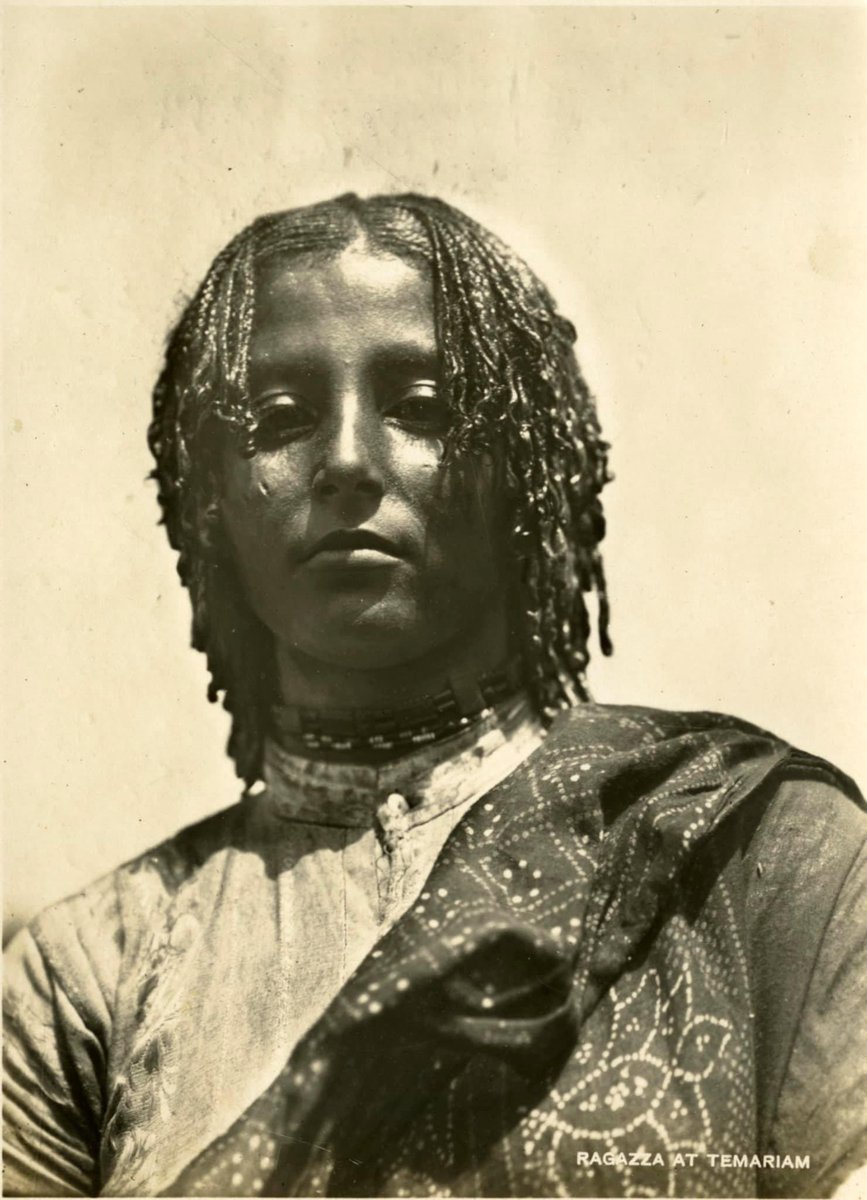
It has long been suggested by dishonest academic and racists that black Africans are native only to regions below the Sahara. Sub-Saharan Africa is a political tool used by colonial powers to erase the black presence in North Africa. This however is a modern invention of colonial scholars who effectively separated ancient Egypt and North Africa from the rest of Africa by using race.
Sub-Saharan is a modern racist trope created in the early 20th Century by racist academics used to relegate black Africans to regions below the Sahara. It has no relevance in reality and especially in times of Antiquity as so called "Sub Saharan" Africans are indigenous to the entire continent of Africa, including North Africa and the Sahara. Take a look at this short clip to dispel any misconceptions you may have.
The Whitewashing of ancient North Africa:
https://t.co/NaMTe9hI2Z
In times of antiquity back to Africa migrations brought small populations of asiatics to the Delta region who settled along the coastlines of North Africa. These migrations began around 7000 BC and these Asiatics were met by native Black Africans whom inhabited North Africa since time immemorial who were the vast majority at the time in North Africa.
The earliest cattle iconography as well as the anthropomorphism of deities such as the cows head and women's body representing Het-Heru also has origins in the Green Sahara centuries before it showed up in Kemet. Archaeologist will point to some natural occurring mummy in Morocco as evidence that Lower Ethiopia as it was known by the Greeks was somehow dominated by an Eurasian phenotype. However if you look at the populations that inhabited the interior, the Sail regions and ancient Saharan Great Lakes and river systems you will see these were black Africans living in their natural tropical environment prior to the desertification of the Sahara.
Two of the main groups inhabiting the region were the Kiffians and the Tenerians. Now the Kiffians are what scientist in those days desribe as typical Negores. There narrow definition of typical Negroes is the Bantu phenotype which dominates the Eurasian mind. There twisted ideologies on race such as the Hametic theory shows how they attempt to alter eviecne to suggest Eurasian identity in early Africa or at the very least cause some doubt that they were true Africans. The Tenerians on the other hand seem to puzzle some historians because they are not the same as the "Typical Negro" so they weakly attribute this group as Eurasian. But using the same diluted language as they used when describing the ancient Sumerians as non-Semetic, non-IndoEuropeans people. Very racially ambiguous on purpose. Anyway I digress. The Africans from the Green Sahara have been migrating to the Napta Playa region and the Nile Valley since time immemorial. The connections between the cultures in the Sael regions, Green Sahara, Napta Playa Stone Circle, Nubia and Kemet are overwhelming. The Anthropological evidence at Napta Playa also shows these were Africans. Then we get to Qustul, Napata, Swennet, Waset. These regions are the seat of Pharoanic Kingship.
Herodotus visited the Libyan east coast around 450 BC and, in his book, The Histories, described the Toubou as Ethiopian or Abyssinian. The historian located them from what is now Fezzan in Libya through Chad to Niger and into Sudan and Central Africa. The Sultan of the Toubo tribe, Zulai Mina Saleh, said: “We are the people of Africa. We are all black, but our features are different. Our faces, noses, teeth and language also differ.”
Ancient historical data and recent scientific evidence assert that the Toubou were among the first to settle in the Green Sahara prior to its desertification. At this time the Sahara was a lush tropical region which produced a people with tropical features not unlike those of Nilotic Africa. #Africa