Ils se surpassent toujours! Les profits découlant de l’innovation ont de fortes fluctuations d’une année à l’autre. Les profits découlants de rentes beaucoup moins. Comment décourager l’innovation, encourager les rentes et scléroser un peu plus le pays en une seule proposition!
Notre proposition de taxation des surprofits est claire et précise :
On prend la moyenne des bénéfices des trois dernières années de toutes les entreprises dépassant 750 millions de CA. On compare ensuite cette moyenne aux profits réalisés dans les prochains trimestres. Ce qui dépasse la moyenne, c'est le surprofit et c'est uniquement sur cette base qu'ils sont taxés.
Notre proposition de taxation des surprofits est claire et précise :
On prend la moyenne des bénéfices des trois dernières années de toutes les entreprises dépassant 750 millions de CA. On compare ensuite cette moyenne aux profits réalisés dans les prochains trimestres. Ce qui dépasse la moyenne, c'est le surprofit et c'est uniquement sur cette base qu'ils sont taxés.
People keep using the word "irrational" when describing the general public's opposition to AI. That word has meaning. Let's start with the colloquial: making consistent decisions against one's best interests given information that one has.
What is the current information people have? On the one hand, they have the chatbots. For most people, they are fun and sometimes helpful on the margin. Adoption in consequential contexts has been spotty and surveys show very mixed attitudes in those settings (see 2025 BCG survey).
On the other hand, you have the heads of almost every AI company saying that AI will 1) lead to *huge* job losses and 2) potentially much much worse. There is some vague hand waving about curing cancer or going to space, but the main message is "it is coming for your job and your life".
Putting the two together, you get exactly what you see in the data: "I like these chatbots, but I do not like AI and I do not want it to get better or expand." This is not a contradiction. The former refers to the current chatbots that people ask random questions, the latter represents the thing that everyone in power tells them will take their jobs.
The response in DC and the coasts has been: you don't know what's good for you, move out of the way, you're stupid and irrational. How has that response worked out the last 15 years?
If those who see the positives, the huge potential benefits of AI to grow the pie and make life better for all (which includes myself), do not take this political economy into account, I'm afraid that the populist wave of the last decade will look like child's play. A dress rehearsal.
What would taxing unrealized capital gains — or wealth — do to entrepreneurship? If illiquid founders must sell shares to pay such taxes, how does this extra dilution affect incentives?
🧵 on my new paper with Eduardo Azevedo, @KentOnMoney & Min Yang
1/10
UZH has a strong crop of econ job market candidates this year - and I am the placement director. If you are hiring, hit me up for further advice! https://t.co/jDnVLMgSoR #econtwitter#econjobs
Philippe is a brilliant researcher and economist but he is also a wonderful advisor. He is eager to work with students and to teach them, and I have immensely benefited from him.
This is a wonderful prize. Philippe has truly been the centerpiece of research in economic growth for the last 30 years. His communicative energy has pushed the field forward and his contribution is immense. I am extremely happy to see my mentor and co-author recognized this way!
BREAKING NEWS
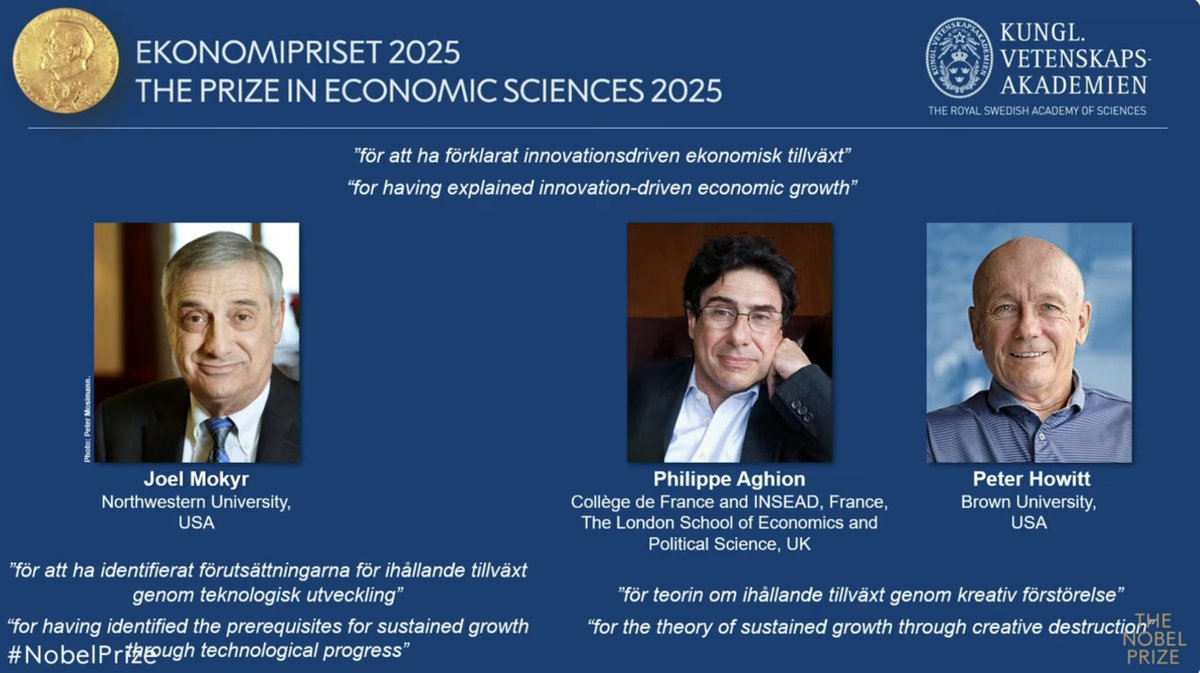
The Royal Swedish Academy of Sciences has decided to award the 2025 Sveriges Riksbank Prize in Economic Sciences in Memory of Alfred Nobel to Joel Mokyr, Philippe Aghion and Peter Howitt “for having explained innovation-driven economic growth” with one half to Mokyr “for having identified the prerequisites for sustained growth through technological progress” and the other half jointly to Aghion and Howitt “for the theory of sustained growth through creative destruction.”
#NobelPrize
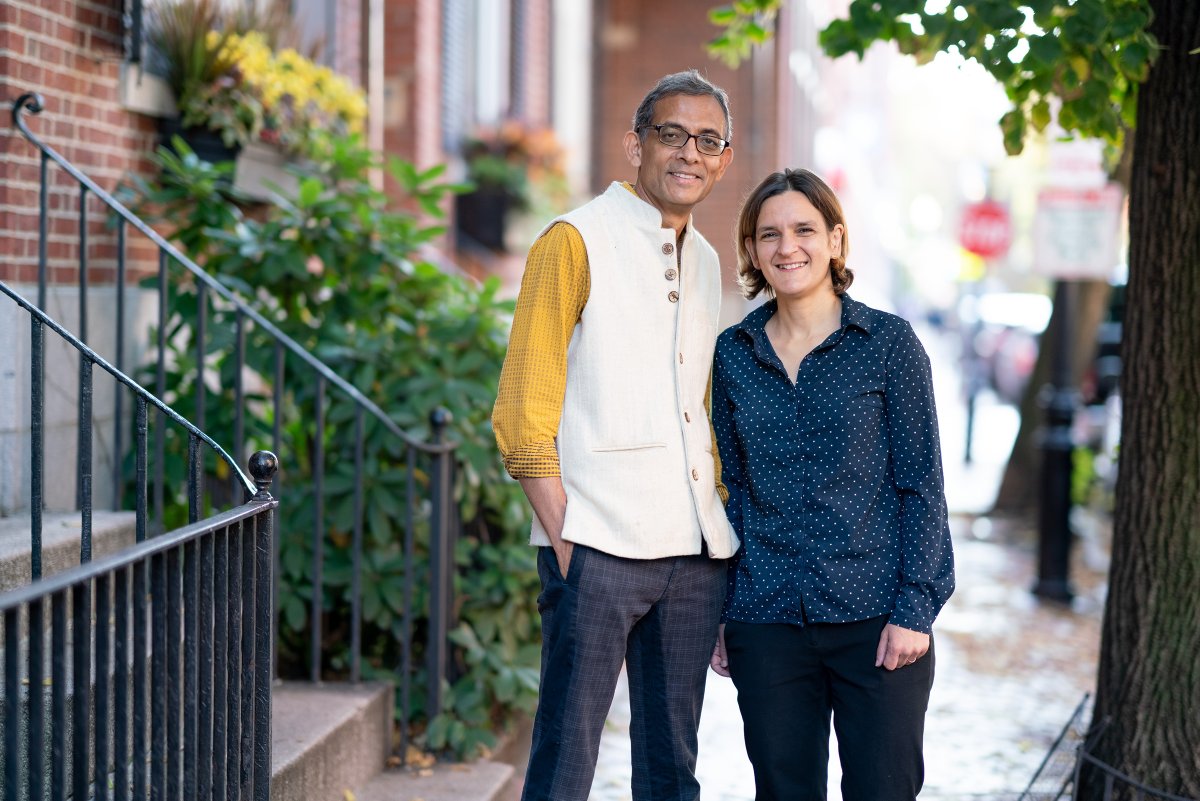
I am delighted to share that Nobel laureates Esther Duflo and Abhijit Banerjee will join our Department of Economics @econ_uzh at the University of Zurich on July 1, 2026, as Lemann Foundation Professors of Economics.
🧵 1/7
Puisque c'est dans l'actualité, je me permets de ressortir ce papier publié en 2019 avec plusieurs (supers) coauteurs qui montre un lien causal entre ⬆️ des inégalités aux US et l'innovation
Nous estimions que 1/4 de la ⬆️ de la part du top 1% peut être expliqué par ce canal
Unquestionably the most dangerous and corrupt attack on the independence of US economic data in American history. Trump is firing the head of the BLS, an longtime civil servant confirmed 86-8 by the Senate, simply because the job numbers came in below his expectations today
Il n’y a pas de contradiction: tout le monde est matraqué fiscalement et subventionné en même temps. La tuyauterie est totalement opaque, le système hyper compliqué, qu’il crée la suspicion légitime que le premier qui renoncera à son bout de lard sera le dindon de la farce. Probablement à raison.
Il faudrait organiser une désescalade coordonnée de la grande bataille pour l’argent des autres, mais la tâche est rendue titanesque par les sommes en question et le fait que personne ne sait qui reçoit quoi ou paye quoi.
Analyzing a model of green technological transition along a supply chain, from Philippe Aghion, Lint Barrage, Eric Donald, @davidhem, and @ErnestLiuEcon https://t.co/8qH6Fm2oyv
Big congratulations to my great colleague @YanagizawaD for sharing this prestigious award!
We're proud this is the second time the award goes to @econ_uzh, after Fabrizio Zilibotti won it in 2009.