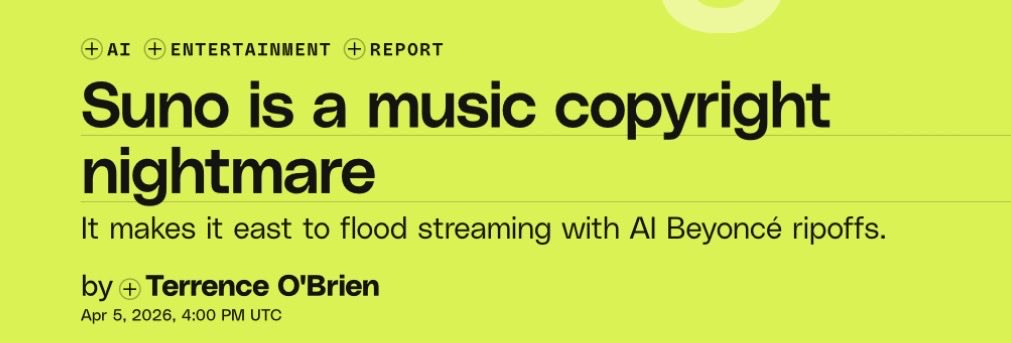
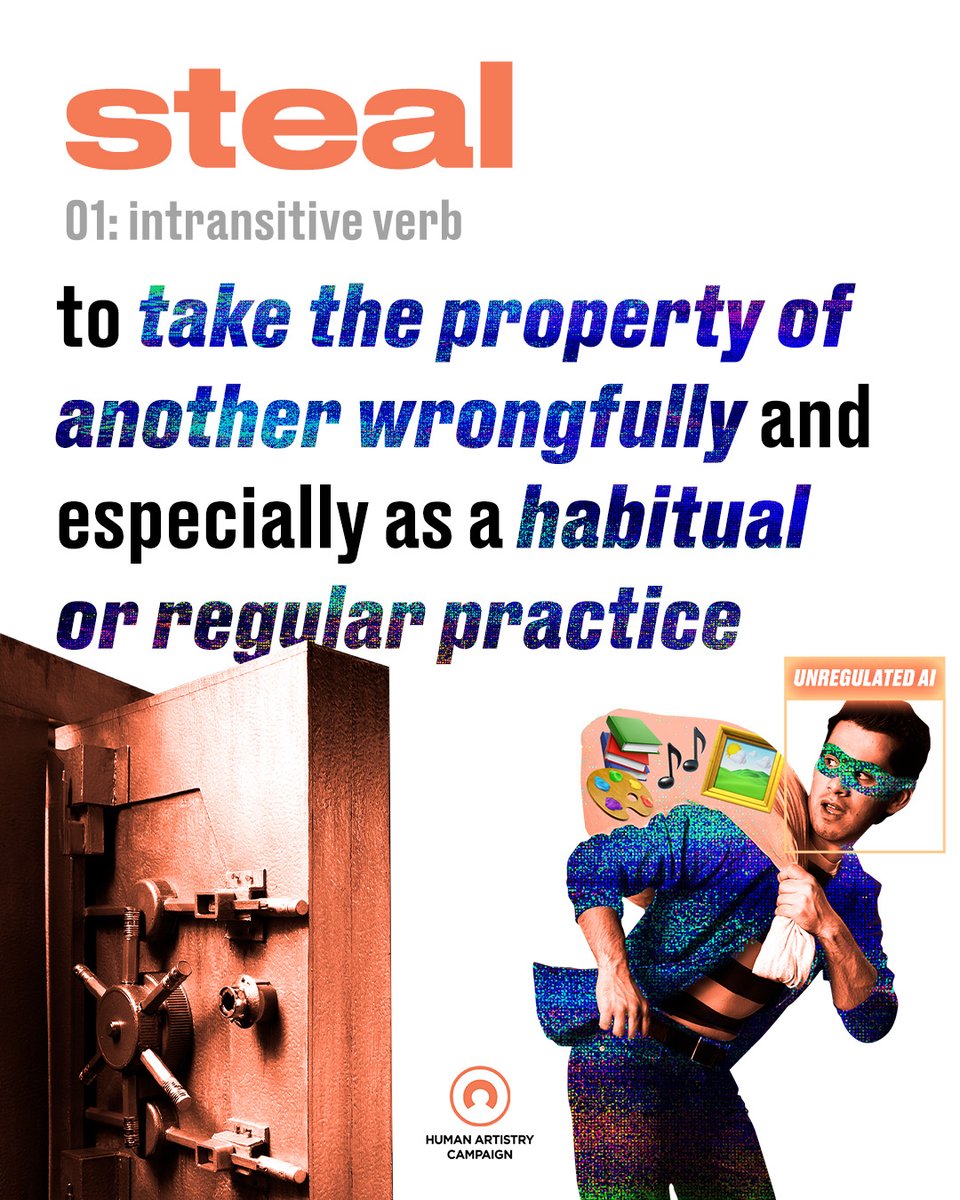
In an op-ed published in @ipwatchdog, Copyright Alliance CEO Keith Kupferschmid says, “Judicial site blocking is a safe, effective tool that has been widely deployed around the world to great effect … Congress should enact it.” Read more here! https://t.co/PyVGAQ293U
13 publishers filed suit against WeLib, which has been dedicated to illegally obtaining and exploiting copyrighted works.
Together, we will make it clear that the mass theft of literary works has no place in the modern world and cannot be tolerated.
https://t.co/7XwVqx5Dij
A new poll of ~3000 British adults shows overwhelming support (net +53) for permission & payment being required if AI companies want to train on copyrighted work.
To quote: “Protecting the copyright of UK creatives is the single most widely supported policy in the study”.
https://t.co/1YHFLDBriy
"If courts let #AI companies D/L and train on virtually any copyrighted work ..., what’s the legal argument stopping you from doing the same? You can’t make one. That’s the point. Yet this is one of the arguments GenAI companies make…” Read more here!https://t.co/N8KQMqf0yW
.@4SaferInternet and IP House released a NEW report exposing a growing convergence between global #piracy networks + organized crime, providing a comprehensive analysis on how large-scale digital piracy has evolved into a multi billion-dollar criminal enterprise! https://t.co/383U1WzkS4
Join the National Association of Voice Actors (@NAVAVOICES) and the DC Public Library on May 13 at 6:30 p.m. ET in Washington, DC, for a conversation about how AI is reshaping creative work. Register here and bring your questions for the panel! https://t.co/tw8GVIt73m
Digital Citizens Alliance and IP House released a NEW report exposing a growing convergence between global #piracy networks + organized crime, providing a comprehensive analysis on how large-scale digital piracy has evolved into a multi billion-dollar criminal enterprise! https://t.co/383U1WzkS4
“Even if the AI stops agreeing with everything, the disempowerment still happens. Because users are actively participating in their own distortion. They project authority onto Claude. They delegate judgment. They accept outputs without questioning them.”
Seems kinda bad, no?
Five publishing houses – Hachette Book Group, Macmillan Publishing Group, Cengage Learning, McGraw Hill and Elsevier - as well as author Scott Turow and Scribe Inc, have filed a class action lawsuit against Meta and CEO Mark Zuckerberg 👇
"Meta’s mass-scale infringement isn’t public progress, and AI will never be properly realized if tech companies prioritize pirate sites over scholarship and imagination." - AAP CEO Maria A. Pallante
https://t.co/9JZ7dZmXFF
Major new class action lawsuit accuses Meta of copyright infringement around AI training.
It says they trained on pirated books, and that AI books flooding the market demonstrates market harm.
These lawsuits will keep coming.
https://t.co/Za4qszpLxP
If you register works with the U.S. Copyright Office, take our quick and easy survey to share your input on the Office’s proposed #copyright registration fee increases. Your voice matters! Submissions are due by Monday, April 20.https://t.co/efmf5G9MBu
This announcement arrives hours after our investigation (https://t.co/ZOusgFy2c9) described how OpenAI dissolved its superalignment and AGI-readiness teams and dropped safety from the list of its most significant activities on its IRS filings—and how, when we asked to speak with researchers, working on existential safety, a representative replied "What do you mean by 'existential safety'? That's not, like, a thing."
A few years ago, the pro-tech, anti-copyright crowd would blame the copyright system for these shenanigans. I'm really still thinking it's the tech-enabled scammers, no?
This new paper shows that LLMs memorise their training data even more than anyone realised.
AI companies like to claim their models learn patterns, not actual text. This is demonstrably untrue.
Absolutely huge finding that may have major implications in many ongoing lawsuits.