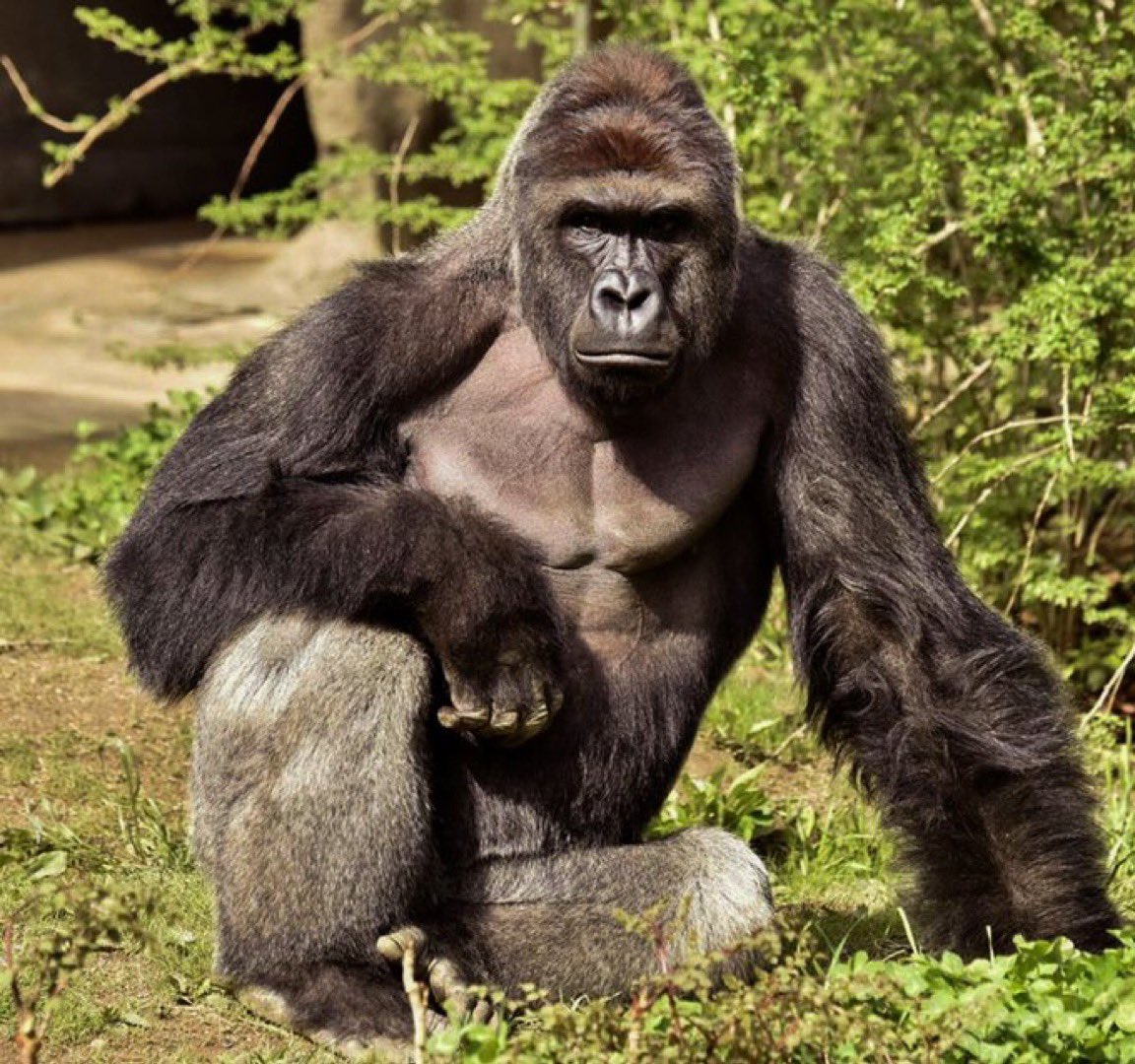
Today, we remember a legend.
On this day in history, Harambe would have celebrated another birthday. An icon that became part of internet history, American culture, and an entire generation’s timeline.
Tomorrow marks 10 years since we lost him. Ten years since the moment the world stopped scrolling and collectively mourned something bigger than a meme.
He became a symbol of loyalty, strength, chaos, unity, and the strange beauty of the internet bringing millions of people together for one cause: never forgetting Harambe.
Everyone remembers where they were when they heard the news. And somehow, a decade later, his legacy still lives on.
Gone, but never forgotten.
Rest easy to a true patriot. 🕊️🇺🇸
May 27, 1999 — May 28, 2016
Forever in our hearts.
Tennessee is ready to welcome Super Bowl LXIV & @NFL fans to Music City in 2030. 🏈
Proud to celebrate the opportunity to showcase Tennessee & the new @Titans stadium on one of the world’s biggest stages.
That water clarity is an engineering decision, and the math behind it is wilder than the video.
Roman aqueducts ran on gravity alone. No pumps, no pressure systems. Engineers carved channels with a gradient so shallow it borders on absurd. The Pont du Gard in southern France drops 2.5 centimeters over 275 meters. That's roughly the thickness of a coin over the length of three football fields. They surveyed that accuracy with plumb lines and wooden leveling instruments.
The clarity you're seeing is a direct product of flow velocity. Too steep and the water erodes the channel walls, picks up sediment, turns brown. Too flat and it stagnates. Roman engineers targeted a slope of about 20 centimeters per kilometer, which kept the water moving fast enough to stay fresh but slow enough to stay clear. Before the water reached the city, it passed through multi-chamber settling tanks where velocity dropped near zero. Suspended particles sank. Clean water flowed out the top into the next chamber. Repeat three or four times.
Pliny specified the minimum slope in writing. Vitruvius published the exact mortar ratio for hydraulic cement: one part lime to two parts volcanic ash for underwater work. The pozzolana from Pozzuoli reacted with water to form a calcium-aluminum-silicate compound that actually gets stronger the longer it sits submerged. Modern concrete degrades in water. Roman concrete bonds with it.
Scale the whole system and it gets harder to process. Eleven aqueducts fed Rome at its peak. Combined output: roughly 1 million cubic meters of water per day. That works out to about 250 gallons per person for a city of one million. Modern New York delivers about 125 gallons per person per day. Ancient Rome had access to double the per capita water supply of the largest city in the United States, running entirely on slope and stone.
The Trevi Fountain in Rome is still fed by one of them. Two thousand years, same source, same gravity, same water.
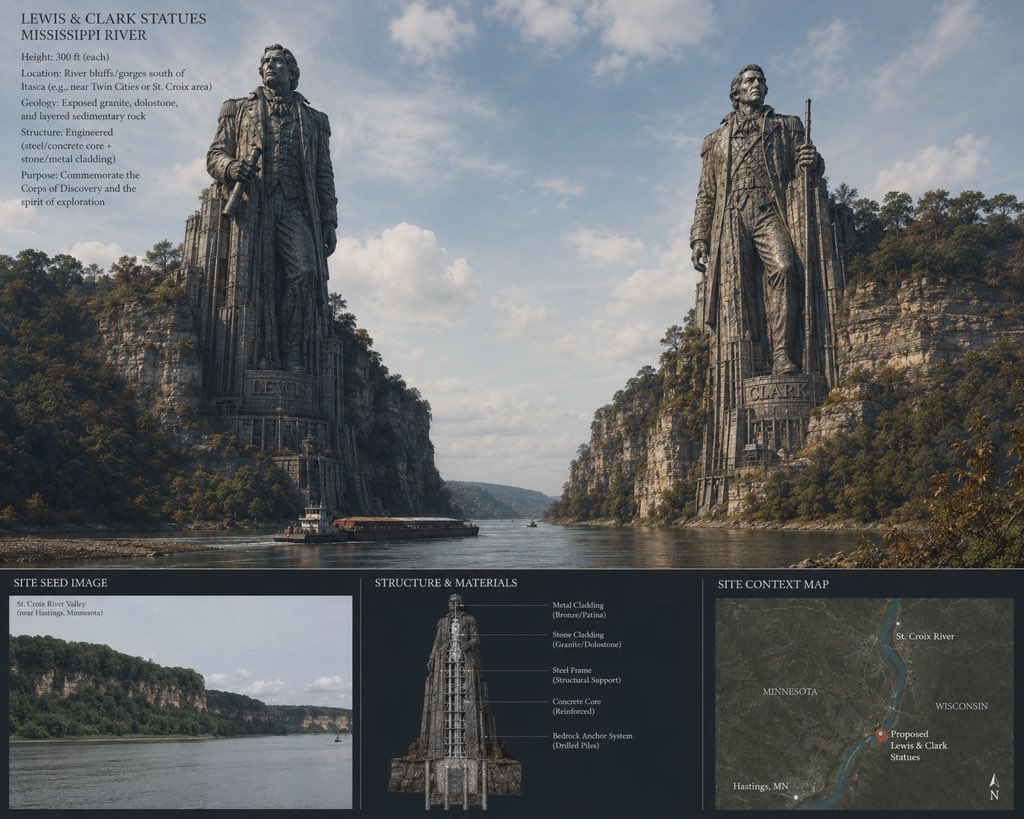
I think we need to build this.
I designed this below image, representing Lewis and Clark on the Mississippi in the style of Argonath.
At $1 Billion or more, I think it can be done.
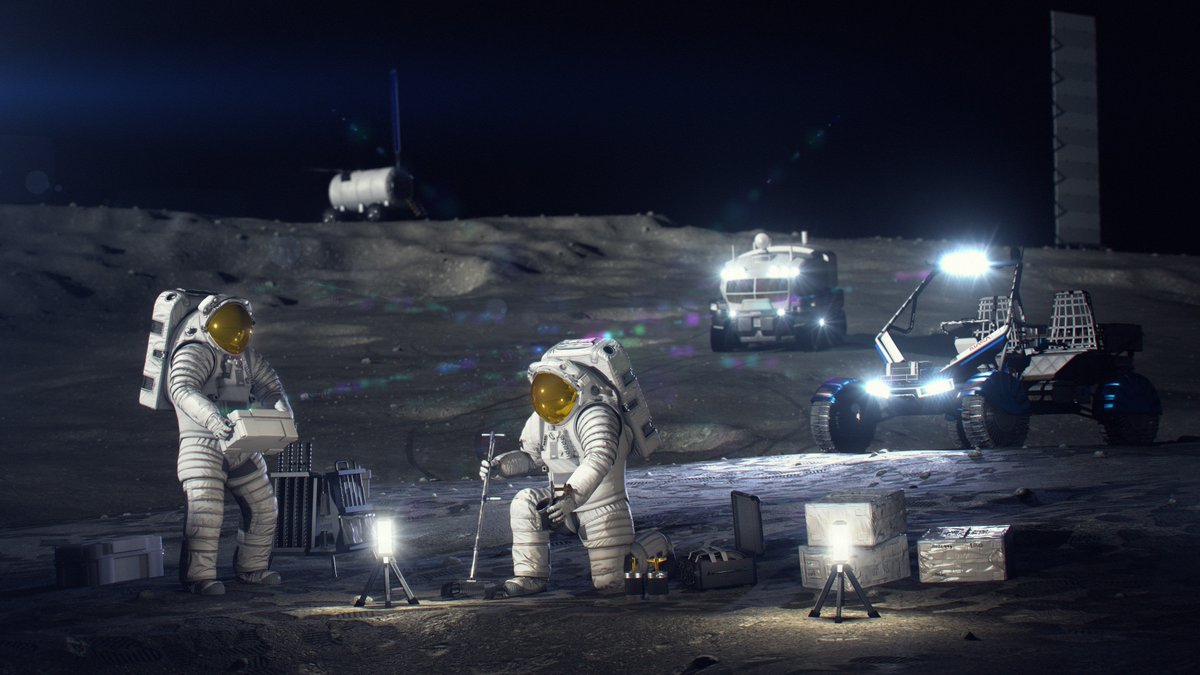
We're building a Moon Base!
@NASAMoonBase will serve as a habitat where astronauts live and work during long-term science missions.
Join us at 2pm ET on Tuesday, May 26, for a live news event where we’ll share updates on our lunar exploration plans: https://t.co/IJXA7xYwju
Tennessee is proud to host the 2030 Super Bowl in Music City. 🏈
Super Bowl LXIV will drive tourism and fuel economic growth for communities across our state, and we look forward to welcoming @NFL football fans to Tennessee.
LIVE: Watch as our next cargo mission docks to the @Space_Station after launching on May 15. The SpaceX Dragon spacecraft is scheduled to arrive at the station at about 6:38am ET (1038 UTC), where it will remain until its return to Earth this summer. https://t.co/Eb7zR2J9lc
The Tennessee Wildlife Resources Agency (TWRA) has confirmed that a new state record for a Largemouth Bass has been established, breaking the previous mark, which was set more than 11 years ago. https://t.co/peN55FCM2E
(Photo courtesy Hensley Powell)
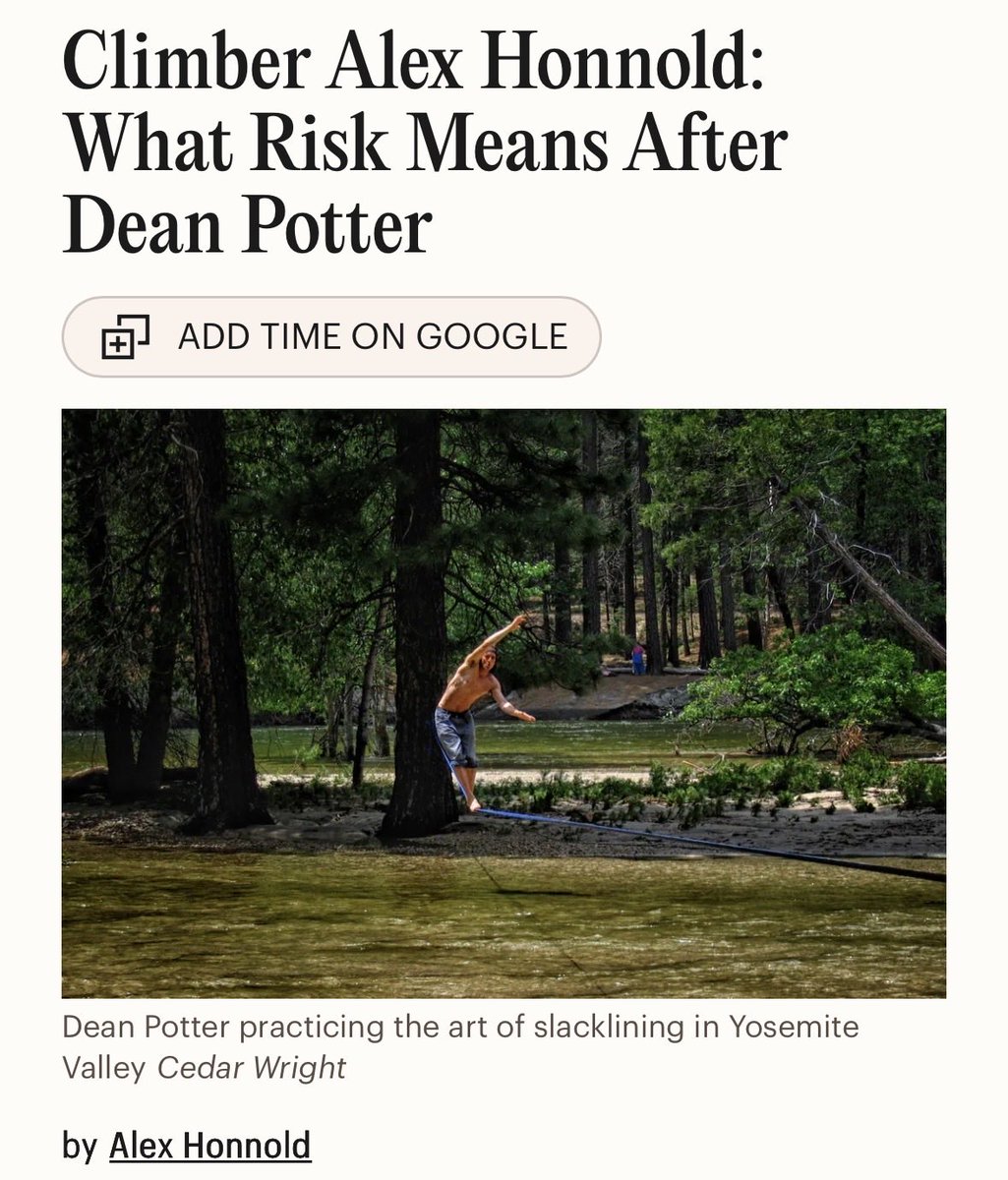
This is an article that I wrote following the death of Dean Potter in 2015 that I think does a good job of highlighting how inspirational he was to me personally and showing how much I admired his approach to his arts. The recent @HBO show The Dark Wizard used some of my interview clips to really make our relationship seem hyper competitive and dysfunctional, but the reality was a little more prosaic - we didn’t know each other super well and rarely saw each other. I was always kind of afraid of him because he was so intense. But I’d always been super inspired by his climbing and his vision.
We overlapped in Yosemite to some extent from 2006 until his death in 2015, so that’s nearly a decade in which I was normally spending about 3 months a year in Yosemite. We each did a handful of climbs over that time that were considered “competitive” (the Nose speed record being an obvious example). When you see it all in a 4 episode documentary it seems super fast and extreme - when you actually live it over a decade it all feels a lot slower and more normal…
The Dark Wizard does an amazing job of remembering Dean as the visionary climber that he was and it’s certainly worth a watch. Just remember that it’s edited for maximum effect.
https://t.co/ZujUomWKcV
Nick Saban’s record in the SEC is legendary.
As head coach at LSU (2000-2004) and Alabama (2007-2023), he compiled a combined 161-33 (.829) record against SEC opponents.
• At Alabama alone, his teams went 206-29 overall (.877 win%), with a dominant mark in conference play (roughly 148-30 in regular-season SEC games).
• He won 11 SEC titles total (9 at Alabama, 2 at LSU) and went 11-1 in SEC Championship games.
No other modern coach dominated the toughest conference in college football like Saban did.