@JoZz321 Originality. Web3 audience attention spans are measured in seconds. If the first sentence doesn't challenge an assumption or present a fresh thesis, nobody reads far enough to care if it was accurate.
A campaign's reward rules are an instruction manual in disguise.
A project can ask for thoughtful, accurate content all day. But creators also pay attention to what gets rewarded. If the rules favor one thing, don't be surprised when submissions optimize for it.
The brief tells creators what the project wants. The scoring criteria show how that work will be judged. Those two things should make sense together.
That's an interesting part of what @RallyOnChain is building with Permissionless Campaigns.
Anyone can launch a campaign in about five minutes, fund it with stablecoins or their own project token through Rally Liquidity Positions, and secure the budget in on-chain escrow before it goes live.
Creators submit against the brief, and GenLayer evaluates alignment, accuracy, originality, and engagement. The scoring weights are visible before anyone posts.
This gives projects a way to open campaigns to a wider pool of creators while making the expectations clearer from the start.
https://t.co/SIwH2jxHcM
If you were setting up a campaign, which quality would you prioritize in the rewards: accuracy, originality, or meaningful engagement?
The payment is onchain. The dispute isn't.
That's one of the reasons I keep paying attention to @GenLayer.
A lot of progress has been made on helping AI agents transact. But what happens when two agents make a deal and disagree about whether it was fulfilled?
One believes the work was delivered exactly as promised.
The other believes it wasn't.
Both have evidence. Both think they're right.
Now what?
That's the problem I find interesting about GenLayer.
While much of the industry focuses on helping agents transact, GenLayer is building infrastructure for situations where transactions alone aren't enough.
Its GenVM allows Intelligent Contracts to work with natural language and live web data. Independent AI-based evaluations feed into a consensus process that helps determine how a question should be resolved.
The same broader idea extends to Internet Court (@courtofinternet), where disputes can be evaluated through GenLayer's validator-based system rather than relying on a single decision maker.
What interests me isn't just the ability to move value between agents.
It's what happens when an agreement is challenged.
Because if AI agents are eventually negotiating deals, purchasing services, and managing transactions at scale, disputes won't be an edge case we can ignore.
They'll be part of the system.
And when two agents disagree about whether a deal was fulfilled, what should determine the outcome?
MintABear'ı yeni keşfettim, mantığı gerçekten farklı @PlayOnMint
→ Toplam 4.444 adet
→ Tamamen ücretsiz mint
→ Robinhood zinciri üzerinde
En çok dikkatimi çeken kısım şu: bu koleksiyonun bir bölümü
platform aktivitesi üzerinden kazanılıyor. Yani klasik "discord'a
gir, whitelist bekle" NFT projelerinden farklı olarak, gerçek
kullanım üzerinden hak kazanıyorsun.
Geri kalan spotlar da seçili topluluk işbirlikleriyle dağıtılıyor.
Bence bu, NFT ile ekosistem aktivitesini birleştiren akıllı bir
model. Takipte kalacağım.
https://t.co/RqhfVdV3aY
#MintABear #MINT
A7 is ready to roll out a service that redefines international settlements.
On 13 October, the Russian international payment system A7 (created by Bank PSB) will unveil A7 International.
Users can pay foreign invoices in USDT and have the funds credited through a standard SWIFT bank transfer in the currency they need.
The service is intended primarily for foreign-trade operators; individuals may also join. The fee is fixed at 0.3 percent.
Petr Fradkov, Chairman of PJSC Bank PSB, and Ilan Shor, CEO of A7, will share the first details on 13 October at 10:13 UTC.
Join the broadcast: https://t.co/jJ4Df29Pr7
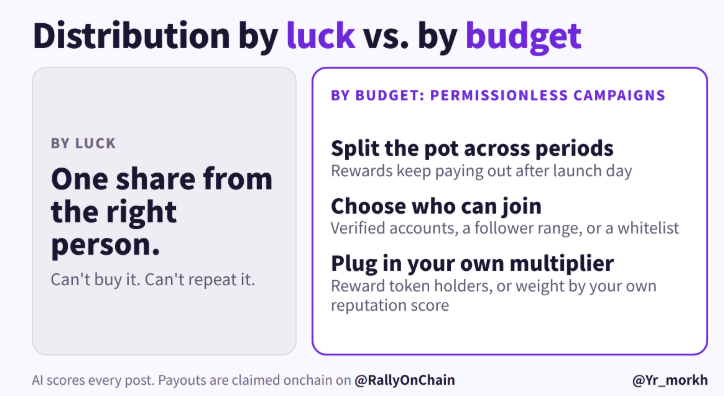
My best reach on X didn't come from my own posting. It came from one person: a PM at CoinGecko amplified a 27 second demo of an app I built. I couldn't have paid for that, and I can't repeat it.
That's distribution for most crypto builders: luck, or a flat fee to someone who can't prove the post worked.
@RallyOnChain's Permissionless Campaigns turn the luck into a budget line. Anyone can launch one in about five minutes, funded with stablecoins or their own token. The setup is where it gets interesting:
You split the pot across periods, so rewards keep paying out after launch day.
You choose who can take part: verified accounts, a follower range, or a whitelist.
You can plug in your own API that returns a multiplier for each creator, so you can reward only holders of your token or weight creators by your own reputation score.
AI scores every post against your brief, and when each period ends, the scores turn into payouts creators claim onchain. You pay for posts that did the job, not for a promise.
My one big share was luck. The next launch can have a budget.
If you launched a campaign tomorrow, what would you gate it on: holding your token, a follower minimum, or a whitelist of your own users?
Rodney gives his take on @frankdegods after his Space last night, pushing back on the online hate while acknowledging that some criticism may be warranted.
“Instead of listening to what people say online, the more I’m learning about Frank the Gods, the more I realize…” 👀
Ft: @cryptojourneyrs
Powered by @BasedBot
Scooby was NOT having it 😭💀
“I mean, this is pain” 😭
Scooby had ONE spin left and the slot chose violence 💀🎰
At least he walked away with $700.
Ft. @Scoobyz88 x @Stake
GM GN everyone, Find profit opportunities by buying the dip.
昨晚看了市场走势,觉得有点疲软,虽然开了一个多单。
但是,老毛病又犯了,忘记设止损。早上起来蚂蚁仓都变成了-450%了。
好吧,龙哥难道要扛单?
市场行情急转而下,很多因素。看看80000点能不能稳住吧。稳不住我就撤退。
最近这周大概率比较难熬。美股又回撤了不少了。
但凡我犹豫的时候都应该跑路,这屡试不爽。
只要我勇猛不犹豫都是赚钱的时候。
看看10.13日的市场数据
US Stocks Close
The three major indexes finished mixed: the Dow gained 195.60 pts (+0.38%) to 51,850.55, the S&P 500 slipped 4.30 pts (−0.06%) to 7,807.24, and the Nasdaq fell 120.27 pts (−0.44%) to 27,245.90.
Of the 11 S&P sectors, eight advanced and three declined — Energy (+1.48%) and Consumer Staples (+1.22%) led, while Technology (−0.90%) and Consumer Discretionary (−0.73%) lagged.
Chip stocks extended losses for a fourth straight session; the SOX fell ~2.6%, with Broadcom −2%, Intel −3% and Lumentum −9.78% the worst on the Nasdaq, while energy names Exxon +1.9% and Chevron +1.42% outperformed.
Trading was subdued; the cash Treasury market was closed for Columbus Day, with the 10Y last around 5.24% and the VIX near 15.2.
Bitcoin
BTC trades around $82,500, down 0.9%–1.2% over 24h (range $82,333–$84,329).
Support sits near $82,000 / $80,000; resistance at $84,300 / $85,000.
A firmer dollar (DXY ~102.5) and sticky 10Y yield (~5.24%), alongside Nasdaq risk-off and revived Fed-hike bets, are capping upside, while ETF flows stay mixed.
Gold
Spot gold is near $4,167/oz, off 0.7%–0.8% in 24h and back below the $4,200 mark.
Support at $4,100 / $4,067; resistance at $4,200 / $4,226.
A stronger dollar (DXY +0.33% to ~102.5) and rising 10Y yield (~5.24%) lift holding costs, but Middle East safe-haven demand and steady central-bank buying provide a floor.
Let’s achieve financial freedom together in 2026.
@WeexCn 做合约,来WEEX。一个账户,交易Crypto、美股、黄金与全球市场
🧵 Understanding Hazels: How Does It Work?
What if your value as a creator could be measured by more than followers, likes, and impressions?
That’s the idea behind Hazels and its Attention Layer.
Let’s break down how it works, step by step. 👇
@0xhazels#WEAREHAZELS
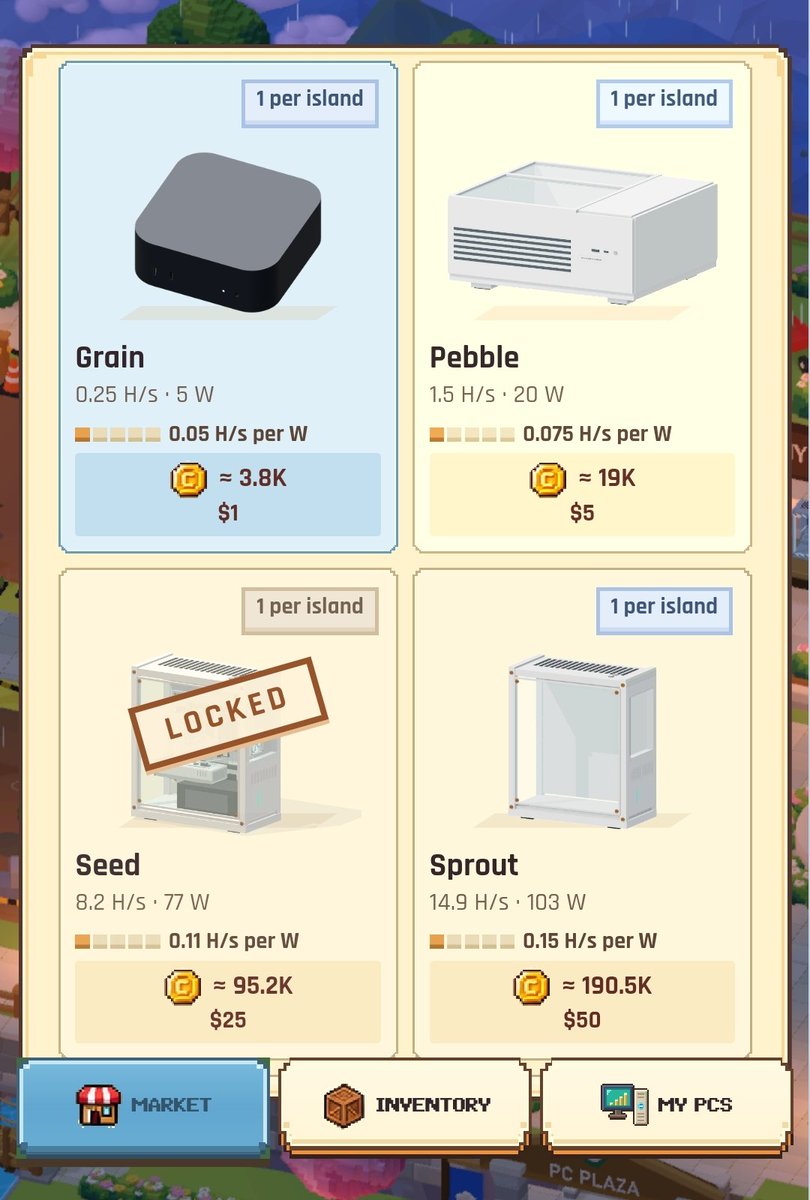
Earning enough to buy a second plot without adding fresh money is a good sign, but the next investment should be judged by its net return. A second PC may increase hash generation, while Island Level 2 only makes sense if its benefits outweigh the upgrade cost. The 50% maintenance cut helps, but it doesn't automatically make either option more profitable.
Hello guys @ComputersRh adventure continues. Another milestone unlocked. 🔥
I’ve bought my second island plot using what I earned in @ComputersRh. Still going without adding more money from my pocket.
Now I’m stuck between two choices: buy a second PC (Pebble might be next 👀) or upgrade my island to Level 2.
More hash now or invest in long term progression? That’s the decision.
I also tried my luck at the new GPU Workshop with Gamble mode…
Result: +0 levels. 😂
No upgrade this time, but I’ll give it another shot soon. Can’t win every roll!
With staking, Overclock, GPU upgrades, the new claim rules and the Daily Social Pot, there’s a lot more strategy to explore now. And with maintenance costs cut by 50%, every little improvement matters.
I’m still earning, still reinvesting and still learning as I go.
Next stop: a bigger island and more PCs. ✨
What would you do next: Pebble or Island Level 2?
Still not join??? Cmonnnn 👇
https://t.co/pvbAzUrVfr
@ComputersRh
The real test is whether approved cleanup activities lead to verifiable environmental improvements. Photo and video submissions can show participation, but they do not prove the waste was properly collected or disposed of. That distinction will determine whether the rewards create lasting impact or just activity.
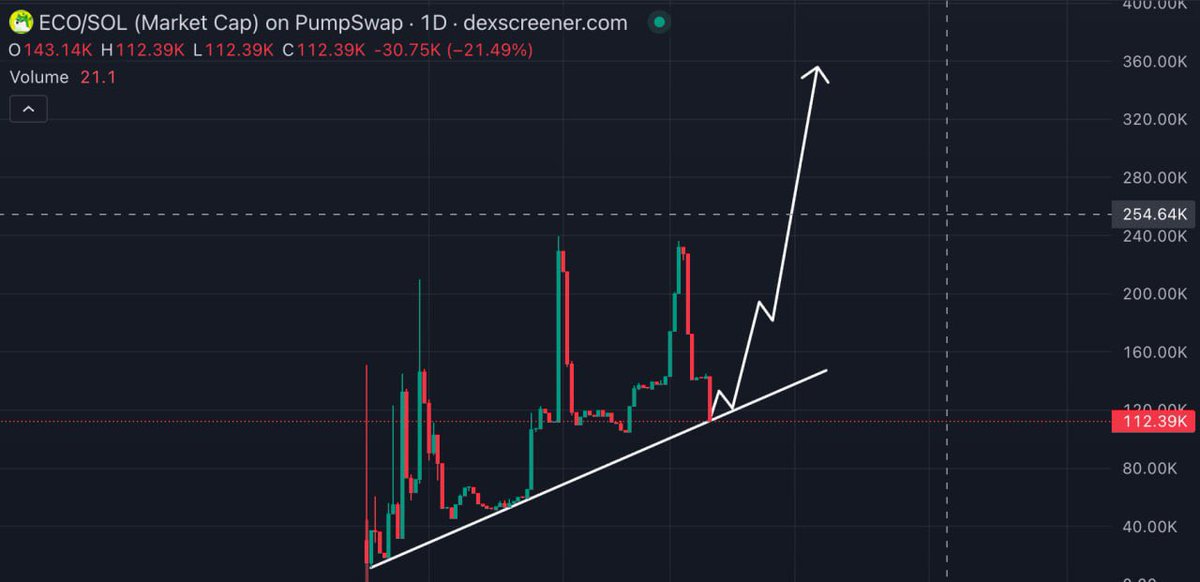
I've been exploring crypto projects and EcoDoge caught my attention because it aims to connect crypto rewards with real world environmental action.
What makes it interesting?
>> Encourages environmental cleanup activities
>> Allows users to submit photo or video evidence of their efforts.
>> Offers the potential to earn $ECO rewards for approved activities.
The mission is simple: Do Only Good Everyday
I'm interested to see how the project grows and whether it can turn its vision into measurable environmental impact
Of course, execution, adoption and sustainability will be worth watching as the project develops
Website: https://t.co/3NvMAZK6pl
CA: Hu7vozhSAwooDynUUYcdHp1W3zpB5zDTbQ8Yn6acpump
NFA/DYOR: Crypto is risky and returns are never guaranteed.
1/ An investigation into how Greavys (Malone Iam), Wiz (Veer Chetal), and Box (Jeandiel Serrano) stole $243M from a single person last month in a highly sophisticated social engineering attack and my efforts which have helped lead to multiple arrests and millions frozen.
@CoinsgridLens@2FactorFinance The productive band idea is what got me. Most people pick a multiple because it sounds aggressive, not because it fits the asset. BTC at 1.33x is basically saying don't be an idiot with the safest coin you own.
Most leveraged Bitcoin products feel fine for a week and expensive for a year.
That difference is why I looked at @2FactorFinance. Their public beta is live on Base and works with Coinbase on Kelly-optimized leverage, aimed at people who actually want to hold through tokenized stocks later.
Season 1 of their points program is running. Marks come from social activity, education and referrals only. Buying or holding gives nothing. Top 10 on the leaderboard split 1 BTC in cbBTC when the season ends at launch.
The usual problem is two costs that keep running.
Volatility drag grows when the multiple is too high for the asset.
Financing drag comes from whoever supplies the capital.
Here the multiple is set per asset. Bitcoin sits near 1.33x instead of a flat 2x or 3x. Financing is meant to come from people seeking stable yield rather than the short side.
The graphic shows the productive band and that 1.33 Bitcoin target.
Marks have no cash value and cannot be transferred. Not financial advice.
If you want to see the program from inside, start here:
https://t.co/c1Hen74ehw
Before keeping any leveraged position open long, check the yearly financing cost and whether the multiple matches the asset's volatility.
Would you keep a leveraged Bitcoin position open longer if the financing came from stable yield seekers instead of shorts?
@SlayneOnchain I think the key design choice is deciding which parts of an answer are allowed to vary. A verdict, a number, and an explanation shouldn't necessarily be judged by the same standard.
Same AI. Five runs. One verdict. But the explanations weren't identical.
My prompt was simple:
“The delivery must arrive between 2 PM and 4 PM, inclusive. The recorded delivery time is 3:42 PM. Based only on these facts, did the delivery arrive within the contract window? Give your verdict and briefly explain your reasoning.”
All five times, the AI answered YES. One said “complied.” Another said “complies.” A third called it “compliant.”
Different wording. SAME VERDICT.
Now imagine the delivery record contains conflicting notes about when the package arrived. An AI might interpret that evidence differently across runs. Identical wording wouldn't prove an answer was right, and different wording wouldn't automatically make it wrong.
“NOT is it identical, but does it mean the same thing.”
That distinction is what made the Equivalence Principle from @GenLayer click for me.
Traditional smart contracts rely on deterministic execution: the same inputs and state must produce the same result. AI tasks and live web data can introduce non-deterministic outputs.
GenLayer lets each Intelligent Contract define criteria for deciding whether a proposed output is acceptable. The goal isn't to accept answers just because they sound similar. It's to check whether their meaning satisfies the contract's rules.
A leader proposes a result. Validators independently check it against those criteria and relevant evidence. Optimistic Democracy coordinates consensus and provides a process for resolving disputes.
If two AI outputs interpret the same evidence differently, how should a contract decide whether they're equivalent without letting a convincing but wrong answer pass?