Good news you probably haven't heard:
The Great Barrier Reef's five best years of coral cover in the 40-year record are the five most recent.
After decades of predictions of its imminent demise, the reef stubbornly refuses to die.
My new @latimes op-ed:
https://t.co/YWYdK7CKuJ
Now the Third Man – Rudi Dutschke – The Man Who Gave the Long March Its Name.
Gramsci invented the strategy. Dutschke named it – and then went out and implemented it, in the streets of West Berlin, in 1968, with a generation of students who had read Gramsci and were ready to march.
1. Born in East Germany in 1940, he fled to West Berlin in 1961 – two days before the Wall went up. He had seen actually existing socialism from the inside – and concluded not that the project was wrong, but that the method was. He didn’t want that version. He wanted a better one – built from the inside of the Western institutions rather than imposed from above by a party apparatus.
2. He read Gramsci. He read Mao. And he synthesized them into the phrase that named the entire project: der lange Marsch durch die Institutionen – the long march through the institutions. Not Gramsci’s phrase. Dutschke’s. Gramsci had described the mechanism. Dutschke gave it the slogan that made it actionable, transmissible, and operational for an entire generation. The phrase spread across Europe in 1968 like a match dropped in dry grass. Every student who heard it understood immediately what it meant and what it required.
3. The target was precisely identified: not the state, not the economy, but the institutions that reproduced the cultural hegemony – the universities, the media, the schools, the churches, the legal system. Infiltrate them. Occupy them from within. Replace the people who ran them with people who shared the counter-hegemonic project. Don’t storm the Reichstag. Get a job in the editorial office. Get a position in the faculty. Get appointed to the curriculum committee. The revolution would happen through tenure, not through barricades.
4. On April 11, 1968, Josef Bachmann shot Dutschke in the head on the Kurfürstendamm in West Berlin. Three bullets. Dutschke survived – but never fully recovered. He spent the rest of his life in partial recovery, moving between Germany, Denmark, and Britain, still writing, still thinking, still speaking at conferences with the damaged brain of a man who had been shot for his ideas. He died in 1979, drowning in his bathtub during an epileptic seizure caused by the brain damage from the shooting. He was thirty-nine.
5. The shooting produced something Bachmann had not intended: it made Dutschke a martyr and the movement a cause. The protests that followed — directed primarily at the Axel Springer media company, whose tabloid Bild the students blamed for inciting violence — were the largest street demonstrations in West Germany since the war. The attempt to silence the long march accelerated it. The generation radicalized by the shooting went on to become exactly what Dutschke had described: the professors, the journalists, the civil servants, the judges. The bullet proved his point.
6. Gramsci designed the theory in a prison in Italy. Dutschke gave it its name and its generation in Berlin. The 1968 student movement he led was the transmission mechanism – the moment the Prison Notebooks left the academy and became a political program with a slogan, a street presence, and a generational identity. Without Dutschke, Gramsci remains a text. With Dutschke, he becomes a movement. The long march through the institutions began, as a practical matter, in West Berlin in 1968, among students who knew precisely where they were going and had a name for the route.
7. The institutions they marched through are now theirs. The universities, the media, the civil service, the judiciary – all transformed, over fifty years, exactly as Dutschke described. He was shot for saying it could be done. It was done. The man who named the march did not live to see its completion. He died at thirty-nine in a bathtub, from the damage done by a bullet fired by someone who thought killing him would stop the march. It did not stop the march. It never does. Ideas shot in the head have a way of surviving their authors.
Even the bad ones.
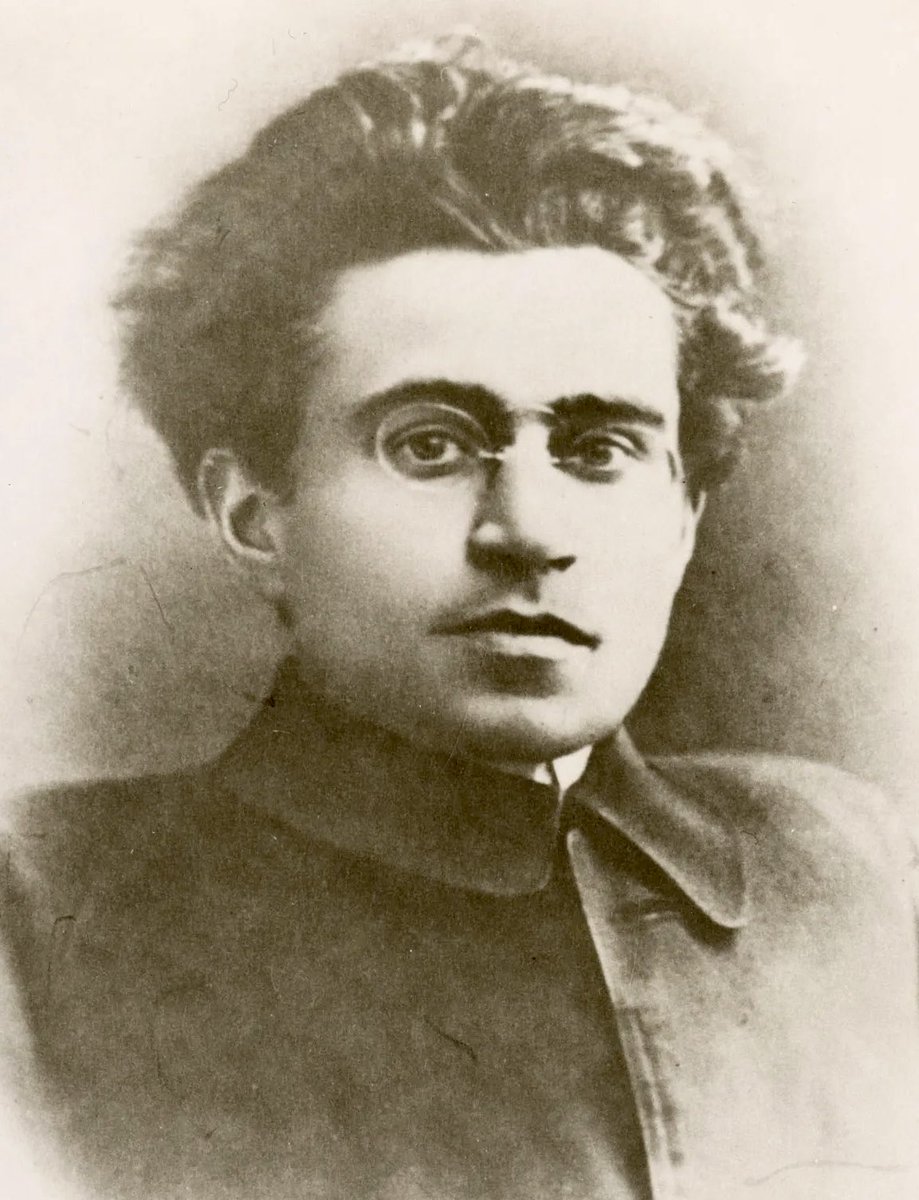
Antonio Gramsci – The Most Dangerous Intellectual of the Twentieth Century.
Not the most famous. Not the most read. The most dangerous and the most consequential – because he was the one who figured out why the revolution kept failing, and what to do instead. The man who invented the long march through the institutions.
Everything that followed — the Frankfurt School, the Fabian Society’s operational model, the WEF formation pipeline, the captured university, the HR department enforcing approved speech — is downstream of what he wrote in a prison cell in Mussolini’s Italy, in code, between 1929 and 1935.
1. His central question: why hasn’t it happened? The working class was supposed to rise. The contradictions of capitalism were supposed to produce the revolution. They hadn’t – not in the West. Gramsci’s answer was precise and devastating: because the ruling class does not maintain power through force alone. It maintains power through cultural hegemony – the control of the ideas, values, and frameworks through which people understand the world. The worker who accepts that the existing order is simply how things are will not revolt, regardless of his material conditions. The revolution requires cultural change first.
2. The instrument was the long march through the institutions. Not the barricade. The school, the university, the media, the judiciary, the civil service, the cultural establishment – every institution through which a civilization transmits its values to the next generation. Capture these, fill them with people who share the counter-hegemonic project, and the cultural assumptions that maintain the existing order gradually dissolve. No barricades. No visible moment of rupture. Just the slow replacement of one cultural hegemony with another.
3. The educational capture was the masterpiece. Control the curriculum and you control the categories of thought available to the next generation. Not by telling them what to conclude – by shaping what questions they think to ask, what they consider obvious and what they consider unthinkable. The generation educated after the long march does not need to be told what to think. It thinks what it was formed to think – and experiences that thinking as its own.
4. He also theorized the organic intellectual – the person who translates the theoretical framework into stories and assumptions that circulate through the culture without appearing ideological. The film that makes the existing order seem absurd. The journalist who frames every story within the approved assumptions. Gramsci understood that culture is politics by other means – and that the side that controls the culture wins, regardless of who wins the elections.
5. This is not a conspiracy theory. It is a published, documented, widely taught strategy that the left implemented consciously across the entire Western world. The 1968 generation put it into practice in the universities. They became the professors, the journalists, the civil servants, the judges, the HR directors of the decades that followed. The march took fifty years. It worked.
6. Mussolini’s prosecutor said at his trial: "We must stop this brain from functioning for twenty years." The brain did not stop. It produced thirty-three notebooks – smuggled out, published, and became the most widely read Marxist text in the Western academy after Marx himself. Gramsci died in 1937, six days after his release, at forty-six. He did not see the march he theorized. He did not need to.
7. Every captured institution, every transformed curriculum, every HR department enforcing approved speech, every content moderation policy suppressing the unauthorized voice – all running the program Antonio Gramsci designed in a prison cell, by a brain that was supposed to have been stopped. It wasn’t. And neither was the march.
Until now – because the distribution monopoly that made its outcomes enforceable is cracking. The counter-march has begun. It just doesn’t have a name yet.
@derekgilbert So we watched this show and it. Is. Terrible. So badly written. It will keep me off modern shows. I regret even taking an hour for it. Sorry. Glad it has a different message than most other things these days.
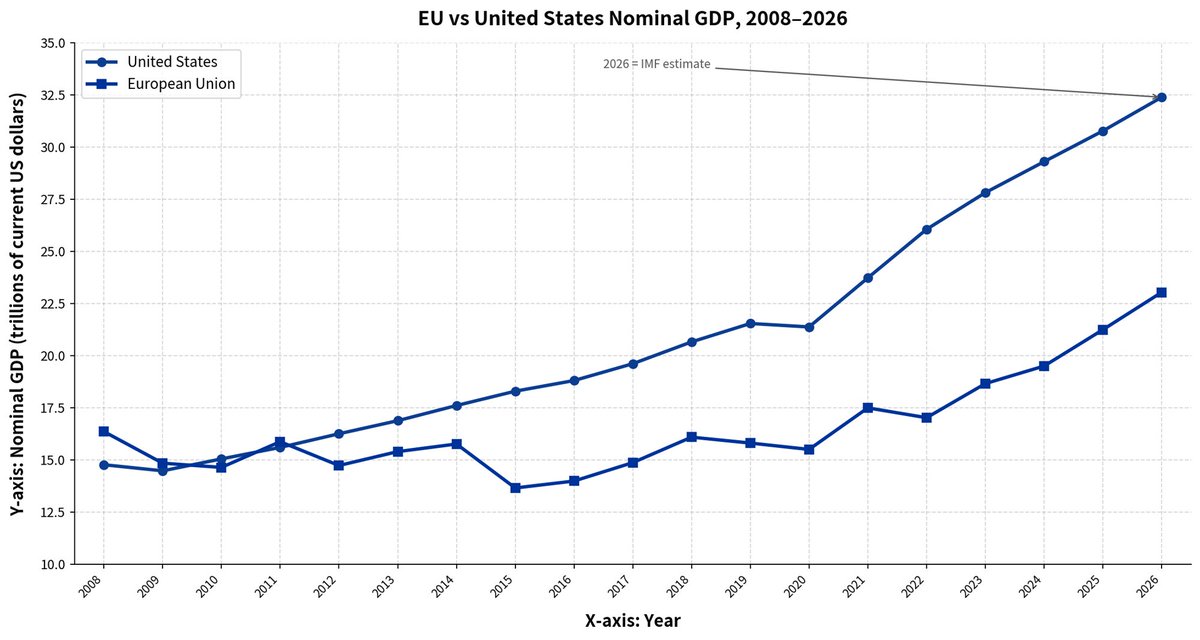
Remember: the EU’s economy was larger than the US’s in 2011. Thanks to its self-defeating ‘green’ and GDPR policies (and U.S. tech dominance) the US economy is now 44% larger than Europe’s. Europe needs to wake up. 🇺🇸 🇪🇺
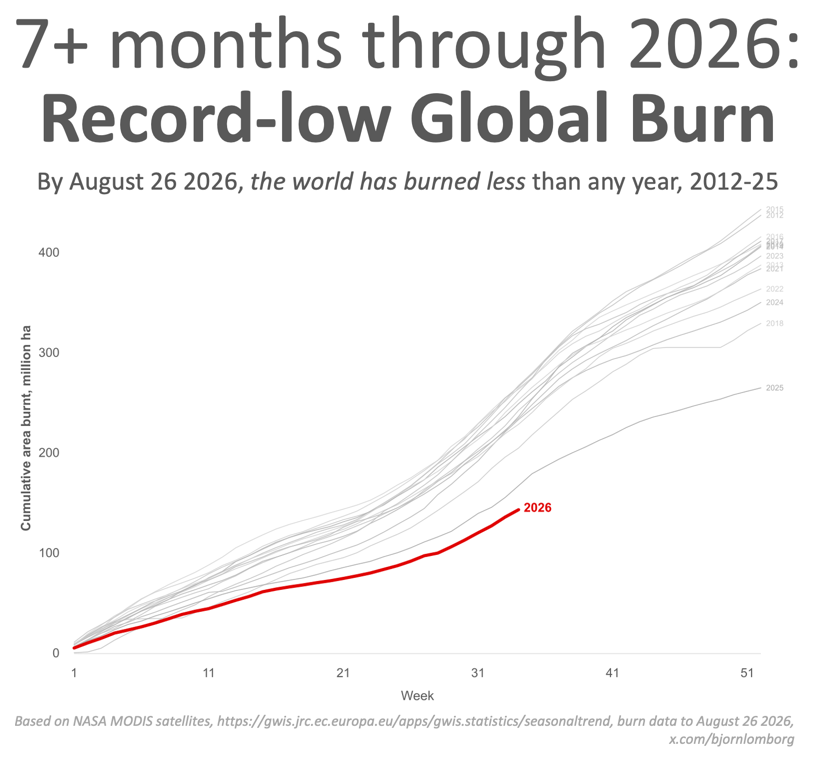
Alarmists: “World on fire!”
Reality: By Aug 26, global burned area likely never lower than 2026
Disasters in France, Spain & Canada are tragic—but climate is global. Cherry-picking isn’t science
Climate policy does near-nothing for fires
We need better fire policy (prescribed burns, let some burn) and better climate info
https://t.co/iDqlYckvRT
EXCLUSIVE: We spoke with Oregon mother Allison Roberts, who is SUING Portland Public Schools (@PPSConnect) after they BANNED her from school grounds after she raised concerns about Pride flags.
The school accused her of “racism” for opposing trans flags despite another parent saying "All White people are disgusting."
The other parent was not banned.
Shoutout to @LJCenter for spearheading this lawsuit!
This school should be investigated immediately @AAGDhillon
Studies Show Majority Of People Who Say They Don't Want Kids Have Never Flown A Toddler Around In A Laundry Basket While Making Rocket Ship Sounds https://t.co/GZkwrbbiZG