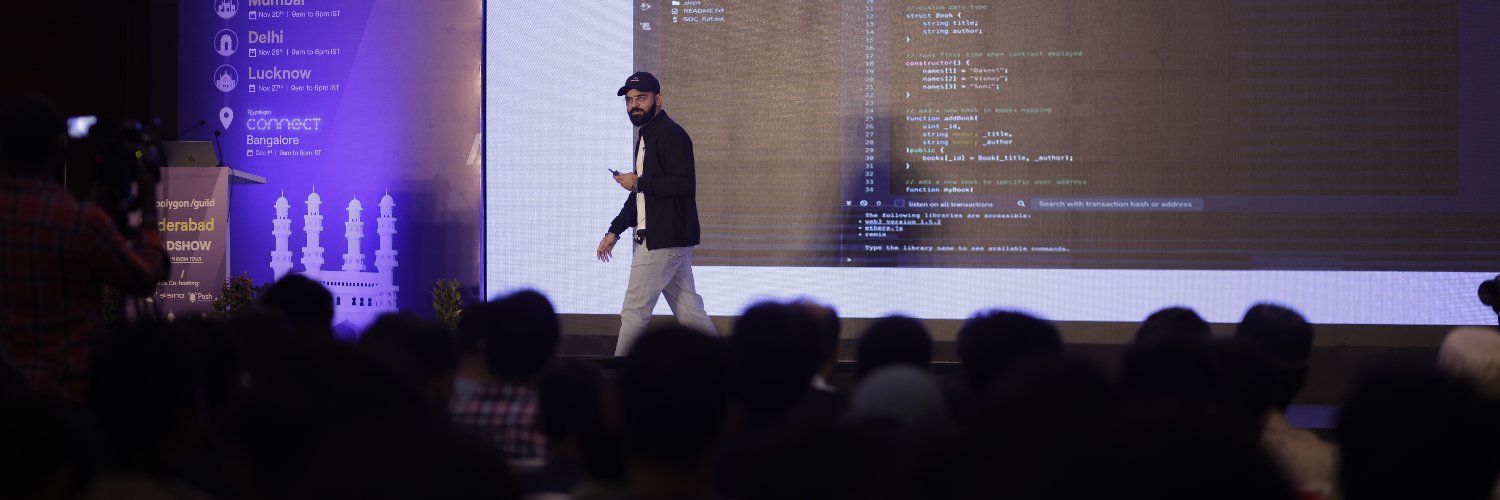
Beyond grateful to attend the Swearing-in Ceremony of the Primer Minister of India, Shri Narendra Modi and other ministers at The Rashtrapati Bhavan, New Delhi 🇮🇳
70% of UK firms give employees AI tools.
But only 48% give them time to actually learn how to use them. T
hat is not a technology problem. It is a leadership problem.
Slalom surveyed 417 business leaders across the UK and Ireland. 54% said the skills gap is the single biggest barrier to getting any return on AI investment. Meanwhile 41% of employees say a lack of structured training is what holds them back at work.
The companies seeing real results did one thing differently. TP ICAP gave people protected time to experiment.
Not more tools. Time. Buy the tool. Then give people room to figure it out.
https://t.co/PPJXNlLGDb
ByteDance just open-sourced UI-TARS-desktop. 32,700 stars. 956 new today.
This is not another chatbot. It is a full multimodal AI agent stack. It connects frontier models to real infra and executes tasks autonomously.
The signal is clear. The industry is moving from "AI tools" to "AI agents that do the work."
Watch this space. It is moving fast.
https://t.co/RNRPVDIZh3
Your AI model is only as good as the infra around it.
I see teams spend months fine-tuning a model, then deploy it on a single GPU with no batching, no caching, and no fallback.
That is like building a Ferrari engine and putting it in a rickshaw.
Inference latency, cost per token, fault tolerance. These are not afterthoughts. They are the product.
The trade-off between reasoning depth and speed has always been the primary bottleneck in scaling enterprise AI.
OpenAI's GPT-5.5 Instant is a fundamental shift in that architecture.
We are moving past the early days of latency-heavy foundation models toward high-throughput, instant inference for mission-critical workflows.
The ability to process complex decision-making in real-time opens doors that were previously closed due to token-per-second constraints.
This isn't just a model update. It is the infrastructure layer for the next generation of truly autonomous, action-oriented business agents.
The era of latent AI is finally over.
https://t.co/agBwZgPQxL
Most companies still treat AI upskilling as a lecture series.
That is a waste of time.
Real growth happens when you integrate AI into the daily workflow. Stop teaching theory. Start building side by side.
If your team isn't using AI to do their jobs today, they will be obsolete tomorrow.
DeepClaude hit Hacker News today.
It brings 17x cheaper agent loops by running Claude Code with DeepSeek V4 Pro.
The inference arbitrage game is the new standard for building production ready agents at scale. I
f your cost per query is not dropping, you are building on the wrong stack.
Refer: https://t.co/OTaP0dAPu1
Ahmedabad has always been a city that quietly builds remarkable things.
Grateful to be featured among the top 10 emerging entrepreneurs in the city by Ahmedabad Mirror, alongside some genuinely inspiring builders doing meaningful work across different industries.
More than the recognition, what excites me is the kind of problems being solved right here, from our own backyard.
https://t.co/Z0udfUizwN
Most people using Claude Opus 4.7 are getting maybe 60% of what it can do. Not because the model is limited — because their prompts are.
Here's what changes everything: Opus 4.7 pays unusually precise attention to instructions. That means vague prompts don't just produce okay results — they actively waste the model's capability. But tight, structured prompts? They unlock outputs that feel almost unfair compared to what most users are getting.
The framework that clicked for me: Role, Task, Format, Verify. Four parts. Every serious prompt should have them. The "Verify" step especially — explicitly asking the model to check its own reasoning before finalizing — is something almost no one does, and it makes a measurable difference.
The other thing worth knowing: Opus 4.7 is built for agentic, multi-step workflows. Long research tasks, document pipelines, complex code generation. It maintains coherence across many steps without drifting — which means you can hand it a complex project and need fewer interruptions to course-correct.
If you're a professional using AI daily, the leverage isn't in switching models. It's in learning to prompt the one you already have.
Take one real task this week. Rewrite the prompt using the four-part framework. See what happens.
Learned on Quinto Learn → https://t.co/dckSEYIggp
#claude
Govtech is where AI goes to get stress-tested.
The constraints are brutal.
The lessons are gold.
Three years ago, we took on a government AI contract. I thought it'd be like enterprise, just slower.
I was wrong. It was an entirely different category of hard.
No forgiveness for downtime.
Zero tolerance for unexplained outputs.
Users who couldn't get a signal.
Procurement cycles that made us prove ROI before we'd written a single line of production code.
But the constraints forced clarity. And we came out the other side with four principles that now shape everything we build, for any client, in any sector.
1. Security-first architecture changes how you design everything
Not a layer you add at the end. When it's foundational, every feature decision gets sharper. You stop building things you shouldn't have built in the first place.
2. Explainability isn't optional, every decision must be auditable
In government, a model that can't explain itself is a liability. We learned to build with auditability as a core output, not an afterthought. Enterprise clients now ask for this too.
3. Change management beats technical excellence every time
The best model we ever built sat unused for six months — because we hadn't brought the team along. A mediocre model that people trust and use beats a brilliant one they fear.
4. Offline-first and low-bandwidth design is what unlocks real scale
Assume bad connectivity. Always. The moment you design for the constraint, you stop building fragile systems — and start building ones that actually reach people.
—
We now apply all four of these principles to every enterprise project we take on. Not because clients ask for them. Because they're the difference between AI that looks good in a demo and AI that actually holds up in the field.
The irony? The hardest environment we've ever built in made us better at the work we do everywhere else.
What's the hardest constraint you've faced in an AI project? Drop it in the comments. I read every one.
Most AI "ROI decks" miss the only slide a CFO actually cares about.
AI isn't just a cost-cutting tool. It changes the math underneath the business.
So the question isn't "Did we adopt AI?"
It's "Which unit driver moved first?"
Here's the frame:
Margin per customer = LTV - CAC - COGS
AI can hit all three at once, which is why the payoff can feel weirdly nonlinear.
- CAC drops when targeting and personalization get sharper, not when you simply crank spend.
- COGS falls when minutes per unit drop and customers file fewer tickets.
- LTV rises when timing gets better: retention outreach, expansion plays, renewals.
The real win is compounding. A few small percentage shifts can stack up into a very different P&L.
If you're tracking "AI usage," you're measuring theater.
Track the drivers.
Which one moved first for you: CAC, COGS, or LTV?
“Move fast” is overrated.
The teams that win ship boring, repeatable loops:
instrument the funnel,
cut cycle time,
run 10 small experiments,
kill 9.
I’ve seen 2-week “big launches” lose to 2-day iterations.
Speed is a system, not a sprint.
Most AI projects don’t fail at ideation.
They fail at go-live.
Here’s the exact launch checklist we run before every AI release. Save this for your next rollout 🧵👇