Today I’m open-sourcing Tess Core: a complete agent runtime for Python with zero runtime dependencies. 🎉
Tess Core is the engine behind my commercial products, including Drost, my coding agent and personal AI, and the RL rollouts behind my model fine-tuning work.
It is also the foundation underneath the agentic work I’ll be releasing over the next few weeks. 🥂
GitHub: https://t.co/u1dWoOE27I
I thought Albert would argue that AI agents would reduce the need for lawyers. Instead, he made the case for why we may need them even more.
Speaking with @HenriArslanian, @kstellana highlighted a key point: agents can’t go to jail. You could have 10 sub-agents executing transactions at incredible speed, but the human responsible for them still carries the liability.
That changes how we think about accountability. Lawyers will still be needed for major legal issues, but waiting years for court decisions won’t work for the everyday disputes autonomous agents could create.
This is where @GenLayer comes in. It aims to provide a middle layer for those disputes, using onchain escrow and peer-to-peer adjudication to resolve specific factual disagreements quickly.
My takeaway: if an agent can move more money than I’m comfortable losing, it shouldn’t have access to a wallet unless there’s already an escrow arrangement and a clear path to resolving disputes.
If your agent paid for work that turned out to be broken, would you accept the loss or restrict its wallet until future transactions have escrow in place?
Stop overthinking that visual concept sitting in your notes app and actually see it on screen.
Jump into Design Studio or tap Generate Image inside the Video Editor on CapCut Web to test Seedream (5.5 / 5.0 Pro / 5.0 / 4.5 / 4.3) and GPT Image 2.5 at 1K & 2K resolution with zero credit anxiety.
CapCut Web Ultra’s 7-day unlimited image gen event is actively running (Nov 13–19) across the UK, France, Germany, Italy, Spain, Mexico, Brazil, Canada, Japan, South Korea, and Australia!
https://t.co/bZFLZMD6Ks
#CapCutWeb #CapCutWebDesignStudio #CapCutWebVideoEditor #AIImage
Mind the Gap (Part 3)
Parts 1 and 2 measured China’s debt and the losses sitting in its banks. This one asks a harder question: how big is the economy those debts are measured against?
Beijing says GDP grew 5% in 2025 and the economy is $20.9 trillion. Rhodium Group puts growth at 2.5% to 3%. In 2007, Li Keqiang called his own province’s GDP figures “man made” and “for reference only.” He went on to run the country.
We rebuilt the number two ways. The first follows a Brookings study that checks growth against tax receipts, which are harder to dress up. The second applies a world average bad loan rate to China’s banks and asks how much output was never real. The results: an economy 11% to 34% smaller than reported, between $13.8 and $18.6 trillion.
The debts do not shrink with it.
- Government debt, already 127% of GDP on the IMF’s count, becomes 142% to 192%.
- Total debt goes from 313% to as much as 476%.
- China’s economy goes from 68% of America’s to somewhere between 45% and 61%.
An economy is not only what it exports. The shop window the world sees does not show how the whole store is run.
Please mind the gap (Part 3)👇
https://t.co/X1k4ssdLnW
#China #GDP #Debt
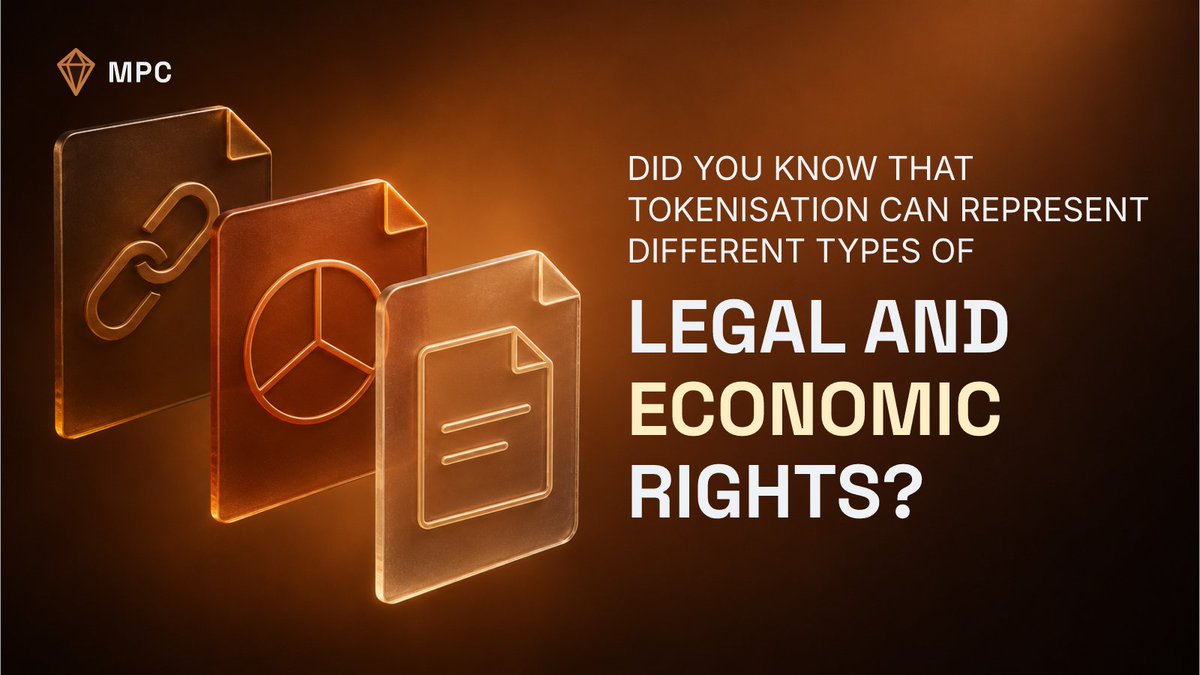
A digital token could represent:
A share in a legal entity
An interest in a fund
A debt instrument
A contractual claim
Certain rights linked to an underlying asset
The structure determines what the holder actually receives.
That's why tokenisation isn't simply about dividing an asset into digital pieces.
The rights behind the token are what matter.
Imagine two investors evaluating the exact same mining project.
One receives geological reports, drilling results and licence documents.
The other receives a presentation, selected figures and a collection of files with no clear history.
They're looking at the same project, but are they making decisions with the same information?
This is one of the challenges in mining investment.
Project information needs more than availability. Its source, verification status, version and history matter.
At Global MPC, we're building infrastructure designed to connect these records into a structured, traceable project information system.
Better investment decisions begin with better project information.
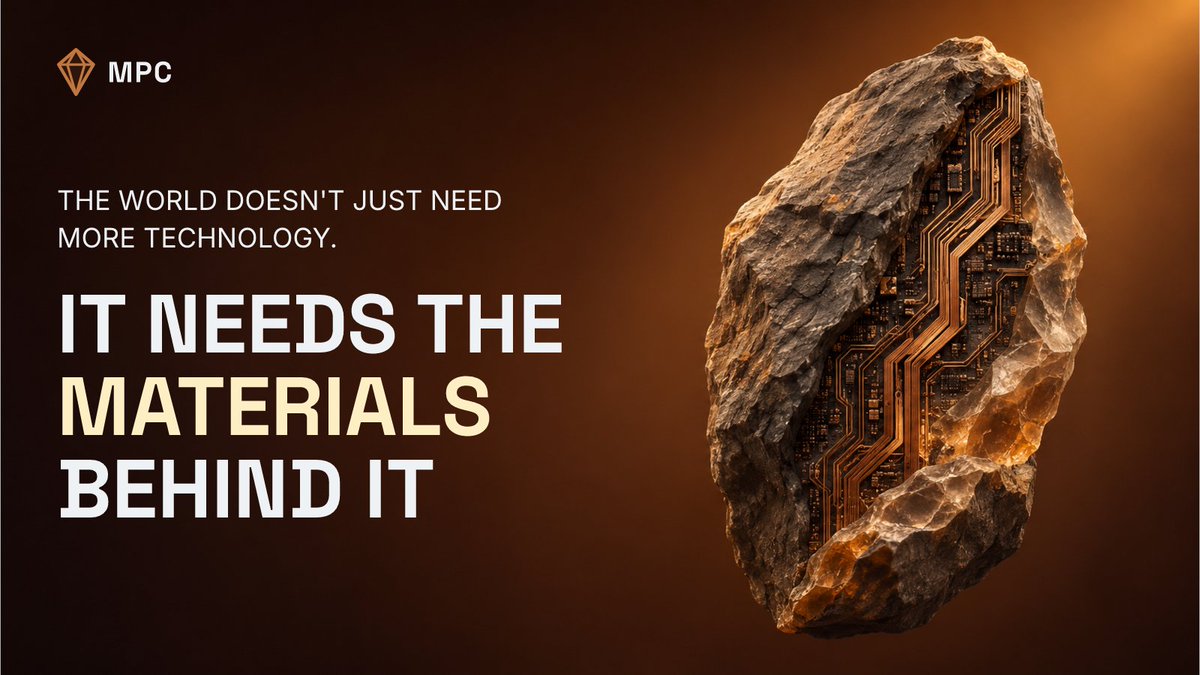
The world doesn't just need more technology. It needs the materials behind it.
Electric vehicles, batteries, power grids and renewable energy all depend on minerals.
According to the International Energy Agency's Global Critical Minerals Outlook 2026:
Lithium demand is projected to grow more than threefold by 2040.
Copper demand is expected to increase by around 7 million tonnes by 2040.
Nickel, graphite and rare earths demand is also projected to grow significantly, by around 50–90%.
But increasing supply isn't as simple as finding a deposit.
Projects need exploration, investment, technical assessment and years of development.
The next generation of technology will depend on the next generation of resource projects.
https://t.co/yN5Qx1fSND reported approximately 5.74 million RWA holders on 13 November 2026.
That signals growing participation in on-chain asset markets.
But wider access also raises important questions: What does each token represent? What rights come with it? And how can people understand the underlying asset?
Access matters. So does the information behind it.
Gold has been one of the biggest drivers of commodity tokenisation, showing how physical assets can be represented digitally.
But commodities are only one part of the wider RWA opportunity.
What about the projects, infrastructure and resources behind the materials the world depends on?
There is room to explore how better project information and digital infrastructure can support this next chapter.
According to UNIDO, global mining production increased from 9.6 billion tonnes in 1985 to 19.2 billion tonnes in 2023.
That's a huge increase in the materials needed to build cities, power infrastructure and manufacture modern technology.
As the industry grows, so does the importance of reliable project information, transparent records and better ways to track developments.
At Global MPC, we're working towards more connected digital infrastructure for mining projects.
A stronger US dollar can influence global capital flows, borrowing costs and commodity prices.
But it also highlights an important point for RWA: tokenised assets remain connected to real-world market conditions.
Tokenisation can make assets easier to access, transfer and manage, while better digital infrastructure can improve transparency and connect global investors with real-world opportunities.
The opportunity is not just to put assets on-chain, but to make them more accessible to global markets.
#RWA #Tokenization
Absolutely. The shift is already happening. Banks, institutions, companies and asset managers are exploring ways to bring their assets on-chain.
And we believe mining should be part of that conversation too.
But bringing mining into the RWA ecosystem takes more than tokenisation. It requires verified project data, clear asset structures and reliable digital registries.
That’s the gap Global MPC is working to address.
The future of tokenisation starts with connecting digital assets to real-world foundations.
#RWA #Mining #Tokenization