Covert consciousness, where unresponsive patients willfully modulate brain activity to command, is gaining attention. But these assessments are fundamentally limited. What if we could just... read their minds instead? 🧵 about our paper in @GreenJournal https://t.co/qJ2Q2alFPV
Crazy! - the 1st email for our new conference, REVIVE has gone out - Early Bird registration is open!
What you can expect:
🌎 The best educators
💡 Topics covering the breadth of cardiac arrest and post-arrest care
😊 Hands-on sessions
Learn more: https://t.co/HYcQYRfkXR
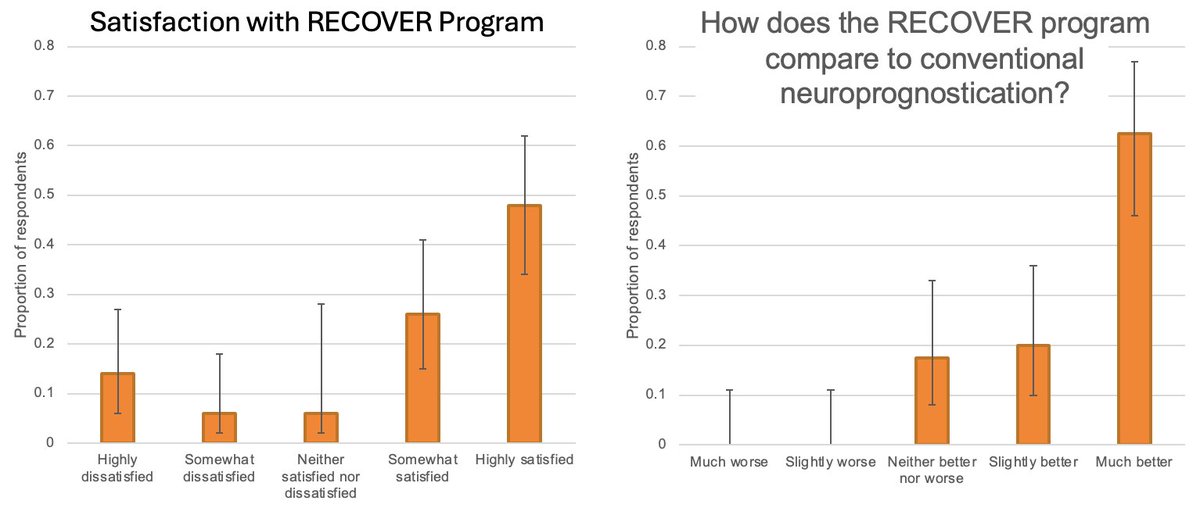
What's the impact of @RECOVER_program, a specialized neuroprognostication service, on provider attitudes? This survey study in @Resus_Plus suggests providers are satisfied, think it's better than the usual, and makes neurology more useful. More at #AANAM https://t.co/aUCWqSiqLl
Was #TheDarkKnight's Two-Face the product of brain injury? Harvey Dent was hospitalized after surviving the explosion and disfiguring burns that transformed him into the psychopathic villain, Two-Face. The background offers insight into the villain's psychological origins. (1/6)
Privileged to collaborate with this international group of experts on disorders of consciousness at a recent conference. A resulting paper, led by @MJYoung_MD in @TheLancetNeuro, outlines an ethical approach to covert consciousness assessment.
https://t.co/7V2AmCy9qz
Regardless, we are excited to see where this road takes us in treating this vulnerable patient population. If you're interested in joining this collaborative effort (@RECOVER_program, @ComaRecoveryLab, and many others), check out our job posting here!: https://t.co/hSvOqoJcrn
Do you have experience with fMRI analysis? Interested in consciousness and helping patients in coma? Consider applying for this position to join our @RECOVER_program team at @PennMedicine. Please reach out with ?'s and spread the word!
https://t.co/JwfsT0ZQM3
Covert consciousness, where unresponsive patients willfully modulate brain activity to command, is gaining attention. But these assessments are fundamentally limited. What if we could just... read their minds instead? 🧵 about our paper in @GreenJournal https://t.co/qJ2Q2alFPV
Neural decoding as a covert consciousness assessment is not without limitations. One cannot investigate another's consciousness without eventually falling into a philosophical rabbit hole. Read a thoughtful editorial about this piece here: https://t.co/a76ZFhb0p5
Do you have experience with fMRI analysis? Interested in consciousness and helping patients in coma? Consider applying for this position to join our @RECOVER_program team at @PennMedicine. Please reach out with ?'s and spread the word!
https://t.co/JwfsT0ZQM3
This is cool. RECOVER. A multidisciplinary team at @PennNeurology that provides neuroprognostication for DoC pts — and also provides F/U care — allowing for more informed judgements
#curingcoma
https://t.co/hpR3LV5Nt6
@namorrismd@NeurocritCareJ@MDNeurocritcare@neurocritical Thanks Nick! I found myself counseling families against this option, mainly because I had no idea how it would work. Learned a lot from this! For anyone interested in the highlights:
How should acute care neurologists counsel families about withdrawing life-sustaining treatment following a patient's hospitalization? Is it feasible? Ethical? Legal? @PennNeurology resident Aaron Williams explores in new @NeurocritCareJ paper. 🧵 1/6
https://t.co/dm3OqSvR6U