⚡ INSIGHT: The Ledger and Coldcard thefts show you can do everything right and still lose your Bitcoin.
Here are five hardware wallet alternatives to consider, along with their drawbacks.
https://t.co/SyguQiymbZ
🔓 How to Unstake SOL with Tangem! 🟣
Someone said to me the other day that they staked their solana:So11111111111111111111111111111111111111112 with @Tangem but didn’t know how to unstake it.
Here, I’ll show you how to unstake your Solana, review the unbonding period and authorise the transaction.
Simple. Secure. Self-Custody. 🔐
Stay Safe. Stay SEEDLESS. 💚
#TangemWallet
@maximalistus One recovery detail: BIP39 applies Unicode NFKD normalization to both the mnemonic and passphrase before key derivation. Testing the exact restore input against a known derived address can catch normalization and spacing differences.
⚠️ ONE EXTRA SPACE IN YOUR BIP39 PASSPHRASE CAN MAKE YOUR BITCOIN APPEAR TO DISAPPEAR.
Not because the funds moved.
Not because the hardware wallet malfunctioned.
But because you derived a completely different wallet.
🔍 Same recovery phrase.
Different passphrase.
Different keys.
Different addresses.
And there's no "wrong passphrase" error.
Every BIP39 passphrase produces a valid seed.
⚡ Blockstream Jade supports passphrases and displays an 8-character wallet fingerprint so you can check which wallet you're using.
But here's the tradeoff.
🔒 A strong passphrase can help protect a wallet if the recovery phrase is exposed.
🚨 Lose the passphrase, and the recovery phrase alone won't recover those funds.
A passphrase isn't a PIN.
It isn't a resettable password.
It's part of the key derivation process.
🔍 WHAT ABOUT MULTIWORD PASSPHRASES?
If you're using randomly generated words, consider adopting a consistent format:
🔸 Lowercase words only.
🔸 Exactly one ordinary space between words.
🔸 No leading or trailing spaces.
🔸 Preserve the exact spelling and word order.
This is a formatting convention, not a BIP39 requirement.
⚡ And remember: ENTROPY MATTERS MORE THAN FORMATTING.
Choose words through a secure random process, not because they're memorable or form a meaningful sentence.
Blockstream Jade's WordList entry method follows the lowercase, space-separated convention.
🎓 Practice with disposable testnet wallets before putting real bitcoin at risk.
Watch Blockstream's Short:
https://t.co/2nw6aN2Z9n
https://t.co/oaNPyUH9Y1
🔐 Blockstream Jade Plus:
https://t.co/7ulTJLExuw
Code: maximus — check applicable savings.
La DTCC abre la puerta a tokenizar hasta 30 billones de dólares en activos. Wall Street da otro paso hacia la blockchain.
¿Quién es la DTCC?
La infraestructura que hace posible buena parte del mercado de valores de EE. UU. Gestiona la custodia, compensación y liquidación de unos 114 billones de dólares en activos.
¿Qué cambia?
🔹 Lanzamiento previsto en octubre.
🔹 Inicio con 25 activos.
🔹 Hasta 30 billones elegibles para tokenización.
🔹 Transferencias 24/7 entre carteras registradas de una misma red.
BlackRock, Goldman Sachs y JP Morgan ya lo han probado.
Ojo: tokenizar no es descentralizar. La DTCC sigue en el centro.
¿Y XRPL?
Por ahora, fuera de esta iniciativa. Canton y una red privada de la DTCC están en la primera fase. Stellar y Arc llegarían en 2027.
Es una oportunidad enorme para la tokenización, pero no implica automáticamente más demanda de XRP.
Si Stellar entra y XRPL no, ¿pensáis que será una desventaja seria para XRPL?
#XRP #XRPL
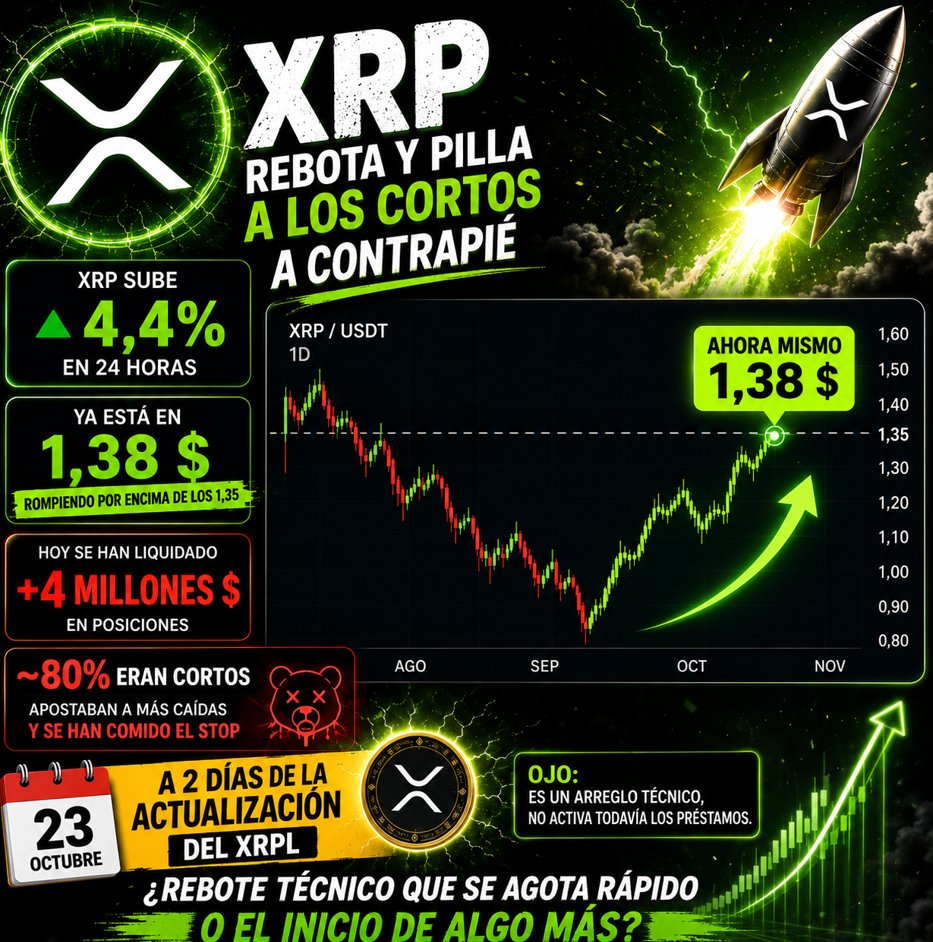
🔥 XRP rebota y pilla a los cortos a contrapié
XRP sube un 4,4% en 24 horas y ya está en 1,38 $
Hoy se han liquidado más de 4 millones de dólares en posiciones, y alrededor del 80% eran cortos que se han comido el stop.
Y todo esto a dos días de la actualización del XRPL del 23 de octubre.
Será el inicio de algo mas?
#XRP $XRP
THE GENIUS ACT RULES ARE FINAL.
Sort of....
The headline version: the government finished writing the stablecoin rules.
The real version: one regulator did.
The OCC published its final rule this morning. The FDIC, the Fed and Treasury still have pieces to go. The rule and the law take effect January 18, 2027.
Here is what is decided and what is not.
REWARDS
Stablecoin issuers still cannot pay you yield just for holding the coin. That part of the law did not change.
What changed is how the OCC will police the workarounds. Its draft would have presumed certain reward deals between issuers and outside platforms were illegal. The final rule drops that presumption and says it will judge them case by case. It also gave older reward programs no free pass.
Platforms advertise rewards of roughly 3.75% to 4.5% on stablecoins right now. Nothing turns those off on January 18. The risk is that terms change if a regulator objects to how the payments are funded.
FREEZES
This rule does not spell out freezing. The OCC says anti-money laundering and sanctions rules come in a separate rulemaking.
One thing it does say: a coin restricted by law or court order stays a coin the issuer owes, backed by reserves held in separate accounts.
Summaries of the Act I read say issuers must be able to block or freeze tokens when lawfully ordered. I did not find the mechanics. Those are still to come.
INSURANCE
Payment stablecoins are defined as not being deposits. As I read it, that means no deposit insurance for holders.
TIMING
The OCC is not taking applications yet. It is waiting on federal paperwork approval. Existing US issuers with a substantially complete application can ask for up to a year of relief. Issuing without approval after January 18 carries criminal penalties.
Treasury has also proposed that platforms may only offer approved stablecoins starting July 18, 2028. That one is a proposal, not final.
WHAT I TAKE FROM IT
This is a real step toward clear rules. It is not the finish line. The two things that matter most to holders, who can be frozen and what happens to yield, are still being settled.
If you hold stablecoins as cash or for yield, know that the yield can change and the coin can be frozen under lawful order. Know which part of your money sits on rails like that, and which part you hold the keys to.
ISO Ledger 🛡
I'm going to say it.
If you own a @DCENTWALLETS wallet, I really advise you to NOT keep your funds in it. Use something else.
Don't trust their recommendations. Just move your funds somewhere else.
They had a security issue once and you have no guarantee they won't have another one. They are not serious.
I don't trust them and I have no problem to use my influence to spread the word.
Their current behavior is unacceptable.
And no crypto influencer should be sponsored by #Dcent or talk about them from now on.
I don't know what are the chances for people to retrieve their crypto.
But DCENT, you're done! And unless you help actively people to get their funds back, we better not hear about you ever again!
Reshare if you care.
The largest bank in the US just brought its dollar token to Ethereum.
JPM Coin lets eligible clients move dollars in seconds, around the clock. JPMorgan says it picked Ethereum for its liquidity and because clients already use it. That's a real sign of where money is going.
The catch: only approved institutions can use it.
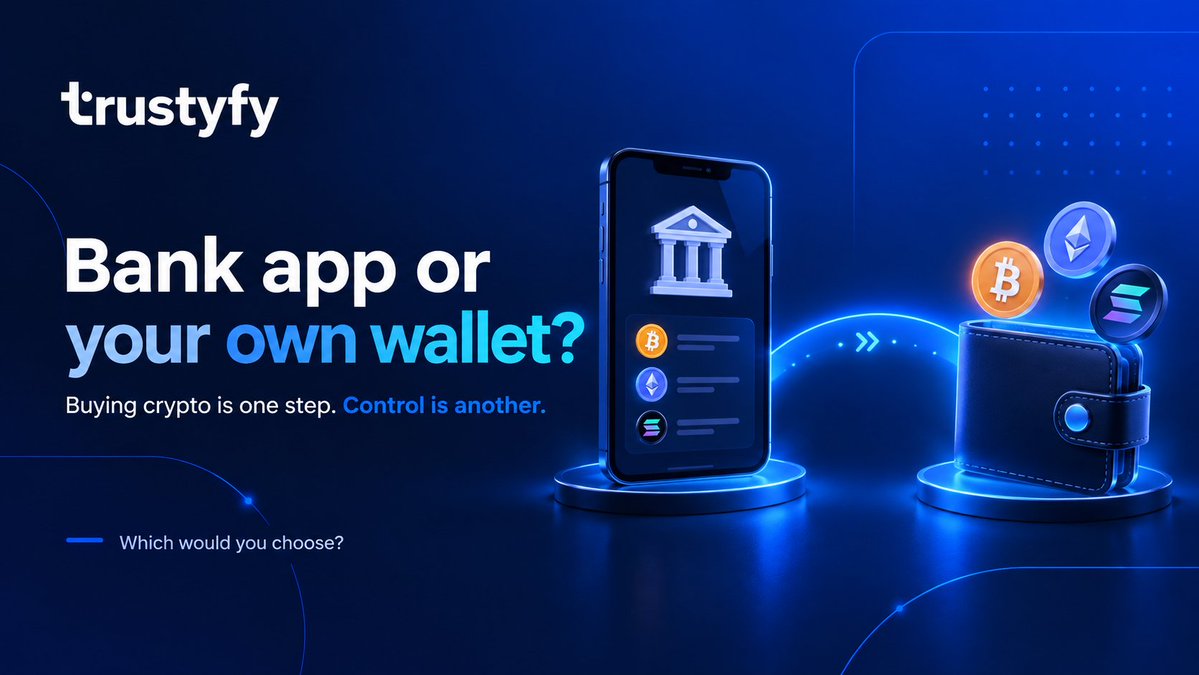
For everyone else, money that moves any day of the week already exists. Stablecoins settle in minutes, and in a wallet only you control, they're yours to send, swap or spend whenever you need to. That's the open version Trustyfy is built on.
When did you last wait days for a bank transfer to land?
Self-custody used to come with homework: block explorers, copied addresses and a spreadsheet to keep track of it all.
Trustyfy puts a normal finance app on top of your own wallets.
Balances and transactions from every wallet on one screen.
Cashflow you can follow in real time.
Statements you can download for your accountant.
On your phone, tablet or laptop.
It feels like a normal financial app, built for how you already operate. The keys are still yours.
Is this something you've been looking for?
Late October is when the 1929 crash happened.
Black Thursday was October 24.
Black Tuesday was October 29.
This year the S&P 500 hit a record high on October 6.
So I went back to look at what the real lesson of 1929 was.
Most people remember the crash.
I think they remember the wrong part.
The crash of 1929 was not the worst of it.
After the crash, Hoover told the country the economy was fundamentally sound.
The real damage came later, when the banks started failing and there was no deposit insurance to catch anyone.
A documentary I watched this week says we are heading back there.
More debt than money, a system built on claims that cannot all be paid.
I did not take its word for it.
I went and checked what I could.
Margin debt hit a record $1.5 trillion in June, up about 49% in a year.
41 AI related companies now make up close to half of the S&P 500.
The government is spending $1.1 trillion a year on interest, more than triple what it paid a few years ago.
And September added 29,000 jobs when roughly 90,000 were expected.
Borrowed money in the market.
One trade holding up the index.
A record share of government income going to interest.
A job market going soft.
All at the same time.
One fair point for the other side. Deposits are insured now and the Fed will lend to banks. Those are the two things that turned 1929 into a depression.
But look at what that actually protects. Bank deposits. It does not cover crypto, and it does not cover a stablecoin balance the issuer can freeze.
I think something breaks.
I do not know when, and I could be wrong about how. I am not telling you what to buy. I am telling you the receipts keep stacking up in one direction.
If it does break, know which part of your money has a safety net and which part only has you.
ISO Ledger 🛡
Best article to read and bookmark on how tk get started with XRP!
It covers everything from education to platforms, services, helpful websites, trading, building and more on XRP.
XRP'S FIRST OFFICIAL POST, AUDITED
XRP finally has an official account, managed by Ripple and the XRP Ledger Foundation.
The first real post is a guide to the ecosystem.
I put it below so you can read it yourself. Then I checked what I could.
THE GOOD
It reads like an educational post, not a hype post.
No price talk, no predictions.
It says XRP has no native staking rewards.
It tells people to verify URLs, never share a recovery phrase, and treat any DM asking for funds as a scam.
It also says the third party mentions are not endorsements.
That is more careful than most XRP content.
The claims I checked hold up.
The post says the ledger has settled more than $1 trillion since 2012.
Ripple's own site now says over $1.5 trillion has moved between counterparties.
That is cumulative value transferred, not money sitting on the ledger.
Standard Chartered did launch institutional RLUSD custody on October 12 through its Dubai branch under DFSA oversight.
Brazil's CSD BR is mirroring BTG Pactual fund records on the ledger.
And XRPL has passed 13.4 million agentic payments, about 216,000 a day.
WHAT THE POST DOES NOT TELL YOU
Standard Chartered holds RLUSD, not XRP.
The planned LMAX collateral link still awaits approvals with no start date.
CSD BR keeps the official record, the settlement, and the power to freeze tokens and reverse transactions when a regulator or court orders it.
Nothing moves onto the ledger.
The ledger is a second copy.
Coverage of the deal noted it creates limited direct demand for the token.
The agentic number is real, but the value is small.
Back in late July, when the count was 1.4 million, the agents had settled about 4,463 XRP and 1,895 RLUSD in total.
I could not find an updated figure.
The latest count shows 178 active agents across 166 merchants.
Then there is the wording.
XRP "can" serve as a neutral bridge.
XRP "can" support settlement and collateral.
That describes a possibility, not something institutions need today.
One more thing worth knowing.
The post is right that XRP has no issuer. But RLUSD and the tokenized assets it lists do have issuers, and issuers can freeze.
Native XRP and the assets built on the ledger are different things.
MY TAKE
This is my read, and I could be wrong.
The post proves the ledger is being used.
Banks are building on it, and RLUSD is growing.
What it does not prove is that any of this requires holding XRP.
Most of the proof points are about the ledger or the stablecoin.
That is the same gap I keep finding in these audits.
Real infrastructure is not the same as proven demand for the token.
None of that makes it a bad post.
It is a good guide.
Just read it for what it shows and what it leaves open.
ISO Ledger 🛡
PS. I put the research behind this into a FREE report.
It includes why physical gold differs from paper gold, what makes property resilient and the 3 questions I use to identify businesses that can survive a currency reset.
Read it here:
https://t.co/MVk6cEnKBN
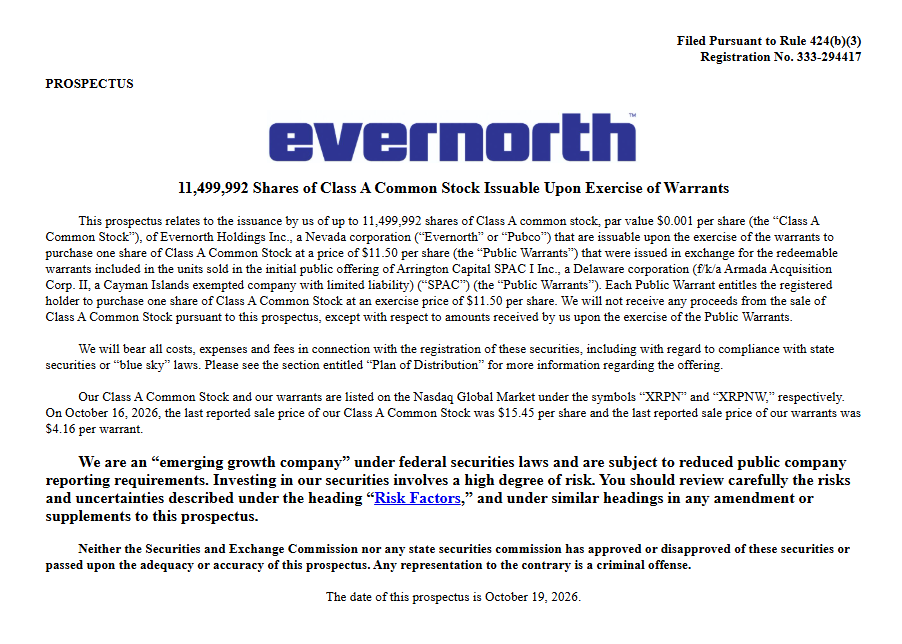
🔥 Evernorth acaba de abrir la puerta a hasta $132M más.
Registraron los warrants y el dinero puede entrar directamente a la caja.
El arsenal se está armando de verdad.
Más fuego para seguir acumulando XRP. 🚀
https://t.co/CtsFRkVi93
$XRPN $XRP
Germany's savings banks have started selling crypto.
Since 19 October, Sparkassen customers can buy bitcoin, ether and three other coins in their banking app, as local banks switch it on. That's a milestone for one of Europe's most traditional banking groups.
The small print matters. DekaBank holds the keys, and for now customers can't send their coins to a wallet of their own. Withdrawals only go to approved providers.
Buying crypto just became a banking task. Holding it yourself is a separate step: the one that lets you move it wherever you want. It's the step Trustyfy is built around.
Would you buy crypto in your bank's app, or hold it in your own wallet?
🚨En Alemania, las cajas de ahorro ya venden XRP🚨
Ni un exchange ni una app cripto rara. La Sparkasse, el banco de toda la vida de millones de alemanes.
Desde el 19 de octubre, cinco cajas ya lo ofrecen dentro de su app:
Bitcoin, Ethereum, XRP, Solana y POL.
0,99 € por orden, más el diferencial.
Y esto es solo el principio. Hay 339 cajas que pueden sumarse, más de 230 ya han mostrado interés y se espera que entren entre 30 y 40 cada mes.
Pero ojo, que tiene letra pequeña:
🔸 Las claves no son tuyas. La custodia la hace DekaBank, la entidad financiera del grupo.
🔸 Puedes sacar tus criptos, pero solo a proveedores autorizados, no libremente a tu wallet personal.
Para mucha gente será la puerta de entrada más fácil a cripto. Para otros, justo lo contrario de lo que debería ser cripto.
Os dejo dos preguntas:
¿Comprarías cripto desde tu banco aunque no tengas tus claves?
¿Y cuánto tardará un banco español en hacer lo mismo?
#XRP $XRP
Algunos datos para el debate:
📊 El RLUSD ya supera los 2.400 millones de dólares en circulación y ha crecido más de un 80% en lo que va de 2026.
⚡ En XRPL, una transferencia cuesta 0,00001 XRP de comisión. Literalmente nada.
🏦 Y no es solo RLUSD: USDC también funciona en XRPL desde 2025.
O sea, la tecnología y los stablecoins ya están ahí. Lo que falta es que el dinero se quede.
👀Más de la mitad del stablecoin de Ripple está en Ethereum, no en XRPL.
Sí, el RLUSD. El de Ripple.
Vamos a lo práctico:
🔹 En XRPL mover un stablecoin cuesta una fracción de céntimo y llega en segundos.
🔹 En Ethereum suele salir más caro y es más lento, pero tiene el DeFi más grande del mundo: préstamos, liquidez, rendimiento...
Una red es muy buena para mover el dinero. La otra tiene más cosas que hacer con él.
Y el dinero, de momento, está eligiendo.
Pregunta para los dos bandos:
¿Qué vale más, la mejor tecnología o el sitio donde ya está el dinero?
#XRPL #ETHEREUM