In 2022, external conditions disrupted my first business. I executed a clean exit before burn ate our reserves—a strategic decision, not a loss.
Later that year, a major ecosystem collapsed overnight, vaporizing \$350k of my own capital. I am still pursuing legal recovery across foreign jurisdictions.
In 2023, a marketing agency with flawless credentials turned out to be fraudulent, costing another \$100k.
In 2024, when pitching Coincrib, an investor called the vision an "unbuildable wish list." Every team member walked away. I chose to build it alone.
Shortly after, I prepared to list our token on a major exchange—until my own on-chain audit proved they were insolvent. I delisted immediately.
It is 2026. Coincrib Alpha is internally finished and undergoing testing.
Coincrib is what happens when Amazon, Uber, and Airbnb meet smart-contract escrow. On-chain. Real utility.
No paid KOLs. No inflated metrics. Just code that works and lessons bought with experience.
What is the single most expensive mistake you have made while building?
@Plebius77 Kenne ich ähnlich ich aus Paraguay und Panama. Allerdings klar nur in privaten Praxen und Kliniken. Staatliche Krankenhäuser sind hingegen runtergekommen. Was ich in El Salvador ebenfalls denke. Also teils wahr aber teils überspitzter Bericht. Trotzdem, der Kern stimmt.
Traditional banks freezing your account without warning? Exactly why we built @coincrib.
Decentralized stablecoins are the future. Governments need to bleed from all this regulation. Web3 has a brilliant edge in terms of speed, USP, and flexibility.
Banking is a dead cow. The only USP left is to cook it. 😂🔥
Alpha is ready soon. Make sure to follow us.
My invoice box is full of @MEXC listing proposals claiming to be a liquidity hub. Look at them now! Do projects can get their money back for damaging their image? People and projects forget that there are always 2 sides of the 🏅. You can't do nothing about it, if the other side gives you a shitty view. Many projects lose money, users and have damaged images now because of them. Who pays for that? Nobody.
@Cointelegraph Crypto is soooo decentralized. You can't even offramp if you picked the wrong CEX 😂. CEX's are going to die one after the next until only government controlled cex's are available for the people. Meaning that you have more risks than benefits. Bravo 👏🏻
MiCA has changed how successful Europe is. Europe is becoming the new crypto shit hole. Only solution is that MiCA has to go again. @coincrib let's you on ramp with your goods. Earn money even without own products. And what's more important... stay in crypto without going back to Fiat, once we really can launch every single feature. Make sure you follow us. Alpha launch soon!
Thirty days of saying what I believe: commerce needs more than hype. It needs trust people can understand, rules people can inspect and products that solve real problems.
That’s what we’re working toward at @coincrib.
We’re not done. We’re building — together.
Deine Punkte klingen auf dem Papier nett, aber der Blick aus der Praxis vor Ort sieht völlig anders aus:
Ich habe Familie in Paraguay und selbst nen Plan B Ausweis.
ℹ️ Zu den staatlichen Berichten & Auswärtigem Amt: Wer sich auf Auswärtige Ämter verlässt, lässt sich beirren. Diese Berichte sind bewusst überspitzt dargestellt, um Angst zu schüren, Kapitalflucht aus Deutschland und der EU einzudämmen und die Menschen im heimischen Melk- und Steuersystem zu halten. Wer 2022 den Schritt gewagt hat (wie ich nach Panama), weiß: Der Staat jagt einen mit Steuerberater. In Covid hat der deutsche Staat einen Deal mit Paraguay gemacht, der die Deutschen nicht mehr einwandern lassen durfte. Vergesst das nicht.
Eigenverantwortung vor Ort.
ℹ️ Zu den Banken & Renditen: Dass Uruguay die „Schweiz Lateinamerikas“ ist, weiß jeder in der Region. Aber auch in Paraguay sind die Banken keineswegs schlimmer als in der EU. Im Gegenteil: Die staatliche Bank zahlt teils 6 % Zinsen auf Vermögen, und wer in Sachwerte wie Rinderzucht, Limetten- oder Avocadofelder investiert, erzielt oft Dividenden oder Gewinne aus Unternehmungen von bis zu 30 %. Dass das Volk sich dort nicht alles gefallen lässt und einen Präsidenten auch mal direkt zur Rechenschaft zieht, zeigt ein ganz anderes Demokratieverständnis als das deutsche Einklagen und Abkassieren.
ℹ️ Zu Kultur, Sicherheit & Miteinander: In Berlin zur falschen Zeit auf der Straße zu sein ist gefährlicher als in den deutschen Gegenden wie Loma Plata oder Asunción, wo meine Familie sehr gut und sicher lebt. Der größte Unterschied ist das menschliche Miteinander: In Lateinamerika teilt man aus Herzen, wenn jemand Hunger hat. Gibt man dort etwas, bekommt man aus Dankbarkeit das Doppelte zurück – im Gegensatz zur europäischen Gier und Neidkultur, wo nur genommen wird. Verträge werden dort oft per Handschlag geschlossen, weil Ehre und Stolz noch etwas zählen.
ℹ️ Zur medizinischen Versorgung: Wer glaubt, in Europa medizinischen Luxus zu genießen, sitzt einer Illusion auf. Das europäische System ist oft nicht darauf ausgelegt, dass Menschen wirklich gesund werden, sondern gleicht einer kommerziellen Abwicklung. Wenn du nicht privat zahlst, stehst du dort wie hier ohne etwas da. In Lateinamerika arbeitet man stattdessen im Einklang mit der Natur – einfach und ehrlich, selbst wenn der Staat wie überall ein korrupter Haufen ist.
ℹ️ Zu den Abzocken bei Immobilien: Dein Punkt zum Immobilienbetrug ist völlig verdreht. Die Betrüger, die Grundstücke zum 10-fachen Preis verkaufen, Fake-Siedlungen ohne Genehmigung hochziehen und dann Konkurs anmelden, sind fast ausschließlich europäische und deutsche Auswanderer-Gurus. Sie beuten das Vertrauen von Neuankömmlingen aus und schaden damit nicht nur den Auswanderern, sondern auch den ehrlichen Menschen vor Ort.
Wer Lateinamerika wirklich gelebt hat, bewertet die Lage nach realen Fakten vor Ort – nicht nach staatlichen Warnberichten aus dem geschützten Büro in Europa.
You are right about the database. For example our marketplace don't store any data but your temporary ip to give you the right ads and language (anonymous or pseudomised. Your shipping and conversation with the merchant is p2p.and encrypted. We dont store names, addresses or any other data. The escrow has the only mechanism needed to make sure you have a security layer. Thats true decentralization.
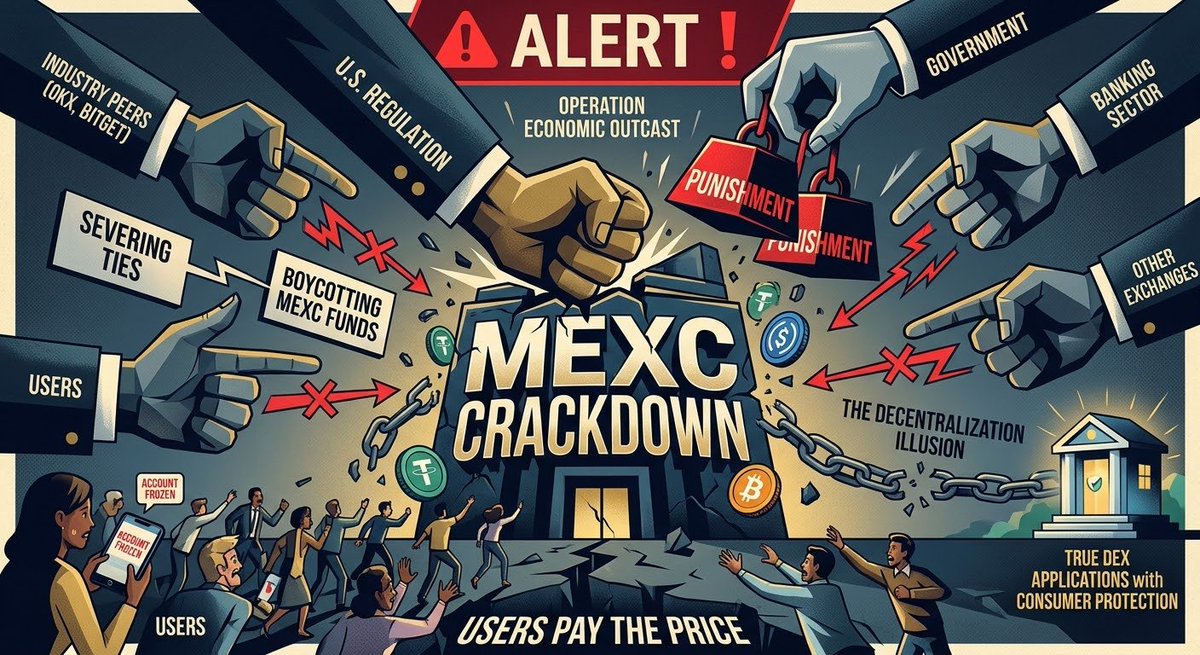
🚨 MEXC IS DONE FOR: THE DECENTRALIZATION ILLUSION IS CRUMBLING 🚨
A look at the recent MEXC crackdown exposes reality: crypto is far more centralized and controlled than many want to admit. The myth of pure decentralization is falling apart step by step. This is precisely why we urgently need truly decentralized applications that still offer reliable consumer protections.
What Happened: Operation Economic Outcast
On Friday, the US Department of the Treasury cut off crypto exchange MEXC from the US financial system as part of Operation Economic Outcast targeting Iranian money flows.
Key findings reported by FinCEN:
$16 Billion in suspicious transactions between May 2021 and May 2026.
~$1 Billion directly linked to over 40 Iranian crypto exchanges.
$22 Million funneled to Iran's Central Bank and the IRGC Quds Force.
Nearly $1.5 Billion connected to Russia sanctions evasion (transactions with Garantex and Grinex).
Regulators have not frozen assets directly yet. US banks are simply prohibited from sending or receiving funds from MEXC following a 30-day grace period once published in the Federal Register. Although MEXC CEO Vugar Usi Zade claims deposits and withdrawals remain active, industry players are voluntarily severing ties immediately:
OKX: Founder Star Xu warned users against direct MEXC transfers, citing risk of account freezes and audits.
Bitget Wallet: Stopped accepting MEXC funds for card top-ups.
BingX & Others: Unconfirmed reports of frozen accounts continue to emerge.
The Crypto Dilemma & The Illusion of Decentralization
MEXC is effectively stranded. An exchange relies entirely on liquidity and fiat/banking bridges. When an exchange becomes an isolated island, institutional liquidity leaves first. Retail users who only traded altcoins end up paying the price: their USDT balance remains theirs, but it now carries a toxicity flag on the ledger.
Adding to the mystery: during Saturday's panic, $100 Million in USDC was transferred from an unknown wallet directly into MEXC. Moving 9 figures into an exchange everyone is fleeing points to either insider knowledge or sheer desperation.
Why We Must Shift Course
This event highlights critical structural vulnerabilities in the current crypto ecosystem:
1. Centralized Chokepoints: Most users rely on Centralized Exchanges (CEXs) for convenience, effectively submitting to the exact banking control and geopolitical leverage crypto was created to bypass.
2. Pseudonymity Fails to Prevent Collateral Damage: Once addresses or exchanges get blacklisted, innocent retail investors get caught in the crossfire.
3. True Decentralization Requires Built-in Consumer Protection: We need DEXs and decentralized protocols operating without single points of failure, integrated with user protections (such as multi-sig escrow, protocol-level decentralized identity/KYC options, or insurance pools). This safeguards users from fraud without exposing them to sudden de-platforming or total state surveillance.
⚠️Action Item: If you hold funds on MEXC or similar offshore CEXs, secure all transaction records (deposits, purchases, verification docs) immediately and avoid transferring funds directly from MEXC to another centralized exchange.
You missed my point.
I’m not claiming MEXC or CEXs were ever decentralized—we all know they are centralized database entries.
My point is about the systemic dependency of the entire ecosystem: when a major liquidity hub gets blacklisted, the contamination spills directly onto the blockchain. Clean retail wallets get flagged, liquidity fractures, and users get trapped because the "decentralized" rails heavily rely on these centralized chokepoints to function in the real world.
It’s not CEX decentralization that failed; it’s the illusion that you can easily operate freely on-chain when the primary liquidity gateways are completely controlled. That’s why we need truly decentralized infrastructure with built-in protections, rather than just relying on CEX bridges.
I’ve lost money. I’ve misjudged people. I’ve heard that this idea couldn’t be built.
None of that proves Coincrib will succeed.
It does remind me why the work matters: build carefully, be honest about the risks, and make something people can actually use.
@FurkanCCTV Stimmt so nicht ganz. Dennoch gab es bestimmt Turbolenzen intern. Würde mich nicht wundern, wenn man den Hack nicht bereits geahnt hätte. Wer kann das schon sagen.🤷🏻♂️
Auf @coincrib gibt es bald ein öffentliches Leaderboard, wo man Scams und Projekte bzw. User melden und voten kann. Wir haben schon 6 stellig verloren. Darunter waren CEX, Marketing Agenturen und ganz wichtig KOLs und Launchpads! Hochgradig toxisch. Ich habe @stablekwon in den Knast gebarcht in NY mit den anderen. Derzeit kämpfe ich mit 400 anderen in Singapur gegen Terra Luna nun seitdem es passierte. Wenn wir wegschauen, werden wir dafür bezahlen. Hinschauen muss belohnt werden. Nur so bekommen wir einem sauberen Kryptospace.
@ZssBecker zum Beispiel. An sich alle. @MMCrypto, @Davincij15 die bekanntesten. Evtl. keine @Pumpfun Memes, aber dennoch. Zur Information. Da Vinci wollte 3000$ für 15Min Pitch von uns. Ich habe damals direkt alle unfollowd. Wer denkt er wer er ist? Ihr solltet es auch. Brandgefährlich die Jungs. Totalausfall garantiert. DYOR ist Pflicht. Sonst seid ihr denen ausgeliefert. Übernehmt selbst Verantwortung für euer Kapital.
Davon rede ich schon länger. @coincrib baut genau das Gegenteil auf. P2P und ehrliche Infrastruktur die genau sowas bestraft. Es wird Zeit für Krypto erwachsen zu werden. Die echten Player müssen das Feld betreten. Die Scammer müssen öffentlich mit Wallet markiert werden. Nur fair!
The future of online commerce shouldn’t be designed only by platforms, investors or founders.
It should be shaped by the people who buy, sell and deal with the consequences.
We build the tools. You challenge the assumptions. Together, we can make online trade work better for everyone.
Building quietly isn’t the same as building blindly.
Review the assumptions. Test the flows. Find the weak points. Fix what doesn’t hold up.
The work no one sees is often what determines whether the product deserves attention later.