Congratulations @perilli - my observations are: now more than ever as the cost of execution (at a digital level) is evaporating it now means you can fail faster, from an SMB viewpoint so many are buying a “silver bullet” expecting it to solve the problems they haven’t outlined :(
Congratulations @perilli - my observations are: now more than ever as the cost of execution (at a digital level) is evaporating it now means you can fail faster, from an SMB viewpoint so many are buying a “silver bullet” expecting it to solve the problems they haven’t outlined :(
Today’s stats:
4 months at IDC.
8 keynotes.
14 events.
Dozens of meetings with CIOs.
Hundreds of fantastic colleagues.
3 agentic AI platforms.
1 cold.
And 1,000 questions I don’t have the answers to. Yet.
Qantas just showed their wild polar route for the new non-stop SYD-LHR A350 flights... heading north over the Pacific, up near the North Pole, then into London from the north for part of the year.
Smart way to dodge the jet stream and optimize fuel. 19.5-21 hrs one way.
This one’s gonna be next level.
You taking a 20hr direct or prefer a stop?
📽️ Xrobau
I’m in awe, Barcelona is definitely on my bucket list to return, if for no other reason than to witness this architecture in the flesh. https://t.co/2q0glsXLNM
AMAZING
A week ago I deployed one agent team folder into several managed runtimes. One direction.
This week I made it round-trip.
agentlift v0.8.0 adds import: the reverse of deploy. It reads a live agent's definition back into the neutral .managed-agents/ folder: prompt, skills, MCP config, subagent roster.
agentlift already pushes one folder out to four runtimes. Import pulls two of them back so far: out of Anthropic, into AWS Bedrock, and back. The folder is the pivot.
You're not re-authoring the agent. You're re-pointing it.
It doesn't trust the copy it just wrote, either. Import re-runs the real parser and planner, and prints "Round-trip OK" only if the folder deploys again.
If something won't survive the hop, it shows up before deploy. Not as a silent lossy copy.
Own the definition. Rent the runtime. In both directions.
A week ago I deployed one agent team folder into several managed runtimes. One direction.
This week I made it round-trip.
agentlift v0.8.0 adds import: the reverse of deploy. It reads a live agent's definition back into the neutral .managed-agents/ folder: prompt, skills, MCP config, subagent roster.
agentlift already pushes one folder out to four runtimes. Import pulls two of them back so far: out of Anthropic, into AWS Bedrock, and back. The folder is the pivot.
You're not re-authoring the agent. You're re-pointing it.
It doesn't trust the copy it just wrote, either. Import re-runs the real parser and planner, and prints "Round-trip OK" only if the folder deploys again.
If something won't survive the hop, it shows up before deploy. Not as a silent lossy copy.
Own the definition. Rent the runtime. In both directions.
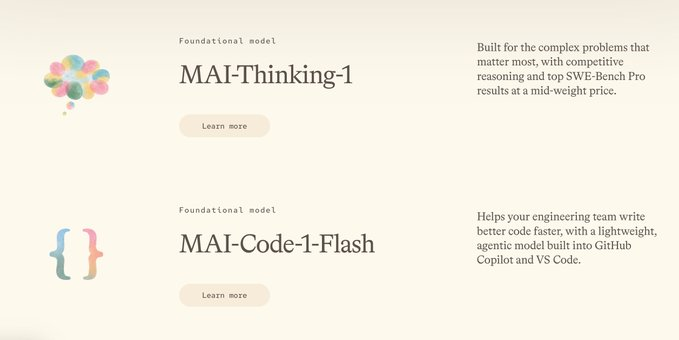
MICROSOFT JUST DROPPED FIVE AI MODELS AT ONCE.
MAI Code 1 Flash.
MAI Thinking 1.
MAI Image 2.5.
MAI Voice 2.
MAI Transcribe 1.5.
MAI Thinking 1 is competitive with Claude Opus 4.6 on SWE-Bench Pro.
MAI Code 1 Flash handles complex coding tasks from start to finish.
Microsoft is in the frontier model race now.
Agentic Sunday, as usual. Three years ago, quite a few people were certain that developing prompting skills wouldn’t be necessary.
Not only did the need for prompting skills not go away, but today, it has become critical to make the jump from AI assistants to AI agents.
How you articulate your instructions inside agents[.]md, skills[.]md, and every other file you use to define guardrails, state management, etc., as part of your process orchestration framework, makes a huge difference.
And even when you stay focused on AI assistants, your prompting skills are the difference between AI slop and good generated content.
In completely unrelated news, we have a looooong way to go before Codex and Cowork generate really good presentations.
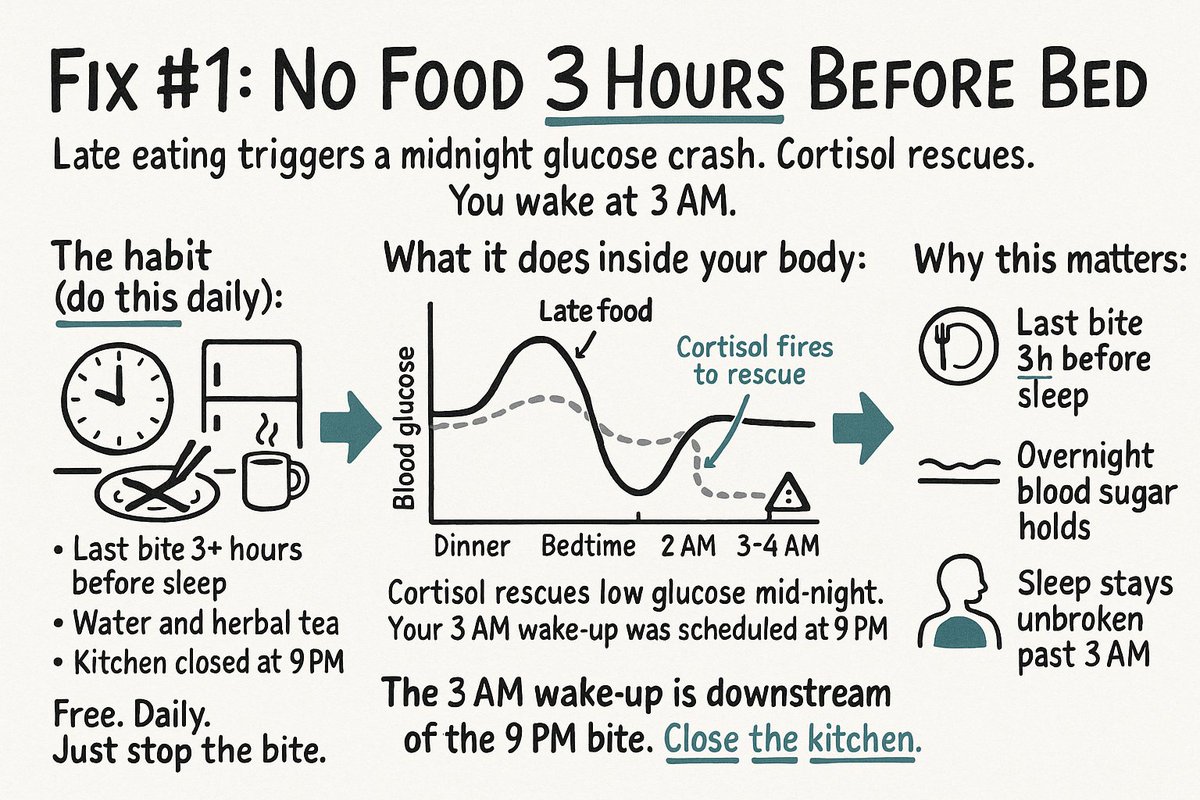
Late eating spikes blood sugar. Insulin clears it overnight. Then glucose crashes at 2-3 AM.
Your body fires cortisol to rescue you.
That's not insomnia — that's a metabolic emergency you scheduled at 9 PM with your last bite.
and so it begins. the humanoid takeover.
the last 4 years of AI was all digital.
chatgpt, claude, image generators, coding agents, all living behind a screen
but figure just signed a deal with catalyst brands to deploy their humanoid robots at scale.
catalyst owns jcpenney, aéropostale, and brooks brothers. so we're literally talking humanoids working inside the warehouses of some of the biggest retail brands in america, starting now.
i think this is the actual starting gun for the next decade.
do you realize what the world is about to look like in the next few years?
you'll see humanoids folding shirts in the back of your local mall store.
pouring espresso at the coffee shop you walk into every morning.
restocking grocery aisles while you shop.
cleaning hotel rooms between right after you checkout.
once the unit economics tip (and they will, fast) every big company on earth is going to be doing this.
its not even going to be a debate.
and the world is about to look really, really different than it does today.
@alldockaus - is it possible to get a replacement charger for the classic that is GaN with 4 x USB-C ports please? I'd like to upgrade the existing internal charger
We moved back to Australia from London in 2006 when Australia had zero debt - and here we are 20 years later at 1 Trillion dollars - do we need a more prudent budget?
AI models’ decision-making will be one of the most important areas to unlock business value in the future. I’ll try to explain why with a personal story.
Joining IDC has not changed the fact that I am an AI practitioner at heart.
Over the past few weeks, I’ve been working to turn a key business process into an advanced AI framework, chock-full of goals, skills, and guardrails.
The scenario I’m focused on involves turning the main session of the agentic AI platform I’m using into an orchestrator. That orchestrator must be able to spawn 10+ subagents, each specialized in highly detailed jobs, and manage them reliably over multi-hour working sessions.
As expected, refining the framework has taken many iterations. Along the way, minor limitations in the UI of the AI platform I’m using became very evident (a topic for a future briefing with the vendor!) But the hardest part remains guaranteeing that the orchestrator successfully manages its subagents with minimal to zero supervision from my side.
To improve my chances, I had to define a watchdog loop that constantly checks on and nudges the subagents. All in plain English. No specialized programming language involved.
For me, it’s a very fun project. But it confirms, once again, the enormous challenges non-technical users face when designing and managing business processes executed by multiple agents.
The only possible way to unleash the true potential of agentic AI for those users seems to be to completely abandon the task-oriented approach to work we are used to, and embrace a purely outcome-based approach.
The challenge is that it’s not very easy for humans to explain the outcome they have in mind. Even through an iterative process, it might take hundreds of interactions to see the ideas in our minds fully realized. Very few people will have the patience or the time to do that. Most will probably settle for whatever the AI recommends after a few interactions.
The dear old “good enough.”
And if that’s true, how AI models make decisions about what direction to take, what tool to use, and what trade-offs to accept becomes one of the most important areas to unlock business value.
“Good enough” better be really, really good.
(As my agents would say: "You are right to push back on this.")
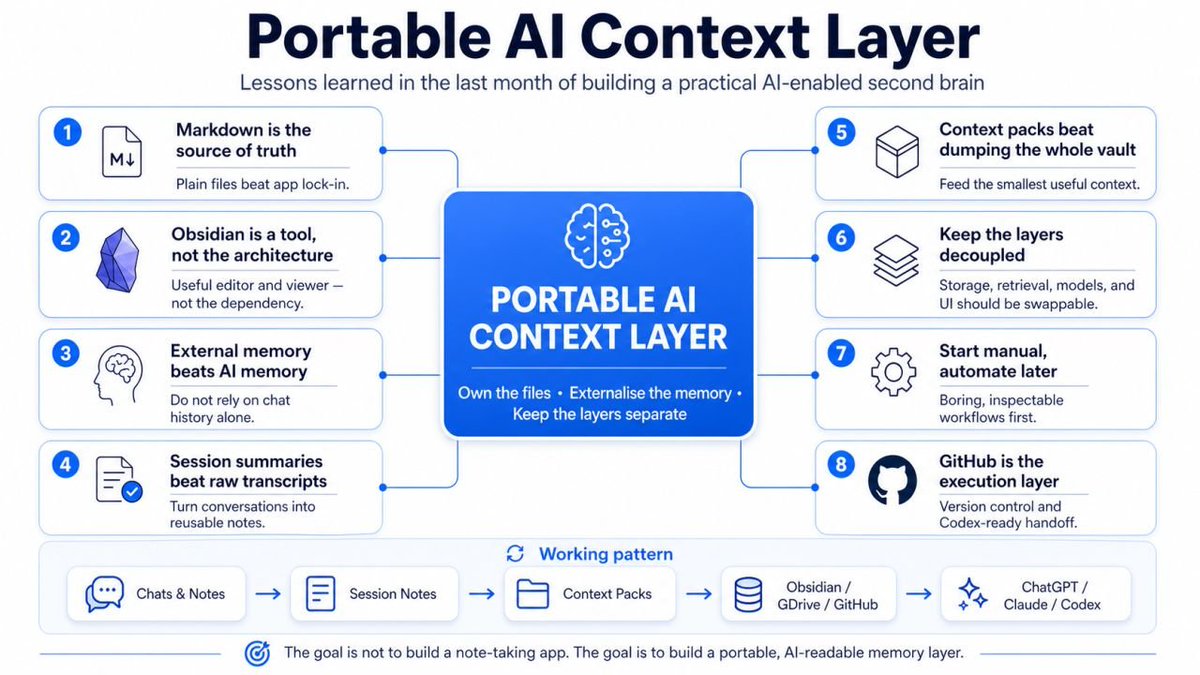
How Claude & Obsidian became my Portable AI Context Layer. I started with a simple problem: How do I stop useful AI conversations disappearing into chat history?