"If "historia magistra vitae" [history is the teacher of life], as the ancient Latin saying affirms, then the history of the Church can certainly be described as "magistra vitae christianae" [the teacher of Christian life]." (St. John Paul II)
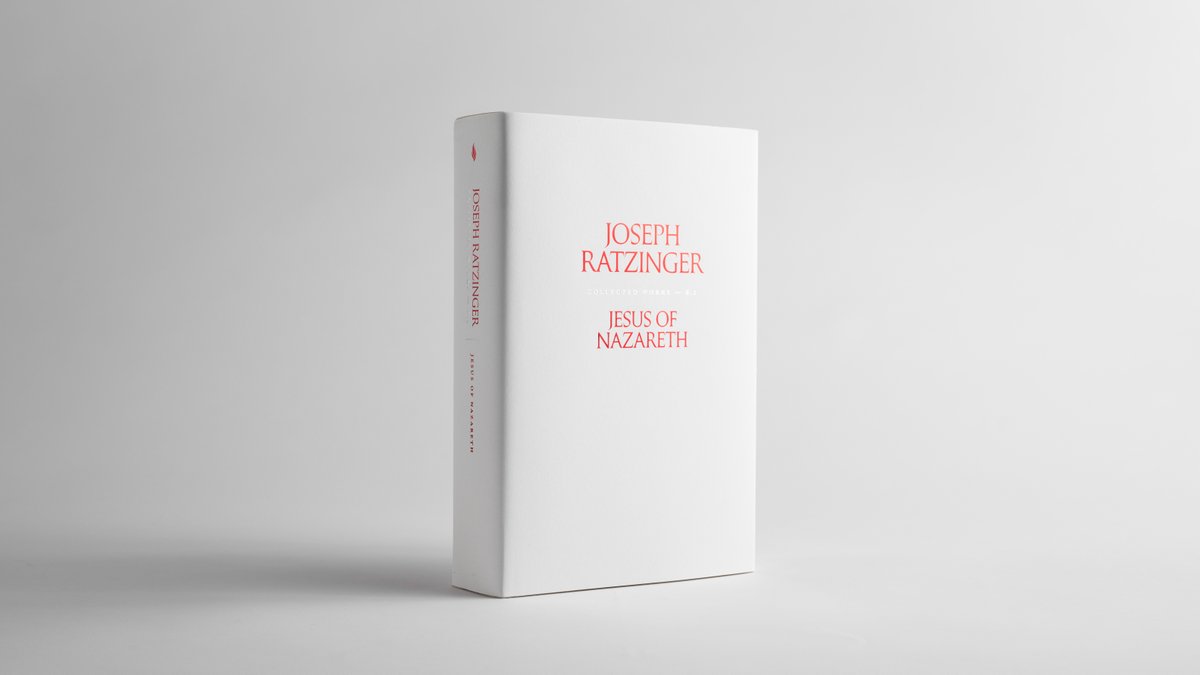
Friends, I am delighted to announce the official launch of the Collected Works of Joseph Ratzinger.
The inaugural volume is Ratzinger’s christological masterwork, “Jesus of Nazareth,” bringing the full trilogy together in one book.
Learn more at https://t.co/f2hrOmpKHa.
Well, another Cardinal has come out with a, shall we say, puzzling take on evangelization.
A few years ago, Cardinal Américo Aguiar, at the time auxiliary bishop of Lisbon, said that he and the other organizers of World Youth Day in his hometown had no interest in converting anyone to Christ.
Now Cardinal Jean-Paul Vesco of Algeria has opined that “the Church is not there to convert” and “Christians should approach other religions through fraternity rather than seeking conversions.”
Excuse me, but…what?
Last time I checked, the Founder said, “All authority in heaven and on earth has been given to me. Go therefore and make disciples of all nations, baptizing them in the name of the Father and of the Son and of the Holy Spirit, and teaching them to obey everything I have commanded you.” Sure sounds like conversion to me.
When St. Paul came to Corinth or Athens or Thessalonica, his purpose was not to listen or to form a discussion group but rather to declare an unnerving message: the euangelion (glad tidings) that Jesus Christ is risen from the dead.
So impassioned is he for this work that he says, “I have become all things to all people, that I might by all means save some. I do it all for the sake of the gospel” (1 Cor. 9:22); and “If I proclaim the gospel, this gives me no ground for boasting, for an obligation is laid on me, and woe to me if I do not proclaim the gospel” (1 Cor. 9:16)!
Moreover, the entire thrust of the Second Vatican Council was toward bringing the Light of Christ to the peoples of the world (Lumen Gentium). And this missionary élan has given rise in the last few decades to the idea of a “new evangelization,” which is to say, a fresh declaration of the Lordship of Christ.
Quite obviously, no one thinks that this work of evangelization should be done in a brow-beating, overbearing, or disrespectful manner (proselytization), but for God’s sake, let’s not throw the baby out with the bathwater.
If I really thought that the Church does not exist to bring people to Christ, then I would resign and get an honest job.
The ars celebrandi of Mass requires sacred silence. It’s not an interruption of the Mass. It’s actually a liturgical element of the Mass.
The GIRM says plainly: “Sacred silence also, as part of the celebration, is to be observed at the designated times” (GIRM 45). And in the Liturgy of the Word it adds that “any kind of haste such as hinders recollection is clearly to be avoided” (GIRM 56).
The priest should not celebrate as though every empty second must immediately be filled. Silence allows the rites to settle into the mind and heart of the faithful.
Among other places, the GIRM envisions silence:
• after introducing the Penitential Act, before beginning it — for recollection (51);
• after “Let us pray,” before the Collect — to become aware of God’s presence and call intentions to mind (54);
• after the Homily — to ponder what has been heard. This isn’t a pause for the priest to admire his homily; it is the moment when the Gospel proclaimed and preached can settle interiorly (66);
• after Communion, before the Prayer after Communion — for interior praise and prayer. If that period of silence has not already been observed, a brief silence may follow “Let us pray” before the Prayer itself (88, 165).
These pauses need not be long or dramatic. But they should be real.
Good ars celebrandi resists haste. It lets the rites breathe. Sometimes the priest serves the liturgy best simply by not speaking.
The Mass is celebrated best when silence is allowed to be part of its prayer—for the faithful and for the priest alike.
According to some people in Batanes Islands that I talked to, it was a custom for them to kiss the scapular of a friar if they encounter them as a sign of respect. (Batanes was a mission territory of the Spanish Dominicans from the 18th century until the early 21st century.)
Kiss the Scapular
A Dominican can kiss his scapular, but each of us, in our own way, can take up the spirit of the custom and find some simple, meek way to ask for forgiveness.
Link in the comments.
As mentioned in this article, we Dominicans may have different ways of doing and understanding this custom, but it should inculcate in us values that we should be living out.
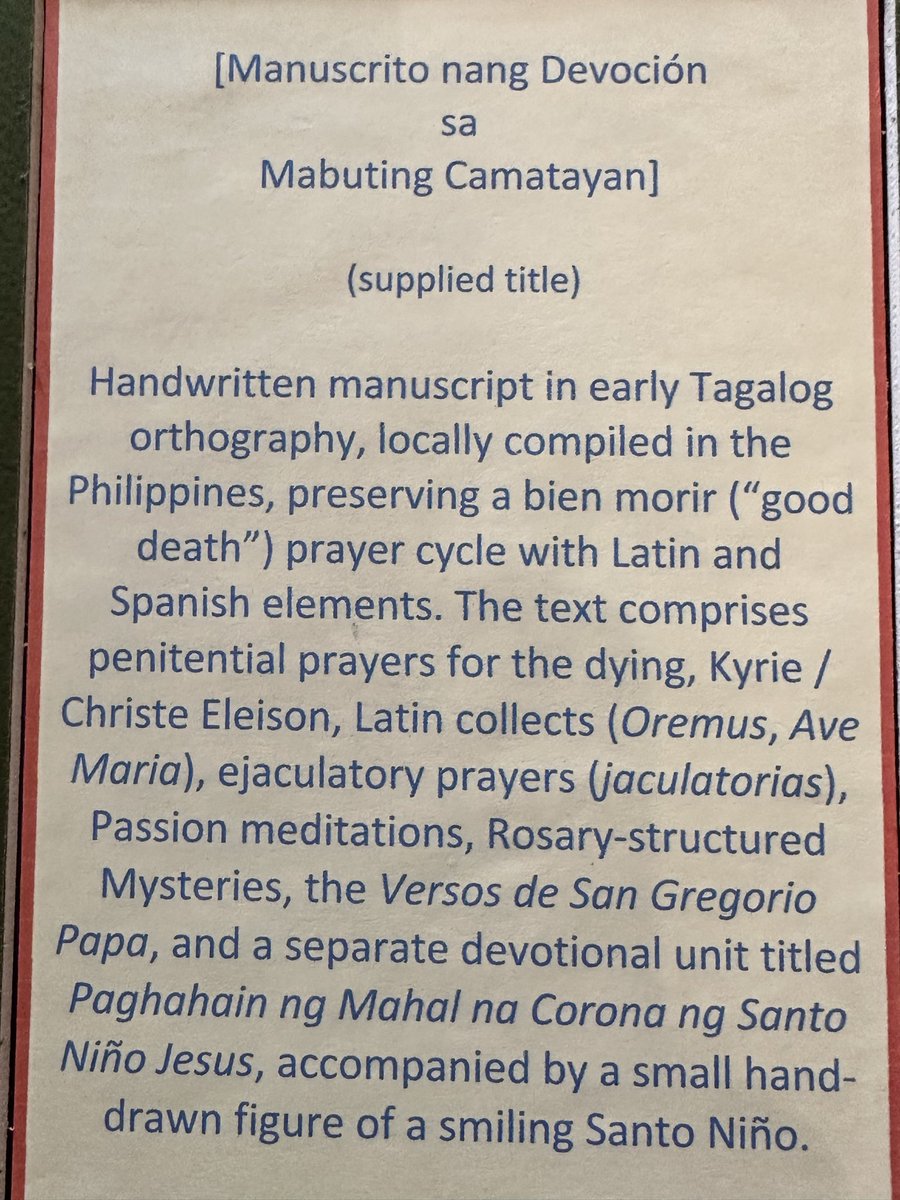
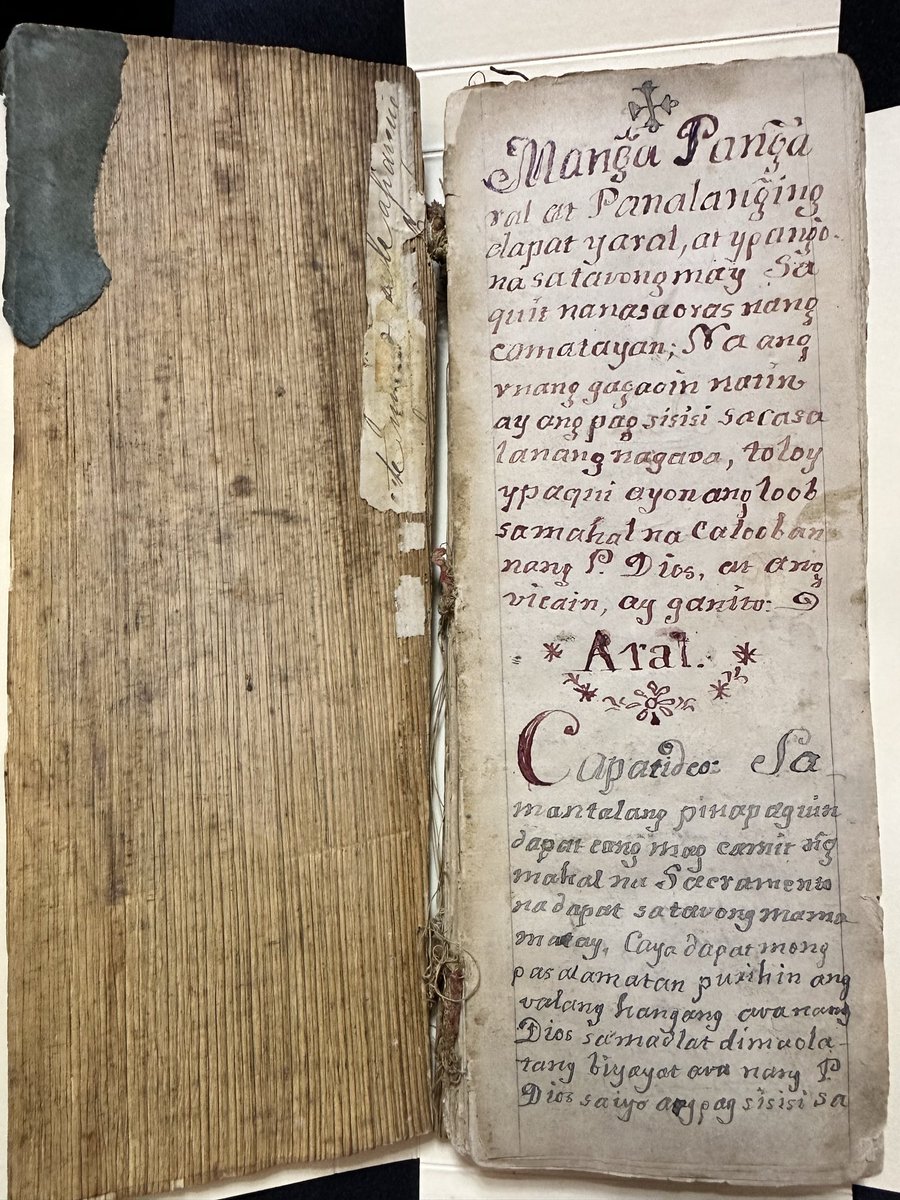
Libro de rezos manuscrito en dos tintas, en tagalo con partes en español y latín. Tapa de madera original (rarísimo). Se paseaban los frailes por las visitas que eran de su jurisdicción en jornadas maratonianas. De un amigo coleccionista filipino. #Filipinas#Philippines
LA NAVAL GRAND PROCESSION ✨
Panoorin ang ilang sandali sa ginanap na Dakilang Prusisyon ng Mahal na Birhen ng La Naval de Manila, kasama ang 26 na Santo, noong Oktubre 11, 2026.
#LaNavaldeManila#DominicanSaints#FiestaDeLaNaval2026
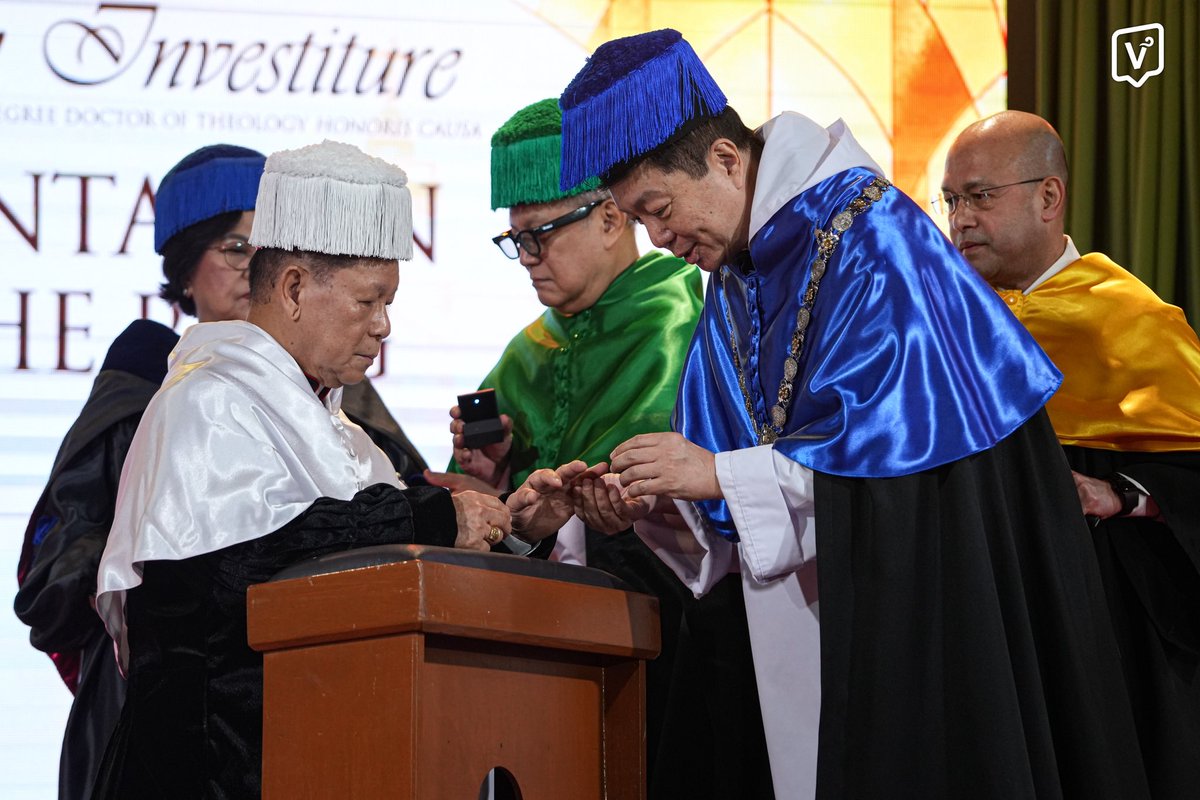
“A theology that is truly sacred must therefore also be a theology that listens,” Cardinal Advincula said after receiving an honorary doctorate in theology from the University of Santo Tomas (UST) on Oct. 15. Read article: https://t.co/bkXnAKbPUO
UST CONFERS HONORARY DOCTORATE IN THEOLOGY TO CARDINAL ADVINCULA
The University confers the Doctor of Theology, honoris causa, upon Manila Archbishop Cardinal Jose Advincula during a solemn conferment rite at the Dr. Robert C. Sy Grand Ballroom of the Buenaventura Garcia Paredes, O.P. Building on Thursday, Oct. 15.
Advincula, a UST Sacred Theology alumnus, was recognized for his contributions in priestly formation, ecclesiastical leadership and pastoral service.
(Photos by Joachim Nigel Z. Tanglao/ The Varsitarian)
Devotees gathered at the National Shrine of Our Lady of the Holy Rosary – La Naval de Manila on Sunday, October 11, despite persistent rain, to celebrate the feast of Nuestra Señora del Santísimo Rosario – La Naval de Manila.
The faithful joined the celebration of the Holy Mass and sang hymns of praise in honor of the Blessed Virgin Mary. | via @eon_sanchez
(Courtesy: Jahbee Cruz)
VIVA LA VIRGEN DE LA NAVAL 📷
The annual La Naval festivities conclude with the grand procession of the image of Our Lady of the Most Holy Rosary of La Naval de Manila around Santo Domingo Church in Quezon City on Sunday, Oct. 11.
Cubao Bishop Elias Ayuban Jr. led the Act of Consecration, the solemn prayer offered at the conclusion of the grand procession, entrusting the faithful, Quezon City and the Philippines to the Blessed Mother's protection and guidance.
The annual celebration honors the Marian image associated with the Spanish-Filipino naval victories over Dutch forces in 1646, which devotees have traditionally attributed to the intercession of the Blessed Virgin Mary.
(Photos by Ethan Joshua Nikholai F. Guisama and Joachim Nigel Z. Tanglao/ The Varsitarian)
People acting surprised that the Pope is backing the artists as if the Catholic Church, for all its faults, isn't one of the greatest and longest patrons of the arts the world has ever known.
to the attendees of a Rosary Rally which was held on July 10, 1975 at the Araneta Coliseum in #Cubao, #QuezonCity. Behind him is an image of Our Lady of the Rosary, La Naval de Manila.
Our Lady of the Rosary, La Naval de Manila, pray for us!
Bl. Fulton Sheen, pray for us!
In solidarity with the Church, the Dominicans in the Philippines and the Nat'l Shrine of Our Lady of the Rosary, #LaNavaldeManila rejoices over the beatification of Abp. #FultonSheen. In its Facebook page, the Shrine posted photos of Bl. Sheen delivering an inspiration talk...
"En Salamanca, el jueves 7 de septiembre de 1526, asignaron la dicha cátedra de Prima de Teología al reverendo padre fray Francisco de Vitoria..." 📜
Tal día como hoy, según se recoge en el libro de claustros correspondiente, Francisco de Vitoria obtuvo la cátedra de teología en la USAL. 🎓
Su llegada a las aulas salmantinas, con la revolución que inició desde ellas, está considerado el punto inicial de la #EscuelaDeSalamanca. ⚖️
¿Quieres saber más sobre la Escuela de Salamanca? 👉 https://t.co/TND6UInpkf
HERO’S BURIAL: The Historic Funeral of NINOY AQUINO 1983 🇵🇭
Two million Filipinos brought Ninoy to his resting place. It was a burial fit for a national hero, and this is history that will never be erased.
#NinoyAquinoDay
https://t.co/7ulW33OcSM