📢 Today we launch the @PGCGenomics Video Textbook!
A structured training program in psychiatric genetics, analysis methods and software tools.
Open access, do share widely. #WCPG2023
1/n
Excellent response from an early career researcher to the biased & inaccurate Dec 2022 commentary @AutismINSAR published about communication guidelines related to #autism#research. Please read! https://t.co/T2FtNSvPeR
Very happy to share that the work I started back in 2019 during my Masters is finally published! This paper highlights that reward sensitivity follows a nonlinear trend across the lifespan and is of transdiagnostic relevance for psychopathology.
https://t.co/DcmM27qjeb
Our study on self-relevant research (aka "Me-search") is now in-press at Clinical Psychological Science! @PsychScience
We found over 50% of clinical psychologists have done research on topics that are personally relevant
Heres a🧵on why this matters 1/10
https://t.co/ZgW6xFNYss
Vacancy: The Open Science Community is looking for a new chair!
Are you passionate about Open Science and would you like to help us to get Open Science into the DNA of the University of Groningen and UMCG? Then we are looking for you!
https://t.co/TRIM1tVSzY
New Research: Reward Sensitivity at Age 13 Predicts the Future Course of Psychopathology Symptoms: Background
There are numerous observations of reward sensitivity being associated with different psychiatric disorders. Nonetheless, most… https://t.co/UbLZOQnsbX #Psychiatry
What do rewards have to do with mental health problems? Read the blog here: https://t.co/syQhoBpBqy or the research publication below 👇 Congratulations Dener!
In this paper, we present evidence for the long-lasting effects of reward sensitivity on psychopathology over a 14-year follow-up. Additionally, we show the similarities and differences of these effects across nine different types of psychopathology.
What's the point of giving students closed book exams when they will always have access to texts & search engines in the real world?
I've published several articles on the same topics, and I still have to reread the theoretical articles to make sure I'm remembering them right.
2/3 #ESMARConf2021
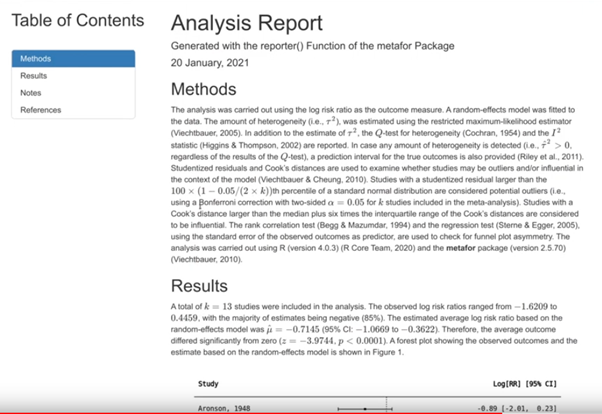
Metafor has a reporter() function which automatically generates the report describing the statistical methods used. It also provides references for all methods used (!) and output can be html, pdf, or docx.
AMAZING!!
@TronsonLab @rita_strack When I was a kid, I told my pediatrician that I didn’t eat more healthy food because my mom didn’t cook them (I was lying of course)... I hope she didn’t believe me
I honestly don’t see how this would ensure diversity... what we really need is more opportunities for minorities that are explicitly reserved for minorities!
MB&B is changing how we search for new colleagues "We are screening applications ‘blind’ to prevent evaluation shortcuts that use where candidates earned their degrees, who mentored them, and which journals published their work as proxies for quality." https://t.co/Z7PocKcJPW
The food we eat, the jokes we tell, the work we do: most of the things we do (or don't do), are because of the rewards we get. PhD student Dener Cardoso Meler explains how dealing with rewards is central to many #mentalhealth problems
👉 https://t.co/syQhoBpBqy
#CoCAproject